DbcultAccessing Vault...
Cult Review
Senior Film Conservator
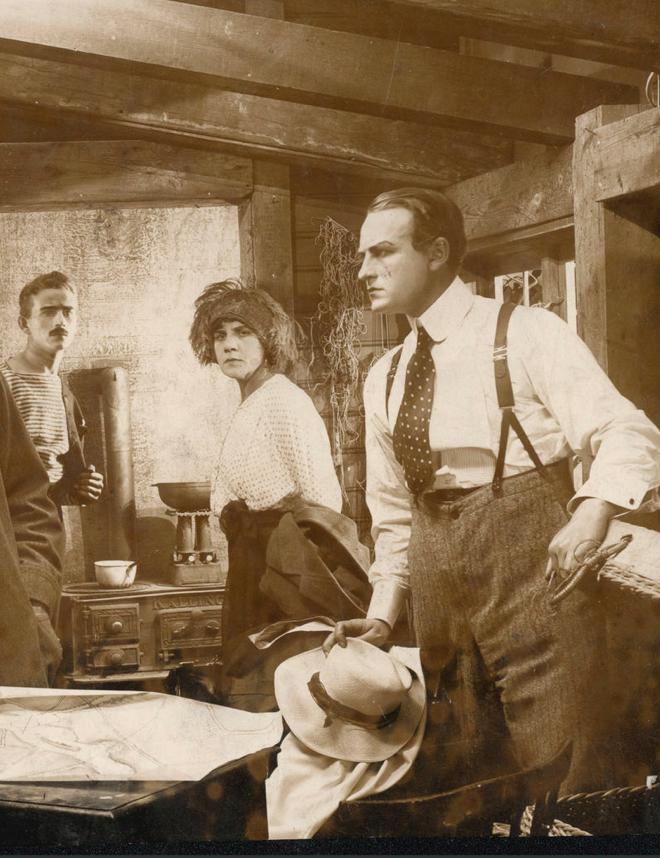
The first time I watched Borgkælderens mysterium I kept the lights on—partly because the only surviving print is a dupe so high-contrast it turns candlelight into solar flares, partly because the film itself behaves like a burglar: it slips inside your ribcage and rifles through memories you thought were locked away.
Set in a Denmark that never existed except in damp storybooks, the narrative coils around the House of Wicksham like English ivy strangling a mausoleum. Rumour—filthier than gutter water—claims the family cellar cradles a treasure whose value outstrips kingdoms. Into this hushed sanctum slinks a syndicate of well-tailored hyenas: Felix (Peter Malberg, eyes sharp enough to slice silk), his lieutenant Sophus Erhardt, and a cadre of silhouettes who barely earn names yet exude menace the way rust exudes history.
Rose, the maid played by Oda Rostrup, enters every frame as though she has already memorised its exit wounds. She polishes silver while parsing footfalls, her peripheral vision a net that traps stray glances. When Felix’s gaze hooks hers, the collision is not star-crossed but coal-crossed: two tectonic vices rubbing until sparks decide which one will burn first. Their courtship is conducted in stairwells and sculleries, shot in chiaroscuro so ferocious that even a kiss looks like a blood-contract.
Director J. Rung, a name half-erased by nitrate amnesia, choreographs the heist like a liturgy. Doors don’t merely open—they confess. Shadows don’t just fall—they plead guilty. The treasure itself is never shown; its absence becomes a character, a black-hole gravity that bends every performance toward inevitable collapse. In one indelible tableau, Rose lifts a candelabrum whose flames quiver to the frequency of her pulse while, behind her, Felix’s silhouette elongates across the wall like a moral tumour. The cut is so abrupt you feel the film itself gasp.
Malberg, who later became Danish cinema’s avuncular comic, here wears arrogance like epidermis. Watch the micro-shoulder-lift when Felix realises Rose could betray him: it is the origami of trust folding into a stiletto. Rostrup counters with ocular artillery; her glances ricochet between fear and appetite until the two emotions become indistinguishable, like twins finishing each other’s crimes.
Supporting players orbit in varying stages of silent-era stylisation. Einar Zangenberg’s corrupt solicitor vibrates with such moustache-twirling gusto you expect him to tie Rose to railway tracks, yet his final close-up—eyes glassy with the knowledge that gold will forever elude him—achieves a surprising patina of pathos. Edith Buemann, as the bedridden Lady Wicksham, utters not a single title card yet manages to haunt the celluloid long after her character expires; Rung simply holds the camera on her hand, a parchment claw tightening around a crucifix, until belief itself seems lethal.
Do not let the lack of Technicolor fool you—this film has colour. You can hear the bruised purple of midnight corridors, taste the arsenic-green of Rose envy, smell the rust-orange of iron-spiked anxiety. Rung achieves synaesthesia by weaponising contrast: corridors drowned in obsidian while faces blaze like magnesium. When Felix first descends the cellar stairs, the screen gutters to near-pitch; only the whites of his gloves float, disembodied harbingers. Modern viewers conditioned by HDR may scoff, yet the limitation becomes transcendence: darkness so absolute it feels like being buried inside someone else’s nightmare.
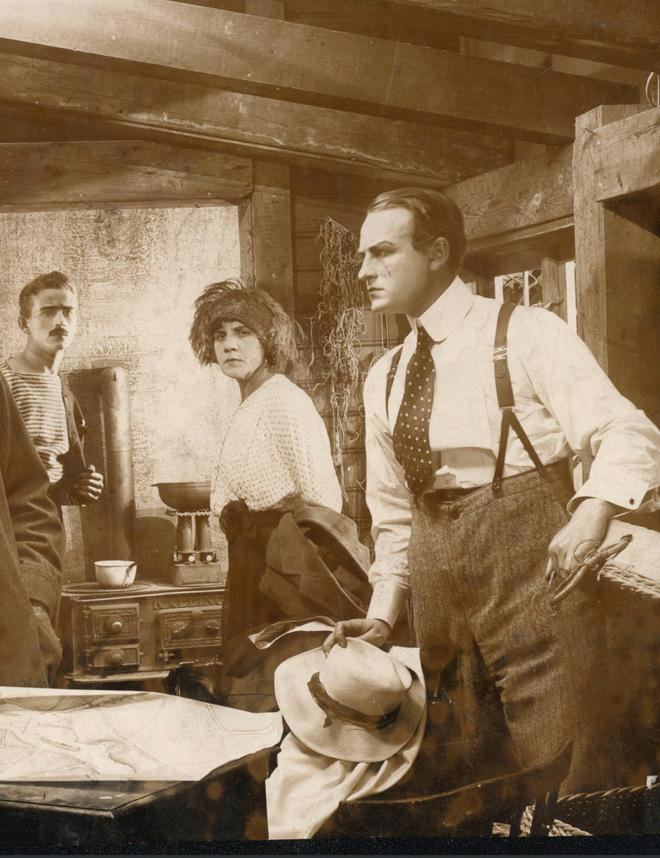
Rose’s agency arrives via inversion: she weaponises the invisibility of servitude. While the gang strategises over brandy, she is the ghost who remembers which floorboard squeaks, which keyhole offers sightlines, which ancestral portrait hides the safe. The film anticipates feminist readings decades ahead of schedule; her love for Felix is never mere capitulation but a calculated risk to vault class barriers. When she finally filches the literal key from his waistcoat, the cutaway to her trembling palm is framed like a secular annunciation. Salvation or damnation? The film refuses verdict, preferring the vertiginous ambiguity of a woman who has learned that survival and betrayal share bunk beds.
Intertitles are sparse, almost aphoristic. One reads simply: "Guilt has a key; so does greed." The rest is montage as metronome. Rung alternates between languorous tableau—servants folding linen like priests handling relics—and staccato chases through hedgerows whose leaves slash the frame like guillotines. The average shot length would give modern editors hives, yet each held image accrues dread the way a held breath accrues desperation. By the time Rose unlocks the cellar door, the audience has been conditioned to expect apocalypse; what we get instead is darkness swallowing darkness, an ouroboros of suspense.
Place Borgkælderens mysterium beside The Key to Yesterday and you notice a shared obsession with thresholds—literal doors behind which history festers. Yet where the latter waxes metaphysical, Rung’s film stays grubbily materialist: gold coins you can bite into, corsets you can unlace, floor-polish you can smell. Conversely, stack it against East Lynne and the Danish offering feels almost Jacobean; its moral universe allows no redemptive rainfall, only a coin-toss between gallows and exile.
Curiously, the film also rhymes with The Life and Adventures of John Vane: both hinge on outlaws whose emotional armour chafes against unexpected tenderness. Yet while the Australian bushranger rides toward mythic sunset, Felix is dragged into the cellar’s abyss, a trajectory that feels more continental—less manifest destiny, more original sin.
For decades the film slumbered in a Copenhagen warehouse, a single nitrate roll considered too fragile to breathe. Then in 1998 a flood—ironic for a film already soaked in dread—forced archivists to evacuate crates, revealing this orphan wedged between medical shorts and Nazi newsreels. Restoration began, but funds evaporated faster than acetate; the unfinished scan languished on a lone hard-drive until 2019 when a crowdfunding campaign fuelled a 4K rescue. The result? Blacks that glisten like obsidian, whites that glare like snow-blindness, and an amber sheen over exteriors that makes Denmark resemble a daguerreotype fever dream.
Most silent screenings default to jangly piano. Do yourself a favour: cue Sigur Rós’ ( ) album—yes, the one with all the glacial pauses. The marriage is uncanny; when the cello swells just as Rose pockets the key, the auditorium feels pressurised, as though someone is screwing down the lid of your coffin.
Great art doesn’t answer questions; it contaminates you with better ones. Long after the credits—well, the final shot of a door slamming on nothingness—I kept wondering: if Rose had been born into the manor class, would she have wielded compassion instead of lock-picks? If Felix had tasted legitimacy, would he still have traded love for lucre? The film withholds moral arithmetic; it simply locks you inside that cellar and swallows the key. And as the beam of your projector fades, you realise the real treasure was never gold but the trembling moment when two human beings weigh loyalty against appetite—and the scale never quite balances.
Watch it alone, preferably after midnight, preferably on a screen large enough to swallow your reflection. Then try walking past your own basement door without hearing the faintest clink of imagined coins. I dare you.
IMDb 6.9
1926
Community
Log in to comment.