DbcultAccessing Vault...
7.3/10
Senior Film Conservator
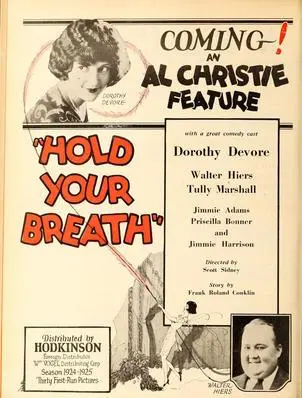
A definitive 7.3/10 rating for a film that redefined the boundaries of cult cinema. Hold Your Breath remains a cornerstone of transgressive art.
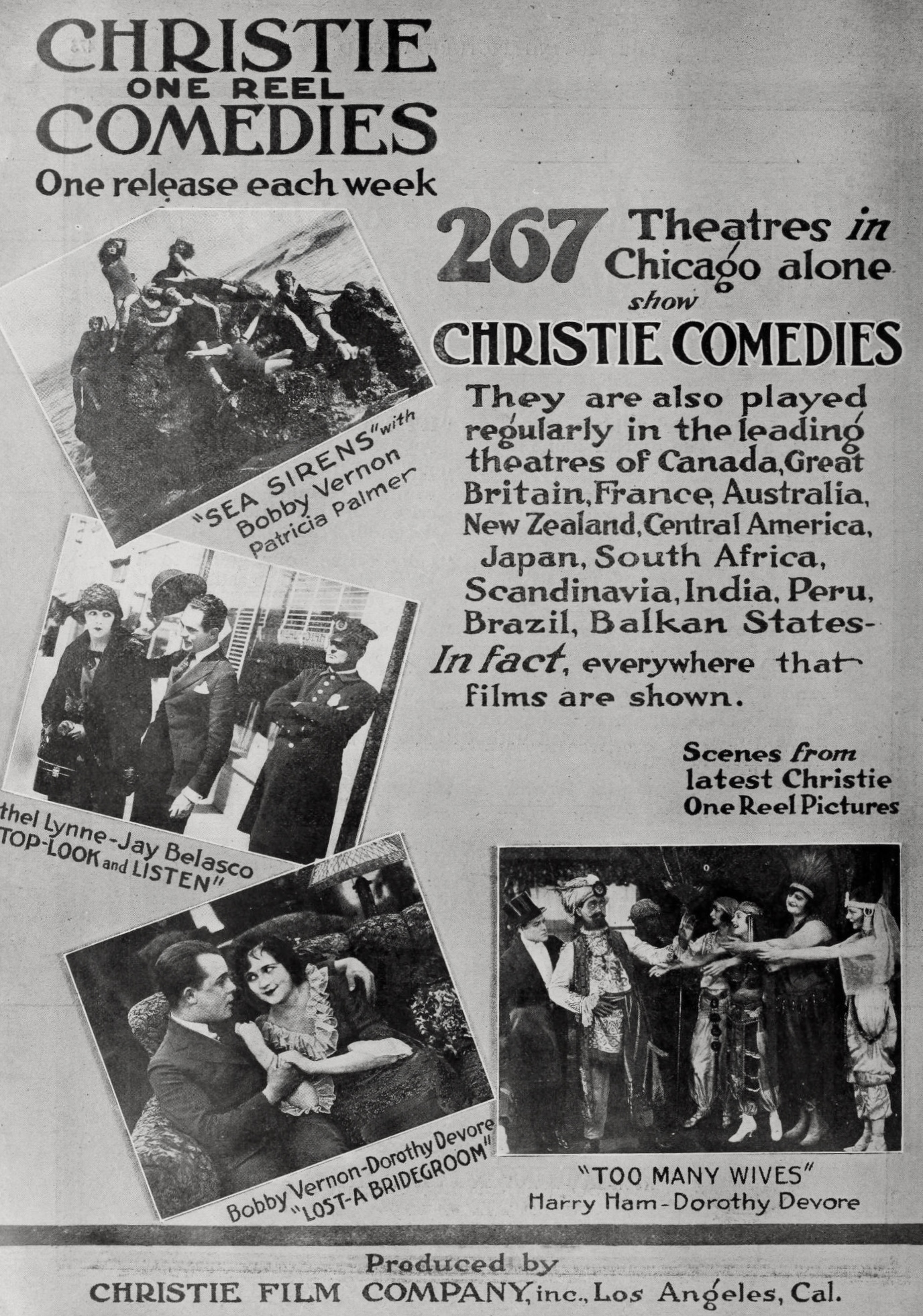
The year 1924 stood as a temporal crossroads for the medium of motion pictures, a moment where the slapstick traditions of the previous decade began to fuse with a more sophisticated, narrative-driven architectural ambition. At the epicenter of this evolution lies Hold Your Breath, a film that doesn't merely ask the audience to watch, but compels them to gasp. Starring the irrepressible Dorothy Devore, this Christie Comedy production transcends its humble origins to become a masterclass in tension, timing, and the terrifying beauty of early 20th-century urbanity.
In the cinematic landscape of the twenties, the 'New Woman' was often depicted through the lens of social rebellion or domestic friction. However, Hold Your Breath offers a more pragmatic, yet equally radical, vision. When our heroine’s brother falls ill, the stakes are not merely personal but existential. In an era devoid of social safety nets, her decision to infiltrate the hyper-masculine enclave of the press is a revolutionary act born of necessity. This thematic weight elevates the film above contemporary efforts like The Ne'er-Do-Well (1923), which often grappled with male indolence rather than female agency.
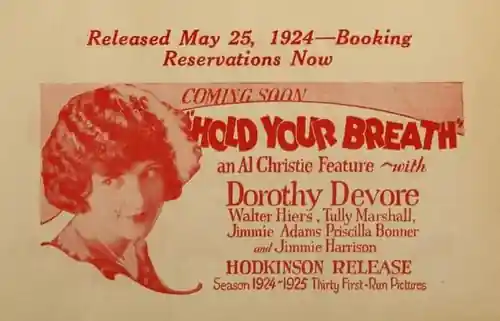
Devore’s performance is a marvel of modulated energy. She possesses a mercurial quality, shifting from the frantic typing of a novice reporter to the wide-eyed terror of a reluctant aerialist. Unlike the broad caricatures found in Distilled Love, Devore anchors the absurdity in a recognizable human vulnerability. Her character's journey into the underbelly of a jewelry heist is not a choice, but a cascading series of unfortunate events that she meets with a resilient, if trembling, resolve.
The introduction of the monkey—a motif that could easily have veered into the puerile—is handled with a surprising sense of narrative gravity. This agile creature is the bridge between the film’s two halves: the grounded newsroom drama and the ethereal skyscraper climax. As the monkey absconds with the stolen jewels, it acts as a literal and figurative 'agent of chaos,' stripping away the protagonist's social mask and forcing her into a physical confrontation with the environment. This use of an animal as a plot pivot is far more integrated here than the somewhat static dramatic tropes seen in Bella Donna (1923).
The interplay between the cast, including the reliable Walter Hiers and the eccentric Max Davidson, creates a rich tapestry of comedic textures. Davidson, in particular, brings a specific brand of ethnic humor that was prevalent at the time, yet here it feels absorbed into the larger-than-life energy of the heist plot. The supporting players function like gears in a complex watch, each movement precisely timed to escalate the stakes.
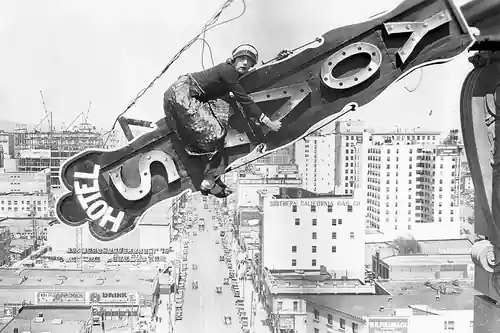
The final act of Hold Your Breath is where the film secures its place in the pantheon of silent greats. As Devore scales the exterior of a building, the cinematography shifts from the observational to the immersive. There is a palpable sense of vertigo that rivals the legendary sequences of Harold Lloyd. However, where Lloyd’s stunts often felt like a celebration of mechanical precision, Devore’s ascent feels like a desperate struggle against an indifferent architecture. The camera angles are aggressively chosen to emphasize the yawning chasm of the street below, a technique that mirrors the psychological pressure of the era's rapid industrialization.
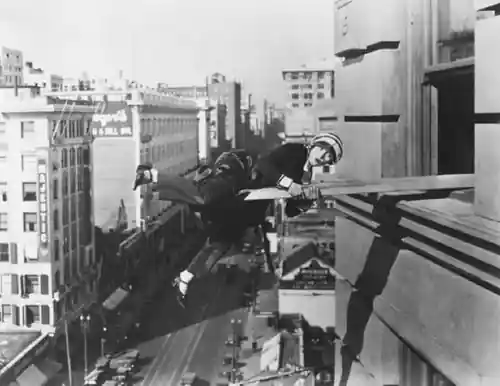
While films like Pyotr Velikiy dealt with the grandiosity of historical figures, Hold Your Breath finds its grandeur in the everyman—or everywoman—pushed to the brink. The visual storytelling here is so potent that dialogue intertitles become almost superfluous. We feel every gust of wind, every crumbling ledge, and every frantic heartbeat. This is cinema as a sensory experience, a precursor to the modern action thriller that understands the primal fear of falling.
The lighting and set design deserve significant praise. The contrast between the cluttered, ink-stained newspaper office and the stark, sun-drenched facade of the skyscraper creates a visual dichotomy that reinforces the film's themes of confinement versus exposure. In the office, our protagonist is trapped by social expectations; on the building’s ledge, she is terrifyingly free. This sophisticated use of space is a far cry from the more theatrical staging of Trois familles or the moralistic austerity of Humility.
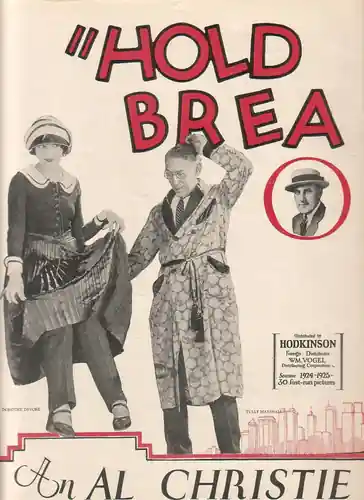
Technically, the film utilizes double exposures and forced perspectives with a seamlessness that was cutting-edge for 1924. The 'human fly' sequences were not merely stunts; they were carefully choreographed ballets of risk. The editors maintain a relentless pace, cutting between the monkey’s playful movements and Devore’s agonizing progress, creating a rhythmic tension that justifies the film's title. It’s a level of craftsmanship that makes contemporaries like The Man Worthwhile or Forbidden Paths feel somewhat pedestrian in their execution.
Beneath the surface of the jewelry heist and the simian antics lies a subtle critique of the American dream. The brother’s illness is the catalyst, suggesting the fragility of the working class. The jewelry, representing stagnant wealth, is literally tossed around by a monkey, mocking the value society places on such trinkets. Devore’s character must risk her life to recover what is essentially a luxury item, just to keep her job. This subtext provides a layer of grit that contrasts sharply with the escapist fluff of Alias Ladyfingers or the spiritual moralizing of Man and His Soul.
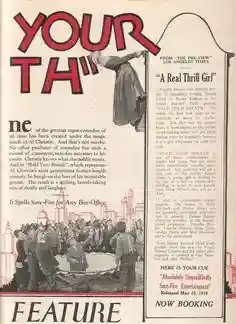
Furthermore, the film’s portrayal of the press is fascinatingly cynical. The newsroom is a place of opportunistic frenzy, where a story is worth more than the person telling it. By placing a woman at the center of this maelstrom, the film highlights the performative nature of gender roles. To succeed, she must not only do the work of a man but do it while literally hanging by her fingernails. It is a more nuanced take on female professional struggle than the artistic romanticism found in Inspiration.
When comparing Hold Your Breath to the broader canon of 1920s cinema, its uniqueness becomes even more apparent. While Body and Soul (1920) explored internal psychological landscapes, and Fresh Paint (1922) toyed with social conventions, Hold Your Breath is obsessed with the physical world. It is a film about the resistance of gravity, the hardness of stone, and the terrifying elasticity of the human body. It shares a certain DNA with the Hungarian expressionism of A Tüz in its use of dynamic movement, though it replaces brooding shadows with the harsh, unforgiving light of a midday sun.
Ultimately, this is a film that demands to be rediscovered. Dorothy Devore should be celebrated alongside the greats of the era—Keaton, Lloyd, and Chaplin. Her ability to synthesize high-stakes action with genuine comedic pathos is nothing short of extraordinary. The film’s climax is not just a stunt; it is a metaphor for the precariousness of modern life, a theme that remains as resonant today as it was in 1924. Whether you are a scholar of silent cinema or a casual viewer seeking a visceral thrill, Hold Your Breath is an essential experience. It is a reminder that before there were green screens and digital doubles, there was only the actor, the camera, and the terrifying height of the sky.
Hold Your Breath is a breathless, brilliant, and beautifully realized artifact of an era when cinema was learning to fly.
IMDb —
1920
Community
Log in to comment.