DbcultAccessing Vault...
6.3/10
Senior Film Conservator
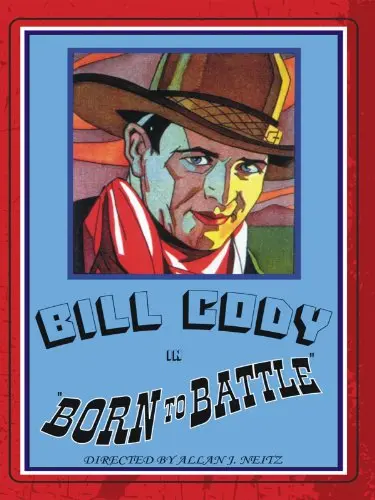
A definitive 6.3/10 rating for a film that redefined the boundaries of cult cinema. Born to Battle remains a cornerstone of transgressive art.
Is Born to Battle (1927) a film worth unearthing from the silent era's vast archives today? Short answer: yes, if you appreciate the foundational grit and narrative purity of early Westerns. This film is absolutely for cinephiles and genre enthusiasts looking to understand the roots of the cowboy narrative, but it's decidedly not for those seeking modern pacing or sophisticated character arcs.
For anyone with a genuine curiosity about the evolution of cinematic storytelling, particularly within the Western genre, Born to Battle offers a fascinating, if sometimes rudimentary, glimpse into the past. It works. But it’s flawed. The film manages to capture a certain raw energy that many later, more polished Westerns sometimes miss, but it demands a specific kind of patience from its audience.
To truly engage with Born to Battle, one must approach it not as a direct competitor to contemporary cinema, but as a historical artifact, a snapshot of a particular moment in film history. It provides invaluable context for understanding how the tropes and archetypes of the Western were first established on screen. The film's narrative, while straightforward, carries a surprising amount of thematic weight for its time, exploring justice, loyalty, and the complex nature of feuds.
This film works because of its unvarnished commitment to classic Western themes and its surprisingly effective visual storytelling, despite technological limitations. It fails because its pacing can feel glacial to modern viewers, and some performances lack the nuanced depth we expect today. You should watch it if you are a dedicated student of film history or a lover of silent-era Westerns; otherwise, its antiquated style might be a significant barrier to enjoyment.
The film’s primary draw is its unpretentious charm and its ability to deliver a coherent, emotionally resonant story without a single spoken word. It’s a testament to the power of pure visual narrative, something often lost in our sound-saturated cinematic landscape. However, its age is undeniably a factor, impacting everything from its visual fidelity to its performance style.
L.V. Jefferson's screenplay for Born to Battle, while simple, lays a solid foundation for a compelling revenge narrative wrapped in a family feud. The plot follows a cowboy, framed for the murder of his father, as he navigates a treacherous path towards uncovering the truth. This journey inevitably plunges him into a bitter, generations-old conflict between two families, a conflict that forms the dramatic backbone of the story.
The core conflict is amplified by the protagonist's unexpected romance with the niece of the man who actually committed the crime. This romantic entanglement adds a layer of Shakespearean tragedy, elevating the stakes beyond mere justice to include profound moral and emotional dilemmas. It’s a classic setup, executed with the directness characteristic of the era.
Direction in silent films often relied heavily on clear visual cues and the expressive power of the actors. Here, the director, though uncredited in the provided information, orchestrates the narrative with a functional clarity. Scenes are staged to maximize emotional impact through body language and facial expressions, a necessity without dialogue.
For instance, the moments depicting the initial accusation and the protagonist's subsequent escape are handled with a brisk efficiency that pushes the plot forward. The framing of shots, while not groundbreaking, consistently keeps the audience informed of character motivations and spatial relationships, crucial for following complex feuds. This is not the stylistic bravura of a F.W. Murnau, but rather the pragmatic storytelling of a genre film focused on plot mechanics.
The cast, led by Sailor Sharkey, delivers performances typical of the silent era: broad, often melodramatic, but undeniably earnest. Sharkey, as the wrongly accused cowboy, carries the film's emotional weight primarily through his physical presence and exaggerated expressions. His furrowed brow and determined stride convey a sense of wronged justice that resonates, even if it feels overtly theatrical by modern standards.
Barbara Luddy, playing the love interest, brings a softer, yet resilient presence to the screen. Her scenes with Sharkey manage to convey a budding romance despite the narrative's grim backdrop. The familial feud is brought to life by actors like Olin Francis and Lew Meehan, whose menacing glares and aggressive posturing effectively establish the deep-seated animosity between the warring clans. It's a performance style that prioritizes clarity over subtlety, ensuring every emotion, every betrayal, is writ large for the audience.
The cinematography, while limited by the technology of 1927, does an admirable job of capturing the vastness and rugged beauty of the Western landscape. Wide shots of galloping horses across open plains are a recurring motif, effectively establishing the setting and emphasizing the isolation and freedom of the frontier. These shots are crucial for grounding the melodrama in a tangible, believable world.
Close-ups are used judiciously to highlight key emotional moments, such as the protagonist's realization of his predicament or the tender exchanges between the lovers. While the print quality available today might vary, the intent of the original photography to immerse the viewer in this harsh, beautiful world is clear. It’s a functional, rather than artistic, approach, but effective nonetheless.
The pacing of Born to Battle is a significant hurdle for contemporary audiences. Silent films, by their nature, often feel slower due to the absence of dialogue and the need for visual exposition. The narrative unfolds deliberately, allowing scenes to play out with extended reactions and visual cues. This can test the patience of viewers accustomed to rapid-fire editing and constant narrative propulsion.
However, within this deliberate pace, there are bursts of classic Western action—horse chases, fistfights, and tense standoffs—that provide necessary energy. The tone oscillates between somber drama, particularly in the initial murder and framing sequence, and moments of earnest romance, all underpinned by the simmering threat of violence inherent in the family feud. It’s a balancing act that, for the most part, succeeds in maintaining audience engagement.
Beyond its plot, Born to Battle touches upon themes that remain relevant. The arbitrary nature of justice, the corrosive power of generational hatred, and the redemptive potential of love are all present. The film surprisingly highlights how easily an individual can be caught in a larger, systemic conflict not of their making, a sentiment that echoes in many modern dramas. It argues, perhaps inadvertently, that personal vendettas often overshadow the truth.
One unconventional observation is how the film's silent nature forces a heightened appreciation for the performers' physical storytelling. Without dialogue, every gesture, every tilt of the head, every rapid blink of an eye becomes a crucial narrative device. This demands a different kind of acting, one that relies on a universal visual language, arguably making the emotions more raw and accessible across cultural barriers than some dialogue-heavy films. It’s a silent film, yes, but it shouts its intentions.
When placed alongside other silent films of its era, Born to Battle holds its own as a solid genre entry. It doesn't possess the artistic ambition of something like F.W. Murnau's Downfall (1927) or the grand spectacle of a Cecil B. DeMille epic, but it delivers on its promise of a straightforward, engaging Western. Its narrative clarity and reliance on classic tropes make it a good example of mainstream silent cinema.
It's a less experimental film than, say, The Living Image, or the Lady of Petrograd, which explored more avant-garde narrative structures. Instead, it aligns more with the accessible storytelling found in other cowboy pictures of the time, emphasizing action and clear moral lines, even when those lines get blurred by forbidden love. This particular brand of Western would evolve, but its core elements are all here.
Born to Battle (1927) is not a cinematic masterpiece that transcends its era. It is, however, a robust and earnest example of a silent Western, a genre that laid the groundwork for countless films to follow. Its strengths lie in its clear narrative, its commitment to classic tropes, and its ability to convey powerful emotions through purely visual means. The film serves as a crucial piece of the cinematic puzzle, demonstrating how core storytelling principles were established long before sound changed everything.
While its deliberate pacing and theatrical acting style will undoubtedly deter casual viewers, for those with an academic interest or a deep affection for the silent era, it’s a rewarding watch. It offers more than just historical curiosity; it provides a foundational understanding of genre filmmaking. So, if you're prepared to adjust your expectations and immerse yourself in a bygone era, Born to Battle is certainly worth battling through its age to experience. It’s a film that reminds us where the cowboys rode first, and why their stories still resonate.
IMDb 4.9
1933
Community
Log in to comment.