DbcultAccessing Vault...
Cult Review
Senior Film Conservator
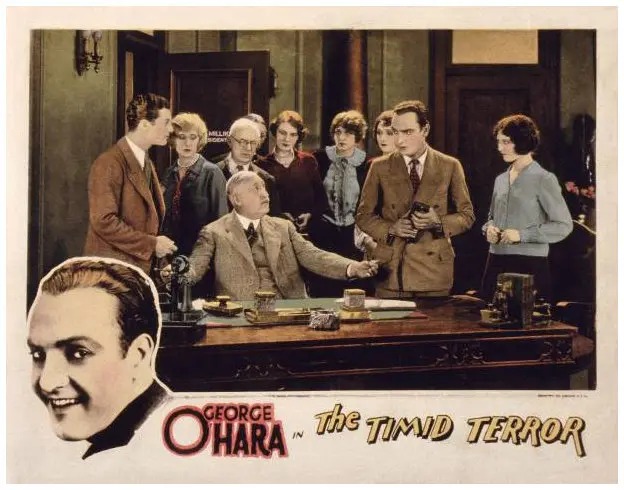
Is The Timid Terror a lost classic of the silent era? Short answer: yes, but only if you appreciate the specific, frantic energy of a man on the verge of a nervous breakdown.
This film is for anyone who has ever felt overlooked at work or felt the crushing weight of social status defined by the car they drive. It is absolutely not for those who demand logical character progression or a nuanced portrayal of gender roles in the workplace.
1) This film works because it transforms a mundane office rivalry into a high-octane physical confrontation that feels genuinely dangerous.
2) This film fails because the romantic subplot involving Dorothy Marvin is paper-thin and serves only as a finish-line ribbon for the protagonist.
3) You should watch it if you want to see how the 1920s obsessed over the 'go-getter' archetype and the cult of personality.
The Timid Terror is a fascinating study of Jazz Age materialism. Talbot Trent, played with a twitchy, relatable energy by George O'Hara, isn't just shy; he is economically paralyzed. In 1926, the 'roadster' was the ultimate signifier of virility and professional potential. Without one, Trent is invisible to Amos Milliken, the firm's president. Milliken is a classic silent-era archetype: the gruff, unyielding patriarch who values 'energy' above all else.
The film sets up a binary between Trent and Howard Cramm. Cramm is the prototypical office shark. He doesn't necessarily work harder, but he owns the roadster. He looks the part. The cinematography in these early office scenes uses tight framing to emphasize Trent’s claustrophobia. He is literally boxed in by his desk and his lack of assets. This reflects the themes we see in other films of the period, such as The Show-Off, where social performance outweighs actual merit.
The turning point involves a taxicab. It is a brilliant, almost cruel narrative choice. Trent wants a car to appear wealthy, but he is given a vehicle designed for labor. When he tries to use the taxi as a private roadster to impress Dorothy, the film highlights the rigid class boundaries of the era. Dorothy, played by Doris Hill, isn't impressed by the utility of the vehicle; she is embarrassed by its identity. It’s a brutal observation: in the 1920s, it wasn't enough to have wheels; you had to have the right kind of wheels.
This leads to the film's most effective sequence. After being fired for his supposed lack of initiative—a common trope also explored in The Pinch Hitter—Trent snaps. The 'Timid' part of the title is discarded. He decides that if Milliken wants energy, he will give him a kinetic nightmare. He forces Milliken into the taxi for a wild ride that is choreographed with terrifying precision. It’s not just slapstick; it’s a hostage situation played for laughs.
George O'Hara is the engine of this film. Unlike the more acrobatic stars of the era, O'Hara relies on a simmering internal frustration that eventually boils over. In the scene where he is fired, you can see the exact moment his spirit breaks and is replaced by a reckless defiance. It is a nuanced performance for a silent comedy. He transitions from a man who can barely make eye contact to a man who would drive a car off a cliff to prove a point.
The direction by Del Andrews (though uncredited in some circles, the fingerprints of the era's best gag-men are here) keeps the pacing brisk. The taxi ride is the standout. The camera placement on the running boards of the car gives the audience a visceral sense of speed. It avoids the static, staginess found in lesser films like Sold at Auction. Here, the movement is the message. The taxi is a wrecking ball aimed at the corporate hierarchy.
Yes, it is. While the resolution—where the boss rewards the man who just kidnapped and traumatized him—is absurd, it perfectly encapsulates the 'might makes right' philosophy of the early 20th-century American dream. It is a short, punchy, and occasionally mean-spirited comedy that offers a lot more than just pratfalls. It offers a look at the soul of a man tired of being small.
We have to talk about Dorothy. Doris Hill does what she can, but the character is a vacuum. She is disappointed when Trent is poor and delighted when he becomes an aggressive maniac. This isn't a criticism of Hill, but of the writing by Gerald C. Duffy and Walter A. Sinclair. In films like Camille, we see women with agency and tragedy. Here, Dorothy is just a trophy to be won by the man with the most 'energy.' It’s a flaw that dates the film significantly, yet it remains a fascinating look at what was considered a 'happy ending' in 1926.
Pros:
- Excellent physical comedy during the climax.
- Relatable themes of workplace frustration.
- George O'Hara's expressive, evolving performance.
- High production value for the driving sequences.
Cons:
- The plot relies on a very sudden character shift.
- The 'romance' feels like a business transaction.
- Amos Milliken is a one-dimensional caricature of a boss.
When compared to something like Molly Make-Believe, The Timid Terror feels much more grounded in the harsh reality of the urban workforce. It lacks the whimsy of Monty Works the Wires but makes up for it with a raw, desperate edge. It’s a film about the fear of being replaced and the lengths a man will go to to secure his place in the world. It’s a proto-action movie disguised as a comedy.
The film's title is an oxymoron that perfectly describes its protagonist. Trent is a terror only because he has been pushed to the brink. The movie suggests that the only way to succeed in a corporate world run by men like Milliken is to become a bit of a monster yourself. It’s a cynical message wrapped in a hilarious package. It works. But it’s flawed.
The Timid Terror is a must-watch for silent film buffs. It captures a specific moment in American history where the car was king and the office was a battlefield. While the gender politics are archaic, the depiction of 'imposter syndrome' and the desire to stick it to the boss remain timeless. It’s a wild ride that deserves a spot in the conversation about 1920s comedy.
IMDb 5
1935
Community
Log in to comment.