DbcultAccessing Vault...
3.1/10
Senior Film Conservator
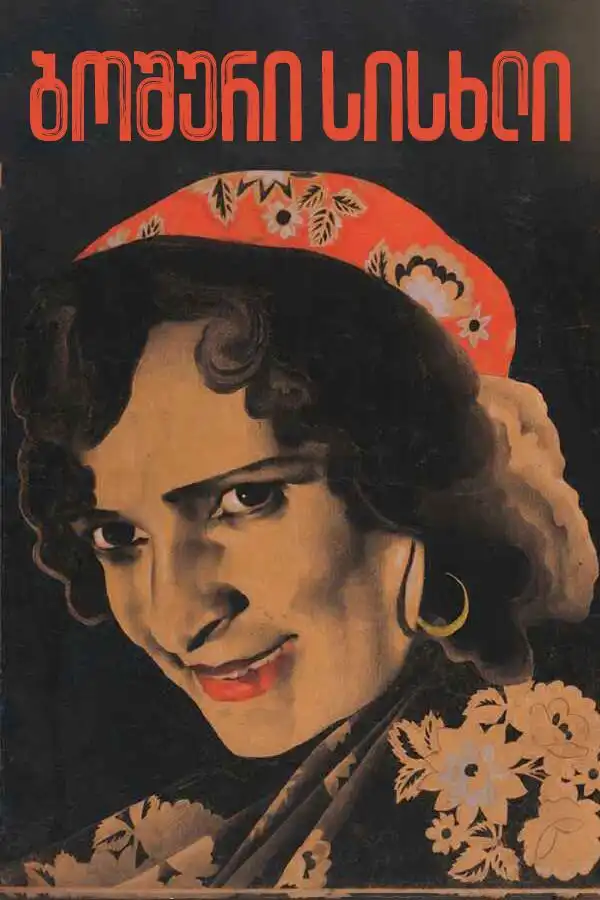
A definitive 3.1/10 rating for a film that redefined the boundaries of cult cinema. Boshuri siskhli remains a cornerstone of transgressive art.
If you are looking for a complex, subtext-heavy screenplay, Boshuri siskhli will likely leave you wanting. However, if you watch cinema to see how a camera can capture the texture of a landscape or the raw intensity of a human face, this 1928 silent film is essential viewing. It is a film for those who appreciate the evolution of cinematography—specifically the early work of Mikhail Kalatozov. Casual viewers might find the 'star-crossed lovers' plot repetitive, but the sheer kinetic energy on screen prevents it from feeling like a museum piece.
Before he became a global sensation with The Cranes Are Flying, Kalatozov was already experimenting with the aggressive, immersive camera work seen here. In Boshuri siskhli, the camera doesn't just observe the Romani camp; it feels embedded within it. There is a specific shot early on—a low-angle view of a wagon wheel churning through thick mud—that tells you more about the hardship of this nomadic life than five minutes of title cards ever could.
The lighting choices are equally bold. Many of the interior tent scenes are played out in deep shadow, with single light sources creating sharp, jagged silhouettes. It’s a stark contrast to the flat, even lighting found in many Western melodramas of the same era, such as That Royle Girl. Kalatozov uses the environment as a psychological tool; the vast, open fields of the Georgian landscape often feel more trapping than the cramped living quarters because there is nowhere for the lovers to hide from the eyes of their elders.
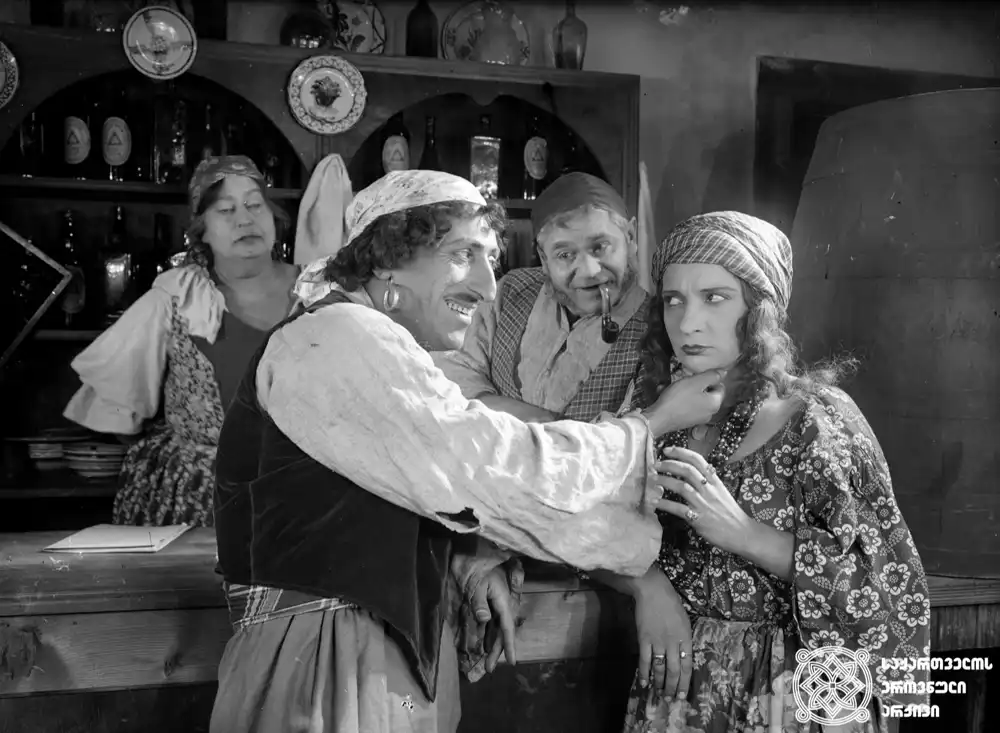
The acting in Boshuri siskhli avoids the worst excesses of silent-era pantomime. I. Zandukeli and Kote Mikaberidze carry the central romance with a heavy, grounded physicality. There is a scene near the middle of the film where the two meet near a riverbank; the tension isn't sold through wide-eyed gasps, but through the way they hold their breath and the stiff, nervous way they look toward the horizon, fearing discovery. It’s a remarkably modern approach to screen acting.
The supporting cast, particularly the tribal elders, are filmed to look like ancient statues. Their faces are maps of wrinkles and scowls, often captured in extreme close-ups that highlight the 'ethnographic' interest the Soviet studios had in Romani culture at the time. While this can occasionally feel like the film is gawking at its subjects, the intensity of the performances usually pulls it back into the realm of human drama.
The film’s greatest weakness is its middle act. After the initial conflict is established, the narrative loops through several scenes of secret meetings and near-misses that start to feel redundant. The editing rhythm, which is usually quite sharp, slows down significantly during a series of traditional dance sequences. While these are visually interesting and clearly meant to provide 'local color,' they go on for about three minutes too long, stalling the momentum of the impending tragedy.
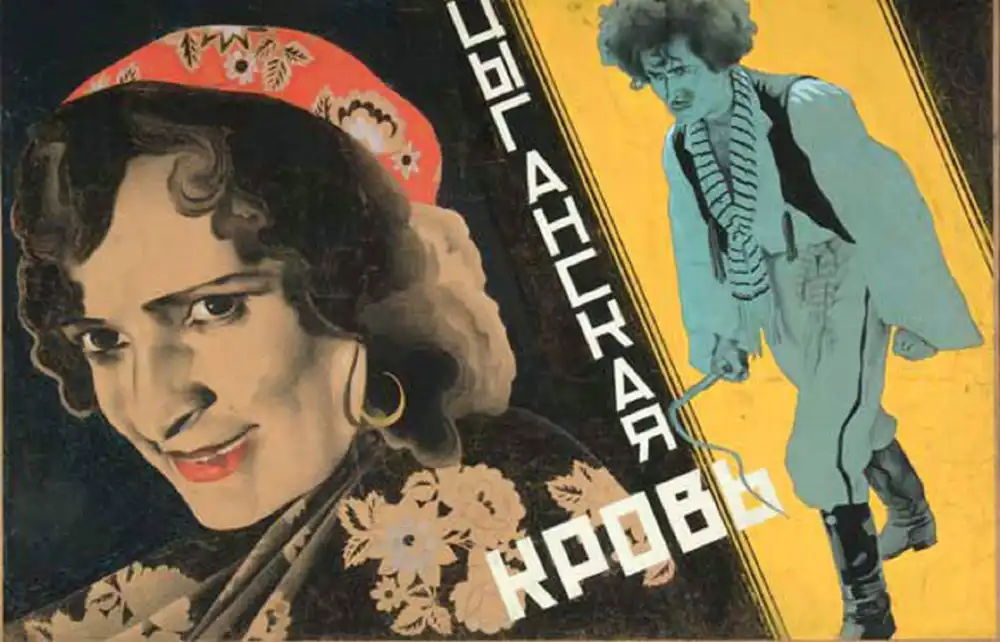
However, the film recovers beautifully in the final twenty minutes. The transition from a celebratory atmosphere to one of impending doom is handled with a series of quick cuts between the lovers and the darkening sky. Unlike the more staged historical dramas like Volzhskiye buntari, the violence here feels personal and messy rather than symbolic or political.
One detail that only becomes apparent during a focused viewing is the use of smoke and dust. Whether it’s the haze of a campfire or the dust kicked up by galloping horses, Kalatozov uses these elements to soften the edges of the frame, creating a dreamlike, almost suffocating atmosphere. It makes the world of the film feel lived-in and tactile. You can almost smell the woodsmoke and the damp earth.
Boshuri siskhli is a film that succeeds in spite of its thin script. It takes a story we have seen a thousand times and makes it feel dangerous again through pure visual bravado. It lacks the polish of later Soviet masterpieces, but it possesses a raw, unrefined energy that is hard to look away from. It’s a short, sharp shock of a movie that proves that even in 1928, the camera was already learning how to tell stories that words couldn't reach.
IMDb 6.9
1931
Community
Log in to comment.