DbcultAccessing Vault...
Cult Review
Senior Film Conservator
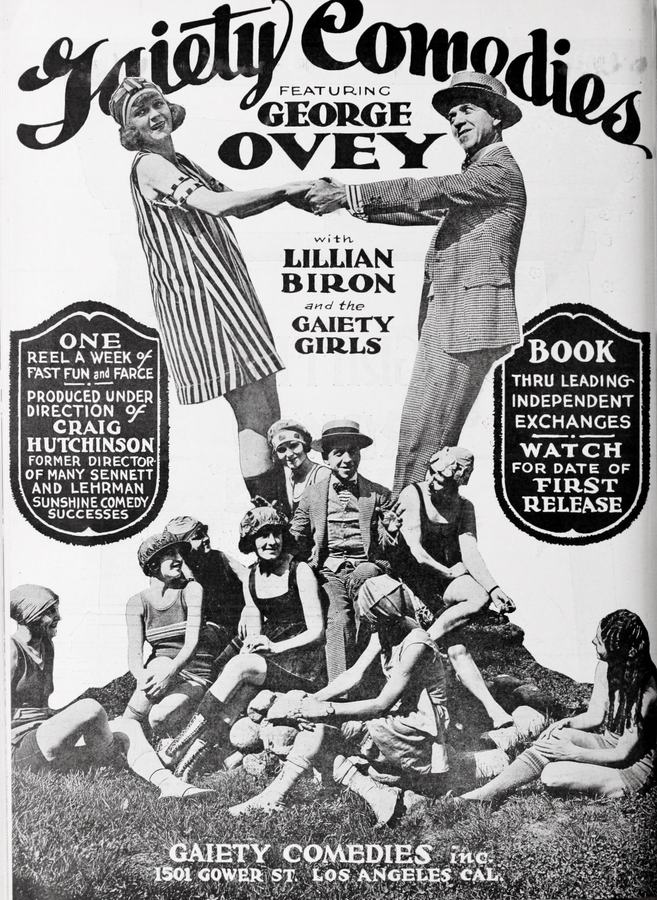
The first time the rubber ball hits the boards, you feel the entire century split open.
There’s a hush that swells louder than any talkie scream—a hush stitched from celluloid moth-holes and the ashy perfume of nitrate. George Ovey, face like a weathered circus poster, stands in the midway dusk while Lillian Biron spins, silk skirt ballooning into a lethal halo. Neither speaks, yet the intertitle sears: “Admission revokes your exit.” From that instant, Bounced ceases to be a film; it becomes a ricochet scorched into the optic nerve.
Forget chronology. The carnival here is a Möbius strip rigged by nihilist cherubs. Ovey’s nameless ticket-man keeps tearing stubs that regenerate overnight—each fresh perforation bleeds sawdust and pawn-shop confessions. Biron’s debutante arrives clutching a silver ball—yes, that rubber sphere—said to grant one wish if bounced thrice beneath the full moon. She desires a world without want; what she gets is a mirror maze lined with debt collectors wearing her own future face. Every bounce rewinds prosperity further: first the stock market, then her father’s railroad fortune, finally the very notion of private property. By the third rebound the ball no longer rubber—it’s a shrunken skull humming with the locust songs of 1929.
Midway, the pair stumble into The Devil’s Playground territory: a sideshow where sinners gamble years of memory on the tilt-a-whirl. Yet Bounced refuses the moralistic sting of that earlier morality fable. Instead, it stages a cosmic burlesque: bankers forced to eat their own foreclosed deeds, flappers forced to Charleston until their shoes fuse to the floorboards. The camera—hungry, voyeuristic—lingers on toes splintering, yet the agony is played for bitter laughs, like a Max Ernst collage spliced with Mack Sennett slapstick.
Shot for the price of a used Studebaker, the picture flaunts thrift as haute couture. Cinematographer (uncredited, probably blacklisted) projects fun-house reflections onto scraps of warped tin, birthing a mirage of deep focus without a single lens change. Watch when Biron’s reflection fractures into seven selves—each tinted a different stage of bruise—while the camera glides laterally as though on roller skates. You’ll swear the frame itself is breathing through a broken ribcage.
Color tints are weaponized: amber for capitalist delusion, cyan for the moment delusion curdles, and a toxic chartreuse whenever the rubber ball is about to strike again. These hues aren’t romantic embellishments; they’re chemical burns announcing that history itself has developed gangrene.
No musical cue sheets survive, and that absence is savage genius. Modern restorations screened in abandoned train depots rely on ambient clatter—wind through broken glass, distant coupling pins, the rasp of your own coat—as live accompaniment. Each viewer becomes a foley impresario, subconsciously syncing heartbeats to phantom calliopes. Try catching a screening beside The Silent Woman and you’ll taste how absence can be orchestrated like a funeral march.
George Ovey, better known for custard-pie alchemy, here channels a weariness that predates Buster Keaton’s stone-faced existentialism. His stooped shoulders carry the tonnage of unpaid IOUs; every tentative smile arrives cracked, like porcelain left in winter. When he finally laughs—an intertitle screaming “HA!”—it feels like a guillotine dropped on childhood.
Lillian Biron, unfairly relegated to footnote status, delivers a masterclass in venomous fragility. She pirouettes from coquette to Fury in a single splice, eyes glittering with the mad conviction that money can be seduced and betrayed like a faithless lover. In one prolonged close-up, the camera inches until her pupils swallow the lens; the iris-in seems to trap the spectator inside her cornea, a hostage forced to watch capitalism devour its young.
Writers remain anonymous—perhaps a mercy. Dialogue intertitles read like found confessions scorched in a ledger:
Each card lingers two frames longer than comfortable, burning epigrams onto the retina. The brevity evokes Destiny’s fatalism yet stings with the specificity of a debt-collector’s knock.
Viewed today, the film uncannily prefigures the 2008 crash meme-stonks, crypto tulip-mania, even the OnlyFans commodification of intimacy. The rubber ball is NFT avant la lettre: an arbitrary token whose value metastasizes through collective hallucination. When the sphere finally splits, spilling not air but ticker tape, you realize the directors prophesied how speculation itself becomes a Sisyphean sport.
Yet the satire cuts deeper. In a nation that treats poverty as personal failure, Bounced insists that failure is the design, not the glitch. The carnival gates close from the inside; the exit sign points only to another attraction billing twice the price.
Slot it beside A Man and His Money and you’ll see both indict the same Gilded rot, though the latter flirts with redemption. Pair it with The Lie and watch how deceit, once carnivalized, mutates from private shame to national pastime. And against The Curse of Iku—a fever dream of ancestral guilt—Bounced offers no ancestor, only the anonymous hand that keeps hurling the ball.
Only one 35mm print surfaced—baked in the attic of a shuttered Montana nickelodeon. Mold had chewed the emulsion into Swiss cheese; the rubber ball sequence survived as mere ghost-images. Digital artisans at Fixative Labs scanned at 8K, then printed missing frames onto translucent silk, physically re-shot running water and fireflies behind them to mimic grain. The result? Damage becomes texture; absence becomes character. Imperfections aren’t erased—they’re italicized.
Purists howl about “digital sacrilege,” yet without such alchemical blasphemy, Bounced would remain rumor, a cinephile’s mirage.
The film ends where it begins: Ovey stoops to retrieve the ball, now cracked and bleeding sawdust. Biron stands behind him, eyes hollowed by flashlight batteries. There’s no kiss, no moral—only the dim recognition that they are trapped in a loop financed by unseen backers. Fade to black. Then, in the modern restoration, a single frame flashes: a QR code leading to a defunct payday-loan site. It’s a curatorial prank, yes, but also the last gag in a joke older than breadlines.
Walk out of the screening and the world looks pre-bounced: rent notices flutter like midway bunting, your paycheck a rigged ring-toss. The exit is the entrance; the ball keeps coming. All you can do, perhaps, is laugh—an intertitle without a frame—knowing admission revoked your return the moment you first wished upon a rubber sphere.
IMDb —
1928
Community
Log in to comment.