DbcultAccessing Vault...
Cult Review
Senior Film Conservator
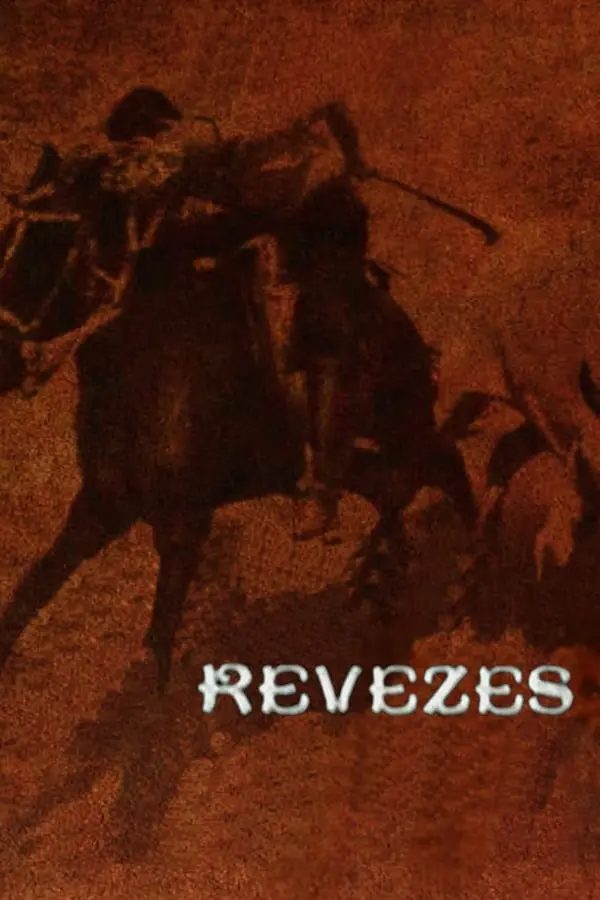
Is Revezes worth your time today? Short answer: Only if you are a dedicated student of cinematic history or a glutton for atmospheric, slow-burn tragedy. This is not a film for the casual weekend viewer seeking escapism; it is a demanding, often fragmented experience that requires the viewer to do the heavy lifting of emotional assembly.
This film is for the archival enthusiast and the lover of world cinema roots. It is definitively NOT for anyone who lacks the patience for silent-era pacing or those who require a clear, linear resolution to every plot point.
1) This film works because it captures a specific, unvarnished sense of place that studio-bound films of the era could never replicate.
2) This film fails because its narrative cohesion is frequently undermined by technical limitations and a lack of rhythmic editing.
3) You should watch it if you want to understand the DNA of Brazilian realism before it became a global movement.
Revezes does not ask for your sympathy. It demands your endurance. From the opening frames, the direction by Chagas de Oliveira establishes a world where the sun seems to burn through the celluloid itself. Unlike the more staged, theatrical environments seen in American films of the same period, such as A Kentucky Cinderella, Revezes feels dangerously close to the earth. The dust on the actors' clothes isn't a costume department choice; it’s a character in its own right.
The performance by Domingos Gusmão is particularly striking. While many silent actors relied on wild gesticulation to convey inner turmoil, Gusmão remains remarkably still. His face is a map of the Brazilian interior—weathered, stoic, and occasionally erupting into a terrifying intensity. In one specific scene, where Gusmão’s character realizes the depth of a betrayal, the camera lingers on his eyes for what feels like an eternity. It is uncomfortable. It is raw. It is exactly what modern cinema often lacks.
We have to talk about the technicalities. By 1927, cinema was reaching a peak of visual sophistication in Europe and the US. Compare the raw, almost primitive framing of Revezes to the stylized, high-contrast work in La p'tite Lili. Where the latter uses the camera to create a dream-like state, Revezes uses it like a blunt instrument. There are moments where the focus pulls are soft and the framing feels accidental.
However, this lack of polish is precisely where the film finds its power. There is a sequence involving a confrontation between Anísio Moreira and Antonio Marrocos that feels genuinely dangerous. The lack of sophisticated cross-cutting makes the physical proximity of the actors feel more threatening. You aren't watching a choreographed fight; you are watching men struggle in the dirt. It’s ugly. It’s real. It works.
If you are looking for a story that moves with the efficiency of a modern thriller, look elsewhere. If you are looking for the roots of a national identity, Revezes is essential. It represents a moment in time when Brazilian filmmakers were trying to find a voice that wasn't just an echo of Lisbon or Paris. It is a stubborn film. It refuses to be charming.
When you compare it to the propagandistic weight of a film like Bismarck, Revezes feels refreshingly devoid of a grand agenda. It isn't trying to build a nation; it’s trying to survive a day. That smallness of scope is its greatest asset. It doesn't care about the world outside the sertão. For 1927, that kind of hyper-local focus was radical.
Pros:
- Exceptional lead performance by Domingos Gusmão.
- A rare look at 1920s Brazilian rural life.
- Avoids the over-the-top theatricality of many silent dramas.
- The ending packs a surprisingly modern emotional punch.
Cons:
- Surviving prints are often in poor condition, making some scenes hard to parse.
- The pacing is glacial by contemporary standards.
- Secondary characters are not as well-developed as the leads.
There is a debatable quality to how Revezes portrays the working class. Some might argue it borders on the exploitative, turning hardship into a spectacle. I disagree. I think Chagas de Oliveira was documenting a reality that he knew would soon be paved over by the march of progress. There is a scene where the men are working the land that feels like it belongs in a documentary. The sweat is real. The exhaustion is real. It makes the escapism of something like Jungle Woman look like a toy in comparison.
The film’s biggest setback—pun intended—is its reliance on title cards that sometimes explain things the actors have already clearly emoted. It’s a common flaw of the era, but here it feels particularly intrusive because the visual language is so grounded. We don't need a card to tell us the protagonist is heartbroken when we can see the slump of his shoulders against the horizon.
Revezes is a difficult, beautiful, and ultimately rewarding piece of cinema for those with the stomach for it. It isn't a 'masterpiece' in the traditional, polished sense of the word. It is a jagged rock of a movie. It is flawed. It is occasionally boring. But it is also undeniably honest. In a world of digital perfection, there is something deeply moving about watching a film that is as scarred and dusty as the people it depicts. It is a vital link in the chain of Brazilian art, and for that alone, it deserves to be remembered, if not necessarily loved by everyone.

IMDb —
1923
Community
Log in to comment.