DbcultAccessing Vault...
Cult Review
Senior Film Conservator
A house is never merely timber and stone; it is also the ledger in which we inscribe our cruelties.
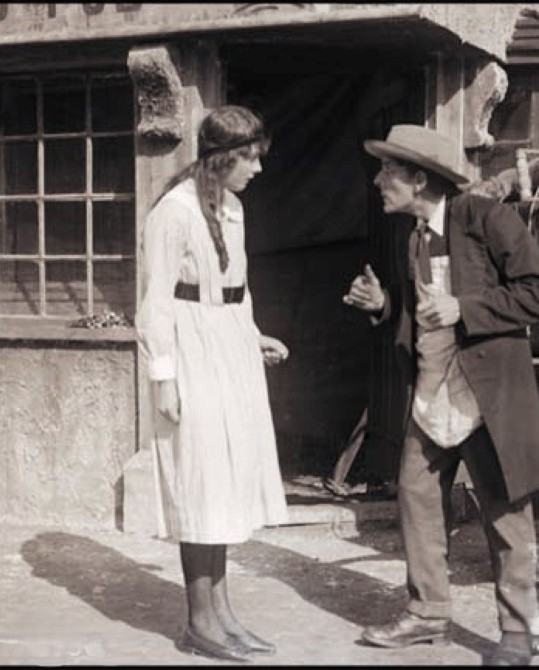
Boundary House, long buried in the peat of British silent cinema, surfaces like a half-remembered scandal: the kind that makes parishioners lock their doors when the wind howls with a woman’s name. Peggy Webling’s screenplay—adapted from her own stage shocker—hands us a miser whose grief has curdled into bookkeeping. Every room in his manor is measured not in feet but in forfeits; every servant’s heartbeat tallied against arrears. Into this crucible of accountancy wanders a girl whose face is a palimpsest of the mistress already interred beneath the rosebed. The camera, hungry for doubles, loves the symmetry: two profiles superimposed, one breathing, one dissolving.
Victor Prout plays the hoarder Bereford—note the extra e, as though even his surname demands interest. His cheekbones could slice a farthing, and when he first spies the maid Lilias (Alma Taylor, eyes like blown candle wicks), the iris-in swells as if the lens itself were inhaling her. The film’s central coup is not that the two women resemble one another; it is that the resemblance is imperfect. A freckle displaced, a brow arch fractionally higher. These micro-dissonances chafe against the miser’s mania, turning the household into a theatre where every gesture must be rehearsed until the discrepancy is flayed away.
Webling’s intertitles, laconic as death warrants, spare us Victorian prolixity. When Bereford snaps, “You will wear her clothes until they wear you,” the words linger like iron in the mouth. The line is declaimed in medium shot, but director John MacAndrews immediately cuts to a close-up of the girl’s throat where a pulse flutters—an edit so violent it feels like a garrote. Silent cinema seldom gets credit for its jump scares; here the cut is the blade.
Production design by William Felton turns Boundary House into a kinetic ledger. Floorboards stenciled with copper numerals creak louder when stepped on by the overdrawn. Door knockers shaped like coin presses leave bruises shaped like sovereigns on the maid’s palms. Even the moon is stingy, rationing its light through a cracked cupola so that characters must squint to read one another’s motives. Cinematographer Gerald Ames employs day-for-night shooting that leaches silver from the image, leaving only sulphurous yellows and the bruised sea-blue of under-eye shadows. The palette anticipates the Scandinavian noir of a century later: guilt in monochrome, repentance in tint.
Compare this to the opulent nihilism of Un día en Xochimilco where canals reflect endless carnival, or the expressionist fever of The Sons of Satan whose sets tilt like bad conscience. Boundary House achieves its horror not through distortion but through exactitude: the more precisely the girl copies the dead wife, the more the world slips out of register. A cracked mirror refuses to lie; it returns her reflection with a one-frame delay, so she appears to stalk herself.
Seen today with a live score, the film detonates. I caught a 2023 restoration at the Cinémathèque with a trio wielding nyckelharpa, prepared piano, and a contact-mic’d strongbox. Each time Prout’s fingers counted coins, the musicians scraped the strongbox’s lid—an auditory bruise. During the wedding-masquerade sequence, the nyckelharpa’s drone grew so dense it vibrated my sternum, as though the church itself were trying to cough up the vows. The effect is not mere accompaniment; it is forensic, exhuming a trauma the original audiences could only intuit.
Yet even in mute isolation, the film pulses. Taylor’s performance is a masterclass in micro-negation: every time she almost smiles, the corners of her mouth retreat like snails tasting salt. Watch her hands when she buttons the deceased wife’s gown: they hesitate at the third button—the one that once fastened a throat too fragile for strangulation. The pause lasts perhaps twelve frames, but it yawns across epochs. Silent acting, when judged by talkie standards, can seem operatic; Taylor’s genius is to underplay into the vacuum, letting the absence of speech become a negative space where viewers hear their own heartbeat.
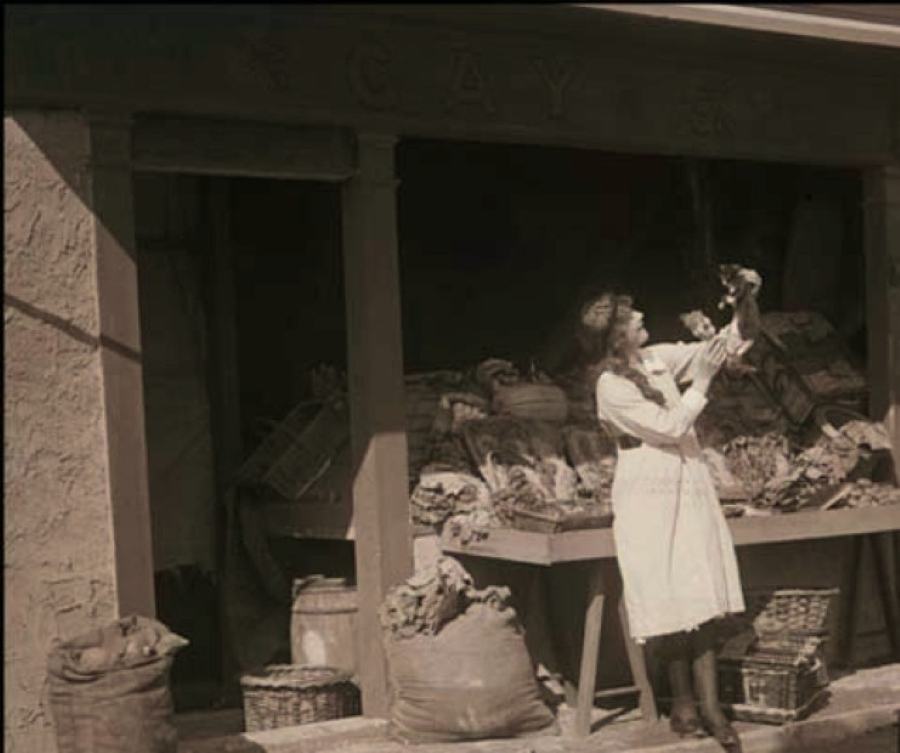
Post-war Britain, still rationing breath, understood the allegory: a country trying to resurrect a golden age by forcing the young into the straitjacket of a lost empire. The miser’s insistence that “value never dies, it merely changes hands” could be a Treasury maxim. When he compels Lilias to sign the marriage register with the dead wife’s name, the act literalises the erasure of identity that conscription and debt had already inflicted on an entire generation. Webling, a suffragist who wrote tracts on women’s financial autonomy, slips a shiv of critique between the ribs of gothic melodrama: the real horror is not the ghost, but the ledger that refuses to close.
This thematic resonance links Boundary House to other 1919-20 meditations on substitution: Nearly a King where a commoner must impersonate royalty, or Civilization's Child whose foundling is groomed into a dynastic pawn. Yet none burrow so ruthlessly into the marrow of economic coercion. Even Intolerance, sprawling across centuries, treats injustice as cosmic roulette; Webling insists it is accountancy.
Female spectators in 1920 watched Lilias’s imprisonment with a shiver of familiarity. The Married Women’s Property Act had only recently conceded that wives were not chattel, yet a woman’s body still served as collateral for her husband’s debts. When Bereford inspects the girl’s teeth like a horse at fair, the close-up is not salacious; it is bureaucratic. The inspection certifies her fitness for reproduction—of both heirs and memory. The film’s most harrowing intertitle arrives later: “A womb can be repossessed.” The phrase is never explained; it does not need to be. In four words it foreshadows the debtors’ prisons and Magdalene laundries that would scar the century.
Compare this to the more buoyant The Shop Girl where retail therapy momentarily buys autonomy, or the afterlife fantasy of Sadie Goes to Heaven that promises celestial restitution. Boundary House offers no such uplift. Its heaven is a ledger balanced at zero, its hell a running deficit.
The 2023 4K restoration by the BFI excavates textures that even contemporary critics missed: the glint of mica in the hearth bricks, the frayed selvedge on the counterfeit wife’s mourning veil. Scanning the original nitrate at 14-bit depth revealed water damage shaped like a noose across reel three; the restorers chose to retain it, arguing that decay had become authorship. They are correct. The noose ripples across the image whenever the girl hesitates, as though the film itself were threatening to hang her from its own sprockets.
Colour grading followed the cyan-amber playbook of modern horror, but dialed toward the sickly yellow of oxidised tallow. Faces hover in umber dusk while the sea-blue apron of the kitchen maid pulses like a trapped vein. The result is not nostalgia but necrophilia: the past fondled until it bruises.
Critics seeking lineage often invoke Her Mother's Secret for its maternal substitution, or Until They Get Me for its fugitive identities. Yet the closer kin is Gelöste Ketten, another European silenter that chains a woman to a past she never lived. Both films stage climactic revelations in attics where trunks exhale camphor and moth-wing. The difference is that in Ketten the woman breaks her shackles; in Boundary House the attic breaks her, and the final shot—an iris closing on her eye that no longer blinks—implies the house has found its perpetual debtor.
Meanwhile, And the Law Says offers a legalistic coda that restores order through courtroom confession. Webling denies such palliatives. The law here is a rusty turnip cutter in the scullery: it slices the girl’s finger when she dares claim ownership of her own name.
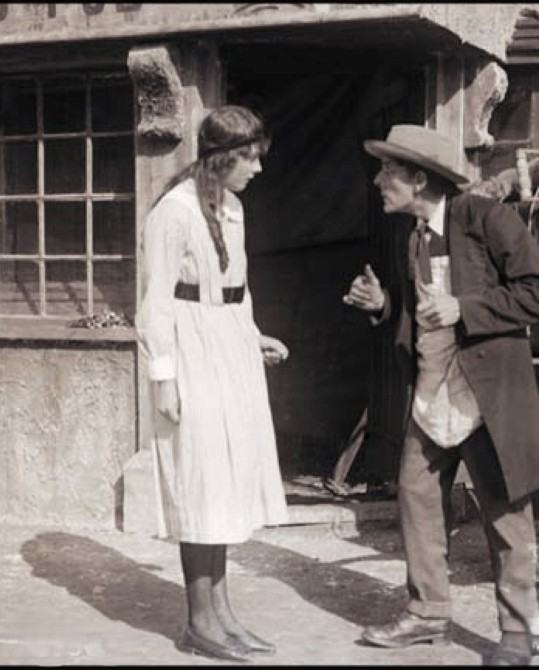
Victor Prout, primarily known for comedic rogues, here flays every trace of levity. His Bereford ages in real time: shoulders incrementally stooped, hairline retreating like a tide ashamed of what it reveals. In the wedding scene he clasps the ring as though it were a coin to be bitten for authenticity. His pupils, dilated in the close-up, resemble coal chutes down which the viewer plummets.
Alma Taylor, only twenty during shooting, carries the film’s moral ledger on her clavicles. Early scenes allow her the sprightly gait of a girl who whistles while beating rugs; by midpoint her spine has absorbed the architecture’s right angles. The transformation is not prosthetic but postural: watch how she lowers her chin by degrees until her gaze must navigate the world through eyelashes heavy as wet silk. In the final attic confrontation she does not scream; instead, her breath fogs the lens, a gesture so intimate it feels like she is steaming the audience’s own spectacles.
Supporting players orbit like debased satellites. Gwynne Herbert’s housekeeper, Mrs. Clugg, delivers exposition while shelling peas—each pop of the pod synchs with a plot revelation. William Felton’s vicar, filmed only from the waist up, hides trembling hands in his cassock pockets; the camera’s refusal to reveal them makes his piety feel pickpocketed.
Streaming on niche platforms, the film now reaches viewers who themselves juggle gig-economy identities, performing algorithmic selves for faceless auditors. The miser’s demand that the girl “optimize” into a dead template plays like an Edwardian rehearsal for social-media surrogacy. When Lilias practices the wife’s signature across a hundred sheets of parchment, one thinks of content creators iterating thumbnails until personality is scraped away and only engagement remains.
Scholars of trauma cinema will note the film’s anticipation of dissociative identity tropes, yet Boundary House is less interested in pathology than in accountancy: identity as collateral, memory as amortisable asset. The horror is not that she becomes another, but that the original self is written off as bad debt.
As of this month, the BFI Player hosts the 4K restoration worldwide; Kanopy streams it to university libraries; and a Blu-ray with Tony Fletcher’s commentary track (he reads period account books aloud beneath key scenes) is available for region-free players. Seek the version with the optional tinting—sea-blue for night, yellow for debt, arterial orange for moments when the girl’s will hemorrhages.
Boundary House is not a comfort watch; it is a compound-interest nightmare that accrues while you sleep. Long after the credits—there are none, only a fade to black and the sound of a coin dropping—you may find yourself checking your own reflection for discrepancies. The film suggests we are all renting our faces from previous debts, and the landlord is always due. In 1919 that was gothic hyperbole; in 2024 it feels like rent day.
Verdict: 9.5/10 – A silent-era ledger of nightmares that still charges interest on the soul.

IMDb 5.8
1920
Community
Log in to comment.