DbcultAccessing Vault...
Cult Review
Senior Film Conservator
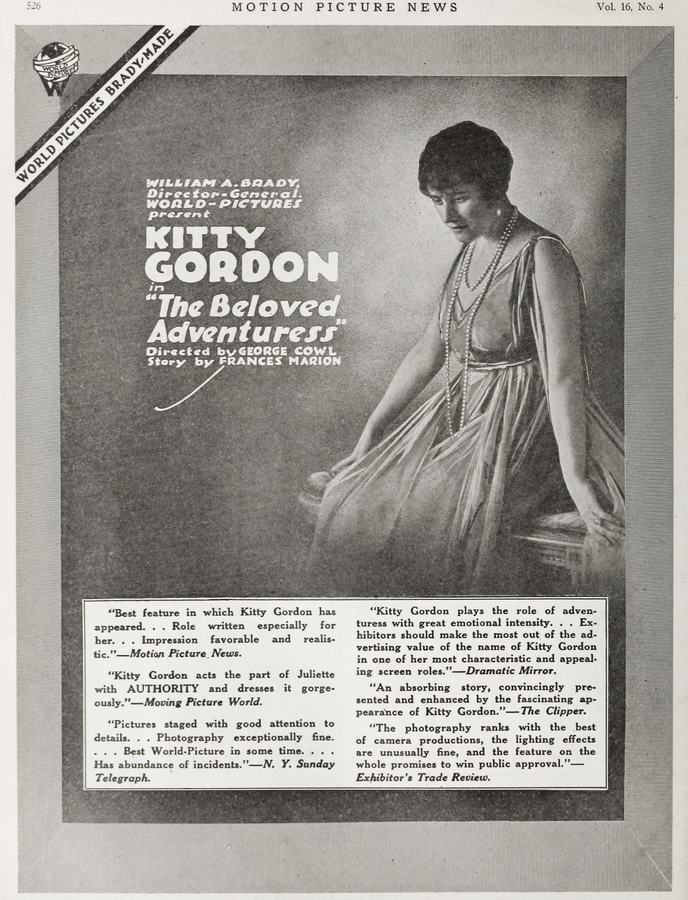
The glare of the marquee, the hush of the orchestra pit, the crackle of nitrate—Beloved Adventuress arrives like a champagne bottle hurled against a cathedral door, effervescent and sacrilegious in equal measure.
Frances Marion’s scenario, tailored for Kitty Gordon’s swan-necked opulence, is less a linear narrative than a fever chart of desire’s contagion. Watch how the film’s palette—amber lamplight, bruised cobalt shadows—bleeds across each intertitle, turning every card into a bruised love letter. The camera, tethered to early-1917 orthodoxy, nonetheless glides when least expected, sneaking up stairwells, peering through transoms, as though the apparatus itself were complicit in the scandal.
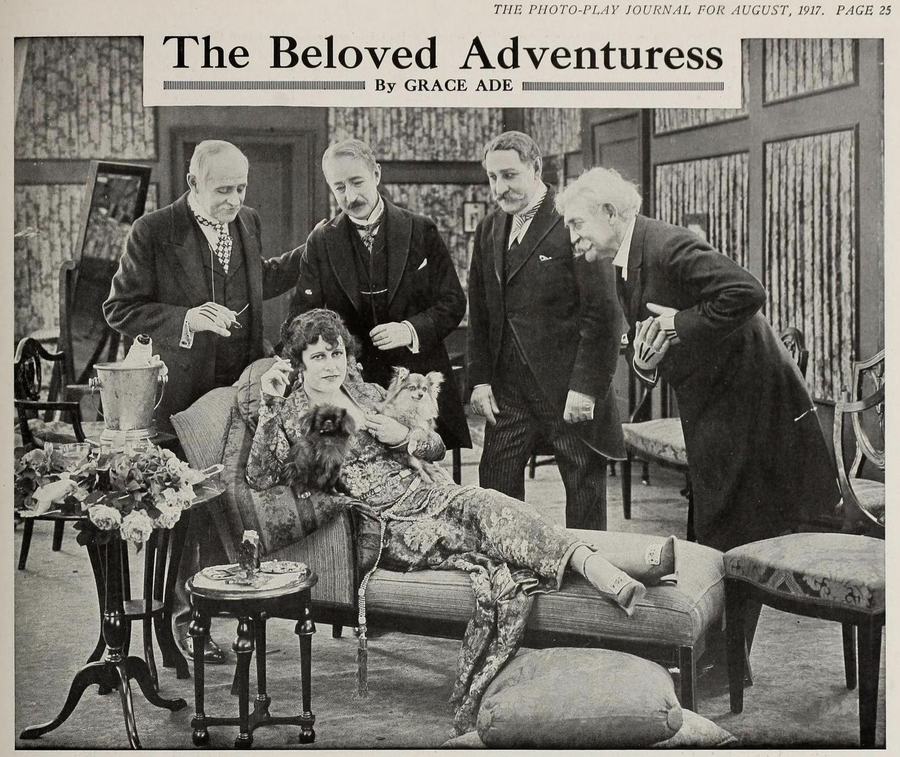
At the epicenter stands Juliette, a woman whose stardom is measured not in curtain calls but in the quantity of diamonds tossed nightly at her feet. Gordon plays her like a serpent that has memorized the Stations of the Cross—every sinuous sway of hip counter-weighted by the mortification in her gaze. Notice the sequence where she discards Grant’s solitaire ring: the stone skitters across parquet, the camera tilts down to follow its trajectory, a visual shrug at the bankruptcy of gemstones to purchase autonomy.
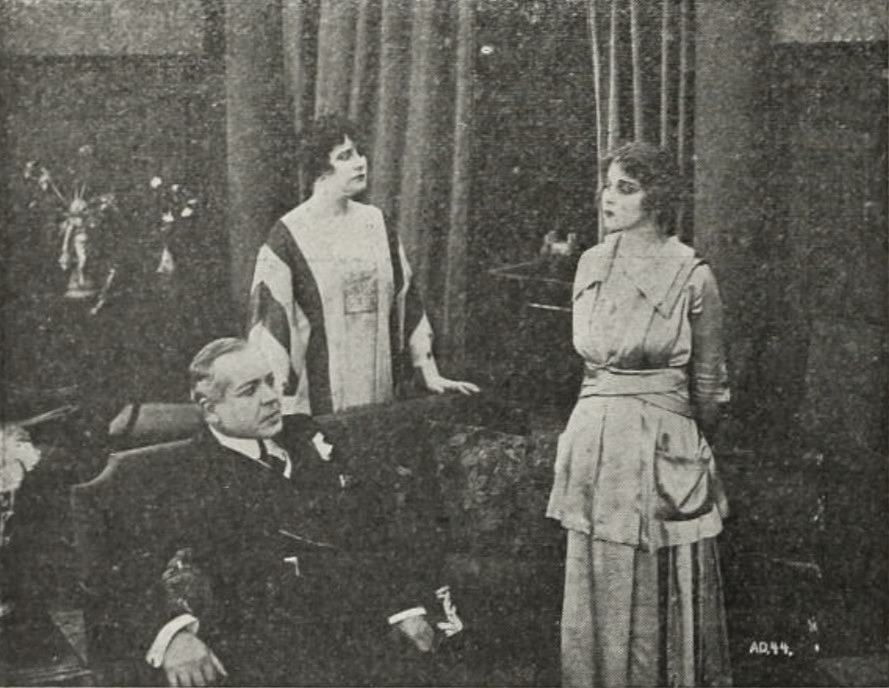
Across the moral divide, Martha—Grant’s abandoned spouse—teaches embroidery to convent girls while stitching her own shroud of resentment. Marion refuses to caricature piety; instead Martha’s religiosity is rendered as a scar tissue, numb yet perennially throbbing. When she ultimately forgives Juliette in a cratered French field, the moment lands with the irrational grace of a Gregorian chant echoing inside a munitions plant.
Morgan Grant, essayed by Frederick Truesdell, is the idle empire of entitlement in a silk lapel flower. His seduction technique hinges on the presumption that every woman yearns to be collateral damage. The performance is calibrated to a minor key—languid glances, half-smiles that never quite crest into full beam—until the final reel, when fear pools in his eyes like ink in water. His deathbed scribble, “I was tired of the performance,” reads as both mea culpa and critique of the film’s own melodramatic armature.
Philip Stewart, the West-Point Apollo, could have strolled straight out of a recruitment poster, yet William Sherwood lets a tremor of insecurity leak through the brass. His heartbreak is less the sting of rejection than the vertigo of discovering that chivalry’s armor is obsolete currency in the new sexual economy.
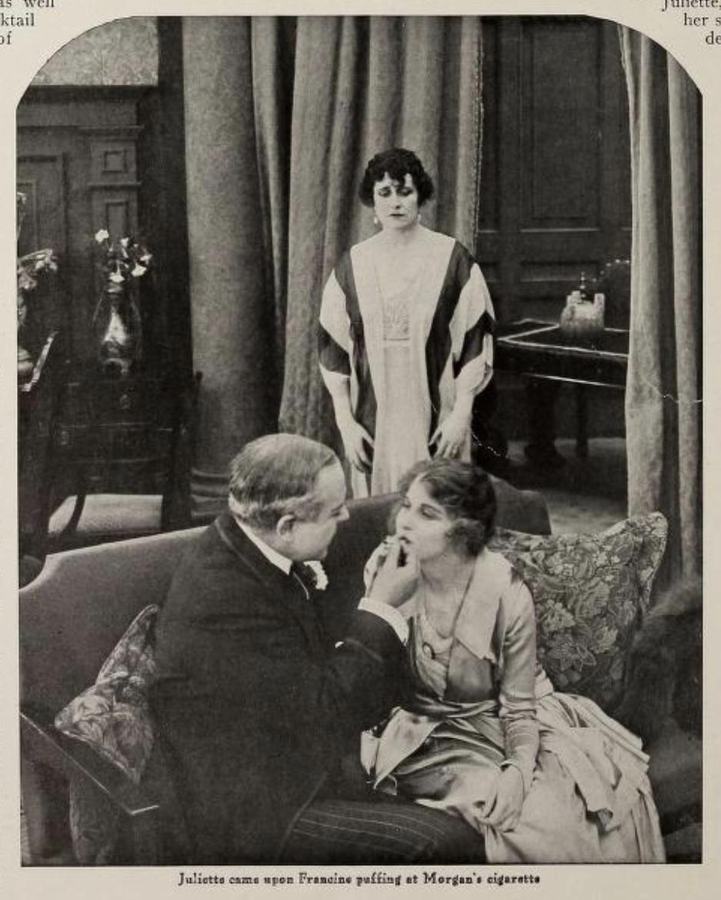
Enter Francine—Madge Evans in her first substantial role—an ingenue whose eyes widen not at stained glass but at the refracted glow of a gin fizz. The film’s most sly commentary resides here: the corruption narrative typically reserved for the fallen woman is rerouted through the pristine vessel. One frame shows her stubbing out a cigarette in a sacramental chalice-shaped ashtray—an image so blasphemously succulent it could headline a surrealist manifesto.
Notice the montage of her education: a swirl of jazz clubs, backseat trysts, and Amy Barker’s American-girl slang, all scored by a foxtrot that accelerates into near-cacophony. The speed of the cuts—radical for 1917—mirrors her metabolic shift from innocence to appetite.
Cinematographer Robert Paton Gibbs treats light like a bribe he refuses to accept. Interiors of Juliette’s penthouse glisten with tungsten burnish, but each source is half-shuttered, so faces emerge from chiaroscuro as though carved by doubt. The convent cells, by contrast, are flooded with even, pitiless daylight—truth without mercy. When Juliette locks Francine in her bedroom, the key grates, and the hallway bulb flickers once, a Morse code of dread.
The pistol crack arrives at reel five, yet the film has prepared us with auditory negative-space: the orchestra drops to a single sustained violin note, the projector’s chatter suddenly audible, as though the medium itself were gasping. Juliette’s recoil is not horror but resignation—the look of a woman who realizes she has shot the last exit sign in a burning theatre.
Grant’s blood, a syrupy concoction courtesy of early Technicolor tests, seeps across white damask in a blooming Rorschach. The image is withheld from us for a full three seconds—Marion cuts instead to Juliette’s trembling gloved hand, allowing our imagination to pigment the scene more vividly than any dye could achieve.
The coda—Juliette as Red Cross nurse—risks plummet into patriotic kitsch, yet Marion salvages it through asymmetrical sacrifice. The battlefield infirmary is a cathedral of gauze and ether; stretchers form pews. When Juliette drags Martha from the shell-blasted tent, she is already hemorrhaging—her life for the life she once fractured. The forgiveness exchanged is wordless, registered only by the pressure of palm against palm, a tactile covenant more binding than matrimony.
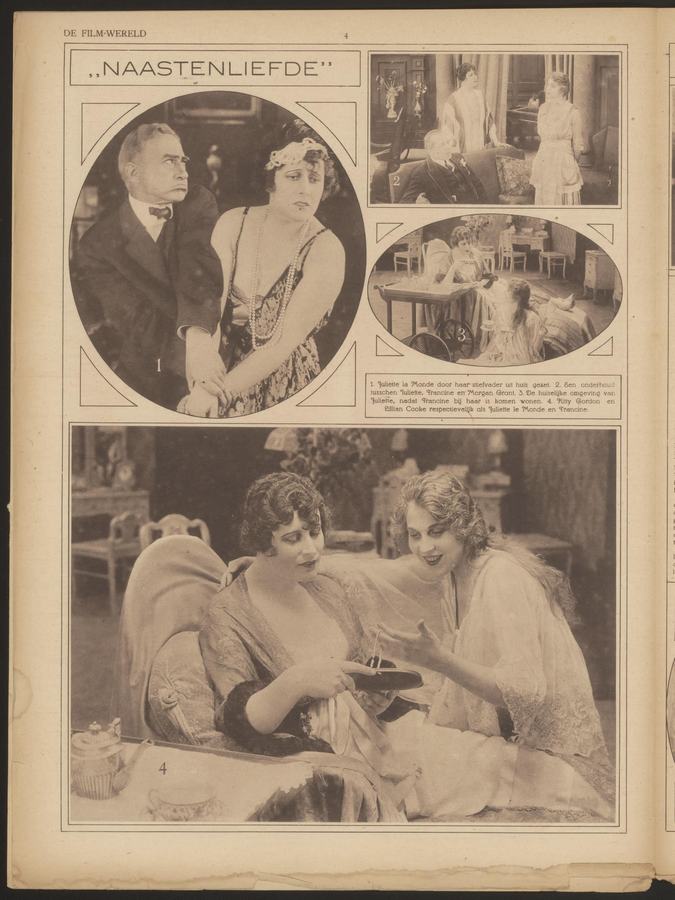
Against The Lily and the Rose—another Gordon vehicle—Adventuress wields a far scalpel where the former employs sentimental balm. Contrast also with The Return of Helen Redmond, whose fallen woman must expire for the crime of appetite; Juliette’s death is not punishment but elective ransom, a nuance that tilts the film toward modernity.
If The Rack interrogates masculine honor through torture, and Il sogno di Don Chisciotte filters quixotic folly through expressionist dream, then Adventuress occupies a liminal corridor: too worldly for hagiography, too mystical for cynicism.
Modern viewers may flinch at certain histrionics—hands clasped to forehead in Victorian anguish—yet closer inspection reveals micro-gestures that anticipate Method minimalism. Note Gordon’s left eyebrow, which rises a millimeter when Juliette discovers Francine in Grant’s embrace; the motion is almost subliminal, a semaphore of betrayal too swift for the stage but perfectly calibrated for the intimate gaze of the lens.
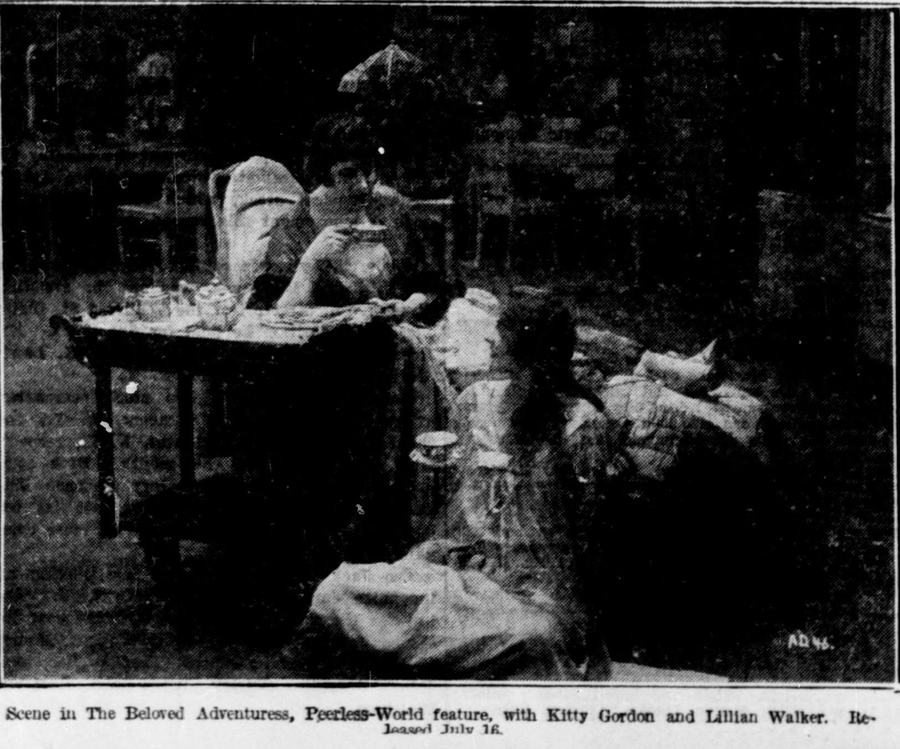
Contemporary screenings often overlay a generic rag medley, yet the original 1917 première featured a bespoke score that veered from Massenet to tango, punctuated by on-stage sound effects—typewriter clacks during letter-writing scenes, distant artillery loops in the war coda. Archive evidence suggests the conductor cued a single bass drum thump at the fatal gunshot, a gesture so ahead of its time that it feels like an Eisensteinian anachronism.
Juliette’s livelihood depends on male patronage—boxes of orchids, pearl necklaces couriered after matinees—yet the film insists her economic entanglement is not moral verdict. When she finally sends Grant away, she retains the apartment, the furs, the Victrola; the narrative refuses the trope of the courtesan stripped to sackcloth. In this quiet rebellion lies a proto-feminist sting: redemption sans penury.
Regional censors excised approximately 412 ft.—the linger of Juliette’s handgun on the divan, the lingering kiss between Grant and Francine. Most prints circulating today are composites, yet the Library of Congress restoration (2019) reinstates the cigarette-in-chalice frame, a victory for forensic film historians. Seek it; the chromatic tremor of that single shot justifies the price of archival Blu-ray alone.
Trace the lineage: Cukor’s Camille, Ophuls’s Letter from an Unknown Woman, even the toxic triangulations of Fatal Attraction owe a splice of their DNA to Marion’s scenario. The notion that a woman might both love and obliterate her oppressor, then seek atonement beyond the convent or the grave, reverberates through a century of soap-opera tropes yet never with this cocktail of glitter and gall.
So, should you watch Beloved Adventuress? If you crave the comfort of retrograde mores safely quarantined behind museum glass, skip it. But if you desire an artifact that still hisses with erotic static, that asks whether desire can ever be disentangled from power, queue the stream. Let Kitty Gordon’s mascara-streaked visage loom over you at 2 a.m., flickering like a cautionary beacon, and admit that the past, like Grant’s cigarette, burns slow—and leaves holes no censorship can patch.
IMDb 3.8
1911
Community
Log in to comment.