DbcultAccessing Vault...
Cult Review
Senior Film Conservator
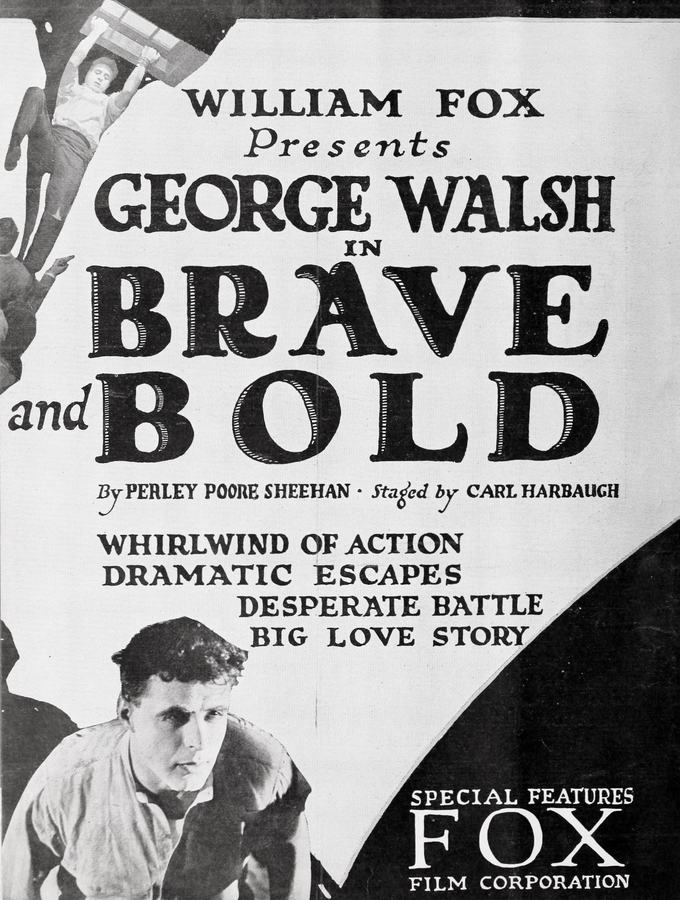
Step back in time to an era when cinema was still finding its voice, yet already masterfully crafting narratives of pulse-pounding adventure and heartfelt romance. The year is 1918, a period etched with the gravitas of global conflict and burgeoning industrial might, a backdrop against which the silent film 'Brave and Bold' unfurls its captivating tapestry. This isn't just a historical curiosity; it's a vibrant testament to the storytelling prowess of early filmmakers, a dynamic spectacle that, even today, resonates with an undeniable charm and a potent sense of derring-do. For those who believe the golden age of action began decades later, prepare for a delightful re-education. This film, though perhaps overshadowed by more famous contemporaries, delivers a concentrated dose of suspense, villainy, and heroic triumph that feels remarkably fresh.
Imagine a world where fortunes are forged in the crucible of steel and diplomacy, where a single contract could shift the tides of industry and influence international relations. This is the stage upon which Robert Booth, portrayed with an implied vigor by Frank Conlan, makes his grand entrance. Booth is no mere businessman; he's a man of destiny, embarking on a high-stakes journey to Pittsburgh. His mission is twofold, intertwining the personal with the geopolitical: to secure a colossal million-dollar war contract with a foreign prince, a deal of immense strategic importance, and, simultaneously, to formalize his engagement to the enchanting Ruth Hunneywell, likely brought to life with grace by Ninon Bunyea. The very premise sets a tone of elevated stakes, promising a narrative rich with both commercial cunning and romantic devotion. It’s a classic setup that immediately draws the audience into Booth’s ambitious world, painting him as a figure both driven by material success and anchored by genuine affection.
However, no hero's journey is complete without a formidable antagonist, and 'Brave and Bold' introduces us to Chester Firkins, a character whose very name seems to drip with malevolence. Firkins, played by an actor whose silent scowls and conniving gestures would have undoubtedly conveyed his villainy, is Booth's direct rival, consumed by an insatiable greed and a bitter jealousy. The million-dollar contract isn't merely a business opportunity for him; it's a personal conquest, a means to elevate himself at Booth's expense. His method of securing this prize is as unscrupulous as it is audacious: he hires a cadre of thugs, the archetypal cinematic henchmen, to abduct Robert Booth. This act of kidnapping isn't just a plot device; it's a declaration of war, escalating the stakes from a mere business rivalry to a life-or-death struggle. The tension begins to coil, promising a thrilling confrontation between light and shadow, integrity and perfidy.
The brilliance of early narrative cinema often lay in its ability to quickly establish character motivations and drive the plot forward with relentless momentum. Firkins' scheme is a perfect example: simple, direct, and immediately effective in creating conflict. It’s a trope that has echoed through countless action films since, from the intricate plots of espionage thrillers to the brute force tactics of gangster epics. Yet, in 1918, this felt fresh, a testament to Carl Harbaugh and Perley Poore Sheehan's understanding of what captivated audiences. The very idea of a rival resorting to such extreme measures amplifies Booth's heroic stature and makes his subsequent struggles all the more compelling. The narrative doesn't dwell on exposition; it plunges us directly into the heart of the conflict, demanding our immediate investment in Booth's predicament.
But Robert Booth is no passive victim. His moniker, 'Brave and Bold,' is not merely a title; it's a descriptor of his very essence. He escapes. This isn't a quiet, calculated extraction; it's a dramatic, adrenaline-fueled breakout, a testament to his resourcefulness and indomitable will. The film then transforms into a relentless chase sequence, a hallmark of early action cinema. Booth finds himself a man on the run, relentlessly pursued by the very forces of law and order that he would ordinarily uphold. This inversion of roles – the hero pursued as a criminal – adds a layer of tragic irony and intensifies his perilous journey. The streets of Pittsburgh, likely captured with dynamic cinematography, become a labyrinth of danger, each turn potentially leading to capture or worse.
The narrative escalates further with the introduction of genuine, explosive peril. Booth narrowly evades a catastrophic detonation from a stick of dynamite, a scene that would have undoubtedly pushed the limits of silent film special effects for its time. This isn't just a close call; it's a visceral reminder of the deadly stakes, a tangible threat that underscores Firkins' desperation and Booth's incredible luck and agility. These sequences, demanding physical prowess and quick thinking from Frank Conlan, would have been the film's showststoppers, demonstrating the raw, kinetic energy that silent cinema could achieve. One can almost hear the frantic, accompanying piano score, rising and falling with each near miss and desperate leap. The visual storytelling, relying entirely on action and expression, would have been paramount, allowing audiences to fully immerse themselves in Booth's frantic flight. The sheer audacity of these stunts, even by modern standards, commands respect, showcasing a willingness to embrace spectacle that predates many of cinema's more celebrated action heroes.
As Booth's odyssey of evasion progresses, the threads of the plot begin to converge into a thrilling climax. His relentless pursuit isn't solely for his own freedom; it's inextricably linked to the safety of others. The daring Robert, with a hero's unwavering resolve, not only navigates his own perilous circumstances but also orchestrates the rescue of his beloved Ruth, who has undoubtedly found herself in dire straits as a consequence of Firkins' machinations. This romantic subplot, woven into the fabric of the high-stakes action, grounds the narrative in emotional resonance. Ruth is not merely a prize to be won; she is a vulnerable figure whose rescue underscores Booth's profound commitment and courage. Her predicament elevates the personal stakes, adding another layer of urgency to Booth's already frantic dash for survival and success.
Simultaneously, Booth's path crosses with that of the foreign prince, whose life is now inexplicably in peril. Whether through direct attack or collateral damage from Firkins' escalating schemes, the prince's safety becomes another critical burden on Booth's shoulders. This twist cleverly elevates the film's scope, transforming a personal vendetta into an international incident, further cementing Booth's status as a true hero capable of safeguarding not just his love, but also diplomatic stability. The film culminates in a triumphant crescendo: Booth not only outwits his pursuers and vanquishes Firkins' threat, but he also successfully secures the coveted million-dollar contract. This triple victory – love, life, and legacy – provides a deeply satisfying resolution, affirming the triumph of good over evil, and ingenuity over malevolence. The audience is left with a profound sense of justice served and heroism validated, a quintessential component of the silent film experience.
The enduring appeal of a film like 'Brave and Bold' lies not just in its thrilling plot, but in its masterful execution within the constraints and strengths of silent cinema. The pacing, though often dictated by intertitles, would have been remarkably swift in its action sequences, relying on visual dynamism to convey urgency. Directors of this era, like those behind films such as The Clue or Sein schwierigster Fall, understood the power of rapid cuts and carefully choreographed stunts to maintain audience engagement without dialogue. The very landscape of Pittsburgh, a city then synonymous with industrial might and urban sprawl, would have served as a compelling character in itself, lending an authentic, gritty backdrop to the high-octane pursuits and clandestine encounters. Imagine the smoky skies, the bustling streets, the towering factories – all contributing to the atmosphere of a world in flux, a perfect setting for a story of ambition and peril.
The performances, particularly from Frank Conlan as Robert Booth, Dan Mason, Mike Donlin, and Ninon Bunyea as Ruth, would have been a study in expressive physicality. Silent actors were masters of pantomime, conveying complex emotions and rapid shifts in mood through exaggerated gestures, facial expressions, and body language. Conlan's Booth would have needed to project both unwavering determination and moments of vulnerability, while Bunyea's Ruth would have embodied grace under pressure. Even supporting roles, like those played by A.B. Conkwright, Regina Quinn, and George Walsh, would have been crucial in fleshing out the world and reacting convincingly to the unfolding drama. This reliance on visual storytelling fostered a unique form of cinematic artistry, demanding a heightened level of engagement from both performer and audience. It's a stark contrast to modern cinema's dialogue-heavy approach, yet equally effective in its own right.
Beyond the thrilling surface, 'Brave and Bold' touches upon universal themes that resonate across generations. It’s a quintessential tale of heroism, where an ordinary man is thrust into extraordinary circumstances and rises to meet the challenge. The film explores the dark underbelly of industrial ambition, highlighting how the pursuit of wealth can corrupt and drive individuals to desperate measures, as seen with Chester Firkins. Yet, it also champions the virtues of integrity, courage, and loyalty, personified by Booth. The romance between Robert and Ruth provides a crucial emotional anchor, reminding us that even amidst global conflicts and personal danger, the human heart seeks connection and solace. This blend of high-octane action with poignant emotional stakes is a formula that has sustained countless successful films throughout cinematic history, from early melodramas like Home, Sweet Home to modern blockbusters.
The film also offers a fascinating glimpse into the social anxieties and aspirations of the early 20th century. The focus on a 'war contract' speaks to the ever-present shadow of World War I, while the industrial setting of Pittsburgh reflects the era's fascination with progress and modernization. The rapid pace of urban life, the emergence of complex criminal networks, and the individual's struggle against overwhelming forces were all nascent themes that silent cinema was adept at exploring. In a way, 'Brave and Bold' acts as a historical document, reflecting the prevailing cultural landscape even as it entertains. It showcases how cinema, even in its infancy, was already capable of holding a mirror up to society, albeit often through the lens of heightened drama and thrilling escapism. It's a reminder that fundamental human drives – for love, success, and safety – remain constant, even as the world around us transforms.
While the specific directorial nuances and detailed cinematography are now largely lost to time, the sheer narrative ambition of 'Brave and Bold' is undeniable. It's a film that would have demanded ingenuity from its creators, not only in staging its numerous action sequences but also in conveying emotional depth without the aid of spoken dialogue. The writers, Carl Harbaugh and Perley Poore Sheehan, crafted a robust plot that allowed for continuous escalation, ensuring that the audience remained on the edge of their seats. Their ability to weave together multiple dramatic threads – the contract, the romance, the kidnapping, the pursuit – into a cohesive and exhilarating whole speaks volumes about their storytelling acumen. This kind of intricate plotting, a characteristic found in many successful films of the period like The Daughter of MacGregor or All the World to Nothing, demonstrated an evolving understanding of cinematic narrative structure.
For modern viewers, approaching 'Brave and Bold' requires a certain re-calibration, an appreciation for the unique artistry of silent film. Without the crutch of dialogue, every gesture, every expression, every camera angle becomes imbued with amplified meaning. The accompanying musical score, whether a live pianist or a pre-composed arrangement, would have been integral to setting the mood and guiding emotional responses, transforming the visual spectacle into a truly immersive experience. It's a reminder that cinema's power to transport and enthrall existed long before synchronized sound, color, or sophisticated digital effects. The raw, unadulterated energy of films like this laid the groundwork for everything that followed, proving that a compelling story, dynamically told, is the most powerful special effect of all.
In conclusion, 'Brave and Bold' stands as a vibrant example of early 20th-century filmmaking at its most thrilling. It’s a narrative that, despite its age, continues to deliver on its promise of adventure, romance, and gripping suspense. The exploits of Robert Booth, his daring escapes, his unwavering love for Ruth, and his ultimate triumph over adversity, encapsulate the timeless appeal of the heroic journey. It reminds us that bravery, ingenuity, and a dash of good fortune have always been, and will always be, the ingredients for truly captivating cinema.
IMDb —
1916
Community
Log in to comment.