DbcultAccessing Vault...
Cult Review
Senior Film Conservator
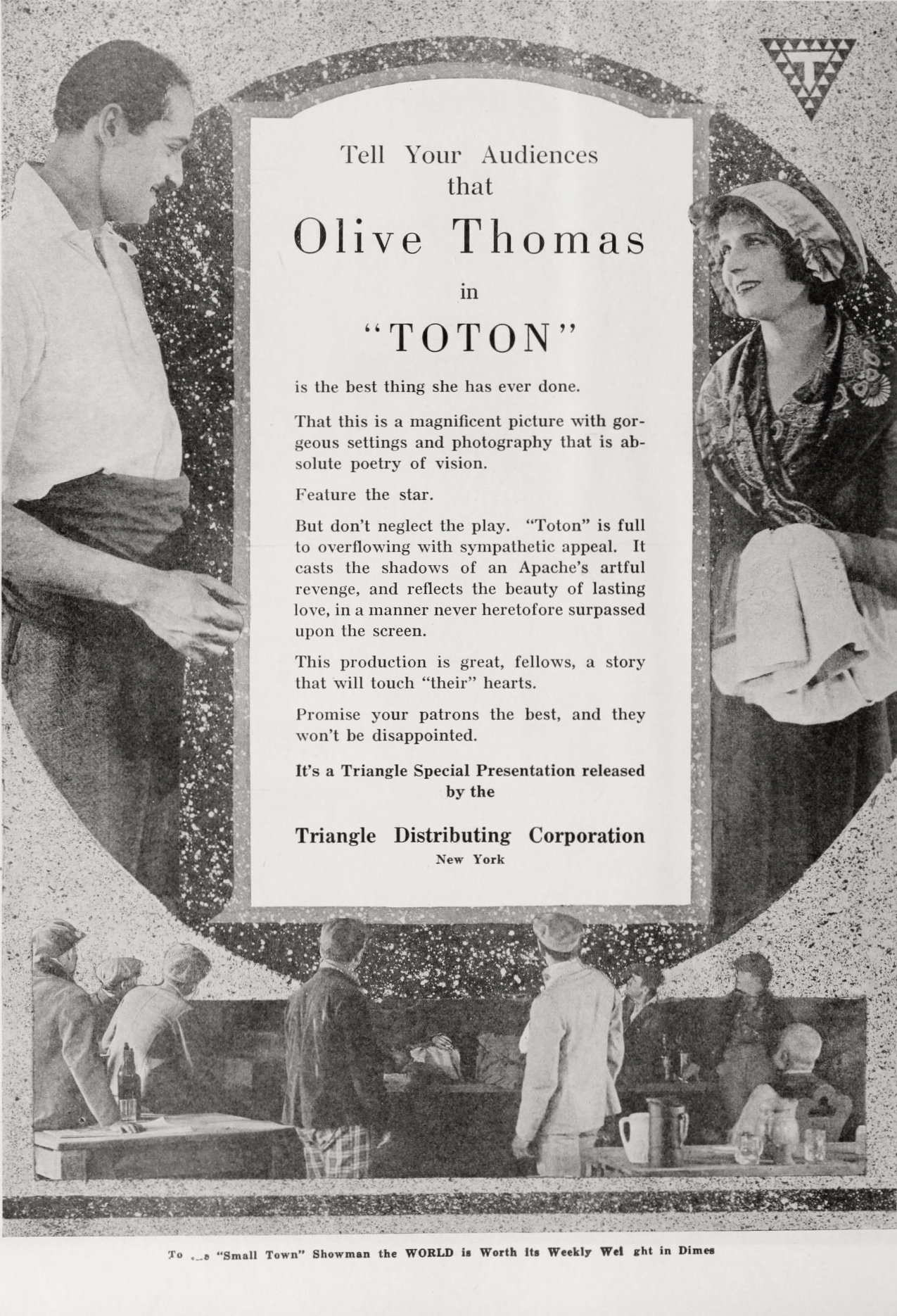
Ah, the silent era! A time when emotions were writ large across faces, when gestures spoke volumes, and when narratives, often melodramatic, aimed directly for the heart. Among the myriad of cinematic offerings from this fascinating period, 1919's 'Toton' emerges not just as a film, but as a poignant testament to the power of storytelling without spoken words. Penned by the insightful Catherine Carr, this picture, starring the luminous Olive Thomas and the earnest Norman Kerry, unfurls a sprawling saga of love, betrayal, mistaken identity, and eventual, hard-won redemption that still resonates with a profound emotional depth. It’s a compelling journey that reminds us how deeply human experiences transcend the limitations of dialogue, speaking instead through the universal language of pathos and perseverance.
The narrative of 'Toton' begins in an almost idyllic fashion, set against the romantic backdrop of Paris's Latin Quarter. Here, we meet David Lane (Norman Kerry), an American artist whose creative spirit finds its muse—and eventually, his wife—in Yvonne (Olive Thomas). Their union, steeped in the bohemian charm of the Parisian art scene, promises a life of shared passion and burgeoning domesticity. However, this nascent happiness is cruelly shattered by the harsh realities of life. A death in David’s family compels his urgent return to the United States, leaving Yvonne, pregnant and vulnerable, behind. It’s a narrative device that, while common in the melodramas of the era, is handled here with a particular poignancy, setting the stage for the tragic events that follow. The separation, initially perceived as temporary, becomes a chasm widened by malevolent intent.
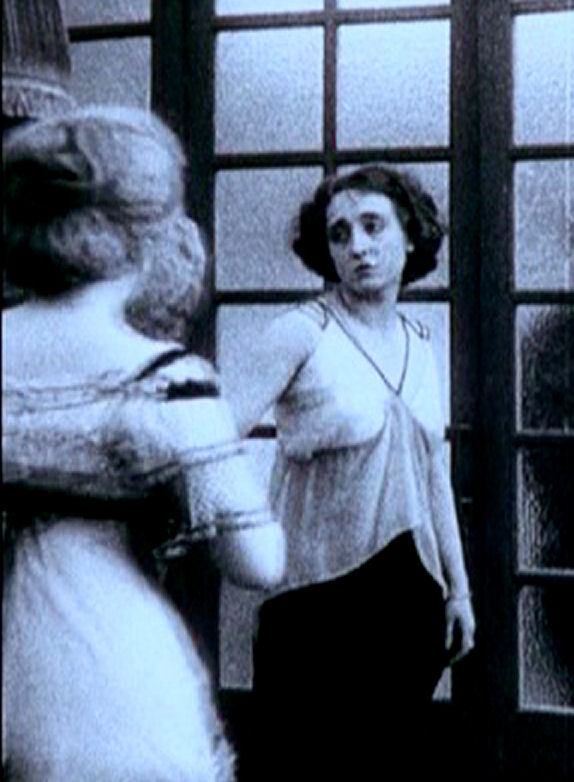
David's absence becomes fertile ground for his father's insidious machinations. The elder Lane, clearly disapproving of the marriage or perhaps simply cruel, employs a lawyer to weave a web of deceit around Yvonne, convincing her that David has callously abandoned her. The weight of this perceived betrayal, combined with the solitude of impending motherhood, proves too much for Yvonne. Her spirit, once vibrant, is crushed, leading to her untimely demise shortly after giving birth to a daughter. This segment of the film is particularly heart-wrenching, relying heavily on Olive Thomas's ability to convey profound sorrow through subtle expressions and gestures. Her performance here, though silent, screams with the agony of a woman wronged, a testament to her remarkable command of the medium. It's a tragedy that feels deeply personal, even within the broader strokes of a silent film, echoing the profound emotional impact seen in other great melodramas of the time, such as The Sorrows of Love, where characters often face insurmountable emotional hurdles.
Into this void steps Pierre, Yvonne's loyal friend, whose grief and rage manifest as a twisted sense of justice. Believing David to be the architect of Yvonne's misery and death, Pierre takes the orphaned infant and, in a startling act of defiance and vengeance, raises her as a boy, naming her Toton. He then trains her in the illicit art of pickpocketing, transforming the innocent child into an instrument of his misguided retribution. This transformation of Toton from a vulnerable girl into a street-hardened 'boy' is a central, fascinating element of the plot, challenging societal norms and expectations of gender and morality. It’s a bold narrative choice that pushes the boundaries of typical silent film character arcs, creating a character who embodies both victimhood and a peculiar form of empowerment.
Years pass, and the threads of destiny begin to intertwine once more. David, having adopted a boy named Carew, eventually returns to Paris, establishing an art studio – a poignant echo of his earlier, happier life. It is here that fate, with its often-cruel sense of irony, brings the estranged father and daughter into proximity. Pierre, still clinging to his vengeful narrative, targets David's studio for robbery. The recognition is instantaneous, and Pierre's long-held resentment boils over. He uses Toton, now a skilled thief, as a pawn, indoctrinating her with his fabricated tales of David's abandonment and perfidy. The emotional stakes are incredibly high in these scenes, as the audience is privy to the truth, watching helplessly as Toton is manipulated into hating the very father she unknowingly seeks.
However, the human heart, even when hardened by grief and vengeance, is not entirely impervious to truth. As events unfold, Pierre begins to question his long-held convictions. The pieces of the puzzle, perhaps through subtle cues or unforeseen circumstances, start to fall into place, leading him to the agonizing realization of David’s innocence. This shift in Pierre’s character is crucial, providing a moral compass that, though initially skewed, eventually points towards justice. His eventual confession, delivered on his deathbed, is the pivotal moment, a dramatic release of years of pent-up sorrow and misinformation. It’s a classic silent film trope, the deathbed revelation, but here it carries immense weight, shattering the fabricated reality Toton has known and setting the stage for a dramatic emotional reckoning. This moment of truth and reconciliation, while bittersweet, is a powerful reminder of how narratives of the era often used such dramatic devices to ensure moral clarity and emotional catharsis, much like the climactic revelations in films such as The Man Who Couldn't Beat God where divine or moral order is ultimately restored.
The dénouement sees Toton, now aware of her true identity and the cruel deception that shaped her life, reunited with her father. The emotional impact of this reunion, conveyed through the powerful, unadorned acting of the silent era, is immense. It's a moment of profound healing, not just for Toton and David, but for the audience who has journeyed through their tribulations. The film culminates in a resolution of happiness, with Toton finding love and marriage with Carew, David’s adopted son. This ending, while perhaps predictable for the genre, provides a satisfying sense of closure, a testament to enduring hope and the eventual triumph of familial bonds over malicious intent.
At the heart of 'Toton's' enduring appeal are the performances, particularly that of Olive Thomas as Yvonne. Thomas, a prominent figure of the silent screen, brings a fragile yet intense vulnerability to Yvonne, making her tragic fate all the more impactful. Her expressive eyes and delicate gestures convey a world of unspoken pain and love, cementing her character as the emotional core of the film’s initial tragedy. Her portrayal is a masterclass in silent acting, demonstrating how nuanced emotions can be communicated without a single word. It’s this kind of emotive power that distinguishes many silent film stars, elevating their craft beyond mere pantomime to a profound form of visual storytelling.
Norman Kerry, as David Lane, delivers a performance characterized by earnestness and a palpable sense of loss. His quiet despair after Yvonne's death and his continued pursuit of his art, even as he builds a new family with Carew, convey a deep emotional landscape. Kerry manages to imbue David with a sense of enduring decency, making his eventual reunion with Toton all the more rewarding. His restrained yet powerful acting provides a stable anchor amidst the film’s swirling emotional currents. The supporting cast, including Francis McDonald and Jack Perrin, contribute effectively to the dramatic fabric, with Pierre's character, in particular, undergoing a significant and compelling transformation from misguided avenger to truth-teller.
Catherine Carr's screenplay for 'Toton' is a remarkable achievement, weaving a complex tapestry of fate, deception, and ultimate justice. Her ability to construct a narrative with such intricate turns, maintaining suspense and emotional engagement without the benefit of dialogue, speaks volumes about her skill as a writer. The plot, while undeniably melodramatic, is executed with a precision that prevents it from descending into mere sensationalism. Instead, Carr uses the conventions of the genre to explore universal themes: the devastating impact of lies, the resilience of the human spirit, the enduring power of family, and the redemptive quality of truth. The character arcs, especially Toton's journey from a hardened street urchin to a woman claiming her rightful identity, are well-developed and emotionally satisfying. Carr's work here demonstrates a keen understanding of how to leverage visual storytelling for maximum dramatic effect, a hallmark of the finest silent films.
'Toton' arrived at a fascinating juncture in cinematic history. 1919 was a period of intense innovation and consolidation within the film industry, a time when silent films were reaching new heights of artistic expression and technical sophistication. Films like 'Toton' contributed to the evolving language of cinema, demonstrating the power of visual narrative to captivate and move audiences. While it might not possess the grand scale of an epic like The Last Days of Pompeii or the overt political commentary of The Kaiser, the Beast of Berlin, 'Toton' carves its own niche through its intimate, character-driven drama. It's a reminder that even amidst the larger-than-life spectacles, personal stories of heartbreak and triumph held immense sway with audiences.
The film's exploration of identity, particularly Toton's gender presentation and her journey of self-discovery, is particularly noteworthy. While not explicitly framed in modern terms, the narrative touches upon themes of societal roles and the construction of identity, making it surprisingly resonant even a century later. The film also showcases the meticulous craftsmanship typical of its era, from costume design that subtly informs character to set pieces that evoke the distinct atmospheres of Parisian bohemia and American respectability. The cinematography, though perhaps not groundbreaking for its time, effectively frames the emotional intensity of the performances, utilizing close-ups to convey inner turmoil and wider shots to establish the social context.
Ultimately, 'Toton' stands as a compelling example of silent cinema's ability to tell complex, emotionally charged stories. It is a film that, despite its age, manages to transcend its historical context to deliver a timeless message about the corrosive nature of deceit and the enduring strength of love and family. For enthusiasts of silent film, or indeed anyone interested in the evolution of cinematic storytelling, 'Toton' offers a rich, rewarding experience. It's a powerful reminder that sometimes, the most profound narratives are those delivered not through a symphony of sound, but through the eloquent silence of human emotion, beautifully captured on celluloid. Its narrative intricacies and powerful performances ensure its place as a significant, if sometimes overlooked, gem from the golden age of silent film. The journey from tragedy to triumph, from deception to revelation, is handled with a grace and emotional honesty that speaks directly to the soul, proving that a century later, its heart still beats vibrantly.
Catherine Carr's 'Toton' is more than just a silent film; it's an intricate dance of fate and human will, a testament to the era's profound understanding of visual narrative. Its legacy lies not just in its dramatic twists, but in its ability to evoke universal emotions, proving that true artistry transcends the boundaries of time and technology.
IMDb 6.8
1930
Community
Log in to comment.