DbcultAccessing Vault...
Cult Review
Senior Film Conservator
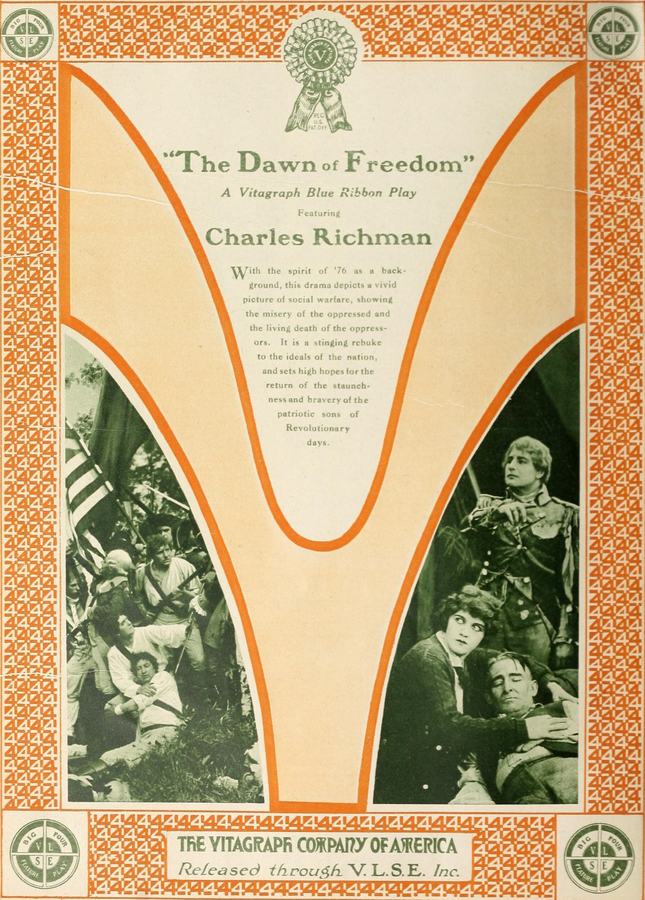
In the annals of early American cinema, few films possess the audacious thematic ambition and stinging social commentary of 'The Dawn of Freedom'. Released in 1916, at a time when the nation was grappling with the profound socio-economic shifts wrought by industrialization and burgeoning wealth disparities, this silent film stands as a remarkably prescient and potent critique. It's not merely a historical drama; it's a grand allegorical canvas, painted with broad strokes of satire and imbued with a deeply felt lament for what its creators perceived as the erosion of foundational American ideals. Far from being a quaint relic, the film’s central conceit—the literal resurrection of a Revolutionary War patriot into the heart of an avarice-driven Gilded Age—offers an astonishingly direct and unflinching mirror to the soul of a nation seemingly forgetting its own genesis.
The narrative, penned by William Hurlbut and Marguerite Bertsch, is an intricate tapestry woven from historical idealism and contemporary disillusionment. It opens in the vibrant, nascent days of the United States, where the spirit of '76 pulsated with collective purpose. Richard Cartwright, a revolutionary patriot, a man embodying the very essence of that era's selflessness, is granted a plot of land in the Alleghenies as a reward for his service. Engaged to Elizabeth Bradbury, he embarks with a small party for his new holdings, promising to return. However, this idyllic vision is violently interrupted when he is captured by Indigenous people. His subsequent rescue by Ambrose, a missionary with an unusual mastery of Eastern hypnotism acquired during years in India, sets the stage for the film's extraordinary premise. Fearing torture and execution, Ambrose makes a desperate choice: to place Cartwright in a deep trance and bury him, intending to later exhume and revive him. But fate, ever the cruel playwright, intervenes. Ambrose himself is tragically killed, leaving Cartwright entombed, a living relic suspended in time, his will dividing his land between his brother and fiancée, a testament to a future he would never see.
One hundred and thirty-nine years hurtle past, and the film plunges us into a radically transformed America. Cartwright's modest grant of land, once a symbol of patriotic reward, is now a sprawling, multi-million-dollar empire of coal mines. The pastoral Alleghenies have been scarred by industry, and the promise of collective prosperity has curdled into concentrated wealth. We meet the modern-day 'Cartwright,' a direct descendant of Richard's brother, who embodies the rapacious capitalist of the era. He controls the vast mining operation with an iron fist, his gaze fixed solely on personal gain, utterly devoid of the communal spirit that animated his ancestor. In a cruel twist of fate, Elizabeth McLean, a great-granddaughter of Richard's fiancée, finds herself living in abject poverty, dependent on the meager wages of a miner in the very mines that, by ancestral right, should have been partly hers. The current 'Cartwright' has systematically frozen her out, seizing her rightful inheritance, illustrating the insidious inroads of greed and the profound disparity between the haves and have-nots.
The social fabric of this new America is frayed. The miners, driven to desperation by exploitation and paltry remuneration, embark on a strike, demanding fair treatment. The coal baron, impervious to their plight and their legitimate demands, meets their pleas with staunch refusal, igniting a powder keg of violence. The ensuing chaos culminates in a dramatic act of sabotage: one of the coal mines is blown sky-high. This cataclysmic explosion, a visceral representation of the boiling social tensions, becomes the unlikely catalyst for Richard Cartwright's re-emergence. His aluminum casket, preserved yet forgotten beneath the earth, is violently propelled to the surface, its top ripped open by the sheer force of the blast. From this metallic chrysalis, the patriot, delivered from his prolonged trance, steps forth. He is emaciated, disoriented, a ghostly figure from a forgotten past, much like a butterfly struggling free from its cocoon, utterly unprepared for the world he now inhabits.
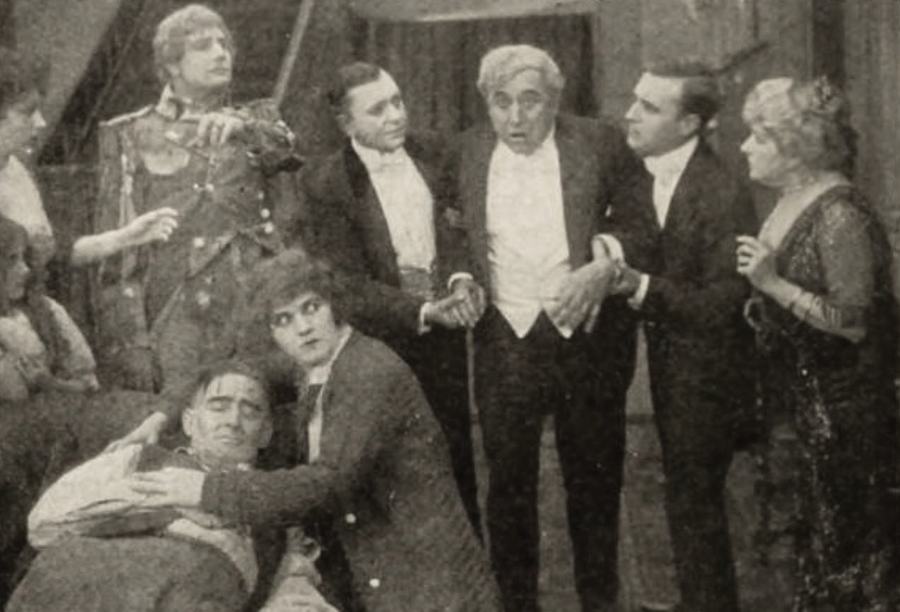
The patriot's resurrection is a moment of profound cinematic power. He is discovered by Dick, the coal baron's son, a character who, unlike his father, seems to possess a vestige of conscience and a capacity for empathy. Taken into Dick's home, Cartwright is confronted with the bewildering reality of modern America. He witnesses firsthand the insidious inroads of a new kind of conflict—not the Revolutionary War for national independence, but a brutal social war, where individuals are locked in a relentless struggle, metaphorically 'waling on the necks of their brethren' in pursuit of personal gain. The film starkly contrasts the collaborative spirit of 1776 with the cutthroat individualism of 1916, highlighting a perceived regression in the nation's moral compass.
Dick dutifully educates Cartwright on the phenomenal growth of the United States, showcasing the marvels of modern invention and technological advancement. Yet, alongside this progress, the patriot also learns of the profound injustices that have taken root, most notably the tragic fate of Elizabeth McLean. The revelation that her ancestors once owned half of the very property that now fuels the baron's immense wealth, while she languishes in poverty, serves as a visceral illustration of the ideals lost and the promises broken. This juxtaposition of dazzling innovation with stark social inequality is a recurring theme in early 20th-century cinema, echoed in films like Where Are My Children? (1916), which also grappled with the moral complexities of a rapidly changing society, albeit focusing on different social issues. While that film explored questions of birth control and societal expectations, 'The Dawn of Freedom' zeroes in on economic justice and the perversion of foundational American principles.
The film’s climax is a powerful, if somewhat melodramatic, resolution to its complex allegory. Confronted by the spectral presence of the patriot, a living embodiment of the nation's foundational conscience, and surrounded by the righteous fury of the rioting strikers, the avaricious coal baron is overwhelmed. The weight of his transgressions, perhaps, or merely the shock of the confrontation, proves too much, and he dies of heart failure. His demise is less a personal tragedy than a symbolic purging of the corrupting influence that has taken hold of the American dream. The patriot, ever the selfless idealist, attempts to quell the enraged strikers, to restore order through reason and the very ideals he represents. In this noble endeavor, he is mortally wounded, a final sacrifice for the principles he holds dear.
However, his death is not one of futility. In a poignant and hopeful twist, his courage and the indelible spirit of '76 are transfused, almost supernaturally, into Dick, the son. This symbolic passing of the torch suggests that while the original ideals may seem lost or dormant, they can be rekindled in a new generation. Dick, now imbued with his ancestor's moral fortitude, champions the cause of the workers, leading to a resolution where everything, quite remarkably for the era, "ends happily for the workers." This somewhat idealized conclusion, while perhaps jarring to modern cynical sensibilities, served as a powerful message of hope and a call to action for contemporary audiences, suggesting that a return to foundational values could yet heal the nation's social wounds. It’s a stark contrast to the often fatalistic or ambiguous endings of other dramas of the period, such as The Fatal Card (1915), which often leaned into more individualistic notions of justice or retribution rather than collective societal change.
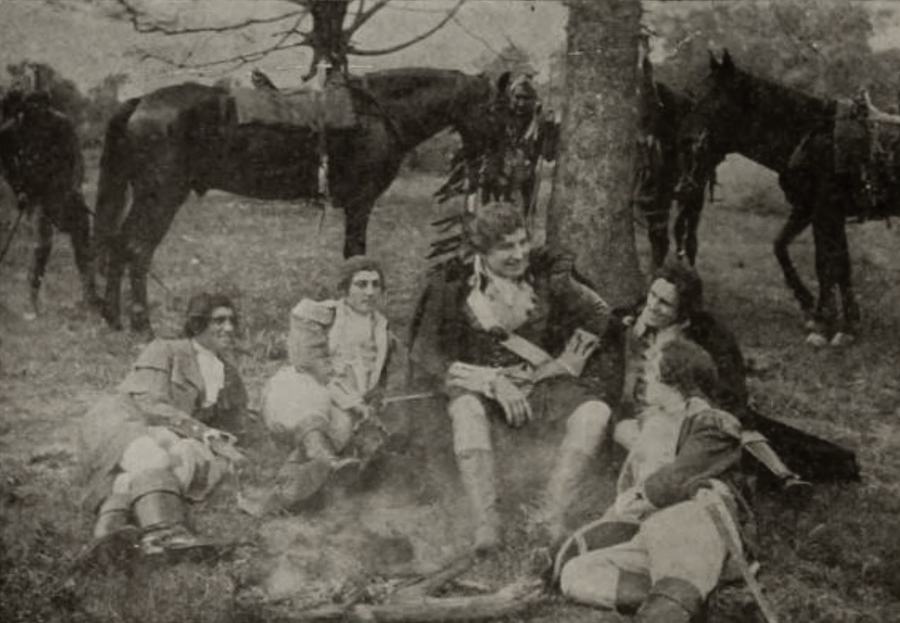
Despite its age and the inherent limitations of silent film, 'The Dawn of Freedom' is a remarkably ambitious production. The direction, likely overseen by the credited writers William Hurlbut and Marguerite Bertsch, effectively conveys the stark contrast between the two historical periods. The initial scenes of 1776, though brief, evoke a sense of nascent idealism, while the later industrial landscapes are grim and oppressive, visually reinforcing the film’s thematic concerns. The use of the aluminum casket and the dramatic explosion to resurrect Cartwright is a bold, almost fantastical narrative device that serves its allegorical purpose with striking clarity.
The cast, featuring names like Arline Pretty, Billie Billings, Thomas R. Mills, and Charles Richman, delivers performances typical of the era, characterized by broad gestures and expressive facial movements necessary to convey emotion without dialogue. Joseph Kilgour as the modern-day Cartwright likely embodied the archetypal greedy industrialist with relish, while Templar Saxe as Ambrose and Edward Elkas as Richard Cartwright himself would have faced the challenge of conveying profound transformation and bewilderment through purely visual means. The emaciated appearance of Cartwright upon his return, described as a butterfly emerging from its chrysalis, would have been a powerful visual metaphor, requiring considerable skill from Elkas to portray both the physical weakness and the underlying strength of conviction.
The writers, William Hurlbut and Marguerite Bertsch, deserve particular commendation for crafting such a thematically dense and structurally adventurous narrative. Their decision to use literal resurrection as a plot device elevates the film from mere historical drama to a profound socio-political commentary. It’s a testament to their vision that they dared to critique the very foundations of contemporary American society so directly. In an era where many films focused on domestic melodrama or straightforward adventure, like Sunshine Dad (1916) or even the more complex character study of Assunta Spina (1915), 'The Dawn of Freedom' chose a path of pointed social satire, a bold move for its time.
'The Dawn of Freedom' is more than just a historical curiosity; it’s a vital document of early American cinema’s capacity for trenchant social critique. Its central thesis – that the nation had strayed from its founding ideals of collective welfare in favor of individual avarice – remains remarkably relevant today. The film’s exploration of labor exploitation, wealth inequality, and the struggle between capital and labor echoes through contemporary discussions about economic justice. The idea of a 'social war' where individuals are pitted against each other for personal gain feels disturbingly familiar, suggesting that the issues Hurlbut and Bertsch highlighted over a century ago are far from resolved.
The film serves as a powerful reminder that the American dream has always been a contested space, a battleground for competing ideologies. Its unique narrative structure, blending historical fantasy with sharp social realism, makes it a fascinating precursor to later works of allegorical cinema. For those interested in the evolution of cinematic storytelling, the history of American social commentary, or simply a compelling narrative that transcends its era, 'The Dawn of Freedom' offers a rich and rewarding experience. It challenges viewers to consider not just where the nation has been, but where it is headed, and whether the spirit of '76 can truly be transfused into every generation. It’s a cinematic call to conscience, urging a return to the communal welfare that once defined the nascent republic, a message that, perhaps, we still need to hear today.
IMDb 5
1917
Community
Log in to comment.