DbcultAccessing Vault...
Cult Review
Senior Film Conservator
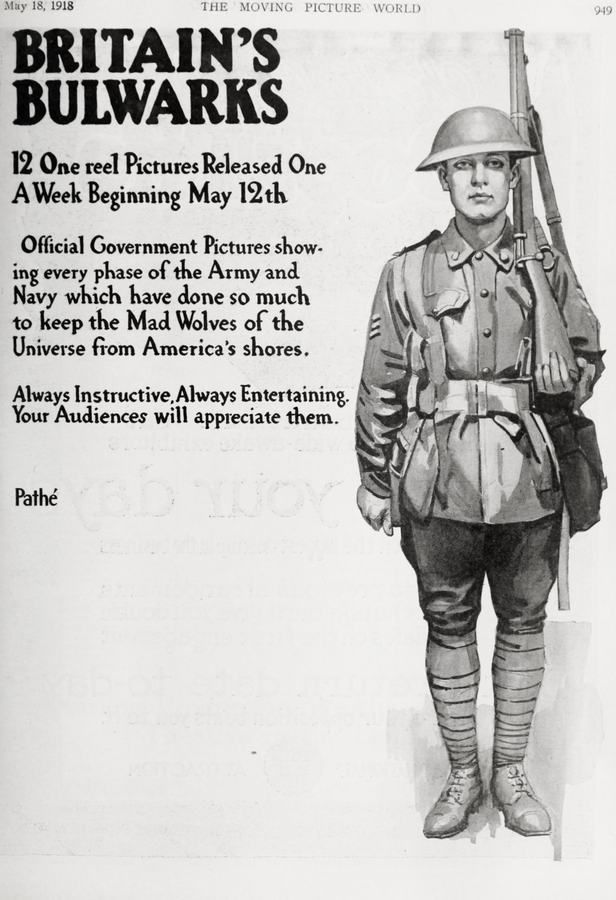
In the grand tapestry of cinematic history, certain films, often overlooked by mainstream discourse, emerge as invaluable time capsules, offering profound insights into the societal zeitgeist of their creation. Such is the case with 'Britain's Bulwarks, No. 1: Women Munitioners of England,' a silent, likely propaganda-infused documentary from the throes of the First World War. This film, rather than merely presenting a historical record, functions as a potent ideological artifact, meticulously crafted to shape public perception and galvanize national resolve during an epoch of unparalleled global conflict. It’s a fascinating study, not just of early filmmaking techniques, but of the dramatic redefinition of gender roles and national identity under duress.
The very title, 'Britain's Bulwarks,' immediately establishes a tone of nationalistic pride and resilience, positioning the subjects – women working in munitions factories – as the foundational pillars of the nation's defense. This wasn't merely a factual reportage; it was an active construction of a heroic narrative. The film, in its silent, stark black-and-white frames, portrays an industrial landscape utterly transformed by the exigencies of war. We are introduced to sprawling factory complexes, vast and imposing, often depicted shrouded in the smoke and steam characteristic of heavy industry. These are not picturesque vistas; they are the grim, vital engines of war, and within them, a new breed of workforce is taking shape.
What truly distinguishes 'Britain's Bulwarks' is its unwavering focus on the women themselves. Before the Great War, the notion of women engaging in heavy industrial labor, particularly in the dangerous and physically demanding realm of munitions manufacturing, was largely unthinkable. Traditional societal strictures confined women primarily to the domestic sphere or to 'acceptable' female occupations such as teaching, nursing, or domestic service. The war shattered these conventions with brutal efficiency. As millions of men marched off to the trenches, the gaping void in the labor force necessitated radical solutions, and women stepped into the breach with remarkable alacrity and determination.
The film captures this seismic shift with a blend of admiration and didacticism. We witness women, often appearing in practical, utilitarian workwear—overalls, caps, and sturdy shoes—operating complex machinery with an astonishing degree of skill and precision. The camera lingers on their hands as they manipulate levers, load components, and inspect finished products. These are not delicate, ornamental hands; they are capable, often grease-stained, hands performing tasks that directly contribute to the war effort. The narrative subtly, yet powerfully, refutes any lingering doubts about women's capacity for such work, portraying them as equally, if not more, dedicated and meticulous than their male predecessors. This visual rhetoric was crucial in countering entrenched prejudices and securing public acceptance for this radical transformation of the workforce.
One might draw a parallel here with films that explore the burgeoning agency of women in the early 20th century, albeit in very different contexts. While A Militant Suffragette addresses the political fight for enfranchisement, 'Britain's Bulwarks' showcases a more practical, economic liberation, born of necessity. Both films, in their own ways, highlight women challenging and breaking free from prescribed societal roles, though the motivations and immediate impacts differ significantly. The 'munitionettes,' as they came to be known, were not merely earning a wage; they were participating in a collective national endeavor, their efforts directly linked to the survival of the nation.
From a purely cinematic perspective, 'Britain's Bulwarks' adheres to the documentary conventions of its era, characterized by relatively static camera work, functional editing, and a reliance on intertitles to convey information and emotional cues. Yet, within these constraints, the filmmakers demonstrate a keen understanding of visual storytelling and propaganda. Close-ups on the women's faces, revealing their concentration and determination, serve to humanize the industrial process and foster empathy. Shots of vast factory floors, teeming with activity, convey scale and efficiency, projecting an image of an unstoppable industrial machine. The rhythmic repetition of tasks, captured through montage-like sequences, emphasizes the relentless pace of wartime production.
The film's propaganda function is undeniable. It aims to inspire patriotism, reassure the public about the nation's productive capacity, and celebrate the selflessness of the working women. There's a deliberate lack of focus on the dangers inherent in munitions work—the TNT poisoning that turned skin yellow, the risk of explosions, the long hours, and the often-harsh working conditions. Instead, the narrative emphasizes order, efficiency, and cheerful dedication. This selective portrayal is a hallmark of wartime propaganda, designed to bolster morale rather than present an unvarnished reality. In this regard, it shares a common purpose with other films of its time, such as some of the more overtly nationalistic newsreels or even narrative features that romanticized military service.
Unlike a narrative feature such as Protéa, which showcased a fictional female spy in thrilling escapades, 'Britain's Bulwarks' grounds its heroism in the mundane, the repetitive, and the industrial. The heroism here is not one of daring feats but of steadfast labor and unwavering commitment to the national cause. It's a different kind of strength, perhaps less flamboyant but no less vital.
The impact of the 'munitionettes' extended far beyond the immediate needs of wartime production. Their entry into heavy industry had profound and lasting social and economic consequences. For many women, this was their first taste of economic independence and the camaraderie of a shared workplace outside the home. The wages, while often lower than those paid to men for similar work, represented a significant improvement for many, providing a degree of financial autonomy previously unattainable. This experience undoubtedly fueled the ongoing feminist movements and contributed to the push for greater equality in the post-war era.
The film, through its visual narrative, subtly champions this new role for women, presenting it not as a temporary aberration but as a legitimate and valued contribution. While the immediate post-war period saw a concerted effort to return women to traditional roles, the genie was, in many respects, out of the bottle. The 'munitionettes' had proven their capabilities, shattering myths about female frailty and incompetence in industrial settings. Their legacy paved the way for future generations of women to demand and secure greater access to diverse professions.
In comparing this to a film like The One Woman, which might explore individual female empowerment through a more dramatic lens, 'Britain's Bulwarks' offers a collective portrait of women's strength. It's not about one extraordinary individual, but the extraordinary collective effort of thousands of ordinary women. This distinction is crucial for understanding the film's historical significance.
Watching 'Britain's Bulwarks' today is an exercise in historical empathy. It transports the viewer back to a time of immense national peril and collective sacrifice. The silent flickering images, devoid of the auditory cacophony of a factory floor, force a different kind of engagement, demanding that we project ourselves into the shoes of these women, imagining the clatter of machinery, the smell of chemicals, and the relentless pressure of wartime production. The film serves as a powerful reminder of the hidden labor and often untold stories that underpin grand historical narratives.
Its value lies not just in what it shows, but in what it represents: a pivotal moment when the very fabric of society was stretched and reshaped by the demands of total war. It documents the emergence of a new social contract, however temporary, where women's contributions beyond the domestic sphere became not just tolerated, but actively celebrated as essential. The film, in its quiet yet resolute manner, paints a picture of national unity forged in the crucible of industry, with women at its very heart. It’s a testament to human adaptability, resilience, and the often-unacknowledged power of collective action.
While it may lack the intricate character development or dramatic arcs of a contemporary narrative film, its power lies in its unvarnished, albeit propagandistic, portrayal of a historical reality. It's a foundational text for understanding the social history of the First World War and the evolution of women's roles in the 20th century. For historians, sociologists, and anyone interested in the intersection of film and social change, 'Britain's Bulwarks, No. 1: Women Munitioners of England' remains an indispensable and profoundly moving document, a true bulwark of historical understanding itself. Its legacy echoes through subsequent decades, reminding us of the profound changes spurred by adversity and the enduring strength of the human spirit, particularly that of women, in times of crisis.
The film's simplicity, born of its era's technical limitations, paradoxically amplifies its message. There are no elaborate special effects or complex camera movements to distract from the central theme. The focus remains steadfastly on the women and their work, allowing their actions to speak volumes in a silent medium. This directness makes the film incredibly impactful, cutting through any potential embellishments to deliver its core message with clarity and force. It is a stark, honest, and ultimately celebratory portrayal of a critical moment in British history, where the strength of the nation was quite literally forged by the hands of its women.
Moreover, the film stands as a significant artifact for understanding the nascent stages of documentary filmmaking and its early utility as a tool for national communication and persuasion. Before the advent of widespread radio and television, cinema played a crucial role in disseminating information and shaping public opinion. 'Britain's Bulwarks' exemplifies this function, leveraging the visual medium to create a powerful, unifying narrative. It is a testament to the early filmmakers' ability to craft compelling content even with rudimentary technology, demonstrating that the power of a story, especially one rooted in national purpose, can transcend technical limitations.
In conclusion, 'Britain's Bulwarks, No. 1: Women Munitioners of England' is more than just a historical film; it is a vital piece of cultural heritage. It offers an intimate, albeit carefully curated, glimpse into the lives of women who stepped forward to serve their country in its hour of greatest need. Their unwavering dedication, captured on celluloid, continues to inspire and inform, reminding us of the profound impact that ordinary individuals can have when united by a common cause. This film, though silent, speaks volumes about resilience, patriotism, and the enduring strength of the human spirit, particularly in the face of unprecedented challenges. It cements its place not merely as a historical record, but as an enduring symbol of women's pivotal role in shaping the course of history.
Community
Log in to comment.