DbcultAccessing Vault...
Cult Review
Senior Film Conservator
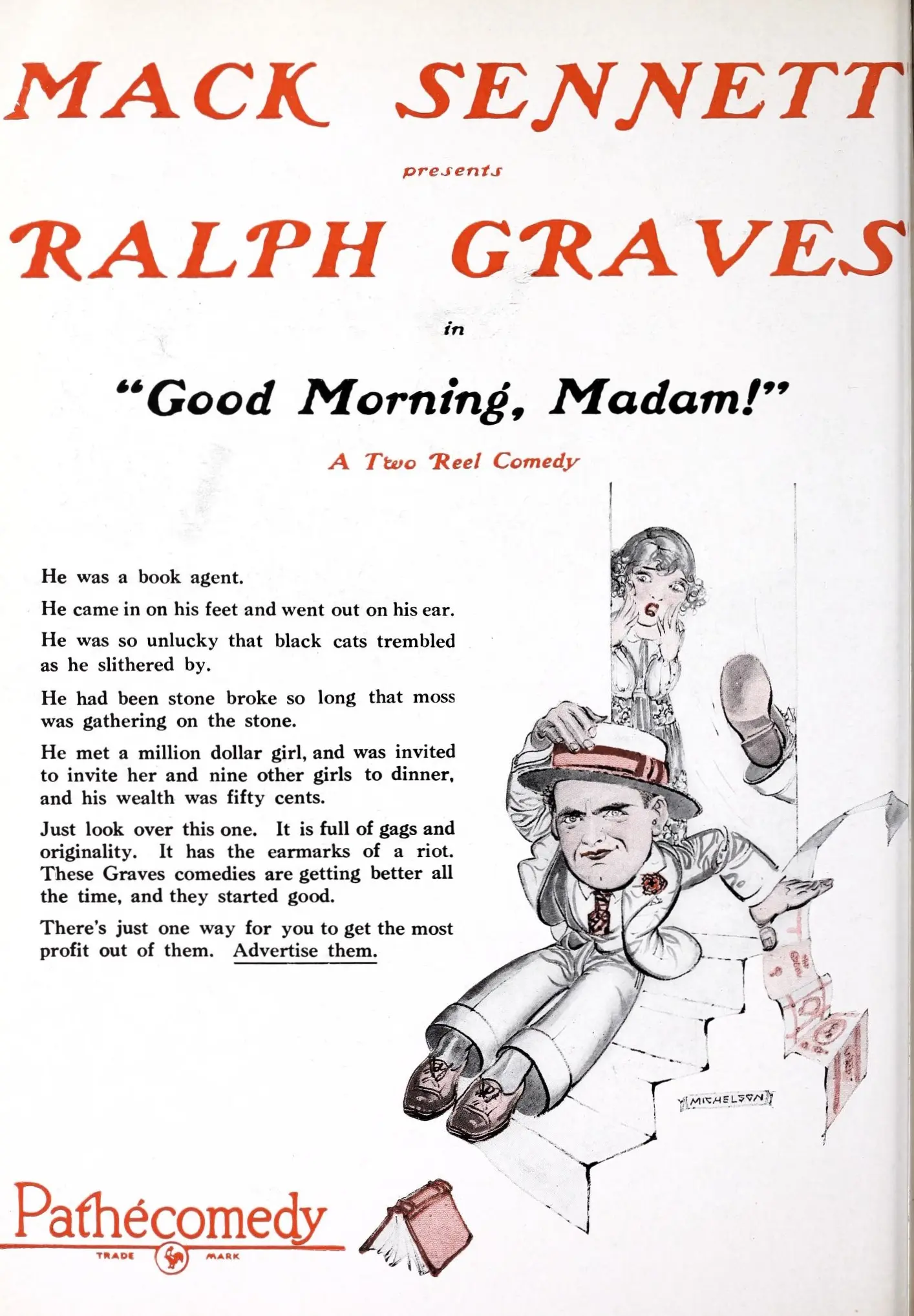
Is "Good Morning, Madam!" worth watching today? The short answer is a resounding yes, but with the crucial caveat that your appreciation hinges on a genuine fondness for the rapid-fire, often slapstick, charm of early silent comedies. This film is a delightful diversion for enthusiasts of the era's unique comedic timing and narrative simplicity, but it will likely prove a challenging watch for those accustomed to modern storytelling conventions and a slower, more character-driven pace. It’s a brisk, unpretentious ride through 1920s comedic tropes, delivering precisely what it promises: lighthearted escapism.
At its core, "Good Morning, Madam!" is a testament to the enduring appeal of the underdog and the delightful chaos that ensues when social classes collide. It’s a film that asks little of its audience beyond a willingness to laugh at the absurdities of life and love, and it largely succeeds in its modest ambitions. This isn't a film seeking to redefine cinema, but rather to entertain with a series of well-executed gags and a surprisingly sweet central romance.
This film works because of its relentless comedic pacing and the undeniable chemistry between its leads, which elevates a simple premise into something genuinely engaging.
This film fails because its narrative depth is minimal, even by silent era standards, relying heavily on situational gags that occasionally outstay their welcome.
You should watch it if you appreciate the raw, unadulterated energy of 1920s silent comedies and are eager to discover lesser-known works from the period.
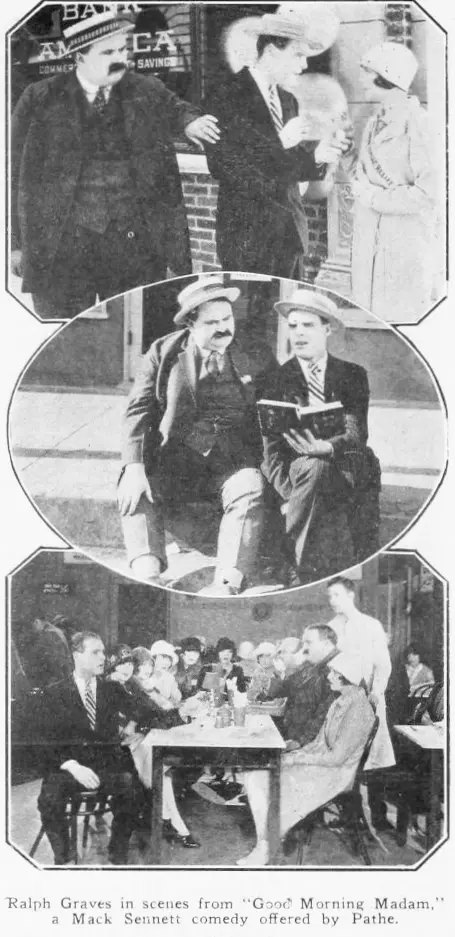
The narrative engine of "Good Morning, Madam!" is a classic comedic setup: two down-on-their-luck book agents, Ralph (Ralph Graves) and his perpetually exasperated pal (Leo Sulky), find themselves in the direst of straits. Their last half-dollar is a stark symbol of their professional futility, a poignant detail that immediately grounds the audience in their struggle. Enter a society beauty (Thelma Parr), ostensibly collecting for charity, a figure of elegant contrast to their grubby reality. Ralph’s reluctant donation of his final coin isn't merely an act of charity; it's a comedic sacrifice, a moment of profound, if self-deprecating, vulnerability.
The subsequent lunch invitation, initiated by the enigmatic socialite, quickly pivots from a potentially awkward encounter into a surprisingly tender one. Her discreet realization of Ralph's impecunious state, followed by her quiet payment of the check, is a moment of genuine grace that transcends the film’s otherwise boisterous comedic tone. It's a subtle beat that suggests a depth of character often missing in such whirlwind romances. This isn't just a transactional exchange; it's the genesis of an unusual, yet immediate, connection.
The film then accelerates, almost jarringly, into a love-at-first-sight scenario, culminating in a second meeting where Ralph brazenly intervenes in her pre-arranged marriage. This swift escalation, while typical of silent comedies, could easily feel unearned. Yet, the film’s inherent charm and the conviction of its leads sell this improbable romantic trajectory. It’s less about a meticulously crafted plot and more about the delightful journey of two disparate souls finding common ground amidst comedic chaos. The sheer audacity of Ralph’s romantic coup is, in itself, a comedic highlight, underscoring the film’s playful disregard for conventional courtship.
The success of any silent comedy hinges almost entirely on the expressiveness and physical prowess of its cast, and "Good Morning, Madam!" is no exception. Ralph Graves, as the titular Ralph, embodies the quintessential amiable everyman, a role he perfected across numerous features. His performance here is a masterclass in understated physical comedy, avoiding the broad histrionics that sometimes plague the genre. Watch his subtle shifts in posture when confronted with the socialite’s beauty, or the barely perceptible slump of his shoulders when realizing his financial predicament – these are moments that build character without a single spoken word. His desperation feels real, his charm effortless.
However, it is Thelma Parr who truly shines as the society beauty. She imbues her character with an unexpected blend of sophistication, wit, and genuine warmth. Her ability to convey intelligence and empathy through mere glances is remarkable. The scene where she quietly signals the waiter to take care of the bill, while maintaining a polite conversation with Ralph, is a standout. It's a moment of quiet strength and quick thinking that instantly elevates her beyond a mere damsel in distress or a comedic foil. Her performance suggests a character far more complex than the script perhaps intended, a surprising observation for a film of
IMDb —
1921
Community
Log in to comment.