DbcultAccessing Vault...
Cult Review
Senior Film Conservator
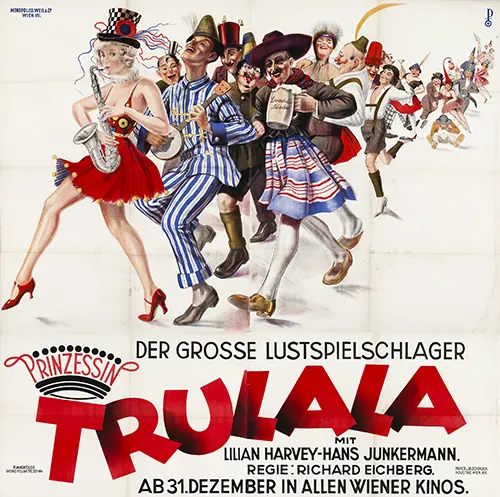
Is "Prinzessin Trulala" a film that stands the test of time, meriting a viewing in our fast-paced, digital age? Short answer: yes, but with significant caveats. This silent-era German production is less a thrilling narrative and more a historical curiosity, a vibrant snapshot of early European cinema.
It's a film for ardent cinephiles, historians, and those with a deep appreciation for the artistry of silent acting and the unique visual grammar of the 1920s. However, it is decidedly NOT for casual viewers accustomed to modern pacing, intricate plots, or dialogue-driven storytelling. If you demand immediate gratification or find the nuances of silent expression tedious, you'll struggle.
This film works because of its undeniable historical value and the captivating presence of Lilian Harvey, who genuinely lights up the screen even without a single spoken word.
This film fails because its narrative, at least as it is understood today, feels less like a cohesive story and more like a series of charming vignettes, lacking the emotional punch or thematic depth of its more celebrated contemporaries.
You should watch it if you're eager to witness the foundational elements of cinema, appreciate the power of non-verbal performance, and are willing to immerse yourself in a different rhythm of storytelling.
To discuss the plot of "Prinzessin Trulala" is to engage in a delicate dance of inference and appreciation for the elusive. Unlike many films where the narrative serves as the spine, here, it feels more like a gentle current, subtly guiding the audience through the world of its titular character. The film, as its very name suggests, centers on a figure embodying a lighthearted, perhaps even frivolous, spirit – a 'princess' not necessarily by birthright, but by disposition.
The story, penned by Hans Stürm, likely delves into the romantic entanglements and societal pressures faced by this spirited individual. One can imagine a series of charming misunderstandings, a playful defiance of convention, and an ultimate quest for genuine connection, all filtered through the lens of 1920s German social dynamics. It’s a narrative that prioritizes character charm and visual whimsy over complex dramatic arcs.
We are not presented with grand, sweeping events, but rather the intimate moments that define a personality. The 'Trulala' aspect isn't merely a name; it's a descriptor of a woman who navigates life with a unique blend of naiveté and resilience. This approach makes the film less about 'what happens' and more about 'who she is' and 'how she feels' – a brave narrative choice for any era, let alone the silent one.
The true triumph of "Prinzessin Trulala" lies squarely on the shoulders of its cast, particularly Lilian Harvey. Harvey, already a burgeoning star in German cinema, delivers a performance that transcends the limitations of silent film, radiating an infectious energy that is impossible to ignore. Her expressiveness, a potent mix of wide-eyed innocence and knowing charm, anchors the entire production.
Harvey’s ability to convey complex emotions through subtle shifts in gaze, a tilt of the head, or a sudden, joyous burst of movement is remarkable. There's a particular scene, for instance, where her character is faced with a dilemma – perhaps a romantic choice or a social faux pas – and Harvey's internal struggle is palpable. Her eyes, darting between hope and apprehension, tell a story more intricate than any intertitle could convey. This is silent acting at its most effective, demanding the audience to lean in, to interpret, and to connect on a deeply human level.
The supporting cast, while not always reaching Harvey's incandescent level, provides solid grounding. Georg Gartz, Victor Colani, and Hans Stürm, among others, contribute to the film's texture. Their interactions with Harvey often serve to highlight her unique sparkle, providing a necessary counterpoint to her vivacity. One might observe a scene where a more stoic character, perhaps played by Leopold von Ledebur, serves as a foil, his reserved demeanor amplifying Harvey's effervescence. This dynamic is crucial for establishing the world around our 'princess'.
However, it must be said that some supporting performances occasionally veer into the melodramatic, a common pitfall of the era. While Harvey masterfully walks the line between theatricality and genuine emotion, a few others occasionally stumble, reminding us of the evolving nature of screen acting. Yet, even these moments contribute to the film's authentic period feel.
The direction of "Prinzessin Trulala," while not groundbreaking in the vein of a F.W. Murnau or Fritz Lang, is competent and often charming. The film embraces the visual storytelling techniques prevalent in German cinema of the mid-1920s. We see a clear preference for carefully composed shots, often utilizing depth and framing to emphasize emotional states or character relationships.
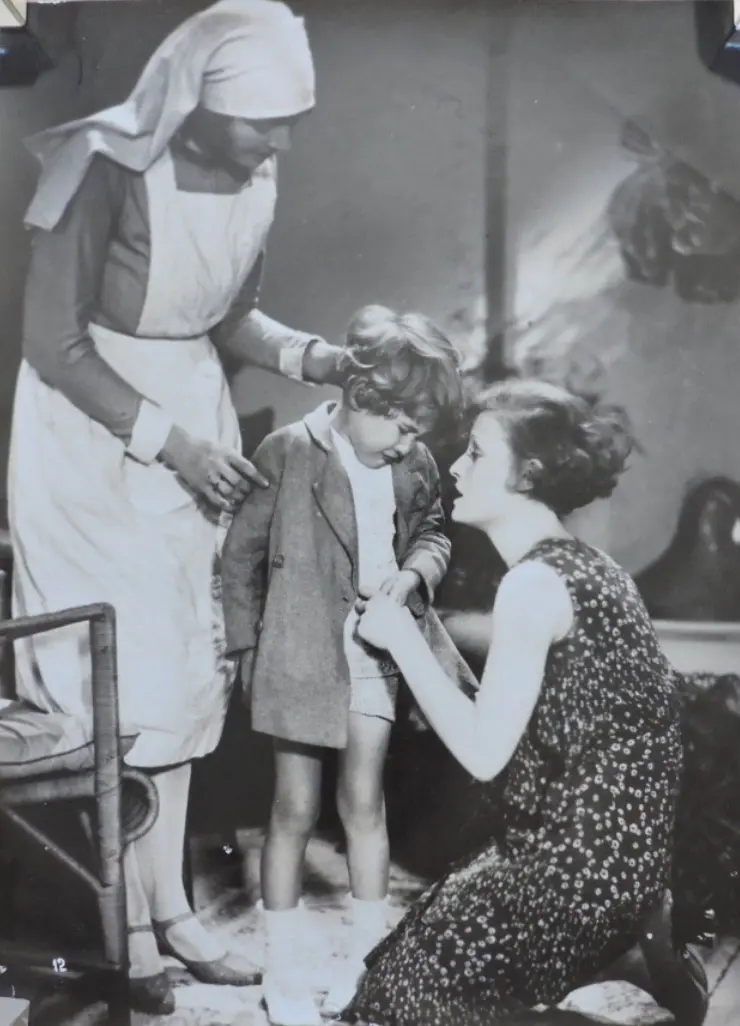
There's a noticeable attention to set design and costume, which, while not overtly Expressionistic like some of its contemporaries (e.g., The Trap), nonetheless creates a distinct sense of place and time. Interiors often feel lived-in, and exteriors, where present, convey a sense of bustling European life. Consider a sequence involving a public gathering or a cafe scene; the director skillfully uses crowd movement and background details to enrich the main action, rather than letting it distract.
The cinematography, though standard for its time, often achieves moments of quiet beauty. Lighting, in particular, is used effectively to highlight Lilian Harvey's features, making her literally glow on screen. There's a subtle interplay of light and shadow that, while not dramatic, adds a layer of sophistication to many scenes. A close-up of Harvey, perhaps framed against a soft, diffused light, perfectly captures her character's inner state without relying on overt gestures.
Pacing, as expected for a silent film, is deliberate. The director allows scenes to breathe, giving the audience time to absorb the visual information and the actors' performances. While modern viewers might find this slow, it's a testament to a different era of cinematic engagement, one where contemplation was as valued as action.
The pacing of "Prinzessin Trulala" is undeniably a product of its era. It moves with a measured cadence, a rhythm quite distinct from the rapid-fire editing and constant narrative propulsion of contemporary cinema. This deliberate speed allows for a deeper appreciation of the visual storytelling and the nuanced performances, particularly from Lilian Harvey.
Scenes are often extended, not out of sluggishness, but to fully explore a moment, a reaction, or a character's internal process. For instance, a sequence involving a character's contemplation of a letter might span several minutes, allowing the viewer to witness the full spectrum of emotions playing across their face. This requires patience from the modern audience, but rewards it with a richer, more immersive experience if one is willing to adjust their expectations.
The tone of the film is predominantly lighthearted and romantic, befitting its 'Trulala' moniker. There are undoubtedly elements of comedy, perhaps even farce, intertwined with moments of genuine sentiment. It avoids the darker, more somber undertones found in some German Expressionist works of the period, opting instead for a charming, almost fairytale-like quality. Even potential conflicts are likely resolved with a certain grace and optimism, reinforcing the film's inherent sweetness.
However, this consistent lightness can occasionally feel a tad superficial. While charming, the film might shy away from truly probing its characters' deeper motivations or the more complex implications of their actions. It works. But it’s flawed. The commitment to a whimsical tone, while a strength in many respects, might prevent it from achieving the dramatic resonance of films like Manon Lescaut, for example, which also explored themes of romance but with a heavier hand.
"Prinzessin Trulala" stands as a valuable artifact of German silent cinema, offering a window into the popular entertainment of the mid-1920s. It represents a period of immense creativity and technical innovation in European filmmaking, bridging the gap between the raw energy of early cinema and the sophisticated narratives that would soon emerge with the advent of sound.
The film's enduring appeal, despite its relative obscurity compared to some of its more famous contemporaries, lies in its charm and the star power of Lilian Harvey. For those interested in the evolution of acting and screen presence, Harvey's performance is a masterclass in silent charisma. It's a testament to the fact that compelling cinema doesn't always require a groundbreaking plot or earth-shattering special effects; sometimes, a magnetic personality is enough.
Furthermore, the film offers subtle insights into the social mores and aspirations of the Weimar Republic era. While not overtly political, the portrayal of a 'princess' figure navigating a modernizing world can be seen as a commentary on changing gender roles and societal expectations. It's a film that, upon closer inspection, reveals layers beyond its initial lighthearted veneer, making it more than just a quaint relic.
Its existence reminds us of the rich tapestry of international cinema that often gets overshadowed by Hollywood's dominance. Films like "Prinzessin Trulala" are crucial for understanding the global development of the art form, showcasing distinct national styles and storytelling approaches. It's a piece of history, and a delightful one at that, for those willing to seek it out.
"Prinzessin Trulala" is not a cinematic revelation that will redefine your understanding of film. It is, however, a delightful and historically significant piece of German silent cinema that deserves to be seen by those with a genuine interest in the period. Its strength lies almost entirely in the vivacious performance of Lilian Harvey, who proves that true star power transcends the need for spoken words.
While its plot may be thin and its pacing leisurely by today's standards, the film offers a rare glimpse into a different mode of storytelling, one rich in visual expression and the subtle art of silent acting. It's a film to be savored, not rushed, and appreciated for its unique charm and the cultural window it provides. Don't expect a profound emotional journey; instead, prepare for a pleasant, engaging experience that will leave you smiling. For the right audience, it's a worthwhile rediscovery.
IMDb 6.2
1932
Community
Log in to comment.