DbcultAccessing Vault...
Cult Review
Senior Film Conservator
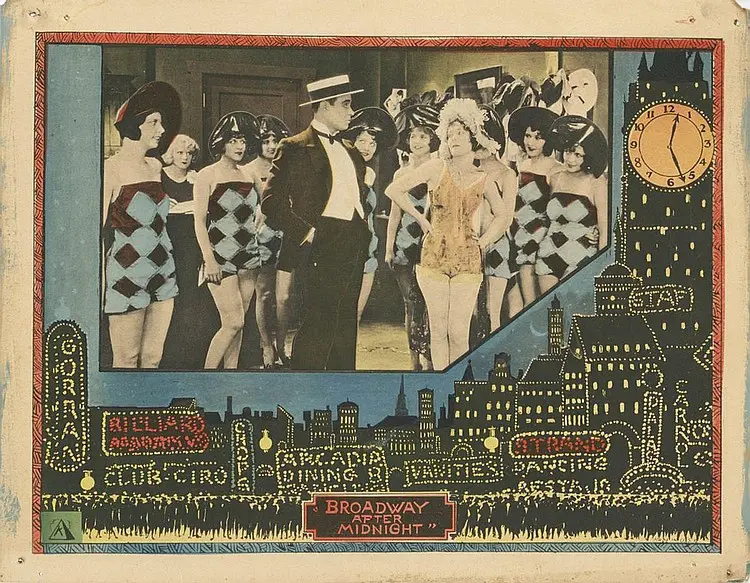
Is Broadway After Midnight a hidden treasure of the late silent era? Short answer: yes, but only if you have a high tolerance for the convoluted coincidences and high-stakes melodrama that defined 1920s crime cinema. This film is specifically for historians of the 'double identity' trope and fans of early female-led noir; it is not for those who demand the fast-paced, logical precision of modern police procedurals.
In the landscape of 1927, cinema was on the precipice of a sound revolution, yet films like this proved that the visual language of the underworld was already well-developed. It is a story of sacrifice, where the protagonist's body and face become currency for men who view women as either shields or leverage. It works. But it is deeply flawed by its own ambition.
1) This film works because the central performance by Priscilla Bonner manages to differentiate two distinct social classes through subtle physicality, making the 'lookalike' plot more than just a cheap gimmick.
2) This film fails because the legal resolution in the final act requires the audience to ignore massive gaps in police logic and the sheer impossibility of the timing surrounding the double murder.
3) You should watch it if you are interested in the evolution of the 'gangster’s moll' archetype and want to see how early screenwriters like Adele Buffington used melodrama to critique the vulnerability of the working class.
The 'double' is one of the oldest tricks in the cinematic playbook, yet Broadway After Midnight treats it with a grimness that feels surprisingly modern. Queenie Morgan is not a woman seeking adventure; she is a woman seeking survival. When she agrees to marry a gangster to save her brother, the film establishes a transactional view of marriage that feels more grounded in the reality of the 1920s urban struggle than the romanticized versions seen in other films of the era like The Luck o' the Foolish.
The resemblance to the society girl isn't treated as a whimsical comedy of errors. Instead, it is a haunting mirror. The society girl has already fallen from grace, having shot her gangster boyfriend. This creates a fascinating parallel: both women, despite their disparate backgrounds, have been corrupted or destroyed by their proximity to the same criminal element. The scene where the gang first realizes the resemblance is played with a predatory intensity that shifts the tone from a domestic drama to a full-blown crime thriller.
The extortion plot itself is where the tension peaks. Queenie’s infiltration of the wealthy household is filmed with a claustrophobic focus on her face. Every flicker of hesitation is a potential death sentence. Unlike the lighter tone found in What Happened to Jones, there is no humor in this deception. It is a cold-blooded financial maneuver that highlights the gang's utter lack of humanity.
Priscilla Bonner carries the weight of the film on her shoulders. In the 1920s, acting was often categorized by broad, theatrical gestures, but Bonner leans into a more internal style here. As Queenie, she carries a weariness that suggests she has seen too much of the 'midnight' Broadway. When she transitions into the role of the society girl, her posture changes, her eyes brighten with a false innocence, and she effectively portrays a woman pretending to be someone she isn't.
Compare this to the more straightforward characterizations in 30 Below Zero. Bonner is dealing with three layers of identity: herself, the wife of a gangster, and the impersonated socialite. There is a specific moment when she looks into a mirror while dressing for the extortion scheme; her expression isn't one of vanity, but of mourning for her lost self. It is a punchy, silent realization that she is no longer a person, but a tool.
Ernest Hilliard and Matthew Betz provide the necessary menace, though they occasionally veer into the stereotypical 'mustache-twirling' villainy common in films like The Rough Diamond. However, their interactions with Bonner are genuinely unsettling. They don't just command her; they occupy her space, a directing choice that emphasizes her lack of agency. This power dynamic is what elevates the film above standard pulp.
Adele Buffington was a powerhouse of early screenwriting, and her influence is visible in how Queenie is framed. While Queenie is a victim of circumstance, she is also the primary mover of the plot. Her decision to protect her brother is the catalyst for the entire story. This isn't a film where a hero rescues a damsel; it’s a film where the damsel tries to navigate a shark tank and nearly drowns.
The script handles the underworld with a cynical eye. It doesn't glamorize the nightclub life. Instead, it shows it as a precursor to the crime world. This cynical edge is similar to what we see in The Woman Under Cover, where the lines between the law and the lawless are blurred. Buffington’s writing ensures that the 'society' world is just as dangerous as the 'underworld,' with the wealthy parents being just as easily manipulated as the thugs on the street.
The pacing, however, is where the film struggles. The first half is a deliberate build-up of character and stakes, but the second half—specifically the murder and the subsequent arrest—feels rushed. It’s as if the film realized it was running out of reel and needed to get to the courtroom as quickly as possible. This abruptness can be jarring, especially compared to the more rhythmic pacing of Midnight Molly.
Is Broadway After Midnight a must-see for casual fans?
No. For the casual viewer, the silent format and the dated 'double identity' trope might feel tedious. However, for those interested in the history of the crime genre, it is an essential watch. It provides a bridge between the moralistic dramas of the early 1920s and the hard-boiled noir that would dominate the 1940s. The film offers a unique look at how 1927 cinema handled complex female protagonists in high-stakes environments.
Visually, the film utilizes the limited technology of the time to create a sense of dread. The use of low-key lighting in the nightclub scenes creates a stark contrast with the bright, flat lighting of the society home. This visual dichotomy reinforces the theme of Queenie being a 'shadow' in a world of light. It’s not quite the expressionism of Mania. Die Geschichte einer Zigarettenarbeiterin, but it shows a clear intent to use light as a narrative device.
The cinematography by an uncredited but capable hand focuses heavily on medium shots. This allows the audience to stay connected to the actors' expressions, which is vital in a silent film about deception. When Queenie is arrested, the camera stays close to her face, capturing the sheer exhaustion of her situation. She isn't just scared; she is finished. It is a brutal moment of realism in an otherwise heightened melodrama.
The editing is functional but lacks the experimental flair found in some European imports of the time, such as Der Galeerensträfling. It follows a standard linear progression that occasionally feels too theatrical, as if we are watching a stage play from the front row. However, this simplicity allows the complex plot—which involves multiple murders and identities—to remain relatively easy to follow.
Pros:
- Strong thematic exploration of class and female vulnerability.
- Effective use of the 'double' trope without falling into comedy.
- Historical significance of Adele Buffington’s screenplay.
- Moody atmospheric lighting in the nightclub sequences.
Cons:
- The 'brother in trouble' subplot is slightly underdeveloped.
- The villains are somewhat one-dimensional.
- Pacing issues in the final twenty minutes.
- Some set pieces feel noticeably low-budget compared to contemporary epics like Queen of Spades.
Broadway After Midnight is a fascinating, if flawed, exercise in silent-era crime storytelling. It manages to take a potentially ridiculous premise—a nightclub girl looking exactly like a murderous debutante—and treat it with a level of gravity that keeps the audience engaged. While it lacks the polish of a major studio production like One of the Bravest, it makes up for it with grit and a standout lead performance.
The film serves as a reminder that the themes of identity and the corruptive nature of the underworld are timeless. It isn't a masterpiece. It is a workmanlike thriller that pushed the boundaries of what a 'crime film' could be in 1927. If you can overlook the creaky plot mechanics of the finale, you will find a story that is surprisingly cynical about the American dream. It works. But it’s a dark, jagged little pill of a movie.
IMDb 5.9
1934
Community
Log in to comment.