DbcultAccessing Vault...
5.6/10
Senior Film Conservator
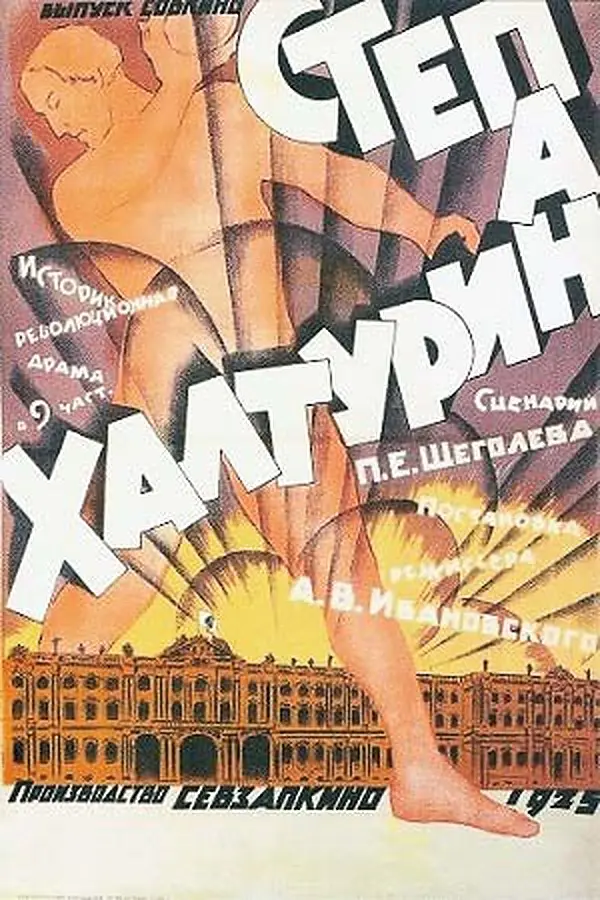
A definitive 5.6/10 rating for a film that redefined the boundaries of cult cinema. Stepan Khalturin remains a cornerstone of transgressive art.
Aleksandr Panteleyev’s 1925 magnum opus, Stepan Khalturin, emerges not merely as a relic of the early Soviet cinematic apparatus but as a profound epistemological inquiry into the nature of radicalization. In an era where the medium was rapidly evolving from theatrical staginess toward a more kinetic visual language, this film occupies a unique space. It avoids the overt montage-heavy experimentation of Eisenstein in favor of a heavy, atmospheric realism that anchors the viewer in the oppressive weight of the 19th-century Tsarist regime. The screenplay, penned by the esteemed historian Pavel Shchyogolev, brings a level of historiographical rigor that differentiates it from more whimsical international contemporaries like Phantom Fortunes.
The film’s power lies in its deliberate pacing. We are introduced to Khalturin not as a firebrand, but as a man of wood and nails. The tactile quality of his labor is emphasized with a reverence for craftsmanship that serves as a precursor to his later, more destructive endeavors. This focus on the physical world—the grain of the timber, the cold iron of the tools—creates a grounded reality that makes his eventual transition into the world of clandestine meetings and explosive chemistry feel all the more jarring. The cinematography by Nikolai Kozlovsky (though often overlooked) utilizes the chiaroscuro of the era to highlight the literal and metaphorical shadows in which these revolutionaries operated.
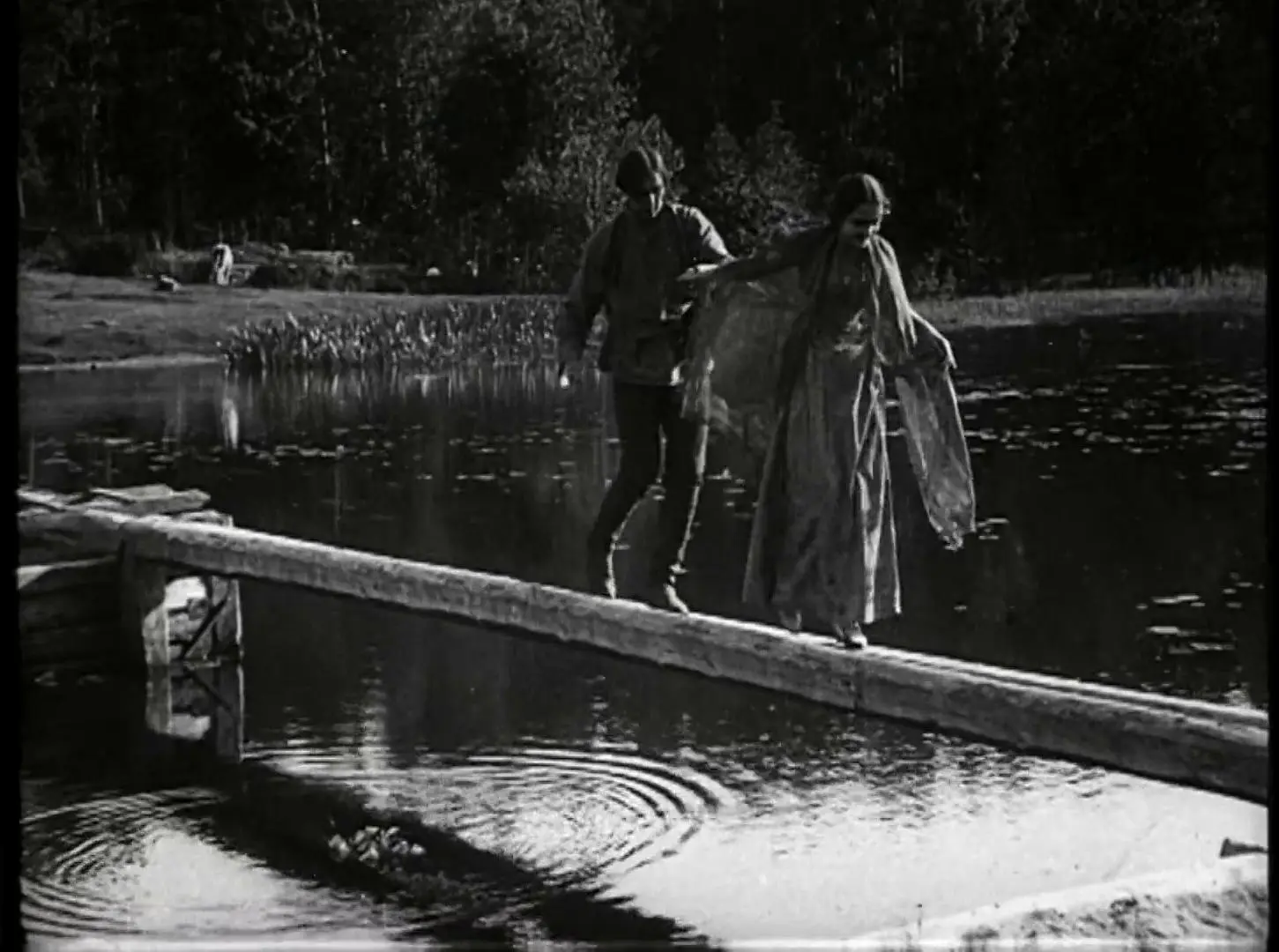
Kondrat Yakovlev delivers a performance of remarkable restraint. In an age where silent film acting often veered into the hyperbolic, Yakovlev’s Khalturin is a study in internal conflict. His face becomes a landscape of suppressed rage and calculated intent. When he stands within the gilded halls of the Winter Palace, the visual contrast is striking. Unlike the melodramatic flourishes seen in The Man in the Moonlight, Yakovlev’s presence is monolithic, suggesting a man who has already accepted his fate. The supporting cast, including the formidable Yekaterina Korchagina-Aleksandrovskaya and Veronika Buzhinskaya, populate this world with a sense of lived-in authenticity that was rare for the mid-20s.
The ideological core of the film is the tension between individual sacrifice and the collective struggle. Panteleyev does not shy away from the moral complexities of Khalturin’s mission. While the film is undeniably a product of its time—designed to lionize the revolutionary spirit—it possesses an underlying melancholy. There is a recognition that the path Khalturin chose was one of isolation. The scenes where he must maintain his cover as a loyal servant while secretly stockpiling dynamite in his basement quarters are masterclasses in suspense, rivaling the psychological depth found in Gengældelsens ret.
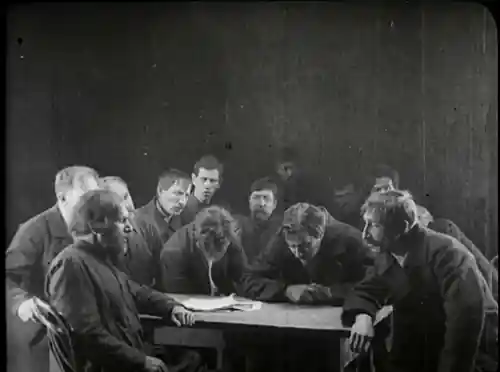
Technically, Stepan Khalturin is a triumph of production design. The reconstruction of the Winter Palace is not merely a backdrop; it is a character in itself—a labyrinthine symbol of imperial decadence that Khalturin must navigate. The camera work during the infiltration sequences uses long takes and deep focus to emphasize the scale of the architecture, making Khalturin appear like a small but lethal virus within the body of the state. This visual strategy is far more sophisticated than the static framing found in The Wrong Woman or the theatrical staging of Chained to the Past.
The sequence leading up to the explosion is handled with a rhythmic editing style that prefigures the Great Soviet Montage movement. As the fuse burns, the intercutting between the unaware Imperial family and the sweating, resolute Khalturin creates an unbearable friction. It is a moment of pure cinema, where the narrative weight of history crashes into the technical possibilities of the frame. Unlike the exoticized tension of The Desert Sheik, the stakes here feel permanent and bone-deep.
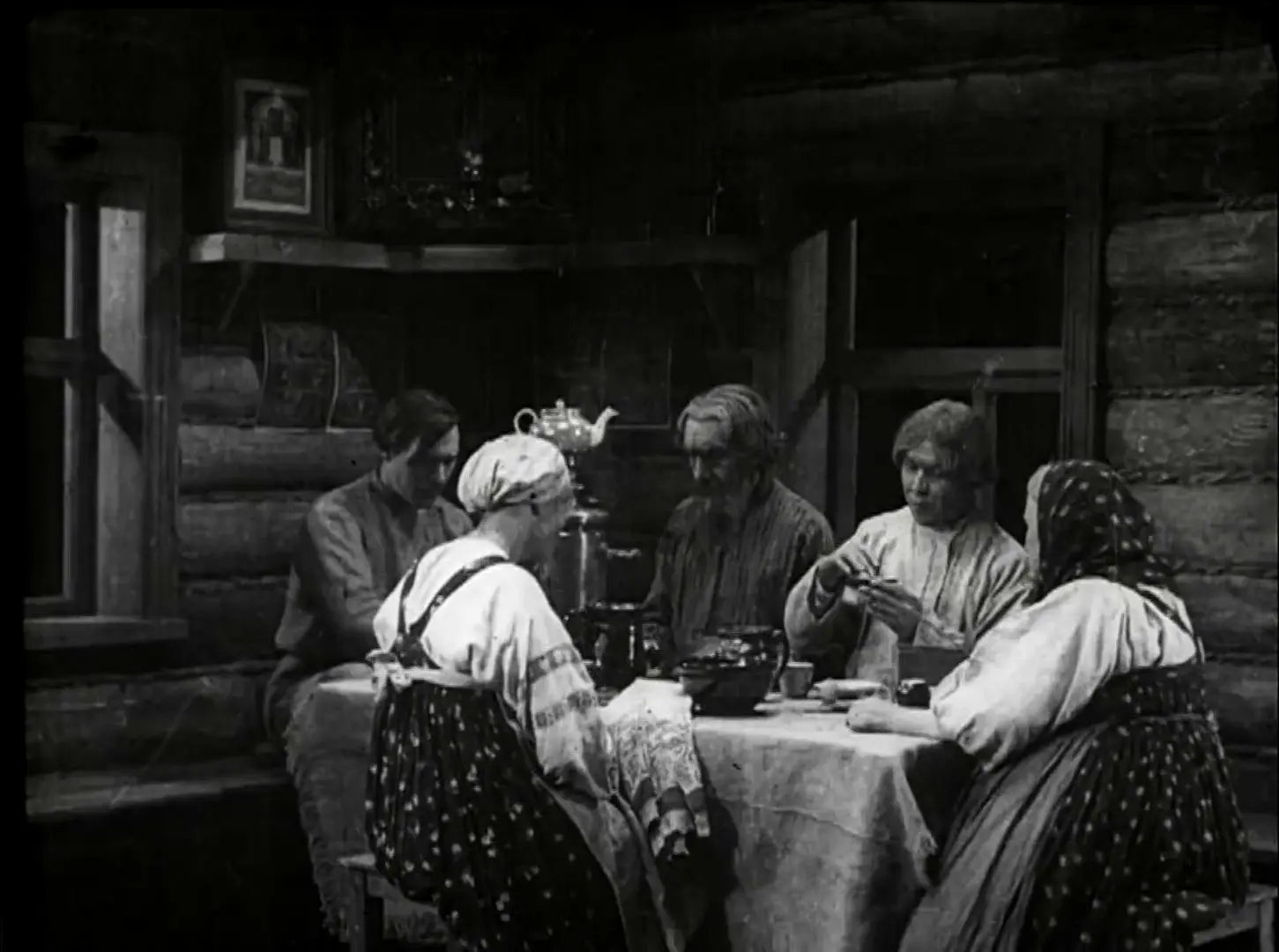
When comparing Stepan Khalturin to other films of its year, such as The Railroader, one notices a distinct lack of sentimentality in Panteleyev’s work. Where Western films often sought to resolve social conflicts through individual triumph or romantic reconciliation, as seen in A Widow's Camouflage, Stepan Khalturin remains committed to the tragedy of the revolutionary process. It shares more DNA with the bleak, atmospheric tension of Sir Arne's Treasure than with the light-hearted escapism of Out of Luck.
The film’s refusal to provide a "happy" ending—given that the explosion failed to kill the Tsar and led to the eventual execution of the conspirators—serves as a powerful statement on the nature of martyrdom. It is a narrative of failure that paradoxically fuels the fire of future success. This thematic complexity is what elevates it above contemporary morality plays like The Triumph of Venus. It isn't interested in cosmic justice, but in the grinding gears of historical inevitability.
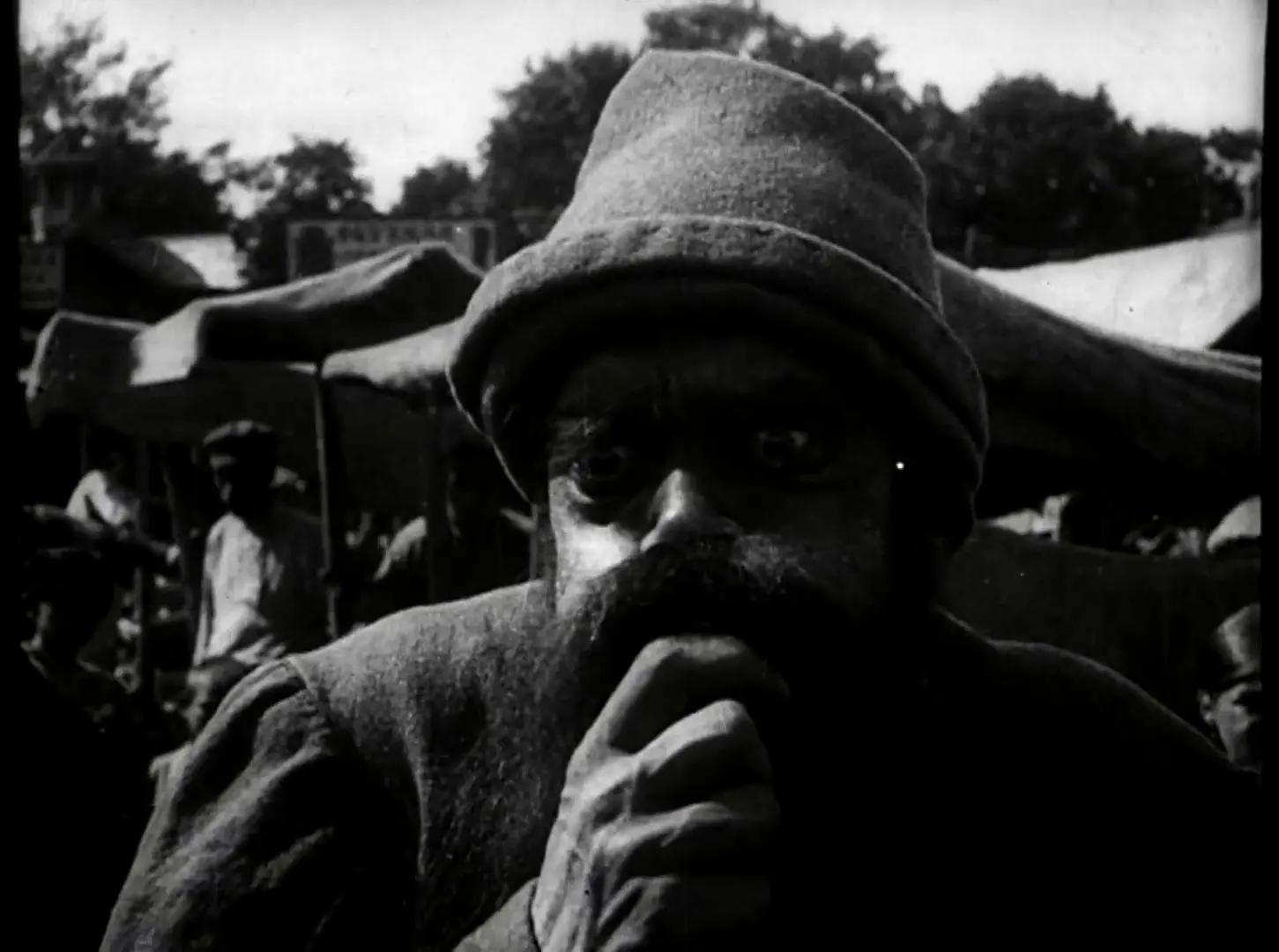
The inclusion of a massive cast, including veterans like Iona Talanov and Oleg Frelikh, ensures that the film feels like a panoramic view of society. Every face in the crowd, every soldier in the palace, contributes to a sense of overwhelming social pressure. This is not the individualized drama of The Western Musketeer; it is a collective portrait of a nation in flux. The documentary-like precision of certain scenes recalls the archival weight of Istoriya grazhdanskoy voyny, yet Panteleyev never loses the thread of the human drama.
One must also consider the film’s place in the transition of Soviet aesthetics. While it lacks the sheer avant-garde audacity of Das Mädel von Picadilly, 2. Teil (Das Mädel von Picadilly, 2. Teil), it offers a more cohesive and emotionally resonant experience. It avoids the domestic trivialities of The Divorcee, opting instead for a grand, somber interrogation of political violence. The film’s final act, depicting the arrest and execution of the conspirators, is filmed with a stark, unadorned simplicity that is devastating in its lack of artifice.
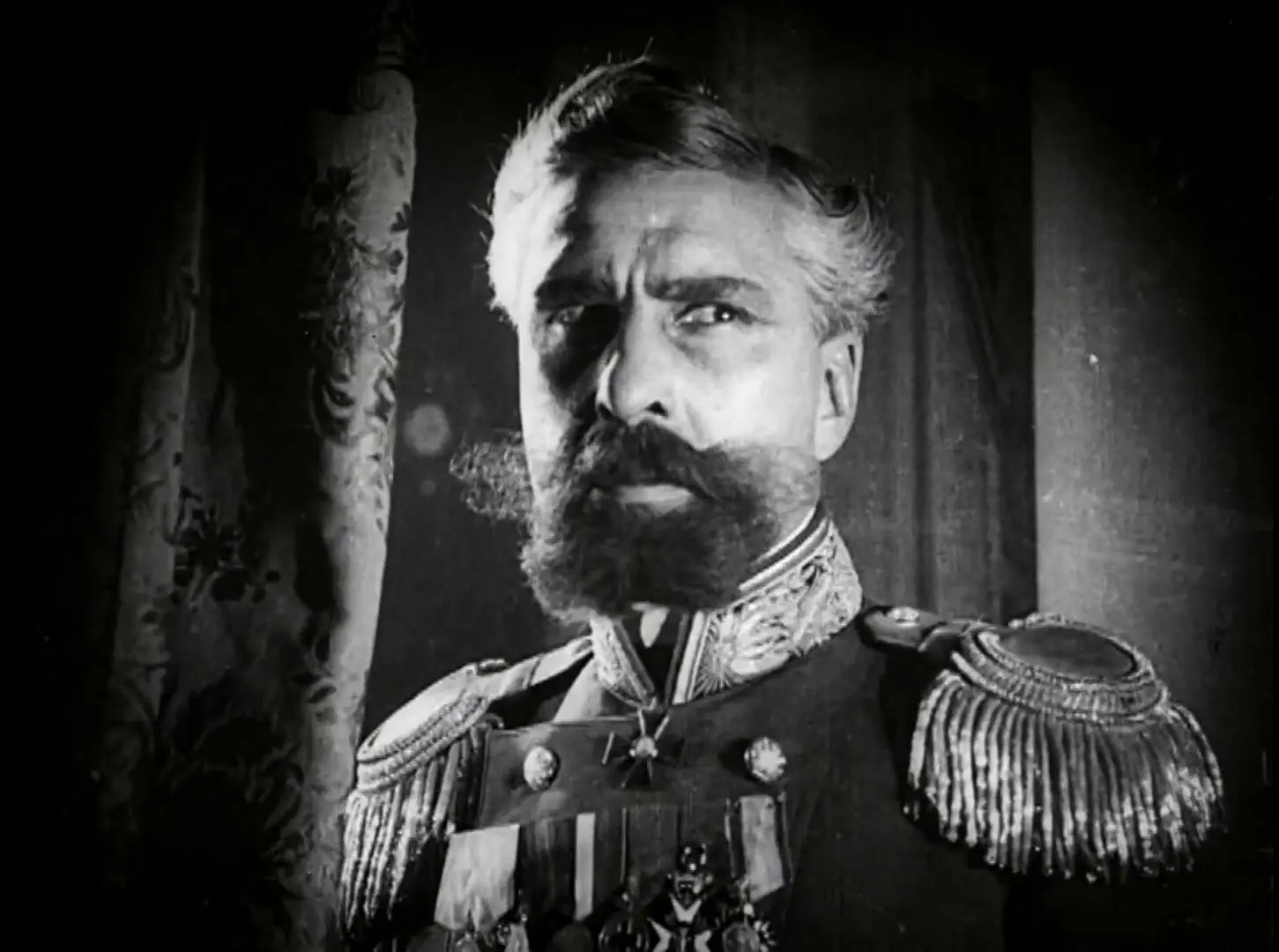
Ultimately, Stepan Khalturin is a testament to the power of silent cinema to convey complex ideological arguments through visual metaphor. The image of Khalturin, alone in his room, surrounded by the tools of his trade and the instruments of his destruction, remains one of the most haunting images of the era. It is a film that demands to be viewed not just as a historical document, but as a sophisticated piece of art that grapples with the eternal question of how far one is willing to go for a cause. The flickering light of the projector mirrors the flickering hope of the characters—a fragile, beautiful, and dangerous thing that changed the world forever. In the annals of early cinema, Panteleyev’s work stands as a monolithic achievement, a somber bridge between the old world and the new, constructed with the same precision and care that Khalturin himself applied to his carpentry.
This review is a deep dive into the historical and cinematic significance of the 1925 classic. For more explorations of early 20th-century film, stay tuned to our retrospective series.
IMDb —
1917
Community
Log in to comment.