DbcultAccessing Vault...
Cult Review
Senior Film Conservator
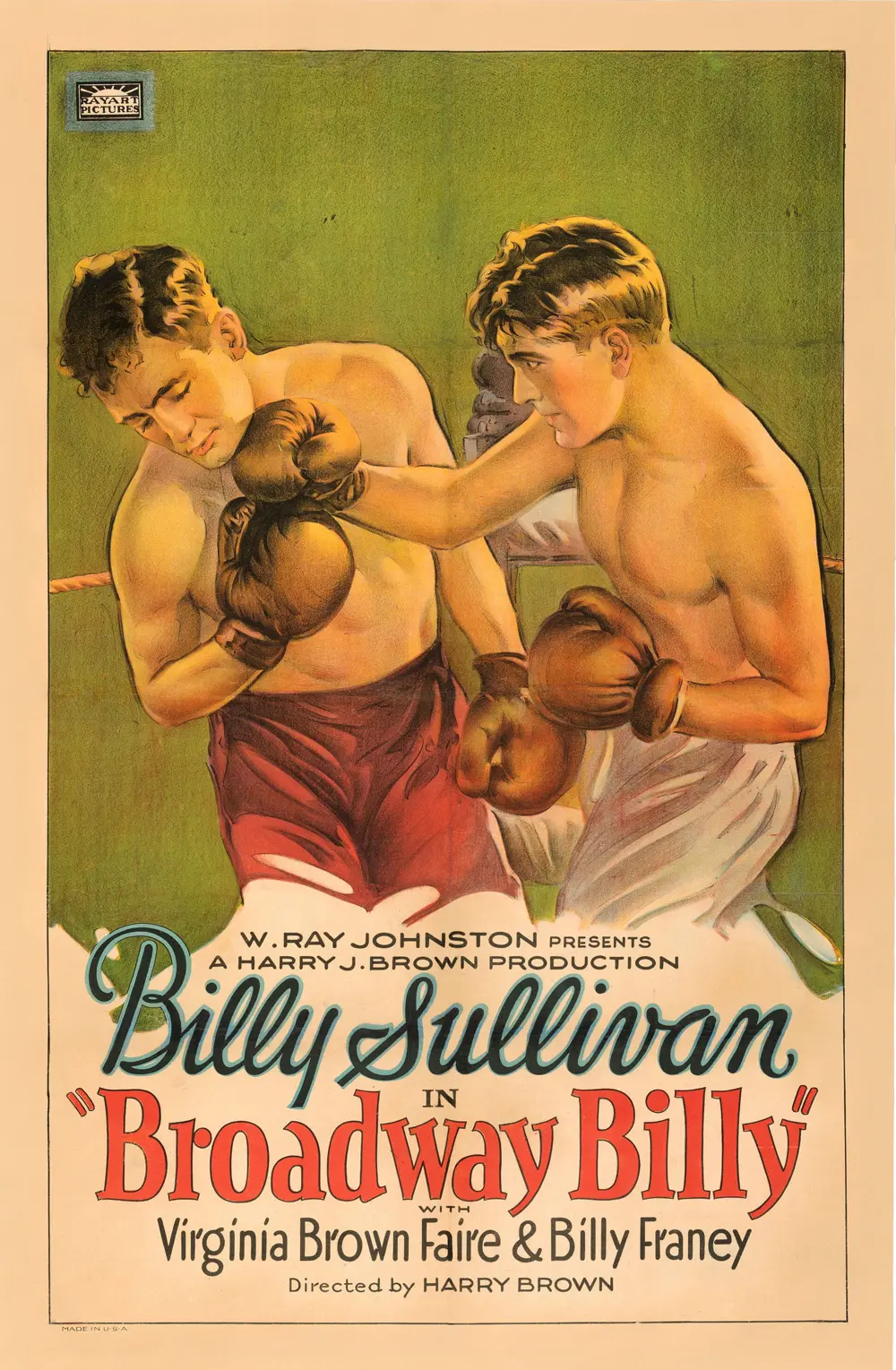
Is 'Broadway Billy' worth watching today? Short answer: yes, but with significant caveats. This 1929 silent drama offers a fascinating, if somewhat dated, glimpse into the perils of sudden fame and the manipulative underbelly of competitive sports, making it a compelling watch for aficionados of early cinema and boxing narratives, yet likely a challenging one for those accustomed to modern storytelling pacing and subtlety.
This film works because of its surprisingly nuanced portrayal of a protagonist's moral decline and eventual, albeit abrupt, redemption. It fails because its melodramatic flourishes occasionally undermine the emotional authenticity it strives for, relying on contrivance rather than organic development. You should watch it if you appreciate the raw, unadorned storytelling of the silent era and are interested in exploring how themes of integrity, temptation, and ambition were tackled before the advent of sound changed cinema forever. However, if you seek fast-paced action, subtle character work, or a narrative free from overt moralizing, 'Broadway Billy' might test your patience.
At its core, 'Broadway Billy' is less a sports film and more a morality play dressed in boxing gloves. Billy Brooks (Jack Herrick), fresh off a lightweight championship victory, is almost immediately catapulted into the glamorous, yet treacherous, orbit of Broadway society. This rapid transition from the disciplined grind of the gym to the hedonistic whirl of urban nightlife is depicted with a surprising degree of psychological insight for its time. Herrick, with his earnest demeanor and expressive eyes, conveys the initial bewilderment and eventual intoxication of a man unaccustomed to such adulation and excess.
The film’s central conflict isn't just about winning or losing in the ring; it's about the erosion of character. Ace O’Brien, the manager of Billy’s next opponent, is a delightfully insidious antagonist, a puppet master pulling strings in the shadows of high society. His weapon of choice is not a left hook, but the enchanting Delorai (Virginia Brown Faire), a 'Broadway vamp-for-hire' whose sole purpose is to distract and destabilize Billy. Faire, with her alluring gaze and calculated charm, embodies the seductive danger that fame can bring. Her performance is less about overt villainy and more about a sophisticated, almost detached, manipulation that feels genuinely threatening.
The narrative expertly illustrates how O’Brien’s tactics slowly chip away at Billy’s focus, his training, and crucially, his devotion to Phyllis (Hazel Howell). The parties, the late nights, the whispers of infidelity – it’s a systematic dismantling of the champion’s foundation. What's particularly effective here is the film's visual language, even without dialogue. The contrast between the stark, honest world of the boxing ring and the opulent, deceptive grandeur of Broadway is starkly drawn through set design and the contrasting performances. The film makes a strong case that the biggest fights aren't always fought with fists.
Jack Herrick, as Billy Brooks, carries the film with remarkable presence. His transformation from a triumphant, wholesome champion to a distracted, morally compromised figure is believable, largely due to his nuanced physical acting. We see the weariness in his eyes, the subtle shift in his posture as the weight of Broadway’s temptations takes its toll. His anger at the party, after losing the fight, feels raw and justified, if misplaced, showcasing a range that goes beyond simple heroics.
Hazel Howell, as Phyllis, plays the archetype of the devoted, long-suffering wife. While her character is undeniably central to Billy’s moral compass, Howell’s performance, through no fault of her own, often feels constrained by the era’s conventions. Phyllis is more a symbol of purity and stability than a fully fleshed-out character with her own agency. Her pain is palpable, but her actions are largely reactive, serving to highlight Billy's journey rather than charting her own. This is a common criticism of female roles in silent films, and 'Broadway Billy' doesn't entirely escape it.
Virginia Brown Faire, however, steals every scene she’s in as Delorai. Her portrayal is a masterclass in silent film villainy, exuding a captivating blend of danger and allure. She doesn't need dialogue to communicate her intentions; a glance, a sly smile, a subtle shift in body language is all it takes to convey her manipulative prowess. It’s a performance that truly exemplifies the power of non-verbal communication in early cinema, making her character far more memorable than she might have been with a less skilled actor.
Billy Sullivan, as Billy’s trainer or manager, provides solid support, embodying the loyal, no-nonsense cornerstone that Billy desperately needs but temporarily abandons. His exasperation and unwavering belief in Billy ground the more melodramatic elements of the story.
The direction, while not groundbreaking, is competent and serves the narrative effectively. Pacing is typical for a late silent film, building slowly before accelerating into dramatic confrontations. The film benefits from clear storytelling, even if some of the narrative beats feel overtly theatrical by modern standards. For instance, the sequence detailing Delorai’s seduction is handled with a certain implied sensuality that hints at the pre-Code era's more lenient attitudes, contrasting sharply with the moralistic undertones of the overall plot. This subtle tension between implied vice and explicit virtue is an interesting, perhaps unintentional, aspect of the film’s tone.
The cinematography, while not employing revolutionary techniques, effectively uses close-ups to emphasize emotional states and wider shots to establish the opulent settings of Broadway. The boxing sequences, surprisingly, are almost secondary, serving more as narrative punctuation than as the main event. This might disappoint modern viewers expecting a 'Rocky' precursor, but it underscores the film’s true focus on the moral and relational drama outside the ring.
One of the film's most striking, and perhaps unconventional, observations is how it positions the boxing match itself as almost an afterthought. The real battle for Billy Brooks isn't fought with fists, but within the gilded cages of Broadway's social scene, a testament to the era's fascination with societal corruption over athletic prowess.
The turning point – Phyllis’s automobile accident – is a classic melodramatic device. While undeniably effective in galvanizing Billy into action and providing a clear path to redemption, it feels somewhat unearned, a convenient plot contrivance rather than an organic narrative development. This is where the film’s commitment to a moralistic arc sometimes overshadows its potential for deeper character exploration. It works. But it’s flawed.
'Broadway Billy' grapples with timeless themes that remain relevant today. The corrupting influence of sudden fame, the fragility of personal integrity when exposed to relentless temptation, and the enduring power of love and loyalty are all explored with earnest intent. Billy's journey is a classic hero's arc, albeit one that takes a significant detour into self-destruction before finding its way back. His anger at the party, while destructive, is a powerful depiction of a man unraveling under pressure and self-recrimination.
The film’s resolution, with Billy quickly dispatching his opponent and rushing to Phyllis’s side, is a satisfying, if somewhat rushed, conclusion. It reinforces the idea that true victory lies not just in the ring, but in the restoration of one's moral compass and relationships. The final reconciliation, implied rather than explicitly shown, leaves the audience with a sense of hopeful closure, a common trope for the period.
Compared to other films of its time, 'Broadway Billy' stands out for its relatively clear-eyed view of ambition's dark side. While it lacks the groundbreaking visual artistry of some European silent films or the epic scope of a D.W. Griffith, it delivers a solid, engaging story that speaks to universal human experiences. It’s a more grounded affair than, say, the fantastical elements you might find in a film like Felix at the Fair, choosing instead to focus on human fallibility.
Yes, 'Broadway Billy' is absolutely worth watching today for specific audiences. It offers a valuable window into late silent-era storytelling, performance styles, and thematic concerns. For film historians, boxing enthusiasts, or anyone interested in the evolution of cinematic narrative, it provides rich material for study and enjoyment. However, its melodramatic elements and slower pacing might be a hurdle for casual viewers accustomed to modern film conventions. Approach it with an appreciation for its historical context, and you’ll find a compelling, if imperfect, drama.
'Broadway Billy' is a fascinating relic from the silent era, offering a compelling, if occasionally over-the-top, exploration of a champion’s fall and redemption. It’s a testament to the power of non-verbal acting and the enduring appeal of morality tales. While it won't resonate with every modern viewer, its strengths in performance, particularly from Jack Herrick and Virginia Brown Faire, and its thematic depth make it a worthwhile watch for those willing to engage with its period sensibilities. It's not a knockout in every round, but it certainly lands enough punches to earn a respectable decision. If you're a connoisseur of classic cinema, especially the silent variety, this film punches above its weight and deserves your attention. It's a solid, if not spectacular, entry into the annals of early Hollywood.
IMDb 6.8
1929
Community
Log in to comment.