DbcultAccessing Vault...
Cult Review
Senior Film Conservator
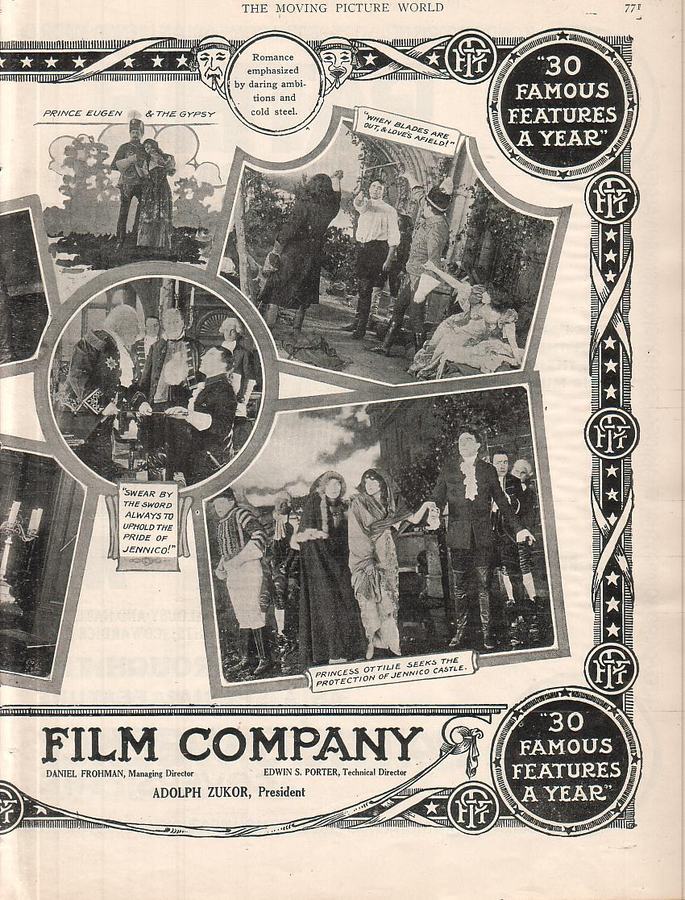
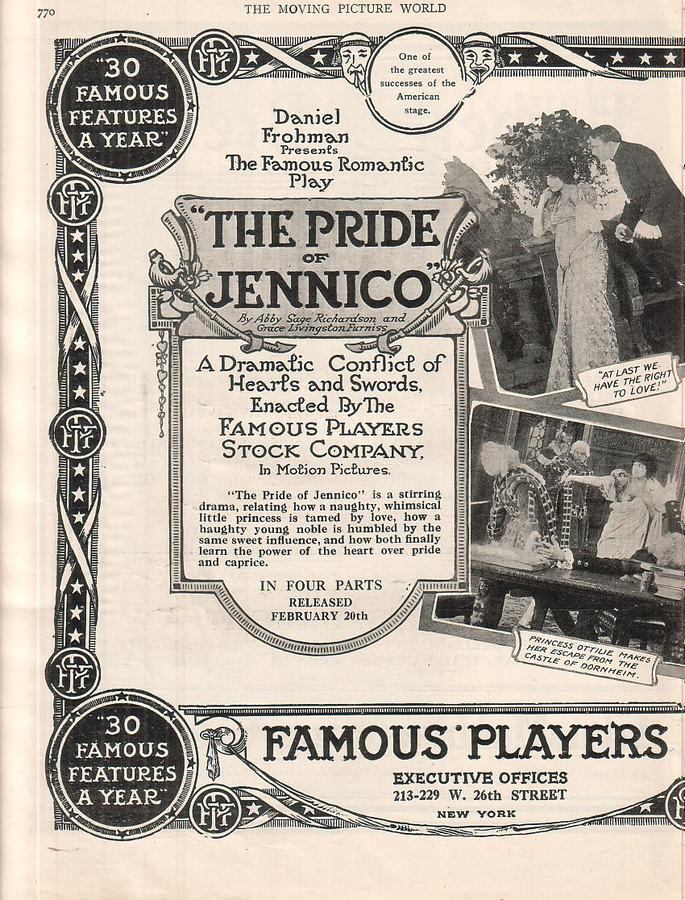
Candle soot still clings to the nitrate of The Pride of Jennico, a 1914 one-reeler that staggers under the weight of its own silk banners. Watching it today feels like eavesdropping on a half-remembered fairytale muttered by an unreliable ghost; scenes waltz, vanish, reappear bleached by time, yet the emotional tremor remains intact. Basil Jennico—half fop, half berserker—stalks his ancestral corridors as though every flagstone demanded obeisance. Meanwhile Princess Ottilie, equal parts coquette and strategist, weaponizes her own social downfall. Together they conduct a pas de deux of self-sabotage so exquisite it could teach Shakespearean lovers a seminar in exquisite agony.
Director J. Searle Dawley, better remembered for his early Frankenstein experiments, here carves miniature frescoes inside a 37-minute runtime. Note how the castle’s great hall, draped in funeral black, becomes a womb of conflicting oaths: the dying uncle rasps fealty to lineage while Basil’s pupils dilate with wanderlust. That single tableau—deathbed beside banquet—encapsulates the film’s dialectic: legacy versus libido. Dawley’s blocking favors diagonal sightlines; characters tilt like chess pieces sliding toward doom, a visual premonition of the coming marital switcheroo.
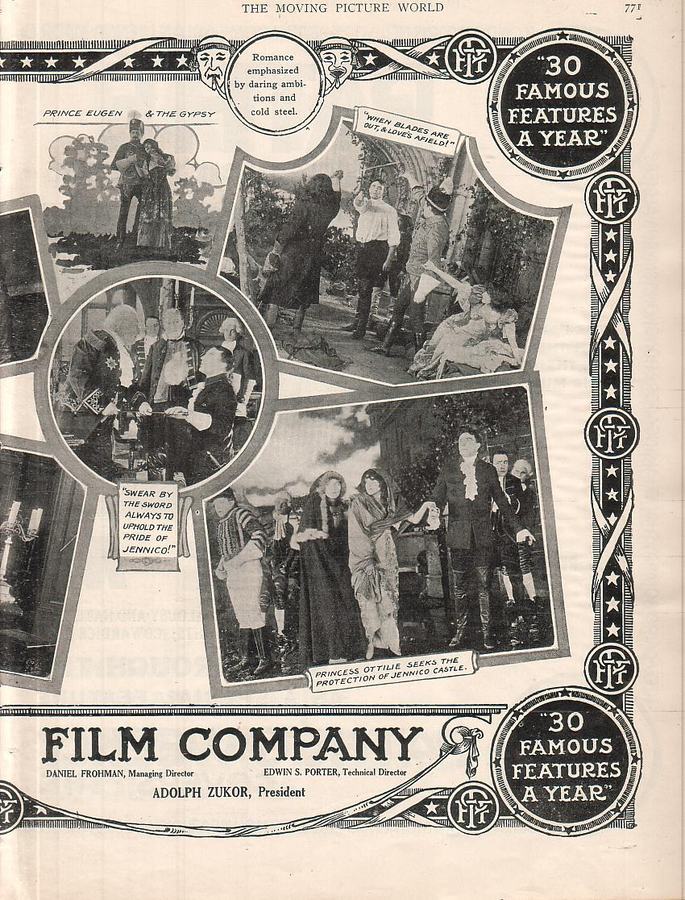
Comparative glances toward The World, the Flesh and the Devil or The Colleen Bawn reveal similar preoccupations with class vertigo, yet Jennico’s tension feels leaner, almost feral. Where other Edwardian romances ladle moral bromides, this yarn trusts the viewer to savor hypocrisy without editorial nudging.
House Peters, embodying Basil, carries the languid swagger of a man who has read too many chivalric ballads yet never wielded iron in earnest. His eyes—calm seas until pride pricks—betray the film’s emotional pivot. In the banquet sequence he fingers a goblet rim, distracted less by wine than by Ottilie’s phantom perfume; the camera lingers, inviting us to study micro-betrayals of knuckles and jaw.
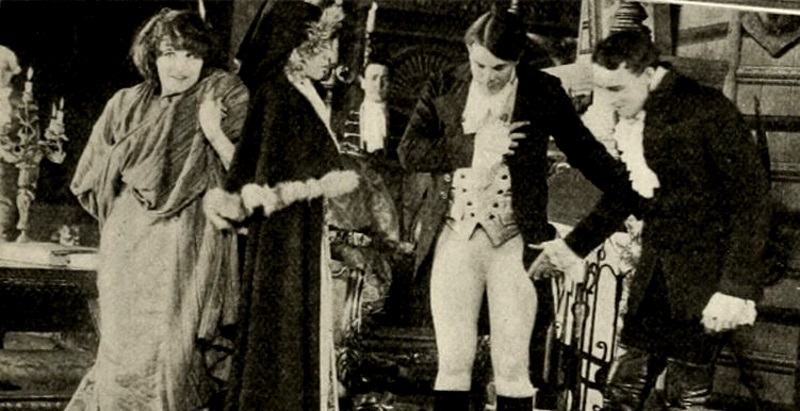
Marie Leonard’s Ottilie oscillates between sovereign poise and kitchen-maid mischief. The genius lies in how she never signals the swap to the audience through exaggerated gesture; instead, minute shifts in posture—spine slightly bent, eyelids half-mast—sell the deception. Silent-era acting often ages into caricature, yet Leonard’s restraint feels startlingly modern, forecasting the nuanced minimalism later celebrated in Scandinavian fare like Balletdanserinden.
Surviving prints, though speckled with vinylite acne, retain amber-and-emerald hues hand-tinted stroke by stroke. When torchlight chases Ottilie through the undercroft, those fleeting color flecks ignite the frame like sparks from a blacksmith’s anvil. The aesthetic tension—opulence married to entropy—mirrors the lovers’ predicament: ardor flares while social contracts corrode.
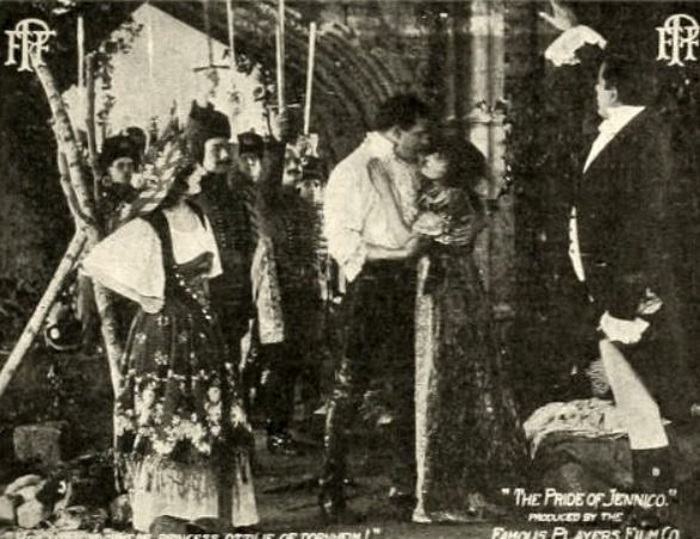
Cinematographer H. Lyman Broening, better documented for newsreels, proves surprisingly baroque. He floods interior scenes with top-light chiaroscuro so cavernous that faces levitate out of umbra, recalling the tenebrism of de la Tour. Meanwhile exteriors—shot in New Jersey’s Watchung reservation—harness windswept underbrush to evoke Mittel-European wilderness. Clouds smother the horizon like crumpled parchment, foreshadowing the lovers’ impending entanglement with fate.
Grace Livingston Furniss and Abby Sage Richardson, adapting the novel from The Pride of Jennico by Agnes and Egerton Castle, compress a 400-page doorstop into brisk title cards that read like bawdy haikus. One intertitle quips: “A kingdom for a kiss, yet a kiss may unking me.” The aphoristic economy forces viewers to assemble subtext between the flashes, a proto-modernist gambit that anticipates the narrative fragmentation of The Reign of Terror.
Scholars often dismiss silent adaptations of popular romances as middlebrow pap, yet the script’s gender politics flicker with subversion. Ottilie engineers her own marital capture; Basil merely believes he’s hunting. The power reversal—woman as strategist, man as credible dupe—quietly undermines the patriarchal scaffolding typical of 1910s adventure yarns.
Most festivals now pair the film with original trios performing galliards and sarabandes. I last caught it at Brooklyn’s Morbid Anatomy Museum where a hurdy-gurdy drone bled into a klezmer clarinet, transforming the courtyard duel into a danse macabre. The clash of timbres—Renaissance strings against wailing reeds—mirrors the aristocratic-meets-proletarian masquerade onscreen. If you curate a home screening, consider layering Dead Can Dance over the runtime; Lisa Gerrard’s glossolalia adds the oracular ache the visuals court.
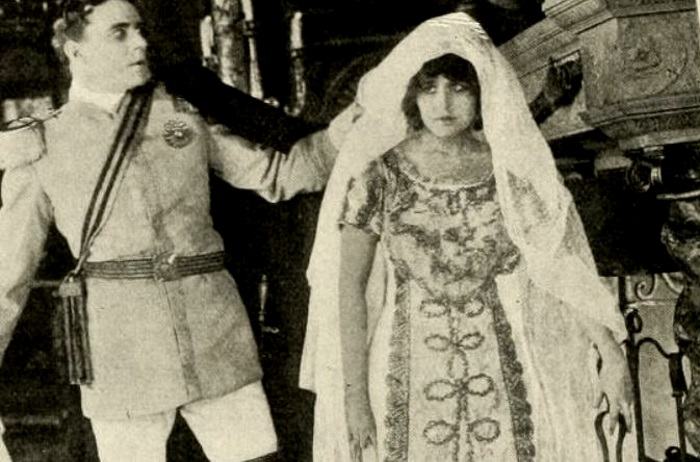
At roughly 1.1 seconds per shot, the cutting cadence rivals later Soviet montage. Note the pre-altar sequence: three shots—veiled bride, anxious priest, Basil’s twitching gauntlet—then a smash-cut to the reveal. The ellipsis skips ceremonial filler, plunging us straight into the emotional fulcrum. Contemporary audiences, nursed on Marvel tempo, might still find the sequence daringly abrupt.
What gnaws at the film’s marrow is not external villainy but the autoimmune disease of pride. Prince Eugen, the nominal antagonist, registers as little more than a courtier’s sneeze; the true enemy coils inside Basil’s ribcage. Every time duty trumps desire, the film sutures a scar onto his psyche, culminating in the bridal-chamber repudiation. Only when steel kisses steel on the fog-slick bridge does Basil realize identity is performance, not pedigree. The denouement—love accepting misalliance—anticipates the egalitarian ethos championed in post-WWI dramas like Only a Factory Girl.
Filmographies list The Pride of Jennico as a footnote in House Peters’ career, yet its DNA replicates through decades of swashbucklers from Flynn’s Adventures of Robin Hood to Princess Bride. The mistaken-identity wedding trope resurfaces in Capra’s It Happened One Night and even Shakespearian reboots like 10 Things I Hate About You. More pointedly, the film’s gender masquerade prefigures Victor/Victoria and She’s the Man, reminding us that early cinema already toyed with performative gender before academic jargon existed.
Archivists at EYE Filmmuseum recently uncovered a 28mm classroom reel containing an alternate ending where Ottilie commands a battalion to rescue Basil from bandits—evidence that distributors toyed with proto-feminist spin-offs long before #StrongFemaleLead trended on social platforms.
A 2K restoration screened at 2022’s Pordenone Silent Days, scanned from a Desmet-colored 35mm at the BFI. As of this writing, no boutique Blu-ray exists; however, a 720p rip with Russian intertitles circulates among cine-club torrents—watch at your ethical peril. For legitimate viewing, stream via Media History Digital Library (U.S. public domain claim) though cue-cards are in Dutch. Pair with a translated subtitle file from the AFI catalog for optimal comprehension.
To witness The Pride of Jennico is to hold a cracked hourglass: sand grains of Edwardian sentiment trickle alongside surprisingly modern grit. Its lovers court calamity, swap roles, unmask each other, and still choose the perilous liberty of love over the gilt cage of rank. In an age when algorithmic dating apps quantify desirability in swipe metrics, there is radical balm in watching two silhouettes—one clad in tarnished armor, the other in servant’s hemp—gamble exalted futures on the turn of a veiled face. Pride drowns, humility surfaces, and the last frame lingers like a breath held too long: passion, once weaponized, can yet be sheathed in tenderness.
IMDb 6.1
1935
Community
Log in to comment.