DbcultAccessing Vault...
Cult Review
Senior Film Conservator
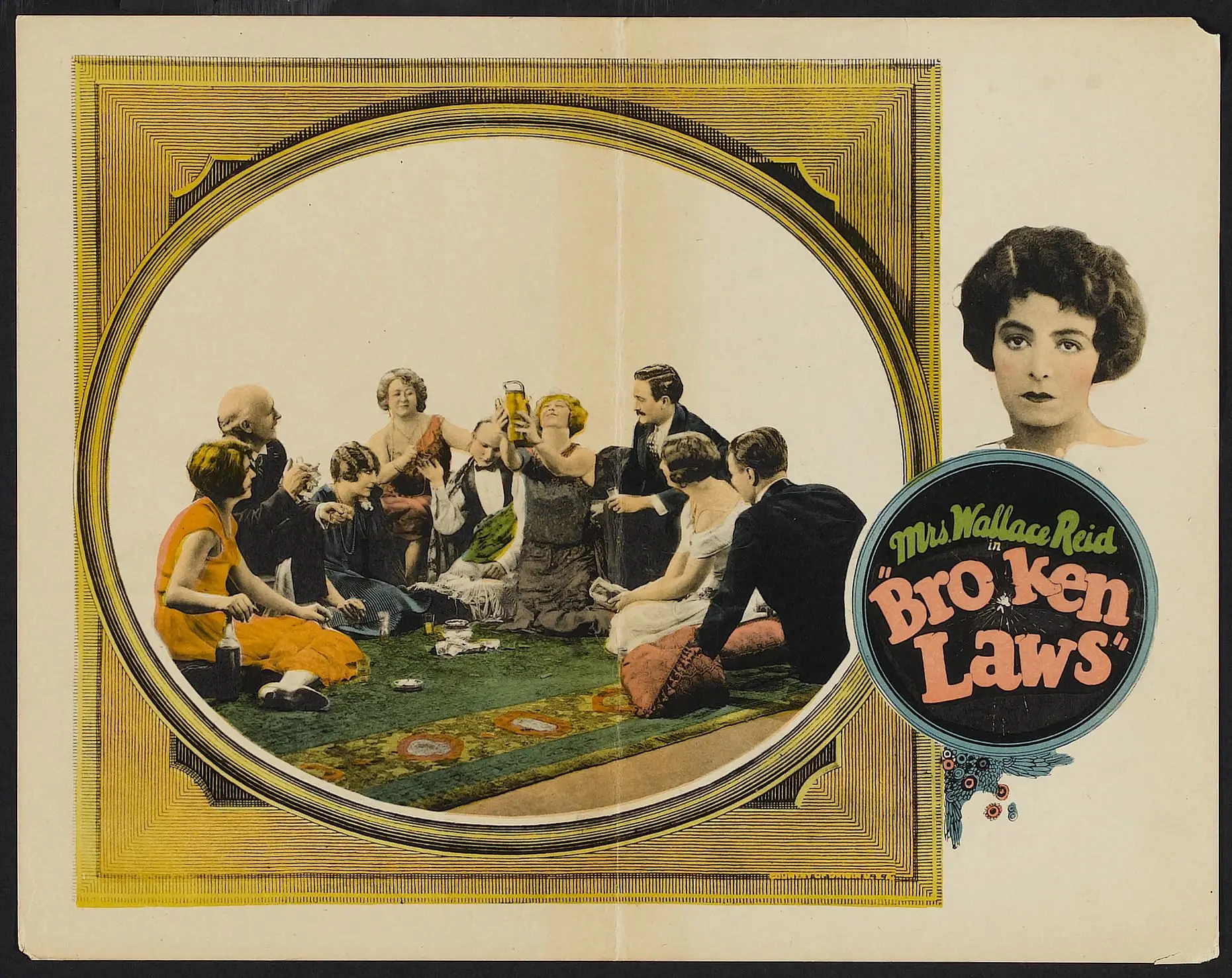
In the pantheon of early twentieth-century cinema, few figures wielded the camera as a cudgel for social reform quite like Dorothy Davenport. Credited here as Mrs. Wallace Reid, Davenport’s presence in Broken Laws (1924) transcends mere performance; it is an act of cinematic activism. This film, emerging from the crucible of the Jazz Age, serves as a stark antithesis to the era's perceived hedonism. It addresses a perennial anxiety: the corruption of the next generation through the softening of the parental spirit. Unlike the more abstract moralizing found in The Guilty Man, Broken Laws anchors its didacticism in the granular details of domestic life, making the eventual legal catastrophe feel not like an accident of fate, but an architectural inevitability.
The narrative architecture, meticulously crafted by the formidable trio of Adela Rogers St. Johns, Bradley King, and Marion Jackson, eschews the melodramatic tropes of the era in favor of a psychological slow-burn. We witness the incremental erosion of authority. The mother, portrayed with a haunting, misguided tenderness by Davenport, views her husband’s warnings as mere cynicism. This fundamental rift in the marital unit—the conflict between the indulgent heart and the disciplined mind—forms the ideological backbone of the piece. It is a film that demands we look at the quiet moments of childhood capitulation as the true source of societal decay.
Arthur Rankin delivers a performance of remarkable nuance as the son, Bobby. In the silent medium, where exaggeration often masquerades as emotion, Rankin employs a subtle petulance that effectively communicates a soul devoid of internal limits. His transition from the pampered darling of the nursery to the panicked defendant in a manslaughter trial is handled with a sophistication that rivals the thematic depth of Forget Me Not. He does not play a villain; he plays a vacuum—a man who has never been taught the shape of 'no,' and thus finds the iron bars of a cell to be his first real experience of physical and moral boundaries.
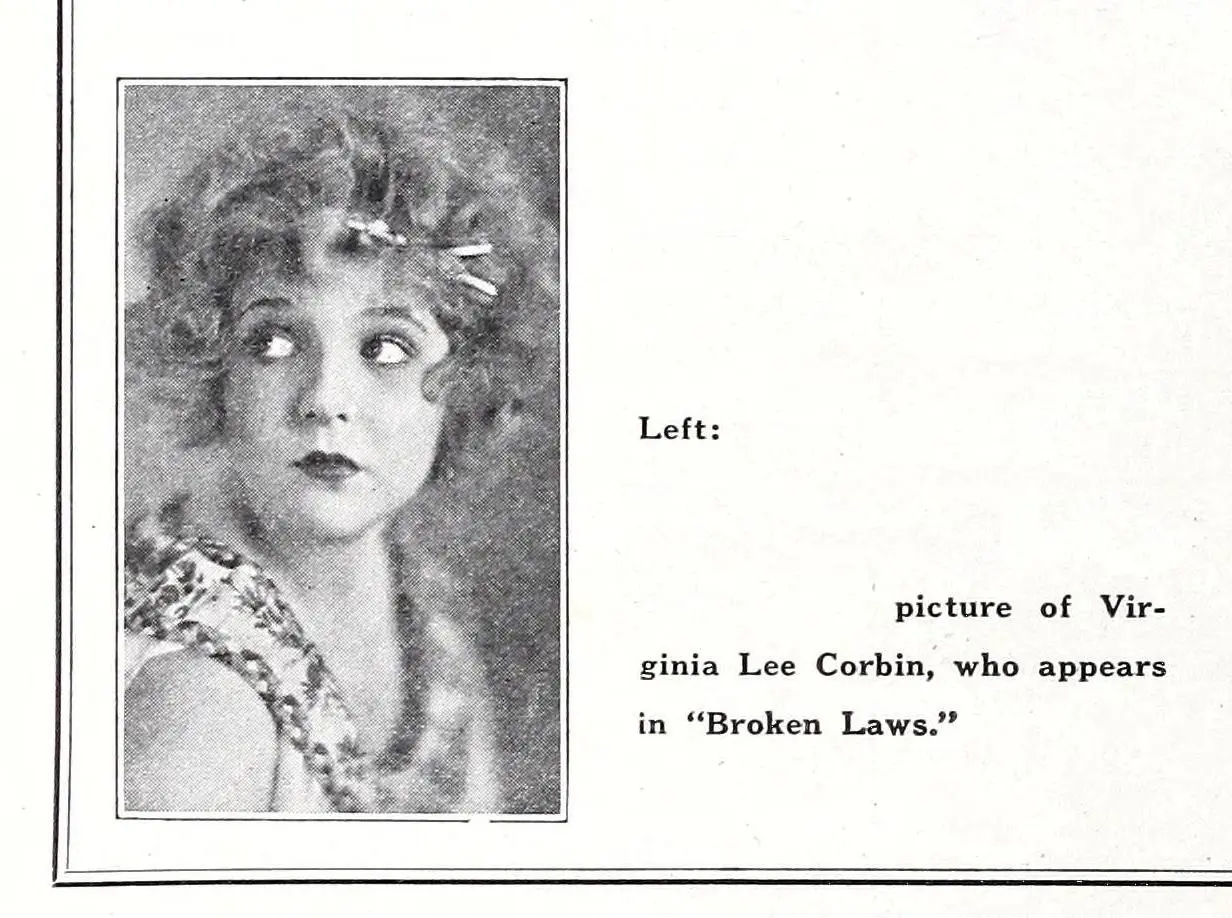
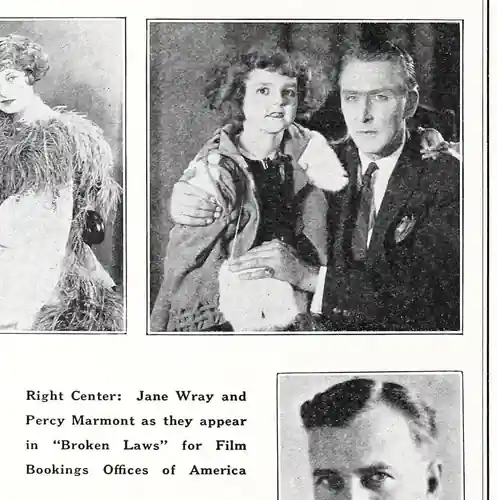
The supporting cast, including Virginia Lee Corbin and Percy Marmont, provide the necessary social context. Marmont, in particular, serves as the voice of the neglected patriarchy, his warnings echoing through the halls of their opulent home like a discarded prophecy. The cinematography captures this opulence not as a virtue, but as a gilded cage where character is allowed to atrophy. The visual language of the film often places Davenport in soft, diffused lighting, emphasizing her maternal blindness, while the courtroom sequences are rendered with a harsh, high-contrast clarity that signals the end of her subjective reality.
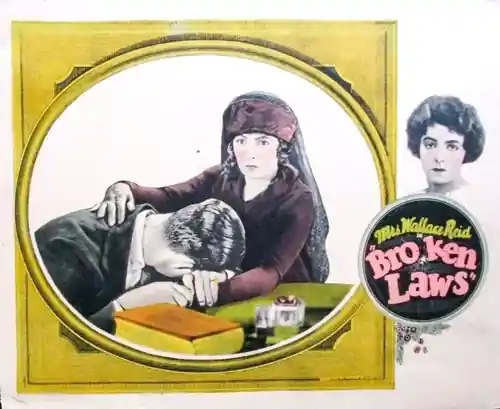
When the narrative shifts into the legal arena, Broken Laws sheds its domestic skin and becomes a precursor to the modern legal thriller. The manslaughter charge is not merely a plot device; it is the physical manifestation of the 'broken laws' referenced in the title—both the statutory laws of the land and the natural laws of cause and effect. The tension in these scenes is palpable. The audience is forced to reconcile their sympathy for the mother’s grief with the undeniable reality of the son’s negligence. This moral complexity is what elevates the film above the standard temperance-adjacent fare of the 1920s.
The script’s brilliance lies in its refusal to offer an easy absolution. Even as the defense argues for leniency, the camera lingers on the victims of the son’s recklessness, ensuring the human cost is never obscured by maternal sentiment. It shares a certain grim realization with The Phantom regarding the inescapable nature of one's past. The law, in Davenport’s world, is the final teacher for those who refused to learn at home. It is a cold, indifferent instructor, but its lessons are permanent.
Visually, the film utilizes the grammar of the 1920s to articulate a very modern anxiety about the 'spoiled' generation. The editing by Marion Jackson ensures that the pacing never falters, moving from the sunny, over-saturated vignettes of childhood to the shadowy, claustrophobic atmosphere of the prison and the court. There is a specific shot—a close-up of Davenport’s hands twisting a handkerchief during the verdict—that conveys more agony than any intertitle could hope to achieve. It is a masterclass in the economy of silent storytelling.
Comparing this to works like Hearts of the World, we see a shift from the grand scale of global conflict to the intimate, yet equally devastating, conflict of the family unit. Broken Laws suggests that the greatest threat to civilization isn't an external enemy, but the internal failure to cultivate virtue. This was a radical stance for a female filmmaker of the time, often expected to produce light romances or simple melodramas. Davenport, instead, chose to produce a mirror in which the audience was forced to examine their own parenting and their own complicity in the creation of 'monsters'.
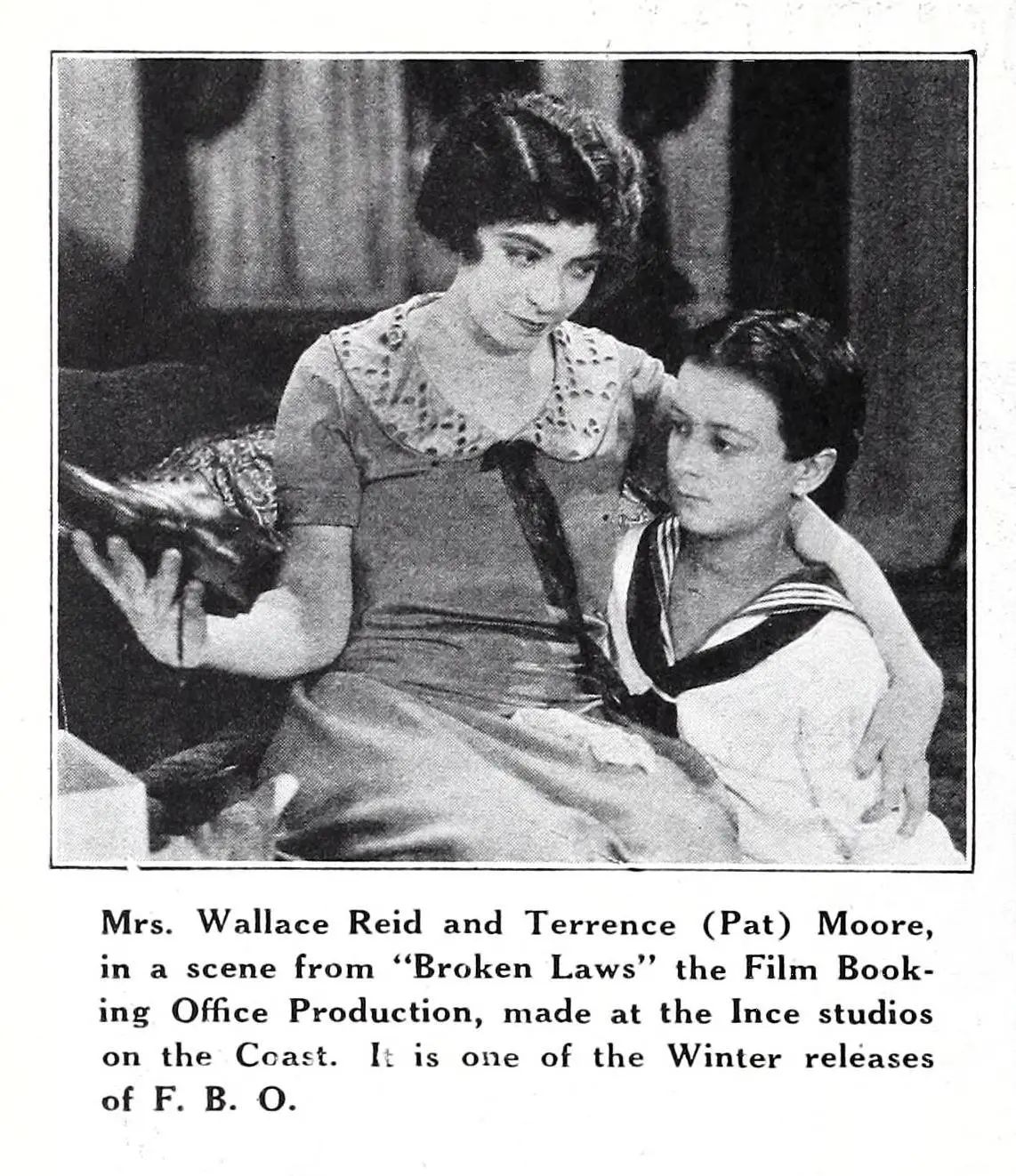
To understand Broken Laws, one must understand the context of Dorothy Davenport’s career. Following the tragic death of her husband, Wallace Reid, due to morphine addiction, she dedicated her life to 'message' films. This film is a crucial component of that crusade. While it lacks the directness of her anti-drug films, its subtext is perhaps even more subversive. It argues that the foundation of all social ills—be it addiction, crime, or apathy—is laid in the cradle. The film’s enduring power lies in its refusal to flinch. It does not allow the mother to simply 'fix' the problem with a tearful apology; the law must take its course.
In the final act, the film achieves a somber grace. It moves beyond the specific case of Bobby and becomes a universal meditation on responsibility. The 'broken laws' are the invisible threads that hold a community together, and the film serves as a warning that when those threads are snapped by misplaced love, the entire tapestry begins to unravel. It is a sophisticated, intellectually rigorous piece of work that deserves a place alongside the more frequently cited classics of the era, such as Where the North Begins, for its sheer emotional honesty and technical precision.
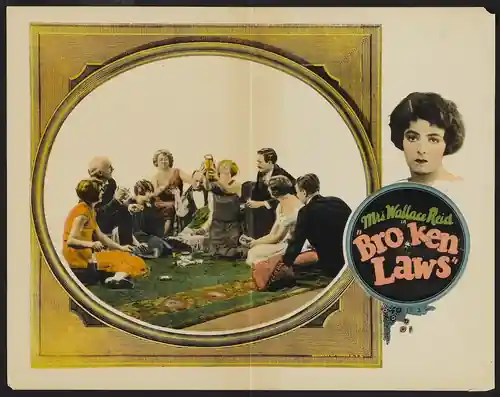
Ultimately, Broken Laws is an essential viewing for those interested in the intersection of cinema and sociology. It avoids the saccharine pitfalls of many contemporary silents, opting instead for a gritty, uncompromising look at the consequences of maternal hubris. The collaboration between Davenport and St. Johns produced a work of significant psychological depth, one that remains uncomfortably relevant in an age of 'helicopter parenting' and the continued debate over juvenile accountability. It is a film that doesn't just ask for our attention; it demands our introspection.
The restoration of such films is vital, for they provide a window into the moral landscape of a century ago, revealing that while the technology of the law may change, the fundamental struggle between the heart and the rule of law remains eternal. This is not just a 'mother movie'; it is a philosophical inquiry into the nature of freedom and the necessity of restraint. It is, in every sense of the word, a masterpiece of silent didacticism, proving that Davenport was not just the widow of a star, but a formidable creative force in her own right, capable of weaving complex social critiques into the very fabric of popular entertainment.

IMDb —
1930
Community
Log in to comment.