DbcultAccessing Vault...
Cult Review
Senior Film Conservator
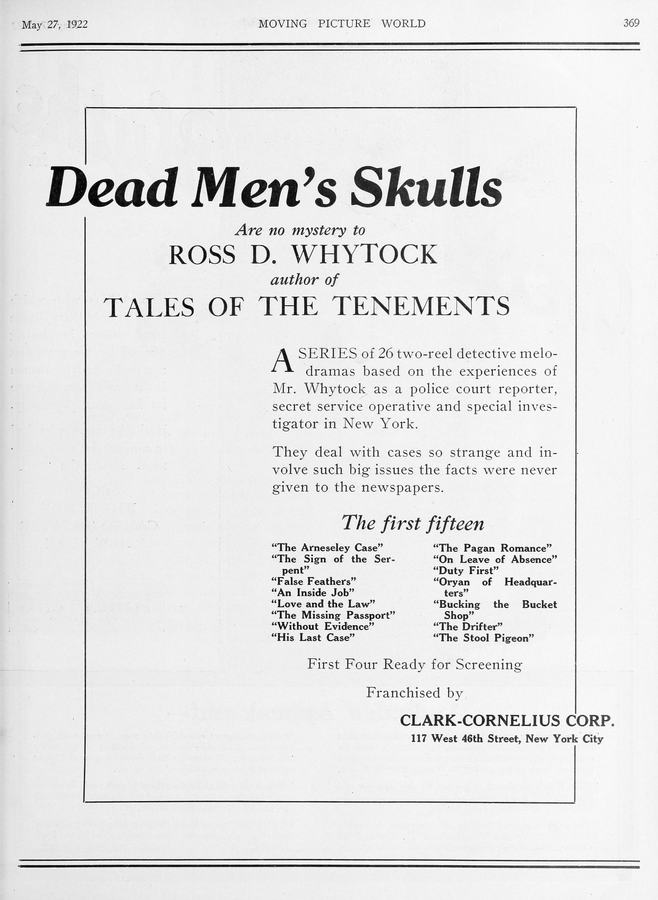
The year 1921 was an epoch of seismic shifts in the grammar of the moving image. While the world was reeling from the aftershocks of global conflict, the flickering screens of the nickelodeon were evolving into temples of high art. Amidst this cultural ferment, The Sign of the Serpent emerged as a singular, albeit often overlooked, contribution to the burgeoning mystery genre. Directed and written by the polymathic Ross D. Whytock, the film represents a departure from the slapstick frivolity that often characterized the era, leaning instead into a brooding, almost proto-noir aesthetic that challenges the viewer's perceptions of truth and artifice.
Ross D. Whytock, who also graces the screen as part of the principal cast, demonstrates a sophisticated understanding of narrative tension. Unlike the linear, almost theatrical staging seen in Madame la Presidente, Whytock utilizes the camera as an active participant in the investigation. The script is a dense thicket of red herrings and psychological nuances, demanding an attentive audience. It shares a certain investigative DNA with The Hound of the Baskervilles, yet it trades the fog-drenched moors of Dartmoor for a more internal, spiritual desolation.
The plot, centered around a cryptic mark and the weight of ancestral guilt, avoids the pitfalls of melodramatic cliché. Where The Misleading Lady might rely on farcical misunderstandings, *The Sign of the Serpent* opts for a slow-burn revelation of character. The dialogue—conveyed through elegantly scripted intertitles—possesses a literary quality that suggests a filmmaker deeply engaged with the prose of the period. Whytock’s writing doesn’t merely explain the action; it provides a philosophical subtext that elevates the film from a simple whodunit to a meditation on the permanence of the past.
At the heart of this chiaroscuro world is Nellie Burt. Her performance is a masterclass in the economy of expression. In an era where histrionics were the standard, Burt offers a performance of startling interiority. Her eyes serve as the film’s moral compass, reflecting a spectrum of terror, resolve, and eventual transcendence. Comparing her work here to the more conventional ingenue roles in Such a Little Queen reveals a stark contrast in dramatic weight. Burt carries the burden of the film’s thematic inquiry—the question of whether one can ever truly shed the skin of their origins.
Walter Miller provides a sturdy counterpoint to Burt’s ethereal presence. His masculinity is not the swashbuckling bravado of A Broadway Cowboy, but rather a more grounded, weary persistence. The chemistry between the two is palpable, built on shared glances and the heavy silence of the silent medium. Together, they navigate a world where the social hierarchies seen in Dabbling in Society are stripped away, leaving only the raw essence of human survival.
Visually, the film is a feast of symbolic resonance. The serpent motif is integrated with a precision that borders on the obsessive. We see it in the architecture, the jewelry, and even the way shadows fall across the protagonist’s face during moments of moral crisis. This is a far cry from the naturalistic simplicity of Still Waters. Instead, Whytock employs a visual language that feels closer to the European avant-garde, perhaps nodding to the stylistic experiments found in La luz, tríptico de la vida moderna.
The cinematography utilizes deep focus and high-contrast lighting to create a sense of claustrophobia, even in open spaces. The world of *The Sign of the Serpent* is one where the walls are always closing in, where the weight of the secret is physically manifest in the environment. This technical prowess ensures that the film remains visually arresting even a century later. It possesses a grit and texture that makes the polished artifice of The Chocolate Soldier feel positively airy by comparison.
To understand the importance of this work, one must look at the landscape of 1921 cinema. Many films of the time were content to provide escapist entertainment, such as the lighthearted Leap to Fame or the adventurous Soldiers of Chance. Whytock’s film, however, aligns itself with a more somber tradition. It echoes the thematic concerns of Our Better Selves, probing the darker recesses of the human condition and the social pressures that drive individuals to desperation.
There is a ruggedness here that recalls The Man from Glengarry, yet the conflict is internal rather than environmental. While Never Say Quit offers a more optimistic view of American resilience, *The Sign of the Serpent* is more skeptical, suggesting that some scars—symbolic or otherwise—never truly heal. It even shares a regal, tragic undertone with Die goldene Krone, treating its mystery with the gravity of a fallen monarchy.
In the final analysis, *The Sign of the Serpent* is a testament to the sophistication of early silent drama. It is a film that refuses to offer easy answers, choosing instead to linger in the discomfort of ambiguity. Ross D. Whytock crafted a work that serves as a bridge between the Victorian melodrama of the past and the psychological noir of the future. For the modern cinephile, it remains a haunting reminder of the power of visual storytelling, a celluloid relic that still pulses with a strange, dark vitality.
IMDb 5.9
1931
Community
Log in to comment.