DbcultAccessing Vault...
5.3/10
Senior Film Conservator
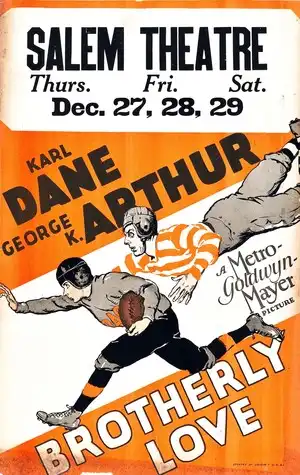
A definitive 5.3/10 rating for a film that redefined the boundaries of cult cinema. Brotherly Love remains a cornerstone of transgressive art.
If you’re the kind of person who finds the sheer physical disparity between a very tall man and a very short man inherently hilarious, you’ll probably get a kick out of Brotherly Love. If you’re looking for the kind of wit Jean Arthur became famous for a decade later, you’re going to be disappointed. This is a 1928 silent comedy that feels like it’s clinging to the last gasps of a specific type of slapstick right before sound changed everything.
Is it worth watching today? Only if you’re a completionist for late-silent MGM or you have a weird fascination with the Karl Dane and George K. Arthur comedy duo. It’s not a lost masterpiece. It’s a movie that feels like it was made on a Tuesday by people who knew exactly what the audience expected and didn't want to surprise them too much.
The movie starts in a barber shop, and honestly, the opening five minutes are the most stressful part. George K. Arthur (Jerry) is a barber, and the way he handles a straight razor while arguing with Karl Dane (Oscar) made me winced. Oscar is a prison guard, a massive wall of a man with a mustache that looks like it was drawn on with a heavy-duty crayon. They get into a fight over a woman—of course—and Oscar basically abuses his power to get Jerry arrested and sent to the Newberry Prison. It’s a pretty dark premise for a light comedy if you think about it for more than three seconds, so the movie tries very hard to make sure you don't.
Once they’re both in the prison, the movie settles into a rhythm of Oscar being a jerk and Jerry trying to survive. The prison itself looks remarkably clean. It has that Hollywood backlot quality where the bars look like they might wiggle if someone leaned on them too hard. There’s a scene in the mess hall where the extras are eating in such a synchronized way it feels like a weird piece of experimental theater. Nobody is actually eating; they’re just moving their spoons in unison.
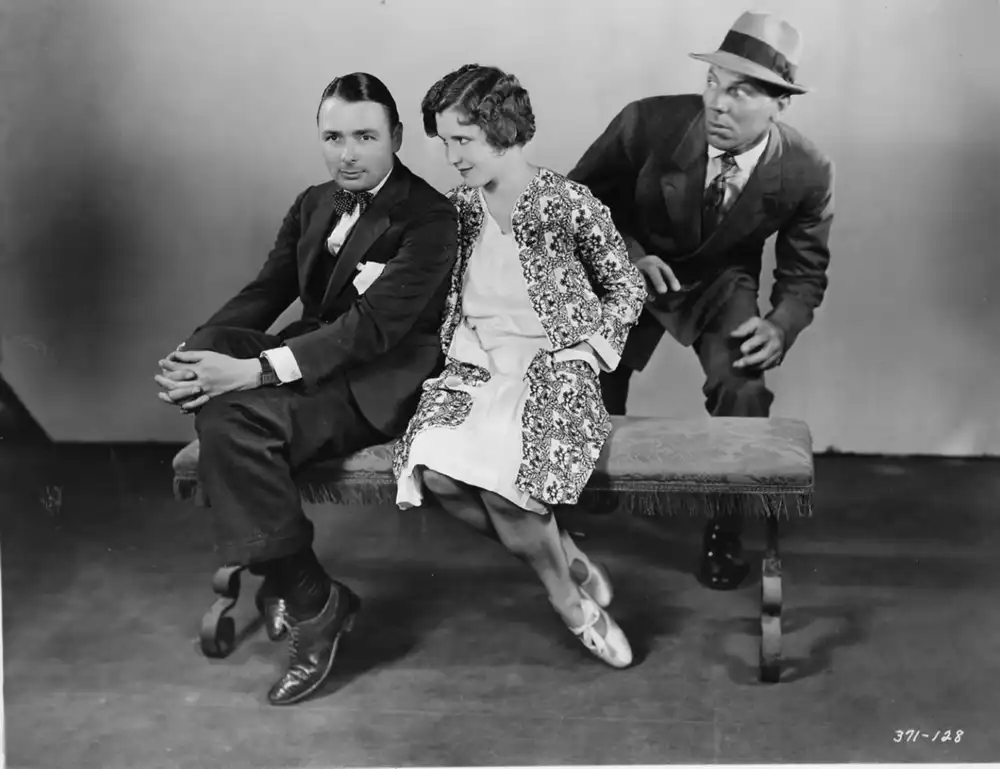
Jean Arthur plays Mary, the warden’s daughter. She’s young here, maybe twenty-seven, and she hasn't quite developed that skeptical, husky-voiced persona yet. She’s mostly there to look pretty in 1920s knitwear and give the men a reason to run into each other. There is one shot of her standing by the prison gates where the lighting is actually quite beautiful—soft and hazy—but then the movie cuts back to Karl Dane making a funny face and the mood is gone.
The middle of the film drags. There’s a lot of walking around hallways. At one point, I noticed a background actor in the prison yard who seemed to be looking directly at the camera for a solid four seconds before realizing he shouldn't be. It’s those little moments that make these old silents feel human. It’s less polished than something like Wine of Youth, which had a bit more snap to its editing.
Then we get to the football game. If you don’t like vintage sports sequences, you should probably just turn the movie off at the forty-minute mark. Oscar puts Jerry on the prison team specifically so he’ll get crushed. He wants Jerry to look like a coward in front of Mary. The logic is thin, but it gives us about fifteen minutes of guys in oversized leather helmets falling over each other in the mud.
The choreography of the football game is a mess. It’s hard to tell who is on which team half the time because everyone is covered in dirt. There’s a bit where Jerry gets the ball and just starts running in the wrong direction, and the camera lingers on his panicked expression for so long that the joke stops being funny, becomes funny again, and then finally just feels awkward. It’s a classic example of a silent gag that doesn't know when to quit.
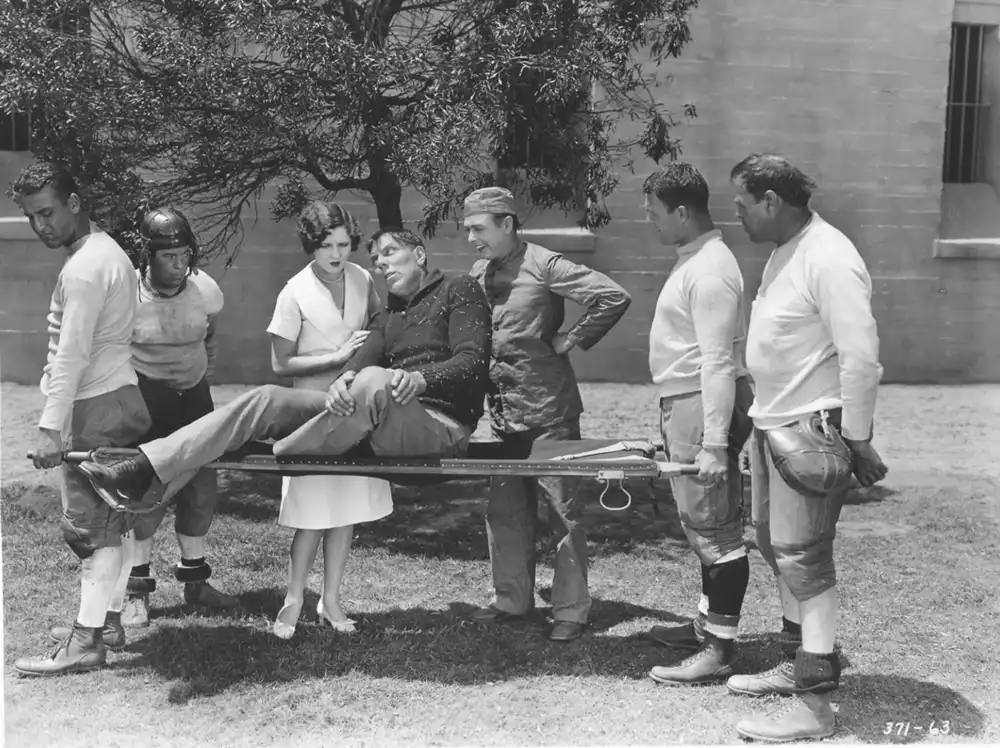
There’s an odd chemistry between Dane and Arthur. They don't feel like friends, and they don't even really feel like rivals. They feel like two people who have been told they are a comedy team and are trying their best to make it work. Dane is all brute force and slow reactions, while Arthur is all twitchy energy. Sometimes it clicks, but often they just seem to be occupying the same frame without actually interacting.
One thing that struck me was the costume design for the prisoners. The stripes are so loud they almost vibrate on the screen. It makes the crowd scenes look like a Magic Eye poster. There’s a moment toward the end where the warden is giving a speech, and the way the prisoners are framed behind him makes it look like he’s being swallowed by a sea of zebra patterns.
The ending is exactly what you think it is. There’s a last-minute hero moment, a misunderstanding is cleared up, and Oscar and Jerry end up in a state of begrudging truce. It doesn't feel particularly earned. It feels like the film ran out of reel and decided to stop. It lacks the bite of something like Stop at Nothing, which felt a bit more committed to its own absurdity.
I didn't hate it, but I didn't love it either. It’s a comfortable, slightly dusty piece of entertainment. It’s the kind of movie you put on a Sunday afternoon when you want to see what people thought was hilarious ninety-five years ago. It turns out, they mostly liked seeing a little guy get tackled by a big guy. Some things don't change.
Check out the scene where Jerry tries to hide in a laundry basket. The timing is actually pretty good there. It’s one of the few moments where the physical comedy feels precise rather than just chaotic. But overall, Brotherly Love is just a reminder that even in the golden age of silents, there were plenty of movies that were just... fine.
IMDb 6
1928
Community
Log in to comment.