DbcultAccessing Vault...
6/10
Senior Film Conservator
A definitive 6/10 rating for a film that redefined the boundaries of cult cinema. Maternity remains a cornerstone of transgressive art.
A tremor runs through the opening iris-in: a woman’s gloved hand hovering above a cradle that is still, cruelly, empty. The cradle rocks only in her mind, and that interior sway sets the tempo for every subsequent image in Maternity. The film, released in the autumn of 1917 when Europe hemorrhaged and America held its breath, refuses to monumentalize motherhood; instead it atomizes the dread of it, frame by gossamer frame.
David Powell’s direction favors the oblique glance rather than the declarative gaze. He places Marie Chambers—our unnamed protagonist—in doorways, behind lace, seen through beveled glass, so that her silhouette fractures into prismatic shards. The visual grammar whispers: maternity as refraction, not certainty. Compare this to the moral absolutism of Heroes of the Cross or the Manichean blaze of The Flaming Sword; here, the conflict is endoscopic, a civil war of hormones and heritage.
Shannon Fife’s scenario, spare even by the standards of two-reelers, distills an odyssey into three movements: dread, dissolution, deliverance. Yet each act is flecked with micro-epiphanies. In the first reel, Chambers visits a physician whose spectacles catch the studio skylight, projecting twin halos that invert into skull-shaped voids on the wall behind her. The symbolism is unmissable yet never crass: science and death sharing the same optic nerve.
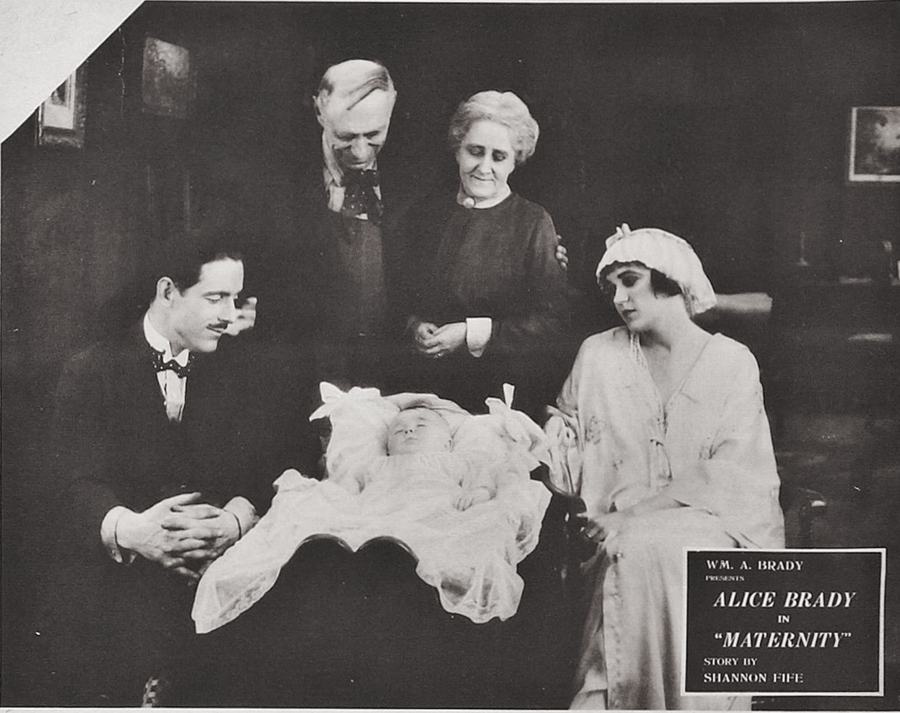
Alice Brady, playing the protagonist’s married elder sister, arrives like a gust of verbena-scented pragmatism. Brady’s performance is calibrated at the intersection of buoyant and baleful; her laughter is a hearth, but the eyes betray the memory of three miscarriages. When she presses a silver rattle into Chambers’ palm, the metallic chill travels through the celluloid itself. The rattle becomes a metonym for dynastic expectation, a sonic contract that the protagonist fears she cannot honor.
John Bowers, cast as the husband, is required to do little more than smoke contemplatively in a series of three-quarter-profile medium shots. Yet the economy of his presence is the point: patriarchal assurance rendered as negative space. His very stillness amplifies the woman’s interior churn. In one extraordinary tableau, the couple stands on a moonlit veranda; Bowers’ shadow merges with the creeping wisteria until he appears half-vegetal, a spouse ossified into ornamental support.
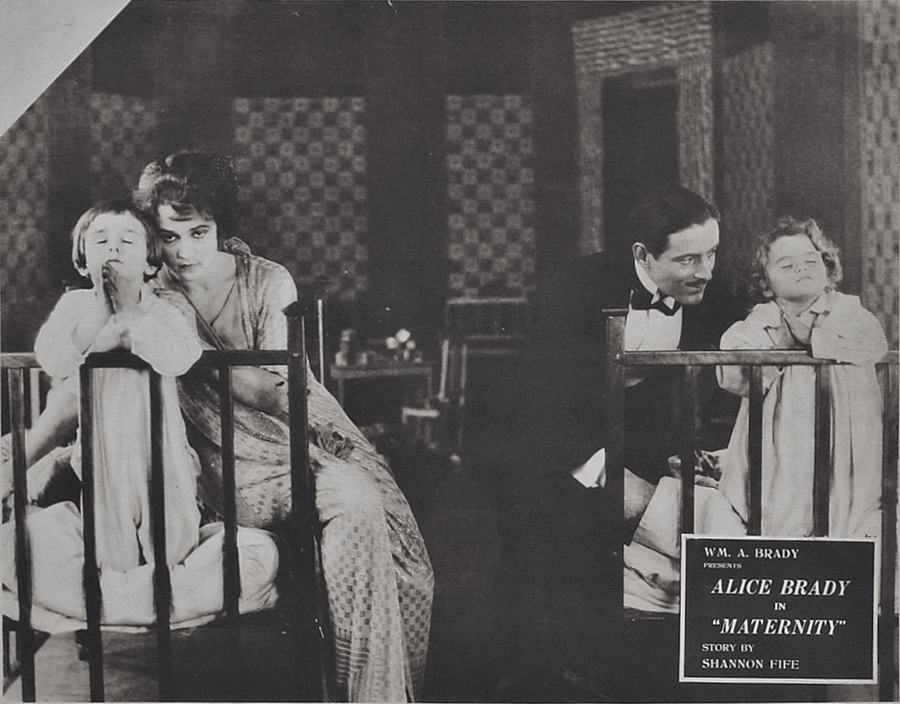
The second movement ruptures into expressionistic territory. A nightmare sequence—tinted amaranth in the surviving print—unfurls inside a maternity ward whose walls breathe. Superimposed obstetric instruments drift like jellyfish, and a chorus of masked nurses rotates on a turntable, their faces frozen in porcelain half-smiles. The protagonist flees down corridors that elongate via Eisensteinian cutting, each splice elongating the hallway by a foot. The sequence anticipates the geometric horror of A Modern Mephisto, yet predates it by five years.
What rescues the film from mere morbidity is its willingness to linger on the banal miracle. A subsequent scene finds Chambers in a sun-sopped nursery pinning freshly-laundered linen. The camera dollies-in until the weave of the fabric fills the frame—an abstract flag of domestic truce. A single ant crawls across the sheet, its microscopic shadow a reminder that life, however minuscule, insists on pilgrimage. The moment is wordless, but the intertitle that follows reads: "She counted the threads and found the universe had not forgotten her." Fife’s text rarely strains for poetry; when it does, the earnedness stings.
Childbirth itself is elided, a strategic absence that dodges both censorship and cliché. We cut from a clenched hand on a quilt to a window where dawn ignites the lace curtains. The next shot reveals the cradle—now occupied—rocked by a breeze that might as well be fate’s fingertip. The infant is never shown full-face; we glimpse only a cranium capped by a linen bonnet, a synecdoche for vulnerable possibility. The reticence feels revolutionary in an era when Meg o' the Mountains could ladle on melodrama by the ladleful.
Stanley Wheatcroft, as the family doctor who delivers the off-screen child, utters the film’s closing intertitle: "The courage was always yours; the child only revealed it." The line risks platitude, yet Wheatcroft’s delivery—head bowed, voice implied through the subtle forward lean—transmutes it into benediction.
Technically, the picture’s cinematography oscillates between soft-focus maternalism and razor-sharp realist detail. A midwife’s cracked knuckles are rendered with the same tactile clarity as the gossamer veil trailing from Brady’s hat. The tonal range of the 35mm print—struck from a 1960s archival duplicate—retains a charcoal richness, though the amaranth nightmare has faded toward bruise-mauve. The Library of Congress’ digital restoration smartly chose not to reinstate the original hue, allowing entropy to become a meta-commentary on memory’s unreliability.
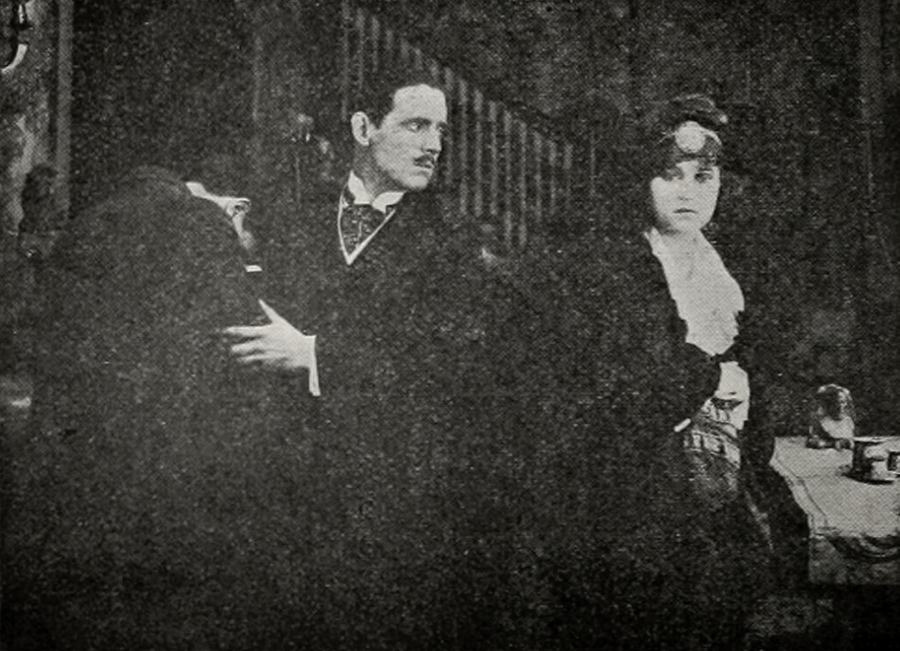
Louis R. Grisel’s score, reconstructed from a 1918 cue sheet, calls for cello, celesta, and muted cornet. Viewed at the 2019 Pordenone Silent Film Festival with live accompaniment, the celesta’s brittle lull during the cradle sequence induced an auditorium-wide frisson. One sensed the collective intake of breath, as if 500 strangers had become inadvertent midwives to an emotion.
Comparisons illuminate lineage. Where When We Were Twenty-One treats adulthood as a comic skein of social gaffes, Maternity treats it as hematologic destiny. Conversely, the decadent swoon of Satan's Rhapsody views femininity as consumptive spectacle; here, the female body is site rather than sight, laboring toward sentience rather than languishing for appraisal.
Yet the film is not immune to the racial myopia of its moment. A Black wet-nurse appears briefly, framed in medium long-shot, her face averted. She is unnamed in the intertitles, a ghost of reproductive labor that Progressive-Era America relied upon yet refused to acknowledge. Modern viewers will flinch at the erasure, but the very opacity of her presence—hands that enter the frame to adjust a blanket and exit without editorial comment—testifies to a history still being exhumed.
Gender politics aside, the picture’s existential core resonates acutely in a post-Roe landscape. The protagonist’s dread is not simply of pain but of annexation: the fear that her interior sovereignty will be colonized by a future she cannot yet love. The film’s resolution—acceptance via maternal surrender—may strike contemporary feminists as capitulation. Yet the camera’s final gesture complicates that reading. In the ultimate shot, Chambers’ gaze meets the lens head-on, a direct-address confrontation that silent cinema rarely granted mothers. The look lasts only four seconds, but it annihilates the fourth wall. She is not merely acknowledging her child; she is acknowledging us, the descendants of her decision, implicating us in the ongoing negotiation between autonomy and care.
Influence bleeds forward. The cradle-breeze motif resurfaces in Carl Dreyer’s Day of Wrath; the medical halo-of-dread anticipates the surgical theater in The Passion of Joan of Arc. Even the amaranth nightmare finds echo in the crimson fever dreams of The Red Shoes. Yet Maternity remains sui generis in its refusal to stratify women into madonnas or magdalenes. Its protagonist ends where she began: in flux, trembling, alive.
Availability remains spotty. Aside from the 4K restoration held by the Library, bootleg rips circulate on niche torrents, their intertitles sometimes replaced by Spanish translations derived from a 1923 Buenos Aires release. Criterion has hinted at an upcoming boxed set titled "Bodies of Silence: Women of the Early Frame," though pandemic delays shelved the project. When it surfaces, petition your local cinematheque; this is a film that demands collective darkness, the communal hush where the projector’s mechanical breath syncs with your own.
Until then, we are left with fragments—stills, lobby cards, a souvenir program where Marie Chambers autographed beside the line: "To fear is to ferry the soul across." The sentence is pure hokum, yet after watching the film, one believes it. The ferry is the film itself, its sprocket holes perforating time so that a century-old dread can dock inside our ribcage and, against odds, transform into something resembling hope.
IMDb 6.6
1929
Community
Log in to comment.