DbcultAccessing Vault...
Cult Review
Senior Film Conservator
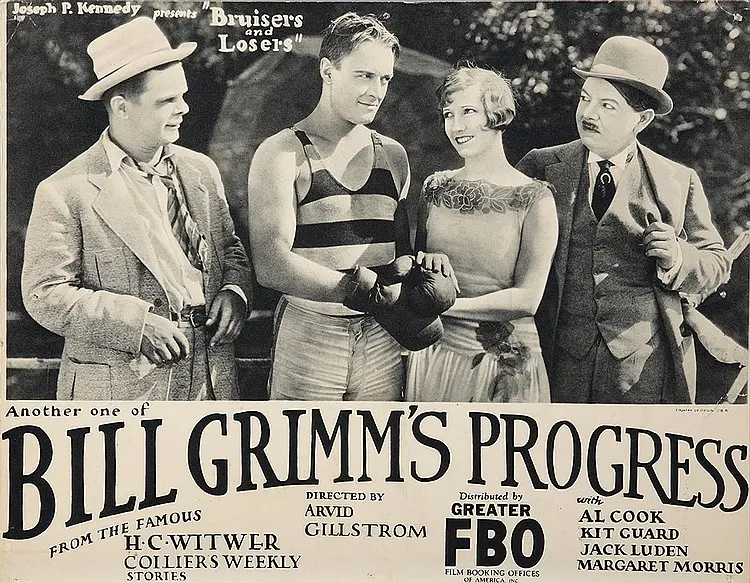
Should you spend your time on this nearly century-old boxing short? Short answer: yes, but only if you value the unpolished grit of early sports cinema over modern technical perfection.
This film is specifically for those who want to see the raw DNA of the underdog sports trope before it became a Hollywood cliché. It is not for viewers who find the silence of the 1920s alienating or those who require a complex, non-linear narrative.
This film works because it prioritizes the physical reality of the boxing gym over the romanticized version of the sport seen in later decades.
This film fails because its narrative structure is strictly episodic, lacking the cohesive emotional arc found in contemporary features like A Woman's Fight.
You should watch it if you are a fan of H.C. Witwer’s writing or if you want to see Al Cooke perform some of the most convincing physical comedy of the silent era.
H.C. Witwer was the king of the 'slang' story in the early 20th century. His characters spoke with a rhythmic, working-class cadence that was difficult to translate to the silent screen without the use of excessive intertitles. However, Bruisers and Losers manages to capture that spirit through movement. Al Cooke doesn't just act; he vibrates with the nervous energy of a man who knows he’s one bad hook away from returning to the soda fountain.
In one specific scene, Gale Galen is shown practicing his footwork in the back of the shop. The contrast between the sterile, white environment of the soda parlor and his aggressive, unrefined movements creates a visual tension that defines the film. It’s a simple moment, but it tells you everything you need to know about his character's internal conflict. He belongs in the dirt, but he’s surrounded by syrup.
Al Cooke’s performance is a revelation for those used to the more static acting styles of the period. While films like The Puppet Crown relied on theatrical gestures, Cooke uses his entire body to convey exhaustion and determination. During the climactic fight, the camera stays remarkably close for 1924, capturing the genuine sweat and the awkward, uncoordinated lunges of a tired fighter.
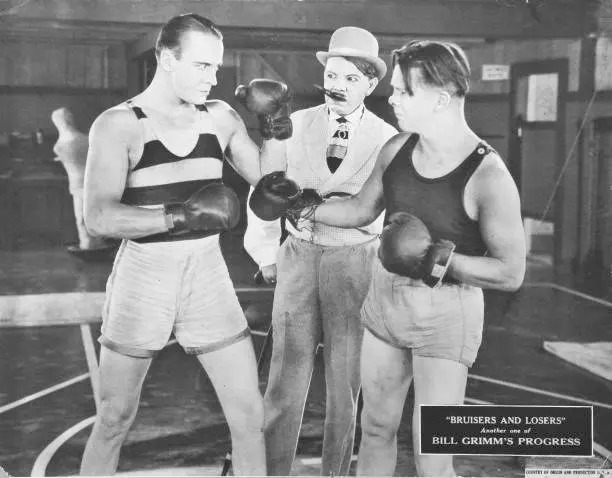
Cooke’s chemistry with Margaret Morris is functional, if not particularly deep. Morris plays her role with a quiet dignity that balances Cooke’s manic energy. However, the real 'romance' in this film is between Gale and the ring. The way he looks at a pair of boxing gloves is far more intimate than any look he gives his co-star. It’s a cynical observation, but a true one.
Yes, Bruisers and Losers is worth watching for its historical value and its surprisingly modern approach to sports choreography. It avoids the over-the-top melodrama found in More to Be Pitied Than Scorned. Instead, it offers a grounded, almost documentary-like look at the life of a low-level pugilist. It is a quick, punchy experience that respects the viewer's time.
The direction is notably brisk. There is very little fat on this film. The pacing feels more like a modern short than a silent featurette. The cinematographer uses shadows effectively, particularly in the gym scenes. The lighting in the training sequences reminds me of the atmospheric gloom found in The Tiger Man, though applied here to a much more mundane setting.
One standout shot involves a low-angle view of the ring from the perspective of the 'loser' on the canvas. We see Gale’s boots and the referee's count, creating a sense of claustrophobia and failure. It’s a sophisticated choice for 1924. It puts the audience on the floor with the protagonist. It’s brutal. It’s effective.
The film walks a thin line between a slapstick comedy and a social drama. At times, the humor feels forced, particularly the bits involving the 'losers' Gale encounters in the gym. These moments feel like they belong in a different movie, perhaps something closer to Oranges and Lemons. But when the film focuses on the struggle of the fight, the tone shifts into something much darker and more compelling.
I would argue that the film is at its best when it stops trying to be funny. The humor often undercuts the stakes. When Gale is being pummeled, we should feel the weight of his potential failure. Throwing in a visual gag about a bucket of water feels like a distraction from the real story: a man fighting for his life.
One thing most critics miss about Bruisers and Losers is its obsession with hands. The camera lingers on Gale’s hands constantly—whether he’s mixing a drink or wrapping them in tape. It’s a subtle visual motif that suggests his hands are his only tools for survival. It’s a strangely intimate focus for a film that is ostensibly about hitting people in the face.
Furthermore, the film presents a surprisingly bleak view of the American Dream. Gale doesn't win because he's the 'best' or the most 'virtuous.' He wins because he can take more pain than the other guy. It’s a philosophy of endurance, not talent. This makes it much more interesting than the moralistic tales common in films like Apartment 29.
Bruisers and Losers is a rough diamond. It’s flawed. It’s inconsistent. But it has a heartbeat. While it lacks the polish of a major studio production, its commitment to showing the sweat and the struggle of the ring makes it a vital piece of silent cinema. Al Cooke gives a performance that deserves more recognition in the pantheon of early screen athletes. If you can look past the dated humor, you’ll find a story that still has some punch left in it. It’s a knockout in its own small way.
IMDb —
1926
Community
Log in to comment.