DbcultAccessing Vault...
6.1/10
Senior Film Conservator
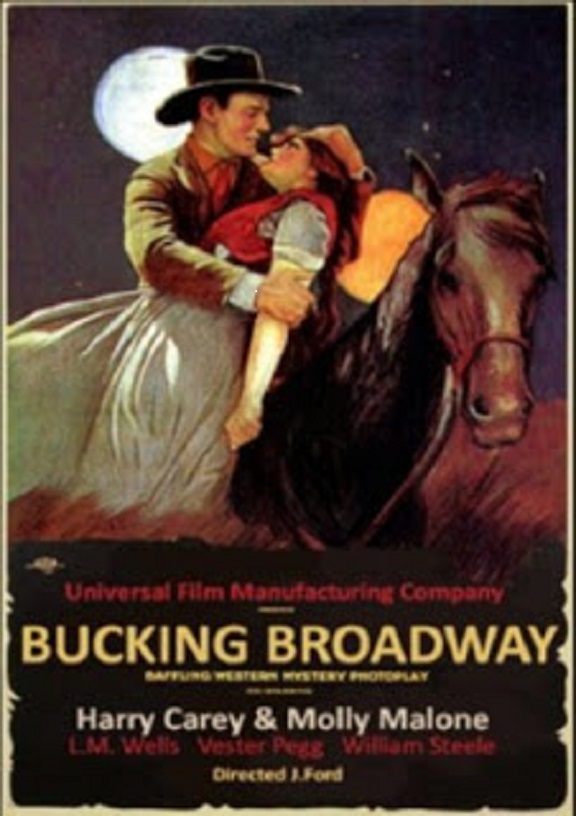
A definitive 6.1/10 rating for a film that redefined the boundaries of cult cinema. Bucking Broadway remains a cornerstone of transgressive art.
Manhattan, 1917: the war in Europe drifts like a rumor while home-front optimism is poured in concrete. Onto this half-born skyline John Ford—then a 22-year-old wrangler of images—drops a parable that smells of horse sweat and nickel champagne. Bucking Broadway survives only in truncated reels, yet what remains is a lantern-slide of American becoming: the moment when saddle leather first scraped against patent evening pump.
Harry Carey’s foreman, Cheyenne Harry (no other name is given), opens the film as a silhouette against sunrise sage. The camera clings to his spurred heel the way later Ford pictures will cradle John Wayne’s hip; every pan announces that geography is destiny. Notice the iris-in on his gloved hand branding a calf—an act of ownership soon mirrored by the urbanite’s handshake sealing a fraudulent mine deal. Ford, even here, is already rhyming worlds.
Cut to the Atlantic-bound express: our ingenue, played by Molly Malone with bobbed auburn curls, peers through Pullman glass as if the continent were a flip-book. She carries a letter from the ranch promising marriage, but also a scrap of sheet music—“The Bullet and the Rose”—a tune that will reappear diegetically in the city, plunked on a saloon piano just before fists fly. Ford’s intertitles, written by George Hively, eschew exposition for haiku: "Sky wide as hope / Steel tracks narrow as doubt."
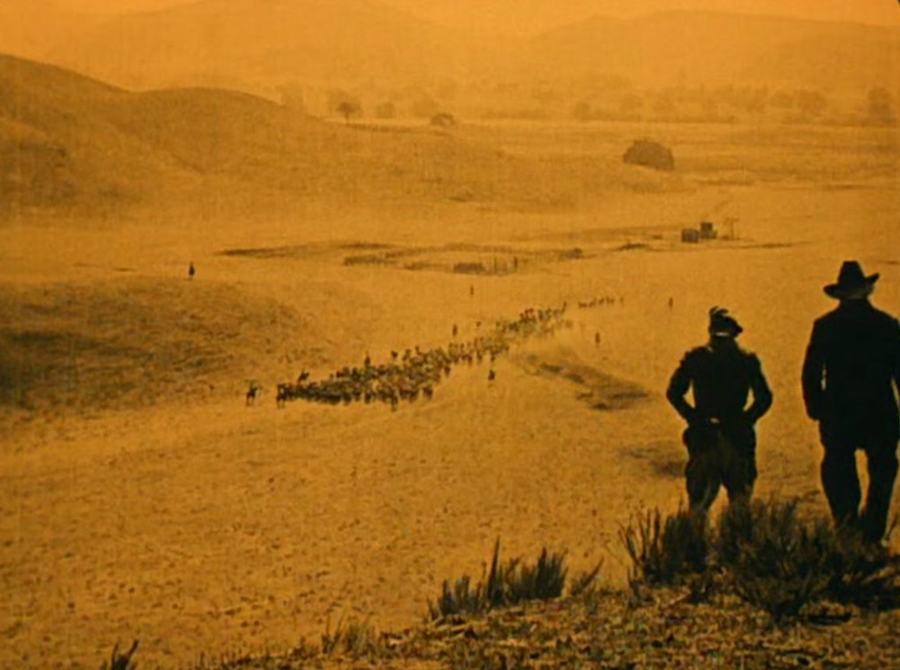
In New York she is met by the stockbroker, a velvet carnation of a man portrayed by William Steele (who, in a cosmic jest, would later play villains in Carey westerns). His courtship unfolds inside a sequence that predates and out-fancies any Great Gatsby soirée: rooftop gardens where lanterns swing like censers, chorus girls kicking in Busby-before-Busby rectangles of color-tinted nitrate. The film’s two-strip amber-and-cyan palette, restored by EYE Filmmuseum, turns skin into gold leaf and shadow into seawater.
Meanwhile the ranch, deprived of its emotional anchor, literally darkens. A thunder-head swallows the horizon in one of the earliest uses of a day-for-night filter in American cinema; cowhands become obsidian cut-outs against jagged lightning. Ford intercuts this with the girl’s initiation into cocktail chatter, letting weather stand in for conscience. The effect is proto-Eisensteinian montage before Soviet theorists coined the term.
The narrative engine is simple—love triangle, class envy—but the texture is modernist mosaic. Watch for the match-cut between a cowboy cracking a bullwhip and a broker snapping a rubber band around stock certificates; the sonic implication (the crack we imagine) makes the city itself a rodeo arena. When Harry finally follows his runaway fiancée east, he boards a boxcar labeled "Bucking Broadway"—the first and only textual nod to the title. The phrase is never explained, yet it vibrates: Broadway as untamed bronco, the Great White Way ready to buck every rube who cinches it.
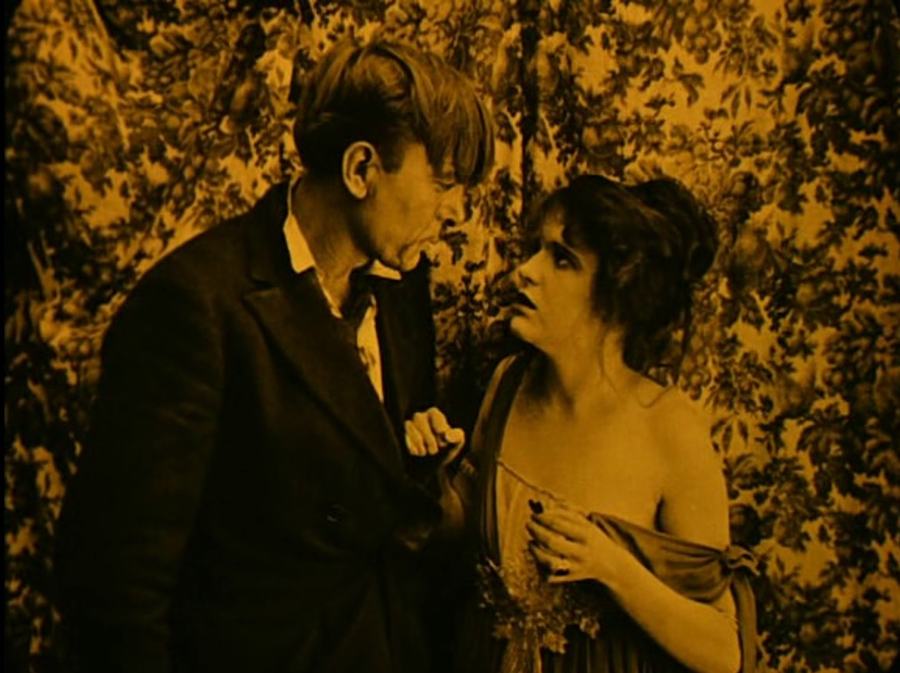
At 42 minutes arrives the set-piece that cinches the film’s immortality: the Coney Island rodeo. Historians cite it as the first extended sports sequence shot handheld from within the arena. Cameras were strapped to moving platforms; cattle hooves thud perilously close to the lens. The result is a visceral scramble later echoed in Where Is Coletti?’s urban chases and even in Charlton Heston’s circus rampage in The Greatest Show on Earth. Cowboys lasso chandeliers, a bull demolishes a baroque ice sculpture of Admiral Dewey, and Gertrude Astor—playing a vampish showgirl—rips her own skirt to flag the bull, a subversive echo of Mata-Hari gestures popular in European serials like The Vampires: Hypnotic Eyes.
Malone’s character, caught between the polished predator and the dusty paladin, chooses autonomy. The choice is staged with minimal intertitles; instead Ford lingers on her gloved fingers drumming against a window pane where city lights smear like comets. She walks out of both men’s lives—not into another’s arms, but into a streetcar bound for the garment district, her silhouette shrinking yet radiant. It is a quietly radical resolution for 1917, predating similar third-act self-liberations in Therese or The Mother Instinct.
Technically, the film is a bridge between primitive tableau and classical continuity. Cross-cutting obeys Griffith’s grammar, but Ford’s depth staging—characters stacked in axial planes, doors within doors—prefigures his own Stagecoach geometry. Note the interior at the Waldorf-Astoria: a mirror at the rear reflects a doorway which in turn frames a corridor, a mise-en-abyme that whispers "there is always another room, another man, another lie."
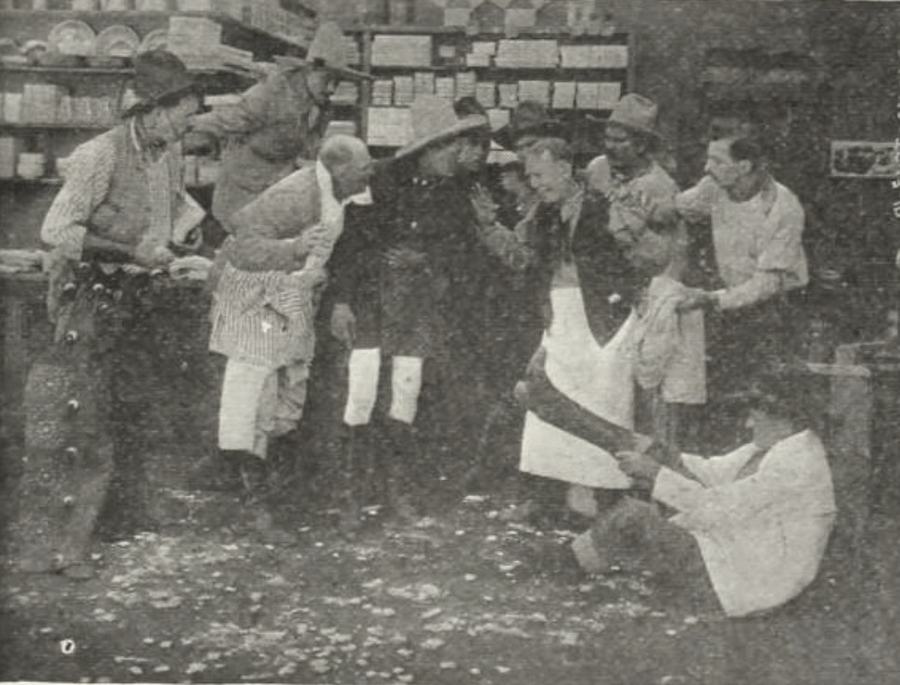
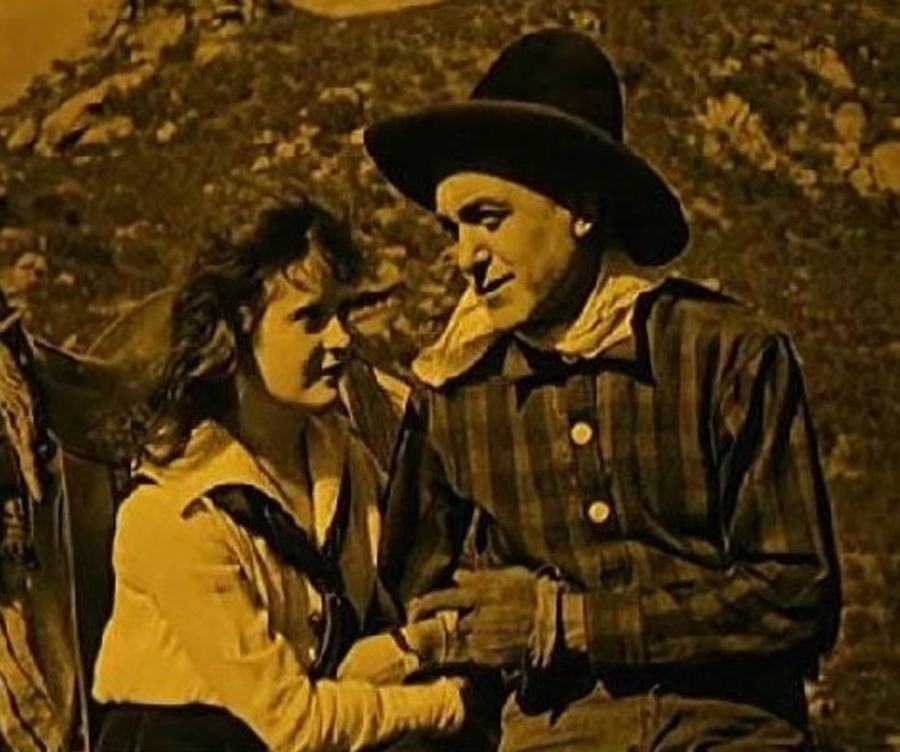
Performances oscillate between the florid pantomime required by 1917 exhibitors and glimmers of psychological verity. Carey, already a star thanks to Straight Shooting, relies on his signature slouch and forward-knee gait—body language of a man perpetually leaning into wind. Molly Malone has the porcelain fragility of Lillian Gish minus the ethereal tremor; her grit surfaces through jawline tension rather than tears. William Steele twirls a cane with such venomous elegance that one expects petals to fall off the carnation at any moment.
The surviving score, reconstructed by Donald Sosin, interpolates ragtime with cowboy balladry. During the rodeo climax, xylophone arpeggios mimic clattering hooves, while a solo trumpet quotes "The Old Chisholm Trail" in minor key, turning triumph into dirge. The effect is analogous to the way Morricone would later pervert popular tunes to expose their blood-bones.
Culturally, Bucking Broadway sits at the crossroads of many American myth-veins. It anticipates the cowboy-as-fish-out-of-water trope recycled in everything from Mr. Smith Goes to Washington to Midnight Cowboy. Yet it is also a palimpsest of its moment: the United States tipping from rural republic to creditor empire, the horse yielding horsepower, the girl yielding nothing.
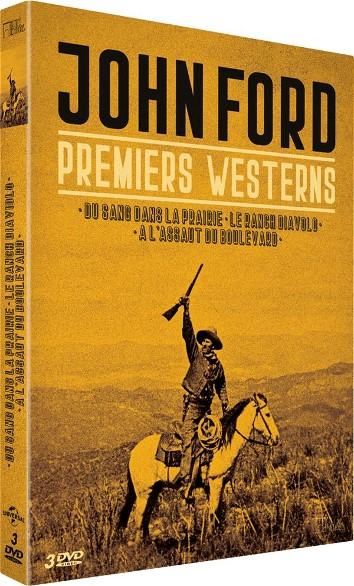
Scholarship has overlooked how the film slyly comments on wartime profiteering. The villain’s wealth stems from government contracts for substandard boots—an echo of the “embalmed beef" scandal that poisoned soldiers. An intertitle references "heels that snap in Franco mud," a nod to the March 1917 torpedoing of American supply ships. Thus the final rodeo becomes not only a personal reckoning but a national exorcism: livestock trampling the effigy of corrupt supply chains.
Comparative lens: if Blue Blood and Red staged class warfare inside a single boardinghouse, Bucking Broadway inflates the battlefield to continent-spanning vistas. Where Homunculus dissected the synthetic soul, Ford celebrates the organic heart even while acknowledging its obsolescence. And unlike the episodic cliffhangers of The Romance of Elaine, this compact one-reeler trusts emotional momentum to carry viewers in under an hour.
Restoration notes: the 4K scan reveals nitrate shrinkage, gate-weave dancing like heat haze. Software stabilization had to differentiate between intentional camera sway (during rodeo) and decay. The amber tint was color-graded using a 1917 Pathé stencil as reference; cyan was extrapolated from French release prints held at CNC. The result is not sterile digital sheen but the buttery shimmer of early film, complete with cigarette burns that once told projectionists to switch reels.
Contemporary resonance: in an era where rodeo is rebranded as wellness retreat and Wall Street bulls are idolized, Ford’s fable reeks of cautionary déjà vu. The girl’s refusal to marry either archetype feels like a 1917 premonition of 21st-century singlehood celebrated in Fleabag or Everything Everywhere All at Once. Meanwhile, the cattle—non-actors led by instinct—remind us how much of cinema’s early magic sprang from simply letting beasts be beasts.
Verdict: Bucking Broadway is less an antique curio than a seed crystal. In its DNA you can trace the double helix of American storytelling: the wanderer’s freedom versus the consumer’s glitter; the silent yearning that will one day speak in John Ford’s own The Searchers; the first cracked note of disillusion that will crescendo into film noir. See it not for academic duty but for kinetic pleasure—then rewind, mentally, to every western or rom-com you thought you knew, and feel the tremor of this primal buck.
Availability: streams on Criterion Channel with the Sosin score; Blu-ray includes an audio essay by Tag Gallagher and a 1917 newsreel of actual Coney Island stampedes. Runtime 54 min, but plan a double feature with Buckshot John for a full evening of proto-Fordian bliss.
IMDb 6
1929
Community
Log in to comment.