DbcultAccessing Vault...
6.4/10
Senior Film Conservator
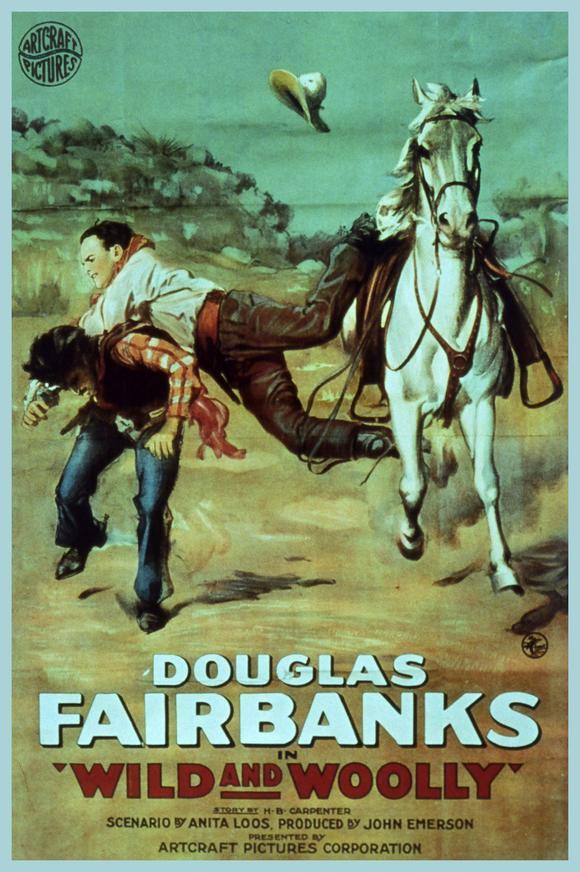
A definitive 6.4/10 rating for a film that redefined the boundaries of cult cinema. Wild and Woolly remains a cornerstone of transgressive art.
The first thing that strikes you about Wild and Woolly—once the nitrate shimmer subsides—is its brazen willingness to bite the hand that fed it. In 1917 the Western was already a brand, a commodity, a vending-machine of varnishes and virtuous gunslingers. Along comes Douglas Fairbanks, grinning like a schoolboy who has just swapped the teacher’s cane for a stick of dynamite, to lampoon the very fantasies that kept box-office tills humming. The joke is meta before meta had a name: a civilized town fakes its own riotous past for the benefit of a citified sap whose wallet bulges bigger than his beliefs. The sap, of course, is Fairbanks himself—Jeff Hillington—an East-coast dandy who owns a private railroad car, a valet fluent in sarcasm, and a daydream stitched from Beadle’s dime novels.
John Emerson’s direction keeps the tone jaunty, but Anita Loos’ intertitles—whip-smart, sardonic, salted with Roaring-Twenties-before-they-roared slang—drop breadcrumbs of cynicism. We sense the film snickering at the same audience who paid to see it: you want the frontier? Fine, we’ll sell you a counterfeit, and then we’ll sell you the hangover that follows. The result is a celluloid Russian-doll: a Western about the invention of Westerns, a comedy that laughs at the commerce of myth, a star vehicle that refuses to stop the car for solemnity.
Bitter Creek’s elders—bankers, cattlemen, one itinerant preacher who has learned to love the collection plate more than the commandments—gather under peeling temperance posters to hatch their hustle. Their plan is as elegant as it is shameless: transform the prim municipality back into a bacchanal of bordellos and bullets for one weekend, just long enough to intoxicate young Hillington and loosen his purse strings. They hire the local Native community—portrayed with the usual period cringe, yet afforded more agency than in many contemporaneous pictures—to whoop, holler, and scalp theatrically. They re-open the Golden Horseshoe Saloon, re-hire the piano man with the missing two fingers, and instruct the dance-hall girls to ratchet their hemlines north and their morals south.
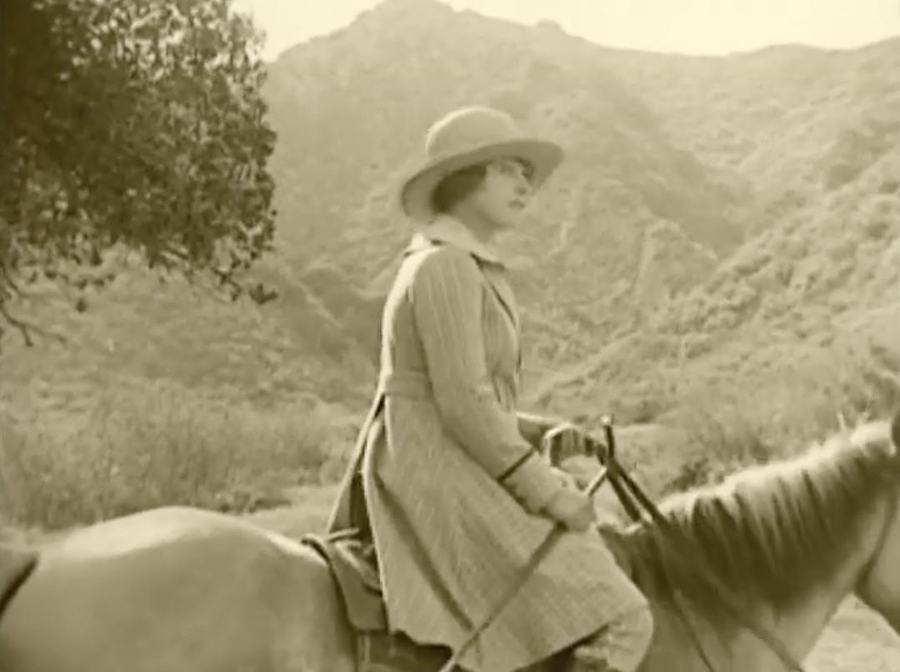
Enter Molly, the banker’s daughter, whose eyes roll like dice at the notion of coddling some greenhorn. Eileen Percy plays her with a flapper’s swagger squeezed into calico; she struts, smirks, and—crucially—never begs the camera for sympathy. Her chemistry with Fairbanks is a duel of eyebrows and elbows; you can almost hear the sparks crackle through the organ score. The courtship is a fencing match: he brandishes bravado learned from pulp; she parries with lived knowledge of branding irons and prairie wind. Their flirtation is less moon-June-spoon than gasoline on boot leather.
But the conflagration arrives ahead of schedule. A bona-fide outlaw crew—fronted by Sam De Grasse in a sneer that could curdle bourbon—crashes the make-believe holdup, absconds with the payroll, and kidnaps Molly as collateral. Overnight the masquerade mutates into manhunt. Fairbanks must vault from pretense to prowess, trading blank cartridges for Winchester bullets. The transition is shot with athletic bravura: a leap from a second-storey window onto a galloping stallion, a scramble along a moving train roof, a fistfight atop a boulder while rattlesnakes coil beneath like cynical critics. The stunt work—performed by Fairbanks himself—still raises eyebrows a century later; no CGI safety net, no speed-ramp cheat, just muscle, timing, and hubris.
Visually, the picture toggles between two palettes: the manicured whites and pastels of Bitter Creek’s domesticated present, and the chiaroscuro murk of its fabricated frontier nights. Cinematographer George W. Hill (future mastermind behind The Big House) lenses the fake-Western sequences like fever dreams: smoke bombs spew ochre clouds, lanterns swing to cast writhing shadows, the camera itself seems drunk on kerosene. The tonal whiplash is intentional; every time the film threatens to romanticize the past, Hill’s lighting undercuts the nostalgia with a reminder of brutality.
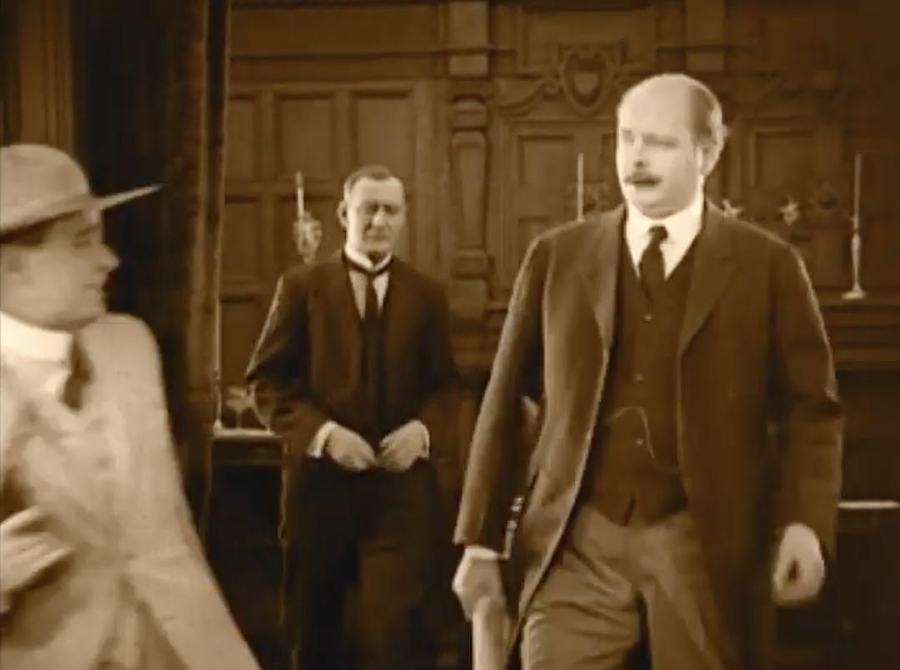
Compare this to Jess of the Mountain Country, where the wilderness is presented as Edenic, or A Tale of the Australian Bush, which aestheticizes survival into pastoral lyricism. Wild and Woolly refuses such comfort; its West is a commodity first, a graveyard second, a punchline third.
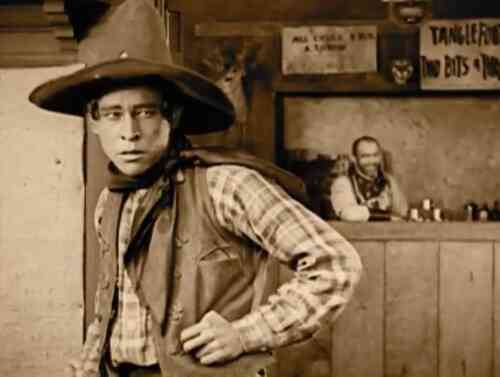
Fairbanks’ screen persona was always half-athlete, half-musketeer, but here he adds a third ingredient: the self-satirizing fop. Watch him prance in front of a mirror, adjusting a ten-gallon hat at a rakish tilt while his valet sighs. Moments later he’s vaulting a poker table to tackle a brute twice his girth. The oscillation is so swift it feels like channel-surfing between two different genres. That elasticity is the joke: the Eastern dandy and the Western hero are not opposites but conjoined twins, each feeding on the same pulp mythology.
Adolphe Menjou, still a year away from becoming cinema’s most dapper cad, plays the slick town promoter with a pencil moustache so thin it could slice prosciutto. He glides through scenes like a shark in a silk waistcoat, every handshake a down-payment on someone else’s dream. Meanwhile, Charles Stevens as the Native chief—billed simply as “Indian Joe”—carries the burden of every grotesque stereotype, yet Loos’ script sneaks in sly reversals: he negotiates his fee per whoop, demands dental insurance, and exits scenes with a shrug that says, ‘White folks’ theater, white folks’ problem.’
Molly’s arc could have been the standard ‘spitfire tamed,’ but Loos—one of Hollywood’s sharpest proto-feminist wits—refuses the trope. When Jeff finally rescues her, she rescues him right back, steering the runaway stagecoach while he clings to the undercarriage like a terrified cat. Their final clinch is shot in silhouette: two equals sharing a horizon rather than a hierarchy. Contrast this with Man’s Woman or Divorced, where female agency is a bargaining chip in a patriarchal poker game.
By the closing iris-in, Bitter Creek has its cash infusion, Jeff has his hard-won spurs, and the audience has its expected happy ending—yet the aftertaste is iron. The town’s renaissance depends on theatricalized violence; the hero’s maturation hinges on commodified slaughter. The film ends with a re-staged bank robbery performed for the next trainload of tourists, now with souvenir programs and a gift shop. Myth, the film winks, is a renewable resource; America will always pony up for the privilege of watching itself die beautifully.
Sound familiar? A century later we binge anti-hero epics set in cowboy-hat Albuquerque or snow-dusted Hoth; we applaud when grimdark reboots deconstruct the same clichés they monetize. Wild and Woolly arrived early to the party, ate all the hors d’oeuvres, and left a whoopee-cushion on the seat of honor.
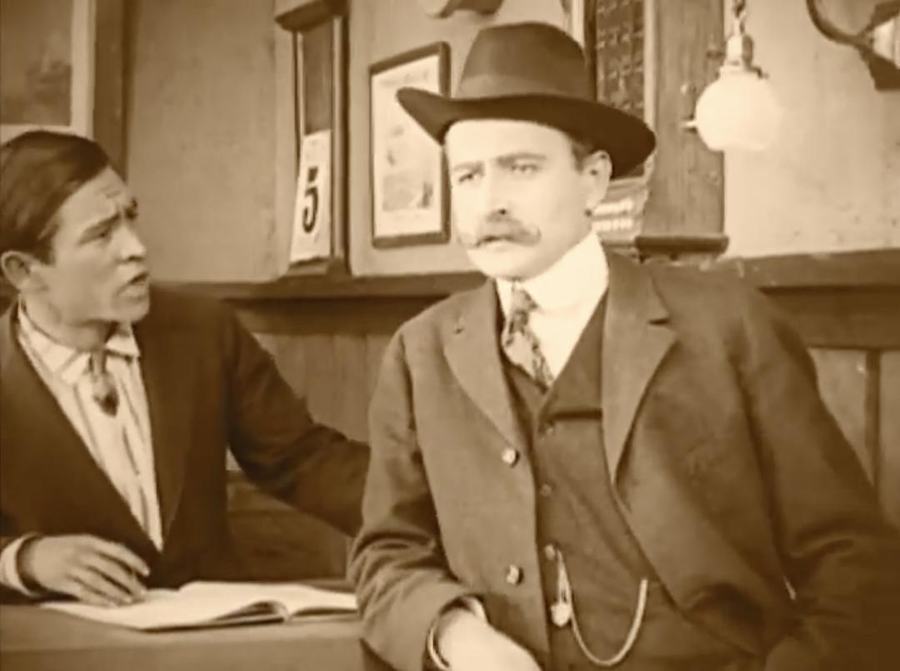
For decades the picture survived only in a 9.5 mm abridgement, battered and cyan-tinted. Then came the 2019 4K restoration by the San Francisco Silent Film Festival, scanning a 35 mm Czech print that had dodged two world wars and a communist purge. The new transfer reveals textures previously smothered: the herringbone weave of Jeff’s city suit, the glint of fool’s gold in the counterfeit mine, the freckles on Molly’s shoulder when the dude’s trembling fingers brush her sleeve. The tints—amber for interiors, viridian for night exteriors, rose for the romantic interludes—pulse like synesthetic heartbeats.
Accompanying the restoration is a sprightly Mont Alto Motion Picture Orchestra score, stitching ragtime, cowboy ballads, and Stravinskian dissonance into a quilt that mirrors the film’s tonal whiplash. During the fake Indian attack, the orchestra quotes ‘Red Wing’ in a minor key, turning a sentimental standard into a savage joke. When Jeff finally kisses Molly, the strings slide unexpectedly into a whole-tone scale, evoking Debussy—romance as fleeting impressionism.
Released mere months before America entered World War I, Wild and Woolly functioned as both escapism and prophecy: the nation would soon trade its own innocence for the muddy trenches of modernity. Fairbanks would pivot to swashbucklers—The Mark of Zorro, Robin Hood, The Thief of Bagdad—but the athletic optimism on display here is already laced with skepticism. The grin is the same, yet the eyes now carry the glint of a man who has seen the mechanical gears behind the dream factory.
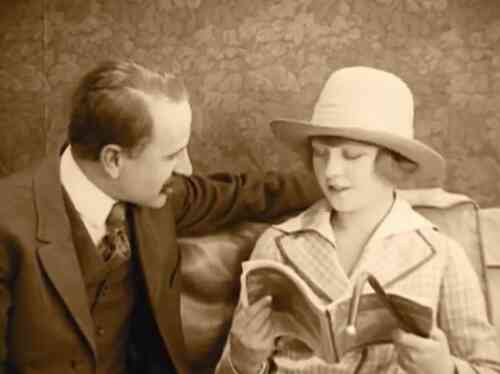
Curiously, the film also anticipates the Fairbanks persona’s demise: the moment when physical derring-do becomes insufficient balm for a world of stock-market crashes and talkies. In 1933, he would confess to a reporter, ‘The world got too heavy for leaps; now we need lungs.’ Wild and Woolly is the last gasp of the leap-before-look Fairbanks, the final pirouette before gravity remembered its obligations.
If you crave more self-reflexive western shenanigans, chase down Bluff (1924), where a cardsharp stages his own death to escape creditors, or And the Law Says (1918), a proto-noir courtroom Western that questions whether justice itself is just another performance. For gender-flipped variations, Rebecca of Sunnybrook Farm offers a heroine who weaponizes domesticity rather than six-guns.
Yet none quite fuse slapstick, social satire, and kinetic poetry the way this picture does. It’s Blazing Saddles without the bean scene, The Sting without the split-diopter, Westworld without the firmware updates. It is, in short, the first post-modern Western, wearing its contradictions like spurs that jingle even when the horse is stuffed.
Watch it for Fairbanks’ jeté onto a moving train. Watch it for Loos’ linguistic switchblades. Watch it for that final, lingering shot: the town elders counting cash while a fresh batch of rubes disembarks, hungry for blood they can applaud. Then ask yourself which century invented the reboot, the immersive theme park, the influencer safari. The answer, like the frontier itself, is a mirage that charges admission.
IMDb 6.5
1928
Community
Log in to comment.