DbcultAccessing Vault...
Cult Review
Senior Film Conservator
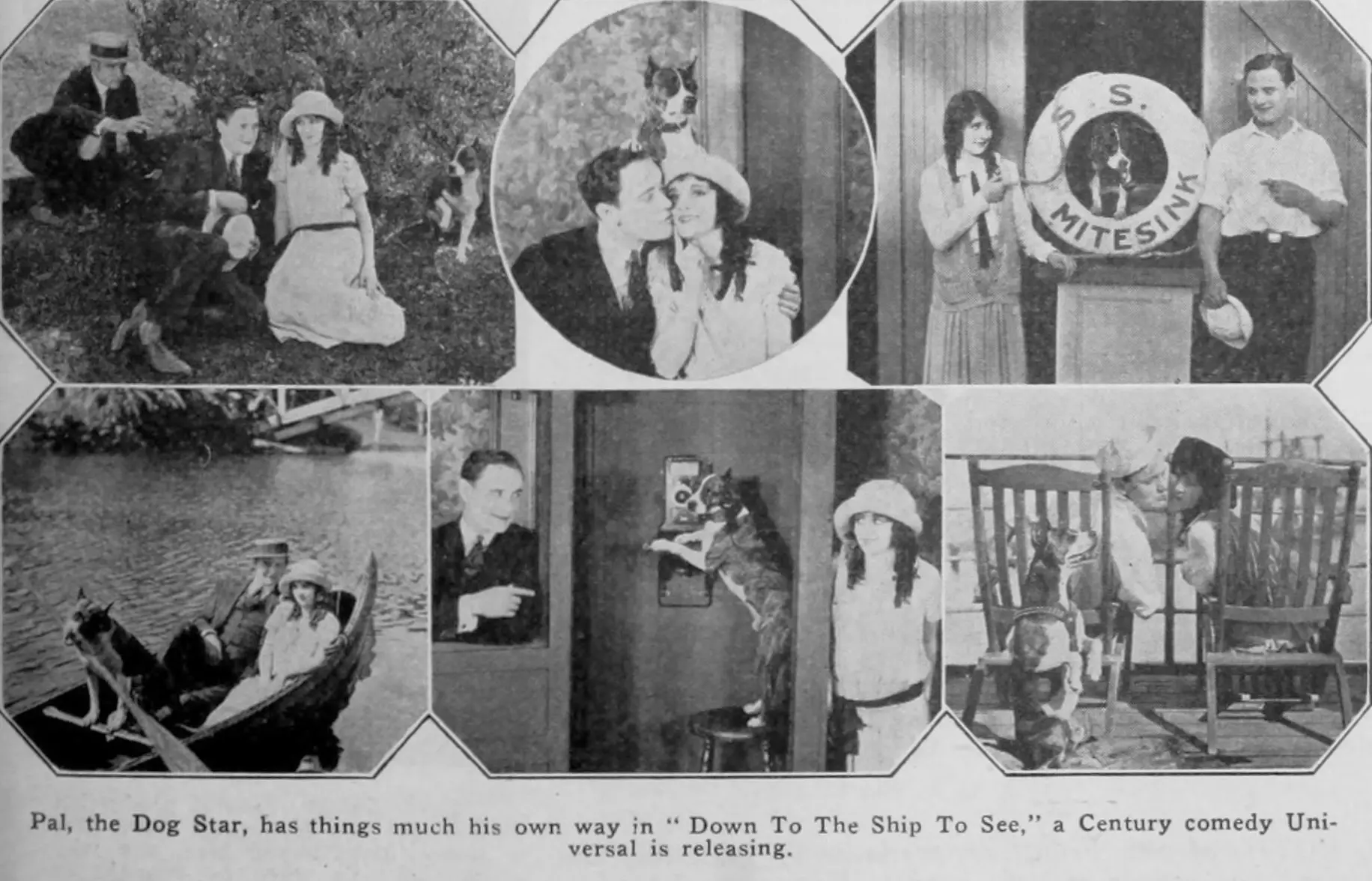
The year 1923 was a fascinating crucible for the cinematic medium, a period where the syntax of visual storytelling was being codified through trial, error, and an abundance of physical exertion. Down to the Ship to See, directed by the prolific Albert Herman, stands as a quintessential artifact of this era. It is not merely a short film; it is a frantic, breathless exercise in situational escalation. While many contemporary features like The Eternal Mother were leaning heavily into the burgeoning language of domestic melodrama, Herman’s work remained stubbornly, gloriously rooted in the carnivalesque traditions of the music hall and the variety stage.
In the hierarchy of early Hollywood performers, the animal star occupied a unique niche, often possessing a more naturalistic screen presence than their human counterparts. Pal the Dog, a progenitor of the canine-centric subgenre that would later be dominated by the likes of Rin Tin Tin and Lassie, provides the film with its most consistent source of grounded humor. Unlike the more staged animal appearances in For the Love of Tut, Pal’s involvement in Down to the Ship to See feels integrated into the very fabric of the slapstick logic. He is not merely an accessory; he is a co-conspirator in the master’s various follies.
The chemistry between Roscoe Karns and Pal is palpable. Karns, whose career would later see him becoming a staple of the sound era’s character actor pool, displays a rubbery physicality here that is often overlooked. His ability to telegraph impending doom through a simple widening of the eyes or a frantic adjustment of his hat is a masterclass in silent timing. The initial sequence involving the destruction of a tent—a classic trope of the 'unlucky traveler'—is elevated by Pal’s reactions. As the canvas collapses and the irate owner emerges, the dog’s frantic attempts to 'help' only serve to exacerbate the master’s predicament, creating a layered comedic effect that rewards the observant viewer.
One cannot discuss this short without acknowledging the inclusion of the Century Follies Girls. Their presence serves as a bridge between the narrative film and the revue format that was so popular in the early 20s. While films like The Vice of Fools dealt with the complexities of social morality, Down to the Ship to See uses its female cast as both an aesthetic flourish and a plot device. The flirtation sequence is particularly telling of the era’s social anxieties. The chaperone, a figure of rigid Victorian morality, acts as the antagonist to the master’s libido, creating a tension that is resolved through more physical comedy rather than any genuine character growth.
This interplay between the 'modern' flirtation and the 'traditional' chaperone reflects the broader cultural shifts of the 1920s. It is a lighter, more comedic take on themes found in more serious works like Her Secret or June Madness. Here, the stakes are low, but the energy is high. The Century Follies Girls bring a certain rhythmic quality to the film, their movements often synchronized with the chaotic energy of the chase, providing a visual counterpoint to the rough-and-tumble antics of Karns and the sailor.
The transition to the ship marks a shift in the film’s spatial language. The open spaces of the earlier scenes are replaced by the cramped, vertical architecture of a vessel. This change in environment allows Albert Herman to experiment with different types of gags. The 'irate sailor' chase is a tour de force of movement, utilizing ladders, hatches, and narrow corridors to create a sense of claustrophobic hilarity. It lacks the somber realism of Pirates of the Deep, opting instead for a surrealist approach to maritime life.
The sailor, played with a delightful intensity, serves as the ultimate foil for Karns. If the master represents the bumbling everyman, the sailor represents the unyielding, often irrational forces of authority and order. The pursuit is relentless, and Pal’s role in navigating the ship’s obstacles highlights the dog’s incredible training. There is a specific gag involving a porthole that remains one of the most clever bits of visual engineering in the short, demonstrating that even with limited resources, the creative team was capable of high-level slapstick ingenuity.
Technically, Down to the Ship to See is a product of its time, featuring the high-contrast lighting and static camera placements typical of early 1920s comedy. However, the editing—likely handled with a keen sense of rhythm by Herman—is surprisingly modern. The cuts between the master’s panic and the sailor’s dogged pursuit create a tempo that anticipates the great features of Buster Keaton or Harold Lloyd. While it may not possess the grand scale of Vendémiaire or the emotional depth of Les deux gamines, it excels in its specific mission: to provide fifteen minutes of unadulterated, kinetic joy.
In the broader landscape of the Century Comedy company, this film is a standout. It avoids the repetitive pitfalls of some of their lesser works, such as The Almighty Dollar, by leaning into the unique strengths of its animal star. There is a certain purity to the comedy here; it doesn't rely on complex intertitles or heavy-handed moralizing. It is a celebration of the body in motion and the inherent humor of the animal-human bond.
One might wonder why such frantic comedy was so popular in an era characterized by post-war recovery and significant social upheaval. Films like Home, Sweet Home offered a nostalgic look at traditional values, but Down to the Ship to See offered something else: a release valve. The sight of a man being chased around a ship by an angry sailor, aided and abetted by a clever dog, is a universal image of defiance against the mundane. It is a rejection of the 'serious' world in favor of a universe where gravity is optional and every disaster is temporary.
The film’s legacy lies not in its narrative innovation, but in its execution. It is a reminder that the fundamentals of comedy—timing, physicality, and the subversion of expectations—were fully formed even in the medium's infancy. When we watch Karns struggle with the chaperone or evade the sailor, we are watching the DNA of comedy being written. It is as much a historical document as the more somber It May Be Your Daughter or the mysterious The Veiled Marriage.
Ultimately, Down to the Ship to See is a testament to the enduring power of the canine-human dynamic. Pal the Dog is the true star here, his intelligence and screen presence providing a necessary anchor for Roscoe Karns' more eccentric performance. The film may be a 'short,' but its impact on the development of the slapstick genre is significant. It manages to pack more invention into its brief runtime than many features of the same period, such as Zongar or Children Not Wanted.
For the modern viewer, revisiting this film is like opening a time capsule of 1920s energy. It is fast, loud (in spirit), and unapologetically silly. It reminds us that before there were blockbusters and complex CGI, there was a man, a dog, a ship, and a camera. And sometimes, that is more than enough to create magic. The nautical setting, the Follies girls, and the relentless chase sequences coalesce into a work that is as charming today as it was a century ago. Albert Herman may not be a household name like Griffith or Murnau, but in the realm of the short-form comedy, he was a craftsman of the highest order, and this film is his shining proof.
IMDb —
1914
Community
Log in to comment.