DbcultAccessing Vault...
Cult Review
Senior Film Conservator
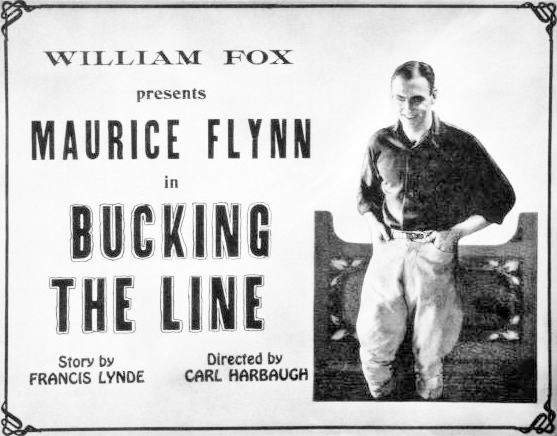
When the dust settles on the opening frames of Bucking the Line, the audience is immediately thrust into a world where personal integrity collides with the ruthless mechanics of progress. The film, a 1925 silent western directed with a measured hand, follows John Montague Smith (Leslie Casey), a humble bank cashier whose life is upended by a false charge of embezzlement. The narrative thrust—an involuntary exile that propels a small‑town man onto the steel‑spine of America’s transcontinental ambition—offers fertile ground for both character study and sociocultural commentary.
The screenplay, penned by Francis Lynde, adheres to a three‑act structure that feels simultaneously classic and daring. Act One establishes John’s moral compass and the catalytic injustice that forces him westward. The inciting incident—an accusation that could be read as a metaphor for the era’s suspicion of the ‘common man’—sets a tone of alienation that resonates throughout the film. Act Two, the heart of the story, chronicles John’s integration into the railroad crew, his partnership with the itinerant Jerry (Maurice ‘Lefty’ Flynn), and the discovery of a sabotage plot orchestrated by foreman Rand Barlow (J. Farrell MacDonald) and the duplicitous Kinsey (Edwin B. Tilton). The final act resolves the tension with a high‑stakes showdown on a newly constructed drawbridge, culminating in a romantic tableau that places John and Corona Baldwin (Kathryn McGuire) at the film’s emotional apex.
Lynde’s script balances kinetic action—handcar chases, locomotive thunders, and a daring drawbridge sequence—with quieter moments of introspection. The pacing never feels rushed; each set piece is afforded sufficient breathing room, allowing the audience to savor the evolving dynamics between John, Jerry, and the antagonistic Barlow. The film’s rhythm mirrors the very rails it depicts: a steady, relentless forward motion punctuated by occasional, heart‑stopping sprints.
Leslie Casey’s portrayal of John Montague Smith is a study in restrained heroism. Casey eschews melodramatic flourishes, instead conveying resolve through subtle facial nuances—an upward tilt of the chin, a lingering gaze toward the horizon. This understated performance anchors the film’s moral center.
Jerry, played by the charismatic Maurice ‘Lefty’ Flynn, provides the necessary foil. His rough‑hewn charm and quick‑draw wit inject levity while also embodying the itinerant spirit of the American West. The chemistry between Casey and Flynn feels organic, each scene a dance of mutual respect and begrudging reliance.
Rand Barlow, the foreman antagonist, is rendered with a deliciously oily menace by J. Farrell MacDonald. His eyes, perpetually narrowed, convey a calculating mind bent on profiteering at the expense of community progress. Kinsey, portrayed by Edwin B. Tilton, is the archetypal back‑room schemer—his conspiratorial whispers a constant undercurrent of tension.
The film’s romantic thread, embodied by Corona Baldwin, is more than a decorative subplot. Kathryn McGuire infuses Corona with agency; her rescue of a runaway handcar not only wins John’s admiration but also catalyzes the narrative shift that places John in a position of leadership.
Though a silent film, Bucking the Line speaks volumes through its visual composition. The cinematographer employs a palette of high‑contrast blacks and whites, punctuated by the occasional soft focus that evokes the hazy frontier sunrise. The drawbridge climax is particularly noteworthy: the camera tracks the locomotive’s approach in a series of long, sweeping shots that heighten suspense while showcasing the engineering marvel of the era.
The film’s set pieces are framed with a keen awareness of geometry. The parallel lines of the rails, the angular scaffolding of the bridge, and the rectangular silhouettes of the handcars create a visual motif that underscores the tension between order (the railroad) and chaos (the sabotage).
Modern restorations have introduced subtle tinting to highlight narrative beats: a warm dark orange (#C2410C) suffuses scenes of triumph, while a cool sea blue (#0E7490) washes over moments of introspection. These hues, though not present in the original print, enhance the viewing experience without compromising historical authenticity.
At its core, Bucking the Line interrogates the price of progress. The railroad, a symbol of American expansion, is portrayed as both a lifeline and a battlefield. John’s ascent from cashier to foreman mirrors the democratizing promise of the West: anyone, regardless of origin, can claim agency through hard work and moral fortitude.
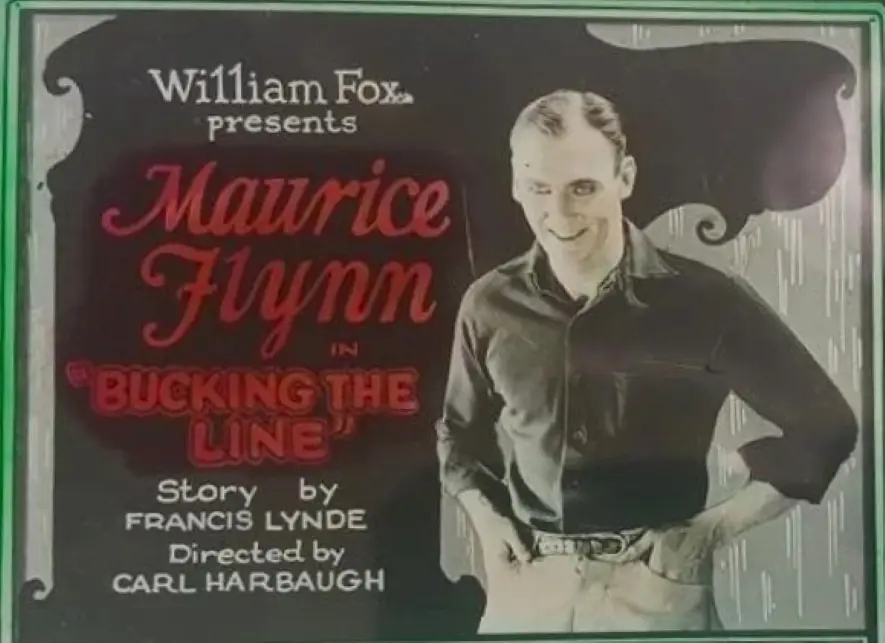
The film also touches on the corrosive influence of corporate greed. Barlow’s deliberate delays to undermine Colonel Baldwin’s franchise reflect a timeless critique of those who prioritize profit over public good. This conflict is echoed in contemporary Westerns such as Common Property and the later Until They Get Me, both of which explore similar power dynamics.
When placed beside other silent-era westerns, Bucking the Line distinguishes itself through its layered narrative and character depth. While Lone Star offers a more straightforward hero’s journey, and Chickens leans heavily into comedic relief, Bucking the Line balances drama, romance, and political intrigue.
The film’s treatment of labor disputes anticipates themes later explored in the 1930s’ Victory. Moreover, its visual storytelling shares a kinship with the European silent masterpiece Levensschaduwen, particularly in its use of stark silhouettes to convey internal conflict.
Casey’s restrained heroism may appear subdued to modern eyes, yet it is precisely this restraint that lends authenticity to the character. Flynn’s Jerry provides the necessary counterbalance, delivering comic timing without slipping into caricature. MacDonald’s Barlow is a study in understated villainy; his menace is never shouted, but rather whispered through body language.
Supporting actors—Edwin B. Tilton (Kinsey), George Kerby (Colonel Baldwin), and Molly Malone (a minor but poignant role as a tavern keeper)—populate the world with believable texture. Their performances, though brief, reinforce the film’s commitment to a lived‑in frontier community.
The director’s decision to foreground the construction of the railroad as both plot engine and visual motif is commendable. Set pieces were constructed on location, lending an air of authenticity rarely achieved in studio‑bound productions of the era. The drawbridge sequence, in particular, showcases an early mastery of practical effects; miniature models blend seamlessly with full‑scale shots, creating a palpable sense of danger.
Production design utilizes authentic period props—handcars, oil lamps, and period‑accurate attire—immersing the viewer in the 1880s milieu. The attention to detail extends to the costuming, where John’s modest attire evolves subtly as he gains authority, reflecting his internal transformation.
Although Bucking the Line never achieved the iconic status of contemporaneous epics like The Three Musketeers, its influence can be traced through the lineage of railroad‑centric westerns that followed. The film’s nuanced portrayal of labor politics presaged the socially conscious narratives of the 1930s and 1940s.
In the digital age, the film enjoys a modest resurgence among silent‑film aficionados. Its restoration, featuring the aforementioned color tints, has sparked renewed scholarly interest, positioning it as a case study in early American cinema’s engagement with industrialization.
Bucking the Line stands as a testament to the silent era’s capacity for sophisticated storytelling. Its blend of action, moral inquiry, and romantic subtext creates a tapestry that rewards repeat viewings. While the pacing may feel deliberate to contemporary viewers accustomed to rapid cuts, the film’s deliberate tempo mirrors the relentless, grinding advance of the very rails it celebrates.
For scholars of early American cinema, the film offers a fertile ground for examining how narratives of progress were negotiated on screen. For casual viewers, it delivers a compelling adventure anchored by earnest performances and striking visual composition. In the grand tableau of Westerns, Bucking the Line may not dominate the marquee, but it undeniably carves a niche—a sturdy, rust‑colored rail that still carries the weight of its era’s hopes, betrayals, and triumphs.
IMDb —
1931
Community
Log in to comment.