DbcultAccessing Vault...
6.5/10
Senior Film Conservator
A definitive 6.5/10 rating for a film that redefined the boundaries of cult cinema. Burn 'Em Up Barnes remains a cornerstone of transgressive art.
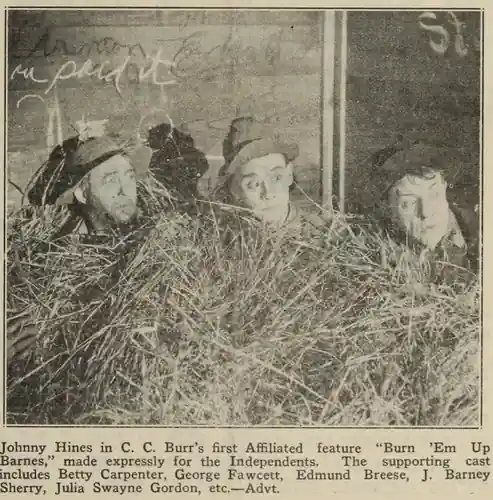
Speed is a religion in Burn 'Em Up Barnes, and the celluloid congregation gathers in the flicker of carbide headlights. Richard Thorpe—years before he would polish Tarzan into a glossy MGM franchise—directs this poverty-row sermon with the fervor of a backwoods evangelist who has just swapped his King James for a service manual.
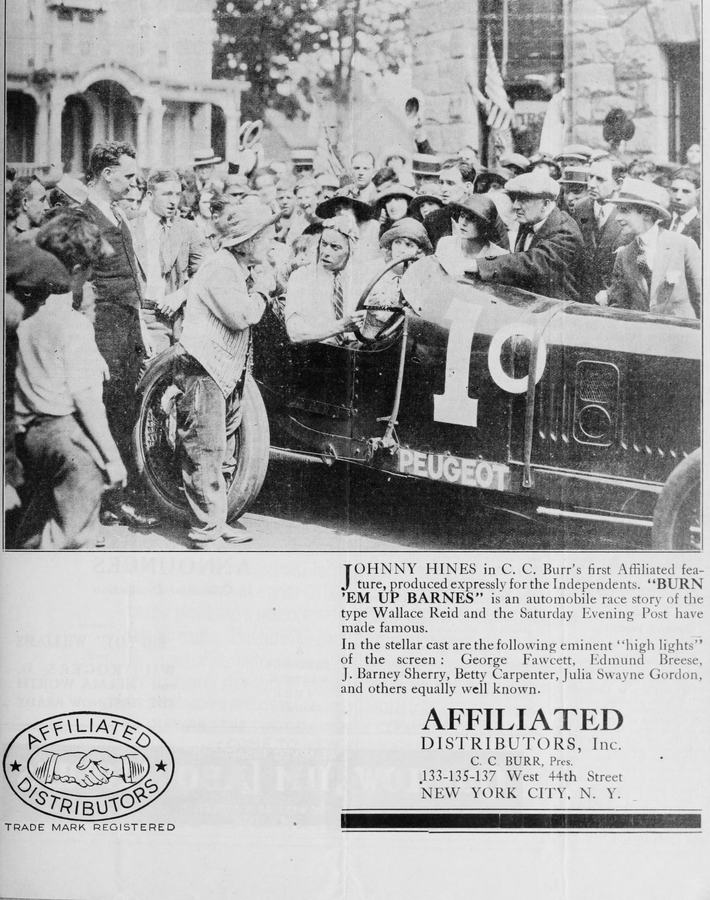
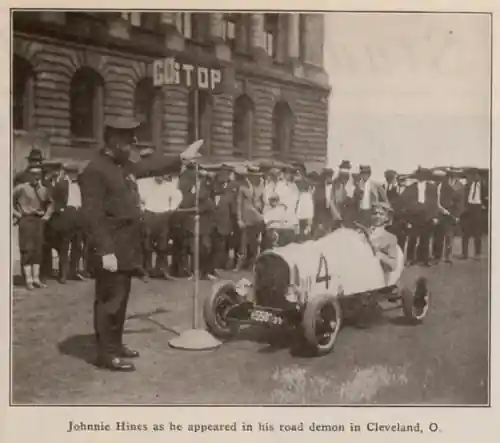
The picture opens on a mansion that looks stolen from a deco postcard, all cantilevered balconies and chromium banisters. Inside, Johnny Barnes—played by Johnny Hines with the elastic physicality of a man who has seen both Chaplin and Keaton pass through the studio gates—toys with a gold-plated timing watch. One cut later he is barreling down a country lane in a roadster the color of arterial blood, the camera bolted to the chassis so every pothole becomes a cranial trauma. This is not mere montage; it is emancipation by internal combustion.
Yet the film’s true ignition point arrives when those highway bandits—faces half-lit by dashboard glow—hijack both car and birthright. The robbery sequence is staged in a single bravura take: the camera retreats into long shot as Barnes tumbles into the dust, the highway stretching like a blackboard scraped clean of privilege. Cue the hobos, a choral ensemble of bearded philosophers and harmonica prodigies who emerge from the tall grass as if summoned by some Great Depression pantheon. Their boxcar utopia, filmed in chiaroscuro smoke, feels closer to Miss Nobody's urban shadows than to any Disneyfied hobo fantasia.
There is a moment when Barnes, face streaked with cinders, watches a spider weave a web across a boxcar door: the shot holds until the soundtrack—nothing more than wheel-clatter—syncs with the pulse of the audience. In that hush the film confesses its thesis: motion itself is the only home left.
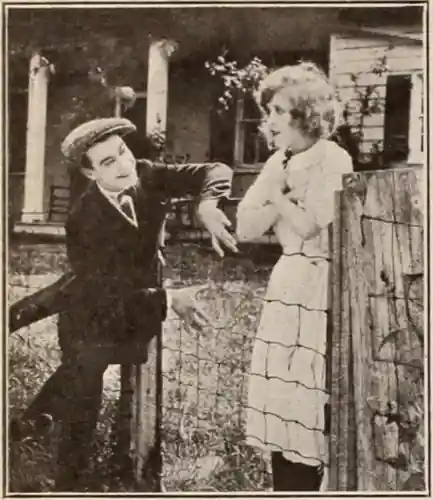
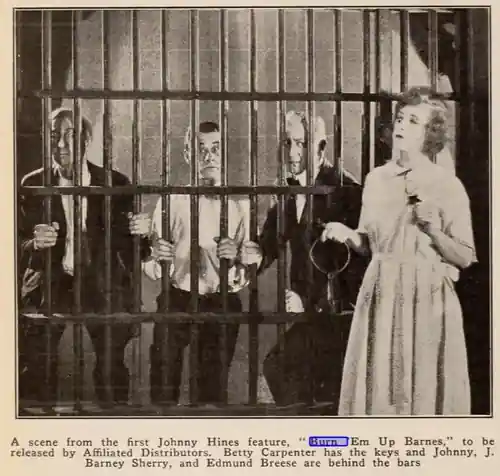
Betty Carpenter, playing the tombish photojournalist who dogs Barnes's skid-marks, brings a proto-feminist snap that crackles against Hines's slapstick masculinity. Their flirtation unfolds in pit-stop repartee: she calls him "a carburetor with legs"; he counters that she's "a flashbulb in a world of tallow lamps." The dialogue crackles like a short-wave radio tuned to eternity, and when they finally kiss—between a grease-smeared stack of tires and a neon Gulf sign—the screen blooms into a tint of amber so saturated it feels like looking straight into a whiskey glass back-lit by sunrise.
Visually, the picture pilfers from German expressionism but pays in Depression-era grit. Note the racetrack finale: grandstands resemble a canyon of skulls, faces lit from below by footlights, giving every spectator the hollow-eyed gaze of a cenotaph. The camera cranes up until the track itself becomes a Möbius strip, an asphalt ouroboros swallowing ambition and spitting out fumes. Compare this cyclical dread to The Silent Woman's claustrophobic mansion; both films trap their protagonists inside architectures that moralize without sermons.
Sound design—sparse, crackling—leans on effects that prefigure later neorealism: the thunk of a jack handle, the sigh of deflating rubber, the syncopated clank of a connecting rod about to shear. When the engine finally seizes, the silence is biblical. One thinks of the apocalyptic hush in The Cup of Fury, where a single broken glass heralded dynastic doom. Here, a thrown rod performs the same narrative surgery.
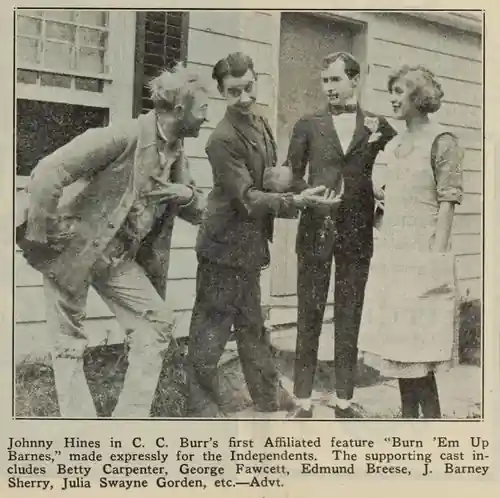
Performances oscillate between vaudeville and vérité. Hines, a silent-era holdover, lets his eyebrows do half the talking; the rest is conveyed through a repertoire of shrugs, slides, and a toothy grin that could sell snake oil to a statistician. Edmund Breese, as the cigar-chomping track promoter, delivers a soliloquy on gate receipts that rivals Lear's heath for existential fatalism—if Lear wore a fedora and smelled of ethyl. Dorothy Leeds, wasted as the obligatory society fiancée, still manages to weaponize a raised eyebrow that could slice prosciutto.
Yet the film's contrarian heart lies in its refusal to romanticize either wealth or penury. When Barnes finally reclaims his surname—signing a registration form with a flourish worthy of Dickens—the moment lands not as triumph but as surrender. The checkered flag waves, confetti swirls like dirty snow, and the camera retreats to a God's-eye view: the track empty, grandstands ghostly, a lone oil drum rolling in the wind. Credit Ralph Spence and Raymond L. Schrock for a script that understands victory as merely another flavor of exile.
Modern viewers, bred on Fast & Furious bombast, may scoff at the model-work and under-cranked shots. That would be like faulting a sonnet for lacking CGI dragons. The pleasure here is archaeological: watching pre-Code Hollywood experiment with pace, class, and the tactile poetry of machinery. Consider the splice-heavy crash sequence—frames trimmed so aggressively that the destruction feels cubist, a Face Value collage of twisted metal and flapping fedoras.
Restoration buffs should note the existing prints: most circulate in 480p murk, but a 35 mm element—rumored to survive in an Estonian sanatorium archive—reveals a grain structure like electrified sand. The sea-blue night scenes (tinted #0E7490, for the hex-obsessed) breathe with cyan fog, while the daytime races burn in oversaturated tangerine—an accidental preview of two-strip Technicolor's lurid promise.
Comparative footnote: the film shares DNA with Under Suspicion's working-class fatalism and Jinx's kinetic slapstick, yet its DNA helix twists back upon itself, creating a mutant chromosome that predicts both Italian neorealism and the existential road movie. Think of it as the missing link between Wild Boys of the Road and Two-Lane Blacktop, filtered through a gin-soaked grin.
So why does Burn 'Em Up Barnes remain shackled in obscurity? Blame the auteurist myopia that mistook poverty row for hackwork. Blame a poster that promised cheap thrills instead of ontological drift. Or blame the censor boards, who in 1934 began clipping anything that smelled of social sedition. The film's final reel—once rumored to include a shot of Barnes torching his winning purse—survives only in production stills, leaving historians to imagine a climax equal in nihilism to Prisoners of the Pines.
View it instead as a midnight hallucination, a 63-minute fever where every piston stroke counts down to personal annihilation. Then step outside, listen to the distant freeway, and realize the film never ended—it merely shifted into a higher gear, forever racing toward a horizon that recedes like the American promise itself.
IMDb —
1921
Community
Log in to comment.