DbcultAccessing Vault...
Cult Review
Senior Film Conservator
The 1915 cinematic adaptation of Octave Mirbeau’s scathing play, Les affaires sont les affaires, titled simply Business Is Business, stands as a monolith of early psychological realism. In an era often dominated by the broad physical comedy of Keystone Comedies or the simplistic moralities of the frontier, this film dares to peer into the cavernous, hollow chest of the industrialist Isidore Lechat. It is a work that does not merely depict greed; it dissects the pathology of a man for whom every breath is a calculated investment and every heartbeat a dividend.
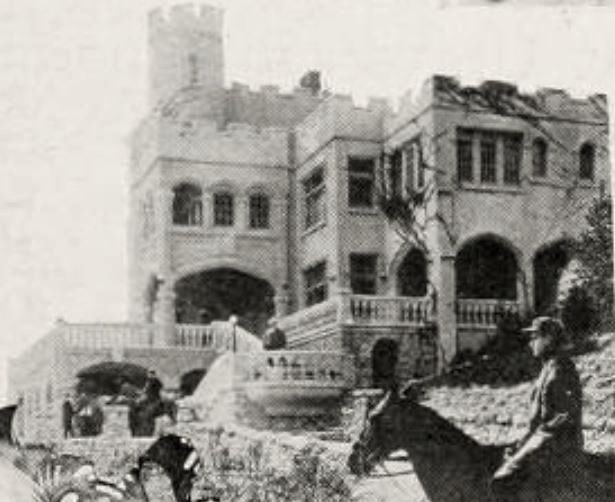
Lechat, portrayed with a terrifying, kinetic energy by Nat C. Goodwin, is the quintessential product of the Belle Époque’s darker impulses. His castle in the south of France is not a sanctuary of peace but a fortress of social warfare. The film’s visual grammar, directed with a surprisingly modern sense of spatial hierarchy, emphasizes Lechat’s isolation. He moves through his ornate hallways like a shark in a gilded cage. Unlike the romanticized tragedies found in La signora delle camelie, where passion dictates the narrative arc, Business Is Business posits that the ultimate tragedy is the death of passion in favor of the balance sheet.
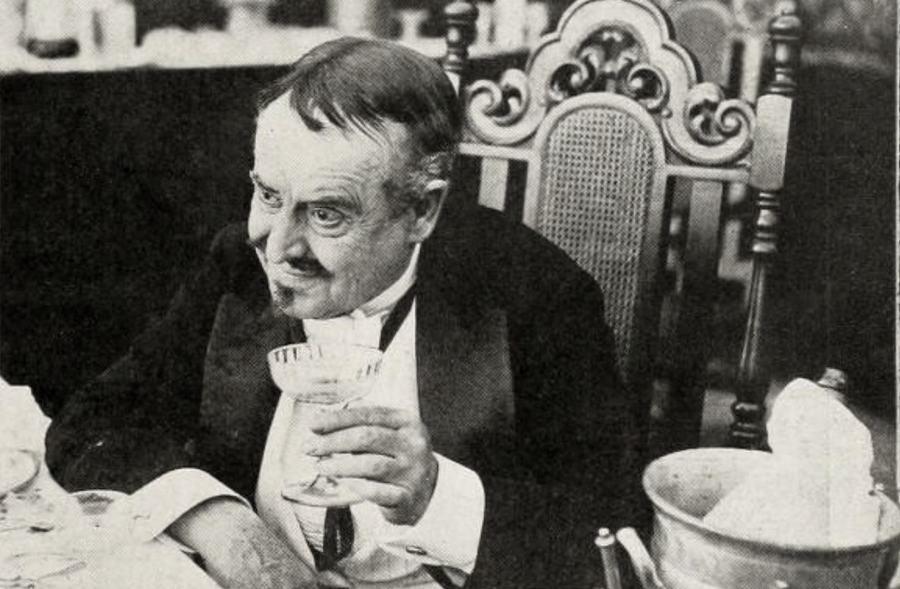
The domestic dynamics presented here are harrowing. Lechat’s treatment of his wife is perhaps the most stinging critique of the patriarchal capitalist structure of the early 20th century. By forbidding her from public view because her 'slovenly' appearance might devalue his social stock, he effectively liquidates her humanity. She becomes a non-performing asset, hidden away in the attic of his life. This isn't the theatrical villainy one might find in Lights of London; it is a cold, bureaucratic cruelty that feels far more contemporary and far more devastating.
Where the film truly excels is in its exploration of the 'wastrel son,' Xavier. Played with a palpable sense of ennui, Xavier represents the second-generation rot that often follows meteoric financial success. He is the antithesis of his father’s drive, yet he is entirely a product of it. The introduction of Celeste, an acquaintance of Xavier’s, provides the catalyst for the film’s second act. Lechat’s pursuit of Celeste is not born of genuine lust or affection, but rather a desire to conquer youth itself. He views her as a new market to be cornered, a fresh cycle of triumphs that will validate his prowess. In this regard, the film shares a thematic DNA with The Toll of Mammon, where the accumulation of wealth demands a spiritual sacrifice that the protagonist is all too willing to make.
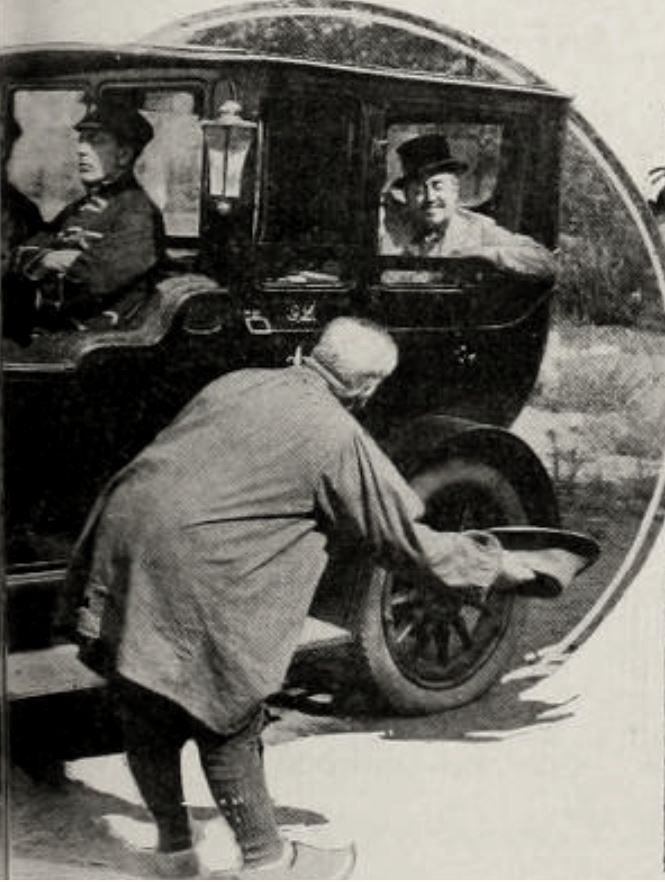
"In the world of Lechat, love is merely a negotiation where the terms are always dictated by the party with the most leverage."
The screenplay by F. McGrew Willis retains the sharp, cynical edge of Mirbeau’s original text. It avoids the melodramatic pitfalls of contemporary works like Carmen, opting instead for a slow-burn tension that mirrors the ticking of a clock in a silent boardroom. The film understands that the most profound shifts in power occur not on the battlefield, as in Karadjordje, but across a dinner table where words are used as shivs.
Nat C. Goodwin’s performance is a revelation. While many actors of the 1910s were still struggling to shed the histrionics of the stage, Goodwin delivers a performance of nuanced restraint punctuated by bursts of manic obsession. His eyes convey a ledger of gains and losses even when his face remains a mask of aristocratic indifference. Opposite him, Hobart Bosworth provides a grounding presence, reminding us of the human cost of Lechat’s ambitions. The ensemble cast, including Mlle. Marguerite and Gretchen Lederer, navigate the complex emotional landscape with a sophistication that rivals the best dramas of the decade, such as The Marriage of Kitty.
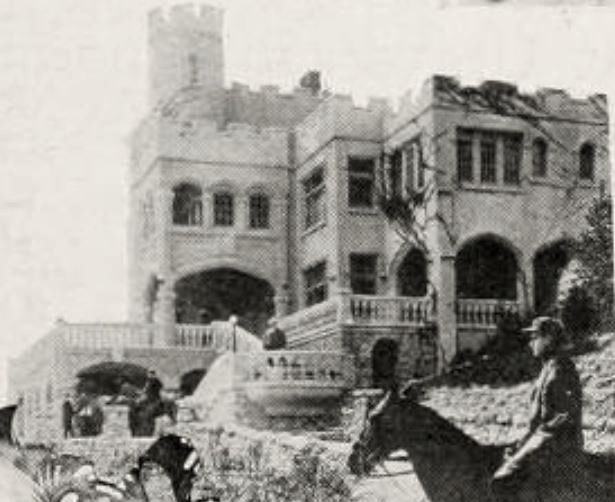
Technically, the film utilizes its locations to great effect. The contrast between the sun-bleached landscapes of the South of France and the claustrophobic, shadow-drenched interiors of the castle creates a visual metaphor for Lechat’s internal state. He is a man surrounded by beauty who can only see its price tag. This visual storytelling is far more advanced than the documentary-style approach of The Pendleton, Oregon, Round-Up, showing a clear evolution in cinematic language.
As the narrative progresses, the 'unexpected turns' mentioned in the plot summary manifest as a series of existential reckonings. Lechat’s belief that he can control the trajectory of his family as easily as he manipulates a stock price is his undoing. The film subtly suggests that while business may be business, life is a chaotic, unquantifiable force that refuses to be audited. This realization brings a level of pathos to Lechat that he arguably doesn't deserve, yet the film forces the audience to confront the humanity buried beneath his monstrous ego.
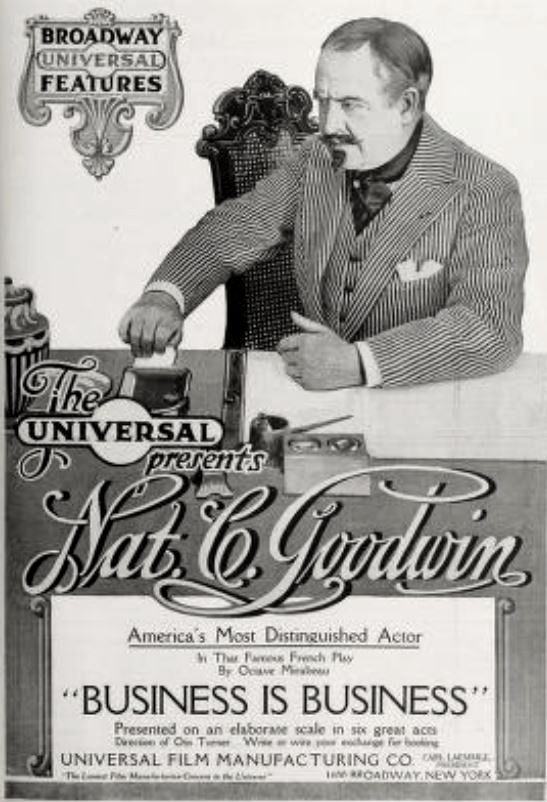
Comparatively, while films like Voodoo Vengeance or The Mystery of the Fatal Pearl rely on external shocks and exoticism to engage the viewer, Business Is Business finds its horror in the mundane—in a cruel word, a cold glance, or a door shut in a wife's face. It is a psychological thriller masquerading as a social drama. It lacks the overt mystery of Wer ist der Täter? but replaces it with the dread of inevitable moral bankruptcy.
Looking back from the vantage point of the 21st century, the themes of Business Is Business feel disturbingly prescient. We live in an era where the 'Lechat' archetype has been decentralized and digitized, yet the fundamental drive—the commodification of every human interaction—remains unchanged. The film serves as an early warning shot against the totalizing nature of capitalist logic. It is a more somber reflection than the youthful rebellion seen in Sorvanets or the romanticized duty of Legion of Honor.
Even when compared to European contemporaries like Sündige Liebe or the fatalistic What the Gods Decree, this film holds its own through its sheer focus on character study. It doesn't need the intervention of the gods or the grand sweep of history; it only needs the claustrophobia of a family dinner where the air is thick with unspoken resentments and calculated maneuvers.
In conclusion, Business Is Business is a vital piece of cinematic history that demands more than a cursory glance. It is a dense, difficult, and ultimately rewarding experience that strips away the veneer of Edwardian respectability to reveal the raw, pulsing greed beneath. It is a reminder that when everything is for sale, the first thing to be sold is the soul. For those seeking a film that challenges the intellect while providing a masterclass in early 20th-century performance, this is an essential viewing. It remains a stark, unblinking portrait of a man who won the world but lost his way in the hallways of his own castle.
IMDb —
1926
Community
Log in to comment.