DbcultAccessing Vault...
Cult Review
Senior Film Conservator
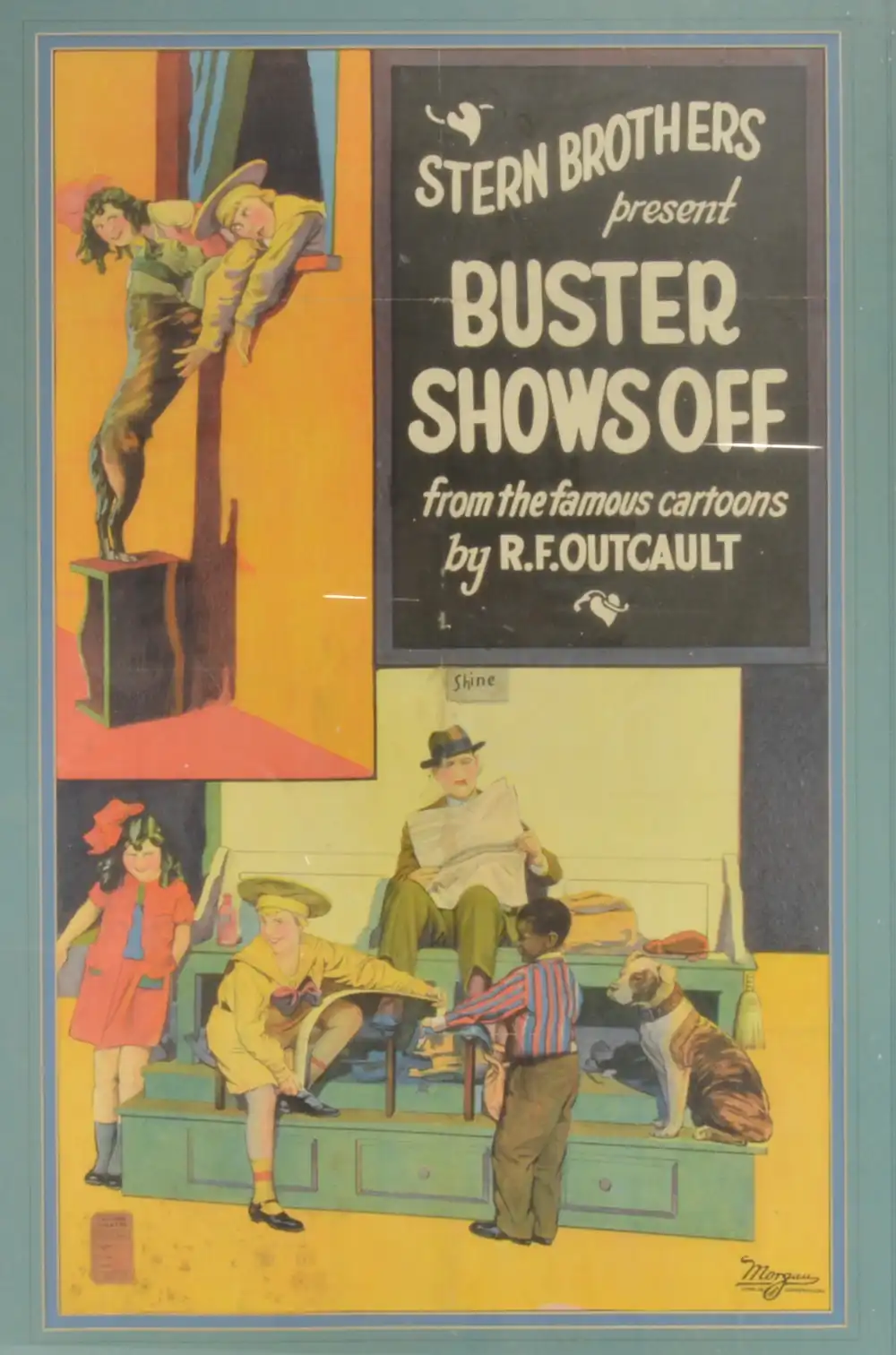
If you’re the kind of person who finds 1920s child actors deeply unsettling, stay away from this. But if you have a soft spot for dogs that are clearly more talented than their human co-stars, Buster Shows Off is a decent ten-minute distraction. You can find it on various archive sites, usually looking like it was dragged through a hedge, which honestly fits the vibe.
Arthur Trimble, playing Buster, has this bowl cut that looks like it was shaped with a literal soup bowl and a pair of garden shears. He spends a lot of the movie making these exaggerated 'O' faces at the camera. It’s that old-school vaudeville style where every emotion has to be visible from the back row of a theater three blocks away. It’s exhausting to watch, even for ten minutes.
The dog, Tige (played by 'The Wonder Dog Pal'), is the only one who seems to know where the lens is without looking like he’s trying to sell you insurance. There’s a moment early on where the dog just sits and watches Buster’s antics with this expression of pure, unadulterated judgment. I felt a spiritual connection with that dog.
There is a specific shot where Buster is trying to show off his 'athletic prowess' and the background is just... bleak. It’s a flat, gray-toned yard that feels more like a stage play than a real place. The editing is jumpy, too. One second Buster is by the fence, and the next, he’s halfway across the yard with no transition. It’s not 'experimental'—it’s just 1922 and they probably ran out of film or the cat ate a few frames.
The costume for Buster is a whole other thing. Those oversized collars and the giant ribbon tie make him look like a very fancy Victorian ghost. It’s hard to buy him as a 'troublemaker' when he’s dressed like he’s about to be served as a centerpiece at a gala. When he gets into a scuffle, you aren't worried about him getting hurt; you’re just wondering how much starch is in that shirt.
I found myself looking at the background more than the plot. There’s a scene in a kitchen—or what passes for one—and the props look incredibly flimsy. There's a bucket that looks like it would collapse if you actually put water in it. It’s a far cry from the more polished sets you’d see in something like A Fool There Was from the same era. This feels like it was shot on a Tuesday afternoon by people who had a dinner reservation at five.
The physical comedy is... let’s call it 'polite.' There’s a bit with a goat that goes on for a long time. The goat is probably the second-best actor in the film. There’s no real tension, just a lot of running in circles. At one point, Doreen Turner shows up as the little girl Buster is trying to impress, and her reaction shots are just her standing perfectly still like a statue. It’s awkward. The chemistry between the kids is non-existent; they just stand near each other and wait for someone off-camera to tell them to move.
The pacing is weirdly lopsided. The first five minutes feel like they take an hour, and then the ending happens so fast you might miss it if you blink. There’s no real climax, just a sudden realization that the movie is over. It lacks the punchy energy of the later 1920s comedies like Wine of Youth, which actually understood how to build a joke.
One detail I loved: there’s a moment where the dog actually helps Buster hide, and the way the dog moves the prop is so precise it makes you wonder how many takes they did. Or maybe the dog was just tired of being there and wanted to finish the scene.
Is it a 'good' movie? Not really. It’s a filmed comic strip that doesn't quite understand how to be a film yet. But as a historical artifact, it’s fascinating. You get to see what passed for 'high-energy kid entertainment' a century ago. It’s mostly just kids in weird clothes being slightly annoying while a very good dog tries to keep the production together.
If you're looking for deep cinema, go watch Shadows of Paris. If you want to see a dog in a collar looking smarter than everyone else in the room, stick with Buster.

IMDb 7.9
1931
Community
Log in to comment.