DbcultAccessing Vault...
7.8/10
Senior Film Conservator
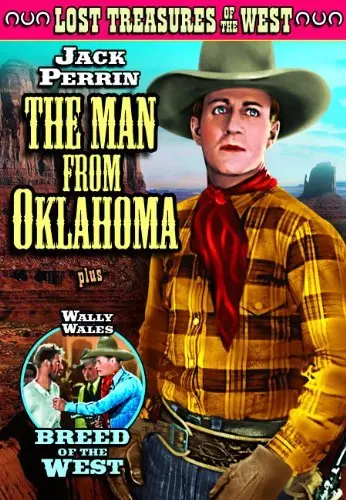
A definitive 7.8/10 rating for a film that redefined the boundaries of cult cinema. The Man from Oklahoma remains a cornerstone of transgressive art.
Is 'The Man from Oklahoma' worth watching today? Short answer: yes, but with significant caveats that demand a particular kind of viewer. This film is a fascinating, if sometimes frustrating, window into early Western cinema, designed for the dedicated cinephile and the ardent fan of frontier justice narratives.
It is decidedly NOT for those seeking modern pacing, complex character arcs, or high-fidelity restoration, nor for anyone who struggles to engage with the unique language of silent storytelling.
For those who appreciate the foundational works of American cinema, 'The Man from Oklahoma' offers a compelling, if unpolished, experience. It’s a stark reminder of how early filmmakers crafted narratives with limited tools, relying heavily on visual storytelling and the expressive power of their actors.
This film works because of its raw, uncomplicated portrayal of good versus evil, its compelling lead performance, and the effective use of its sparse, yet evocative, frontier setting. It strips away modern cinematic embellishments, revealing the core appeal of the Western genre.
This film fails because of its predictable plot trajectory, the inherent limitations of silent film acting for nuanced psychological depth, and sometimes rudimentary cinematography that, while historically interesting, can feel visually static to contemporary eyes.
You should watch it if you appreciate historical cinema, enjoy the straightforward morality of early silent Westerns, or if you are keen to observe the foundational elements upon which an entire genre was built.
'The Man from Oklahoma' emerges from an era when cinema was still finding its voice, quite literally. Released during the roaring twenties, a period of immense experimentation and innovation in film, this silent Western stands as a testament to the enduring appeal of simple, potent narratives. It’s a film that encapsulates the nascent stages of a genre that would come to define American storytelling for decades.
While not as widely celebrated as some of its contemporaries, it embodies the spirit of early Westerns: rugged individualism, a clear moral compass, and the relentless pursuit of justice in a lawless land. It’s a film that asks its audience to lean in, to interpret, and to appreciate the artistry of a bygone era.
The film's title itself conjures images of an outsider, a figure stepping into a pre-existing conflict, much like the lone riders of countless Westerns that would follow. It promises a tale of a man, defined by his origin, bringing his own brand of order to chaos.
At its heart, 'The Man from Oklahoma' is a classic tale of retribution, cloaked in the dusty attire of the American West. The narrative unfurls with a brutal act: the murder and robbery of Lynn Durant, an event that serves as the catalyst for the entire story. This isn't a whodunit; the villain, Sam Stallings, is quickly established, his malevolence almost palpable even in the absence of spoken dialogue.
The arrival of the titular 'Man from Oklahoma' isn't just a plot point; it's the introduction of a force of nature. He represents the inevitable consequence of Stallings' actions, a quiet storm brewing on the horizon. His conflict with Stallings isn't merely personal; it's a symbolic battle between the encroaching forces of law and the vestiges of untamed savagery.
What makes this seemingly straightforward plot resonate is its focus on the procedural elements of frontier justice. The Oklahoman doesn't just stumble upon the truth; he actively seeks it, piecing together clues through observation and the subtle shifts in allegiances among the townsfolk. This detective-like quality elevates the narrative beyond simple chase sequences.
The climax, where the Oklahoman dispatches his dog for the Sheriff while pursuing Stallings, is a masterful stroke of silent storytelling. It’s a powerful visual metaphor for the transition from individual vengeance to communal justice, a recognition that even the most capable lone wolf eventually needs the system to solidify order. It's a surprisingly sophisticated touch for a film of this vintage, distinguishing it from more purely action-driven contemporaries like The Home Stretch.
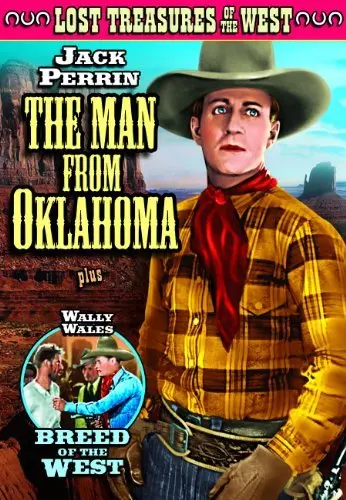
The direction in 'The Man from Oklahoma,' while lacking the flamboyant flourishes of later eras, is remarkably effective in its simplicity. The camera is often static, allowing the actors and the vast landscapes to tell the story. Director George Hazel understands the power of a wide shot, using the expansive, often desolate, terrain to emphasize the isolation and vulnerability of the characters.
Consider the scene where the Oklahoman first encounters Stallings; the framing often places them at opposite ends of the screen, subtly reinforcing their adversarial relationship before a single 'word' is exchanged. This visual grammar is fundamental to silent film, and Hazel employs it with a utilitarian elegance.
The cinematography, relying on natural light and stark black-and-white contrasts, paints a gritty, authentic picture of the frontier. Shadows play a crucial role, particularly in scenes involving Stallings and his henchman, adding a layer of menace to their clandestine activities. The lack of vibrant color forces the viewer to focus on texture, form, and facial expression, intensifying the emotional impact.
There's a raw beauty to the way the sun-drenched plains are captured, juxtaposed with the dusty interiors of saloons and cabins. While not as artistically ambitious as, say, Der verlorene Schuh in its visual poetry, 'The Man from Oklahoma' achieves a grounded realism that serves its narrative well. It’s functional, but undeniably atmospheric.
The success of any silent film hinges almost entirely on the expressiveness of its cast, and 'The Man from Oklahoma' is no exception. Martin Turner, as the titular 'Man from Oklahoma,' delivers a performance that is stoic and understated, yet undeniably commanding. His character communicates through subtle shifts in posture, piercing gazes, and deliberate actions rather than grand gestures.
Turner embodies the archetypal silent Western hero: a man of few 'words' but immense integrity. His quiet intensity is a stark contrast to Edmund Cobb's portrayal of Sam Stallings, who leans into the more theatrical villainy common to the era. Cobb’s sneers, his furtive glances, and his overall demeanor leave no doubt as to his nefarious intentions, making him a compelling, if one-dimensional, antagonist.
The supporting cast, including Bud Osborne and Lew Meehan as Stallings' henchmen, provide effective, if predictable, foil. Josephine Hill, as the likely love interest or damsel in distress (though not explicitly detailed in the plot summary, it's a genre staple), brings a necessary human element to the otherwise stark conflict. Her vulnerability offers a counterpoint to the masculine bravado.
Perhaps the most surprising and effective 'performance' comes from the Oklahoman's dog. Animal actors in silent films often stole scenes, and the dog’s role in fetching the Sheriff is a pivotal moment that adds both charm and crucial narrative propulsion. It highlights the bond between man and animal, a recurring motif in the genre, and provides a much-needed moment of heartfelt loyalty in a world of betrayal.
The pacing of 'The Man from Oklahoma' is undeniably different from modern cinema. It builds slowly, allowing scenes to unfold without the rapid-fire cuts audiences are accustomed to today. This deliberate tempo, however, is not without its merits. It allows for a greater appreciation of the setting and the gradual development of tension, particularly as the Oklahoman closes in on Stallings.
There are moments of genuine suspense, such as when the Oklahoman avoids the trap set for him. The extended duration of these sequences, devoid of dialogue, forces the viewer to focus on visual cues and the characters' reactions, creating a unique kind of immersive experience. It's a masterclass in silent tension building, proving that less can often be more.
The tone of the film is consistently one of earnest moralism and adventurous grit. There’s a clear delineation between good and evil, a characteristic that defines many early Westerns. It's a world where justice, though delayed, is ultimately inevitable, and the hero's resolve is never questioned. This straightforward moral landscape can feel simplistic to a modern audience, but it offers a comforting clarity that is often absent in today's more morally ambiguous narratives.
While some might find the pacing occasionally sluggish, it’s important to view it through the lens of its time. This was how stories were told, and the film leverages this style to create a mood that is both contemplative and ultimately thrilling. It works. But it’s flawed. The slower pace allows for more contemplative shots of the landscape, which, while beautiful, can sometimes feel like filler. Yet, it also allows the audience to truly absorb the isolation of the characters, enhancing the stakes of their conflict.
‘The Man from Oklahoma’ is more than just a historical artifact; it’s a robust, if unrefined, example of early Western filmmaking. It’s a film that demands patience and a willingness to engage with a different cinematic language, but for those who make the effort, it offers a deeply satisfying experience of classic frontier justice. While it won't redefine your understanding of cinema, it will certainly reinforce your appreciation for the foundational power of visual storytelling. It’s a quiet triumph, a sturdy horse that still has plenty of miles left in its stride, particularly for those who cherish the dusty trails of film history.
IMDb 5.9
1924
Community
Log in to comment.