DbcultAccessing Vault...
Cult Review
Senior Film Conservator
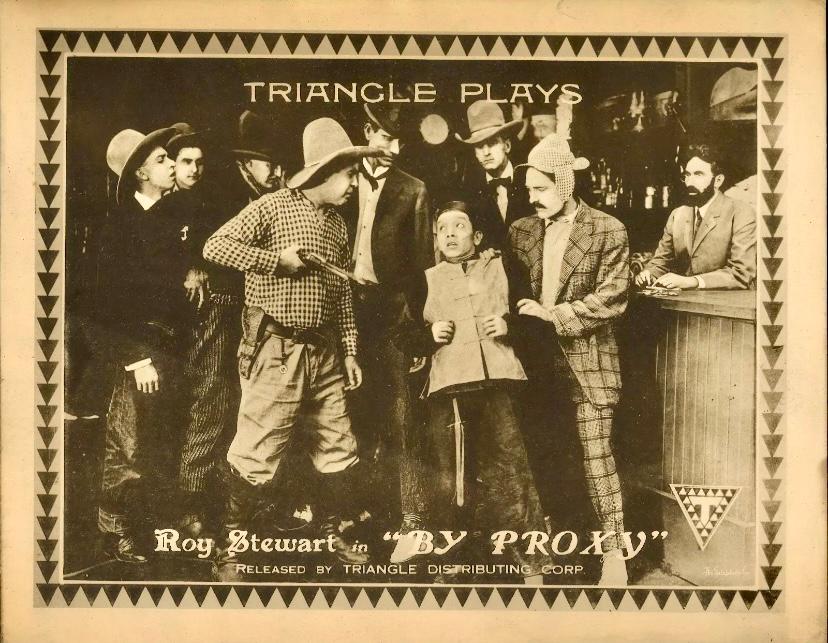
The first time I saw By Proxy I expected a rope-and-saddle trifle; instead I got a pocket-sized cyclone—dust, desire, and stolen denim whirling inside a single reel. The film clocks barely twenty minutes yet packs more narrative pratfalls than most trilogies manage today.
Walter Perry’s Red Saunders enters frame-left like a whisky commercial incarnate: ten-gallon swagger, grin cocked like a Colt. He’s ostensibly the sidekick, yet the movie pivots on his shoulders with the nimbleness of a stagecoach acrobat. Perry’s silent-era star power is a hot ember—never over-mugging, letting iris-in close-ups catch the micro-twitch of second thoughts when he realizes he’s kidnapped the wrong dream girl.
Maude Wayne’s Lindy, meanwhile, exudes flapper sunlight: knees that dare hemlines, gaze that audits every cowboy fib. Watch her react the instant Red confesses the mix-up—eyebrow arcing like a crescent moon, smile sidling from suspicion to amusement. In that splice of celluloid she gifts the picture its moral pivot: consent as carnival, courtship as happy accident.
Harry Yamamoto’s Ah Sing ignites the plot engine, but also the era’s racial fuse. The intertitles brand him “the ranch Chinaman,” a phrase that jabs modern ears; Yamamoto plays him with sly subversion—eyes flicking to camera as if to say, Yes, I’m your exotic plot device, but watch me steer the story anyway. His pilfered-jeans gambit reads like a migrant’s revolt against Manifest-Destiny entitlement, turning laundry into lucre, denim into diaspora currency.
Director-screenwriter Henry Wallace Phillips stages the gambling-hall finale inside a plank-walled saloon where cigarette haze hangs like diaphanous curtains. He cross-cuts between roulette chips skittering across felt and cowboys wriggling into reclaimed trousers—visual ping-pong that anticipates the staccato rhythms of 1930s screwball. The camera tilts up to reveal a chandelier made of antlers, shadows jitterbugging across faces; it’s pure chiaroscuro carnival.
Silent-era Westerns often mythologize solitude; By Proxy prefers bedlam. Where The Mating of Marcella lingers on prairie courtship and The Miner’s Daughter excavates filial duty, this yarn opts for sartorial slapstick—a sly reminder that desire undresses us long before lovers do.
Comparative note: if you’ve savored the cosmic comeuppance of A Message from Mars or the amnesiac hijinks of The Man Who Forgot, you’ll recognize By Proxy’s thematic DNA: identity as movable feast, romance as correction fluid on the ledger of life.
Score? None survives, so I project my own: mouth-harp, tin-pan piano, and a whispered kazoo every time Ah Sing outsmarts the cowpokes. Try it at home—silence plus imagination equals orchestra.
The cinematography, grainy yet giddy, revels in tactile detail: spurs that catch the sun like miniature supernovas, playing cards thumbed to velvet softness. Restoration efforts leave scratches intact—history’s acne—and somehow the blemishes amplify authenticity, like palm-print fossils on adobe.
Feminist read: Lindy’s final yes could feel like narrative capitulation—until you notice she pockets Red’s pawn-shop ring between gloved fingers, owning the token more than the man. The look she shoots the camera is pure self-amusement: I choose the chaos; it doesn’t choose me.
Racial read: problematic. Yamamoto’s billing as the ranch Chinaman is period-accurate insult; yet within the diegesis Ah Sing engineers every reversal, filching agency from Caucasian bluster. Modern viewers may cringe, but archival context demands we confront the stereotype, not sandblast it.
Runtime brevity helps. Unlike Hamlet or La dame aux camélias, which sprawl across existential tundras, By Proxy sprint-tackles desire, error, redemption, and betrothal before your popcorn cools.
Performative highlight: watch Red calculate the instant he recognizes Lindy’s mismatch—eyelids flutter like moth wings, then settle into entrepreneurial resolve. It’s a masterclass in micro-acting, the sort of detail 4K would over-sharpen into farce; 16mm softness keeps humanity intact.
Cultural echo: the stolen-clothes trope resurfaces in later comedies from Some Like It Hot to The Hangover, proving that nudity-induced panic is a century-spanning laugh track.
Final verdict? By Proxy is a shot of moonshine—brief, bracing, likely to leave your sensibilities coughing if you inhale too deep. Yet its afterglow lingers: a testament to how silent cinema could juggle social commentary, farce, and frontier myth in one hand while palming your heart with the other.
Seek it out via any archive daring enough to stream 1920 rarities; pair with The Stolen Triumph for a double bill of larceny and laughter. Just keep your jeans on—Ah Sing might be watching.
IMDb 7.2
1929
Community
Log in to comment.