DbcultAccessing Vault...
Cult Review
Senior Film Conservator
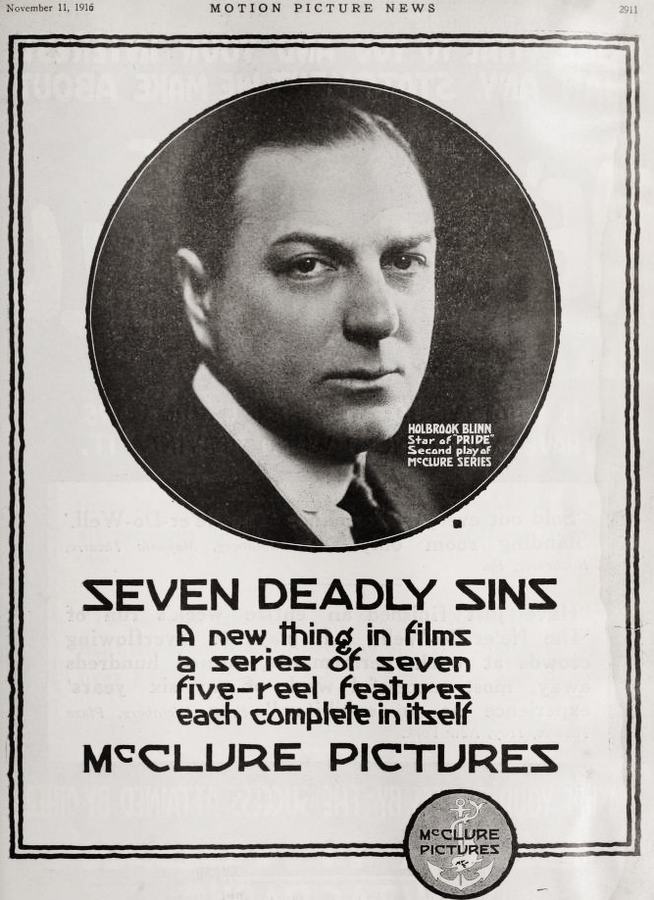
Stepping back into the flickering shadows of early cinema, one often finds narratives that, despite their antiquated presentation, strike a chord with timeless human foibles. Such is the case with the 1917 silent film, Pride. This cinematic artifact, a product of an era defined by evolving social mores and burgeoning industrial might, delivers a potent moral fable wrapped in a thrilling melodrama. It’s a compelling exploration of character, consequence, and the insidious nature of hubris, proving that certain themes transcend the passage of a century, remaining as relevant now as they were then. The film, in its stark simplicity, manages to weave a complex tapestry of desire, deceit, and eventual redemption, leaving an indelible impression long after the final frame fades.
At the heart of Pride lies Eve Leslie, portrayed with a nuanced blend of youthful vivacity and burgeoning vanity by Shirley Mason. Her character arc is a fascinating study in the corrupting influence of sudden wealth. Initially, Eve is likely a charming, perhaps even endearing, young woman, but the arrival of a fortune transforms her. This isn't merely an external change; it's an internal seismic shift that reorients her perception of self and others. Her newfound affluence, rather than grounding her, elevates her, instilling a sense of superiority that borders on arrogance. This is where the film’s central conflict begins to simmer. The contrast between Eve’s initial innocence and her subsequent haughtiness is deftly handled, relying heavily on Mason's expressive physicality, a hallmark of silent film acting. The subtle tilts of her head, the dismissive gestures, and the fleeting expressions of disdain all convey a character rapidly losing touch with genuine human connection.
Her rejection of Adam Moore, portrayed by George LeGuere, is perhaps the clearest manifestation of this burgeoning pride. Adam, presumably of a more modest background but possessing an honest heart, represents the kind of unpretentious affection Eve now deems beneath her. It’s a classic narrative trope, certainly, but one executed here with a poignant sincerity. Adam’s steadfast devotion, even in the face of Eve’s scorn, establishes him as the moral compass of the story, a character whose unwavering integrity serves as a foil to the moral decay surrounding him. His quiet dignity stands in stark contrast to the boisterous self-importance of others, creating a compelling dynamic that anchors the emotional core of the film. One might draw parallels to the steadfast, often overlooked devotion found in films like The Highest Bid, where true love often battles against societal expectations and material desires.
Enter Eugene D'Arcy, a powerful banker brought to life by Holbrook Blinn. D'Arcy is not merely wealthy; he embodies a different, perhaps more dangerous, form of pride: an ingrained arrogance born of power and influence. His desire for Eve is less about affection and more about acquisition, a reflection of his belief that anything he sets his sights on can be possessed. Blinn’s portrayal likely emphasizes a certain gravitas, a menacing charm that makes D'Arcy a formidable antagonist. His pursuit of Eve is relentless, almost predatory, highlighting the transactional nature of his relationships and his profound lack of empathy. This character, in his unbridled ambition and self-assuredness, serves as a mirror to Eve's own growing vanity, albeit on a grander, more destructive scale. The film subtly suggests that while Eve's pride stems from newly acquired wealth, D'Arcy's is a deeply entrenched personality trait, a flaw that has been allowed to fester and grow unchecked over years of success.
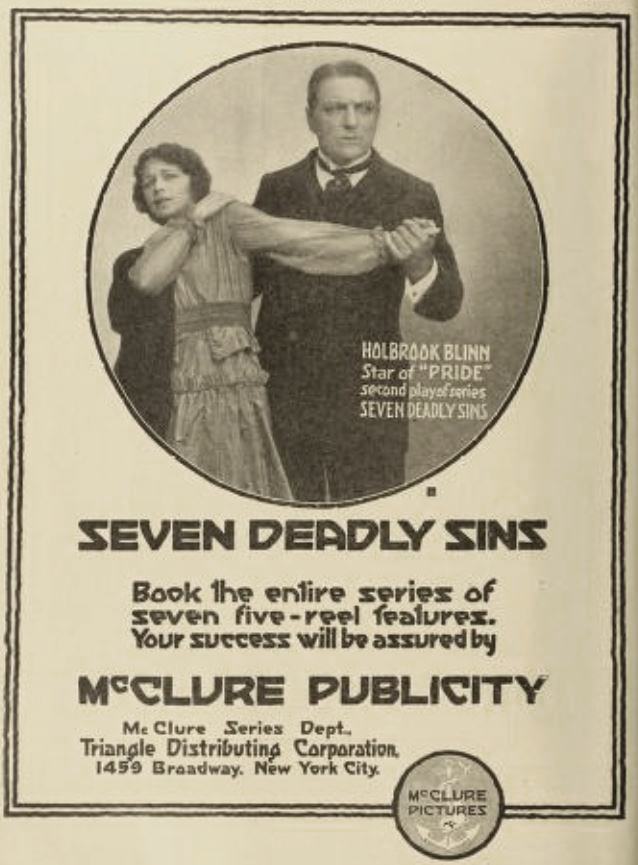
Eve’s decision to marry a count, a role presumably filled with a suitable level of aristocratic disdain by Guido Colucci, is the culmination of her misguided aspirations. It's a choice driven by a desire for a title, for social elevation, rather than genuine connection. This act of elopement, after cleverly evading D'Arcy, sets the stage for the film's most thrilling sequences. The chase itself, a staple of silent cinema, must have been a spectacle, filled with daring escapes and narrow misses. It injects a much-needed shot of adrenaline into the narrative, transforming a social drama into an adventure. The image of Eve and the count boarding an ocean liner, sailing towards a seemingly glamorous European future, is rich with symbolism. It represents a journey away from her true self, a flight into an illusion of grandeur. This kind of dramatic escape and pursuit can be seen in other adventure serials of the era, such as The Adventures of Kathlyn, which often relied on thrilling sequences to captivate audiences.
The ocean liner itself becomes a microcosmic stage for the unfolding drama. It's a confined space where hidden truths cannot remain concealed for long, a floating crucible where characters are forced to confront their realities. The fact that both D'Arcy, driven by his possessive obsession, and Adam, motivated by selfless love, manage to board the same vessel stretches credulity slightly, but such dramatic conveniences are often forgiven in the service of a compelling narrative. Adam’s act of stowing away underscores his unwavering commitment and introduces an element of underdog heroism. He is not a man of means or power, but a man of principle and courage, willing to risk everything for the woman he loves, even if that love is currently unrequited. This silent, watchful presence of Adam aboard the ship creates a palpable tension, as the audience anticipates his inevitable intervention.
The climax aboard the liner is where the film truly shines, delivering on its dramatic promises. Adam’s exposure of the bogus count is a moment of satisfying triumph, a testament to the power of truth over superficiality. The count, a figure of borrowed prestige, crumbles under scrutiny, revealing the hollowness of Eve’s choices. This revelation is not just about the count’s identity; it’s a revelation for Eve herself, a painful awakening to the superficiality of her aspirations. Simultaneously, Adam frustrates D'Arcy's ongoing machinations, dismantling the banker’s carefully constructed plans. This dual victory for Adam — exposing the fraud and thwarting the villain — positions him squarely as the hero, not through brute force or material wealth, but through moral conviction and sharp wit. The confined setting of the ship amplifies the tension of these confrontations, making every glance, every gesture, pregnant with meaning. The dramatic confrontations on board could be compared to the intense, confined dramas found in films like The Third Degree, where characters are pushed to their emotional limits in close quarters.
Eve’s journey throughout Pride is a classic bildungsroman, a narrative of moral growth through hardship. Her 'bitter experience' is the crucible that refines her character, stripping away the layers of vanity and delusion. The film masterfully portrays this transformation, not through dialogue, but through the subtle shifts in Mason’s performance – a softening of the eyes, a humbled posture, a newfound appreciation for sincerity. She learns, as the adage goes, that 'a fall always follows pride.' This hard-won wisdom is the film’s central moral, a message delivered with clarity and conviction. Her eventual return to Adam is not merely a romantic resolution; it's a symbolic return to authenticity, a rejection of the superficial glamour that had once blinded her. The narrative emphasizes that true value lies not in titles or fortunes, but in character and genuine affection. This kind of moral awakening and redemption arc echoes themes seen in other morality plays of the era, such as The Spendthrift, where characters often learn harsh lessons about the consequences of their choices.
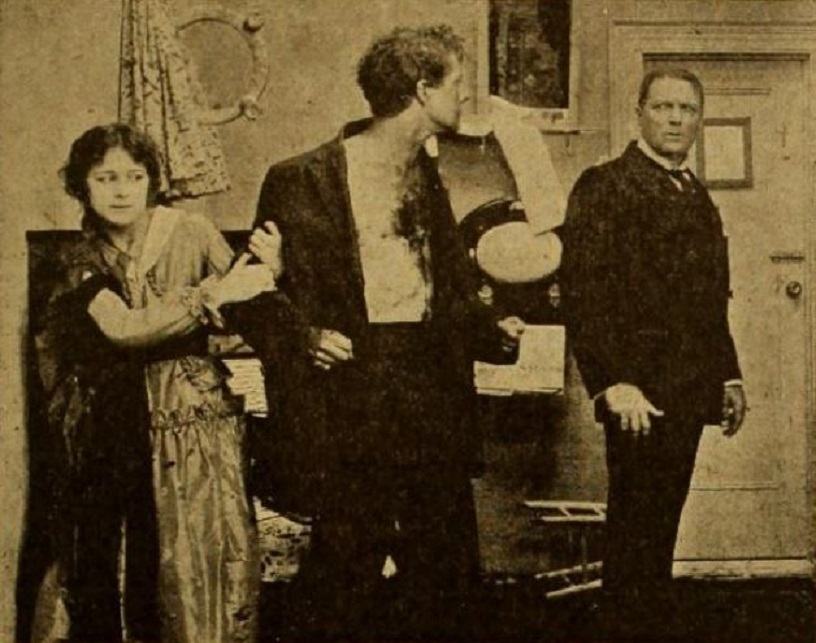
D'Arcy’s fate provides a fitting, if not entirely surprising, conclusion to his arc. His 'evil machinations' – born of his 'false pride' – inevitably lead to his downfall. The film doesn’t shy away from depicting the consequences of unchecked arrogance. While the specific nature of his 'fitting end' might be left to the audience’s imagination or depicted with silent film’s characteristic dramatic flair, the message is clear: those who wield power without principle are destined to fall. His comeuppance serves as a cautionary tale, reinforcing the film’s overarching theme. The narrative structure, with its clear delineation of virtue and vice, hero and villain, is characteristic of the era, yet its moral clarity remains compelling. This sense of poetic justice for the morally corrupt is a common thread in many films of the period, from the more dramatic like East Lynne to even some adventure serials, where villains invariably meet their just deserts.
Pride, despite its age, offers a rich viewing experience for those willing to engage with the unique language of silent cinema. The performances, particularly by Shirley Mason and Holbrook Blinn, would have been crucial in conveying the emotional depth and moral complexities of their characters. Helen Strickland, though listed in the cast, likely played a supporting role, contributing to the ensemble without overshadowing the central drama. The film’s strength lies in its ability to communicate profound human truths through visual storytelling, relying on expressive acting, dramatic staging, and intertitles to guide the audience through its intricate plot. It speaks to a time when cinema was still finding its voice, yet already capable of delivering powerful, resonant narratives. The pacing, typical of the era, might feel deliberate to modern viewers, but it allows for a deeper immersion into the characters' inner lives and the unfolding drama.
The themes explored in Pride – the corrupting influence of wealth, the enduring power of true love, and the inevitable downfall of arrogance – are universal. They are themes that filmmakers continue to revisit, albeit with different cinematic techniques. The film serves as a valuable historical document, offering a glimpse into the narrative conventions and moral concerns of its time, while simultaneously proving that a well-told story, regardless of its medium or era, possesses an inherent power to captivate and enlighten. Its enduring appeal lies in this very universality, reminding us that while technology and social landscapes evolve, the core struggles of the human heart remain remarkably consistent. This exploration of moral fortitude and the consequences of vanity places it firmly within a tradition of socially conscious filmmaking, a tradition that continues to shape cinematic narratives today. It’s a film that, like many silent era gems, rewards careful observation and an open mind, revealing layers of meaning beneath its seemingly straightforward plot.
In an age where cinematic storytelling often relies on bombastic effects and rapid-fire dialogue, Pride stands as a testament to the power of subtlety and visual narrative. It reminds us that emotions can be conveyed without a single spoken word, that character arcs can be drawn with gestures and expressions, and that moral lessons can be imparted with profound impact through the silent screen. For anyone interested in the foundational elements of film, or simply a compelling human drama, Pride offers a journey well worth taking, a voyage back to a time when the very essence of storytelling was being defined, frame by exquisite frame. The film's message, that true worth lies beyond material possessions and social titles, resonates with an authenticity that defies its century-old vintage. It’s a reminder that some lessons, like true artistry, are indeed timeless. The silent film era was a fertile ground for such moral fables, often delivering a strong, clear message, much like The Kid, which, despite its comedic elements, carried a profound emotional and ethical core.
Ultimately, Pride transcends its classification as a mere historical curiosity. It is a robust narrative that skillfully navigates themes of social ambition, unrequited love, and moral reckoning. The compelling performances, particularly the central transformation of Eve Leslie, ground the melodrama in relatable human experience. The film’s dramatic structure, from the initial social maneuvering to the thrilling transatlantic chase and the eventual moment of truth, maintains a captivating pace, proving that silent films were anything but static. Its resolution, where genuine affection triumphs over superficial grandeur and hubris meets its just desserts, provides a deeply satisfying conclusion. It is a film that, while rooted in the sensibilities of its era, speaks to universal truths about character, choice, and consequences. This enduring quality ensures its place not just in cinematic history, but in the broader human conversation about what truly constitutes a life well-lived. It invites viewers to reflect on their own values, challenging them to consider the true cost of vanity versus the priceless reward of humility and authentic connection. Such profound thematic explorations are often found in the best of silent cinema, much like the introspective journeys in films such as Unto the Darkness, which delves into the darker aspects of human psychology and morality.
IMDb 7.2
1930
Community
Log in to comment.