DbcultAccessing Vault...
Cult Review
Senior Film Conservator
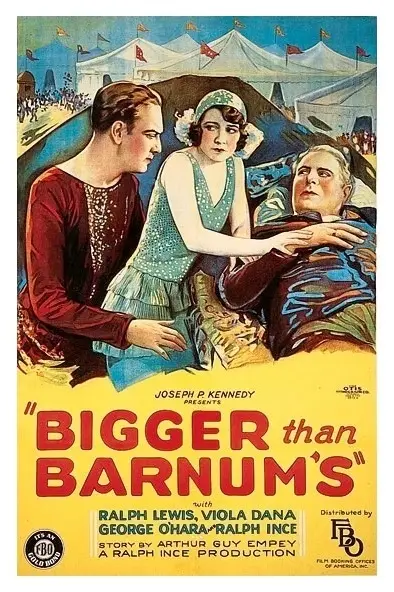
Is Bigger Than Barnum's a hidden masterpiece of the silent era? Short answer: No, it is not a masterpiece, but it is a fascinating, high-stakes melodrama that delivers one of the most harrowing finales of its decade. This film is for the viewer who enjoys the raw, unpolished energy of early 20th-century spectacle and those interested in the 'disgraced hero' trope. It is absolutely not for anyone who requires fast-paced editing or psychological subtlety.
1) This film works because the final 'wire walk' sequence is filmed with a visceral sense of danger that modern CGI simply cannot replicate.
2) This film fails because the middle act, which follows Robert’s life as a vagrant, feels like a disconnected detour that kills the initial momentum.
3) You should watch it if you are a fan of Viola Dana or if you want to see how 1920s cinema handled 'man-against-the-elements' tension without a safety net.

The premise of Bigger Than Barnum's is surprisingly cynical for 1926. It centers on a manager who views human life as a secondary concern to ticket sales. By ordering the removal of safety nets, the film sets up a conflict that feels modern in its critique of corporate greed. Ralph Ince, who directs and also acts in the film, captures the sweaty, claustrophobic atmosphere of the circus tents with a heavy hand. Unlike the whimsical circus of later films, this is a place of dirt, illness, and exploitation.
Peter Blandin, played with a weary dignity by Ralph Lewis, is the heart of the first act. His illness isn't just a plot point; it’s a physical manifestation of the toll the industry takes on the aging performer. When he falls, the soundless impact on the screen is more jarring than a modern sound effect. It marks the end of the film's first phase and the beginning of a much darker, albeit uneven, narrative path.
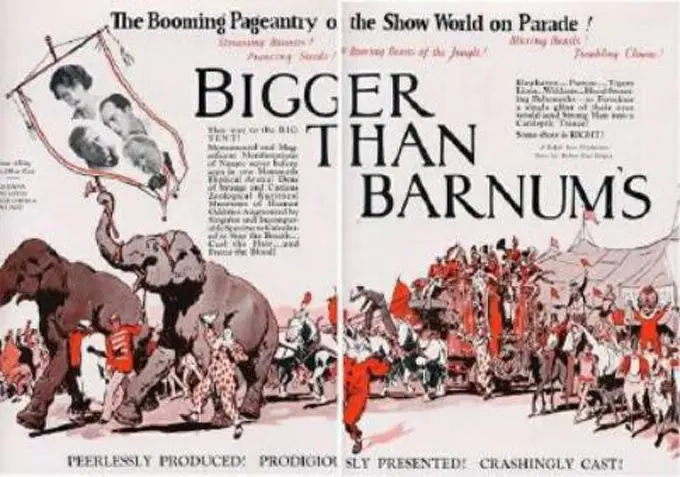
If you are looking for a historical curiosity that bridges the gap between stage melodrama and cinematic action, the answer is a firm yes. While it lacks the poetic depth of The Song of the Soul, it makes up for it with a raw, almost primitive sense of stakes. The film asks a very simple question: what does it take to prove you aren't a coward? The answer involves a burning building and a telegraph wire, which is exactly the kind of escalation silent cinema excelled at.
However, be warned: the pacing is erratic. The transition from the circus to the streets is jarring. We see Robert go from a disgraced performer to a literal vagrant, and the film lingers too long on his misery without giving us much to hold onto. It’s a bit of a slog until the smoke starts billowing in the final act. But once that fire starts, the film finds its pulse again.

Viola Dana, a staple of the era who also appeared in Blue Jeans, brings a necessary groundedness to Juanita. In many silent films, the love interest is a passive prize. Dana, however, manages to convey a sense of genuine dread. Her reactions to the arrogant Carl Ravelle (played with oily perfection by George Holt) provide the emotional stakes for Robert’s eventual return. She isn't just waiting to be saved; she is actively resisting the predatory environment of the new circus lineup.
George O'Hara as Robert has a difficult task. He has to play 'cowardice' in a way that remains sympathetic. For most of the film, he succeeds by playing Robert as a man paralyzed by logic rather than fear. He knows the net-less wire is a death sentence, and his refusal to walk it is a protest against the manager’s cruelty. It’s an unconventional stance for a 1920s hero, and it makes his eventual 'brave' act feel more like a desperate necessity than a standard heroic trope.
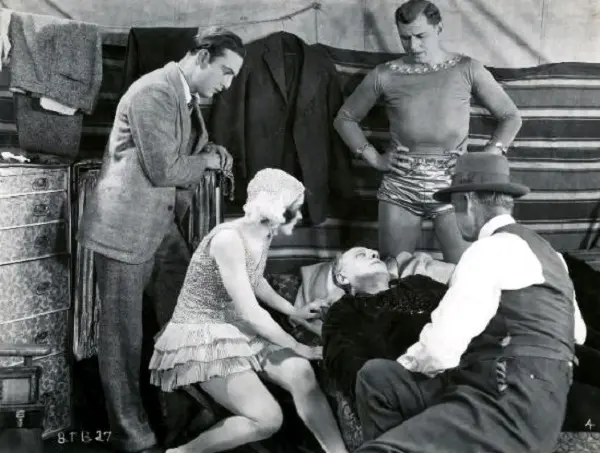
The cinematography in Bigger Than Barnum's is standard for the most part, but it transforms during the fire sequence. The use of practical fire effects and the scaling of the telegraph wires creates a sense of height that is genuinely dizzying. Ralph Ince uses wide shots to show the distance between the burning building and safety, emphasizing the fragility of the wire Robert must traverse. It is a masterclass in spatial tension.
Compare this to the stagey, static shots of The Third Degree (1926), and you see that Ince was trying to push the camera toward a more dynamic, action-oriented language. The way the smoke obscures the frame adds a layer of chaos that feels unscripted, even if it was meticulously planned. It’s messy. It’s loud in its silence. It works.
Pros:
- High-stakes emotional conflict that feels relevant.
- Strong villainous turn by George Holt.
- Incredible practical effects in the final act.
- Viola Dana's expressive and nuanced performance.
Cons:
- The 'cowardice' plot point is stretched to its breaking point.
- Some supporting characters are caricatures rather than people.
- The pacing in the second act is genuinely frustrating.
At its core, Bigger Than Barnum's is about the social construction of courage. Robert is labeled a coward by a crowd that would never dream of stepping on a wire themselves. The film critiques the audience’s bloodlust—the same bloodlust that the manager exploits by removing the nets. This meta-commentary on the nature of entertainment gives the film a weight that elevates it above standard pulp. It suggests that the real villains aren't just the greedy managers, but the people who pay to watch others risk their lives.
This theme of public perception vs. private reality is a common thread in films like Slaves of Pride or The Snarl, but here it is literalized through the circus. When Robert finally walks the wire at the end, he isn't doing it for the crowd; he’s doing it for his father. The fact that he regains his reputation is almost incidental to the personal redemption he finds. It’s a powerful, if slightly sentimental, conclusion.
"The wire doesn't care if you're a hero or a coward. It only cares if you fall."
Bigger Than Barnum's is a film of two halves. The first and last acts are gripping examples of silent-era tension, while the middle act is a forgettable slog through melodrama clichés. However, the strength of the finale is enough to carry the experience. It is a film that understands the visceral power of height and the psychological weight of a fall. It’s flawed. But it’s effective. If you can sit through the slower moments, the payoff is one of the most satisfying rescues in early cinema. It earns its place on the shelf next to other 1920s survival stories like Blue Jeans or The Kentuckians.

IMDb 6.8
1929
Community
Log in to comment.