DbcultAccessing Vault...
Cult Review
Senior Film Conservator
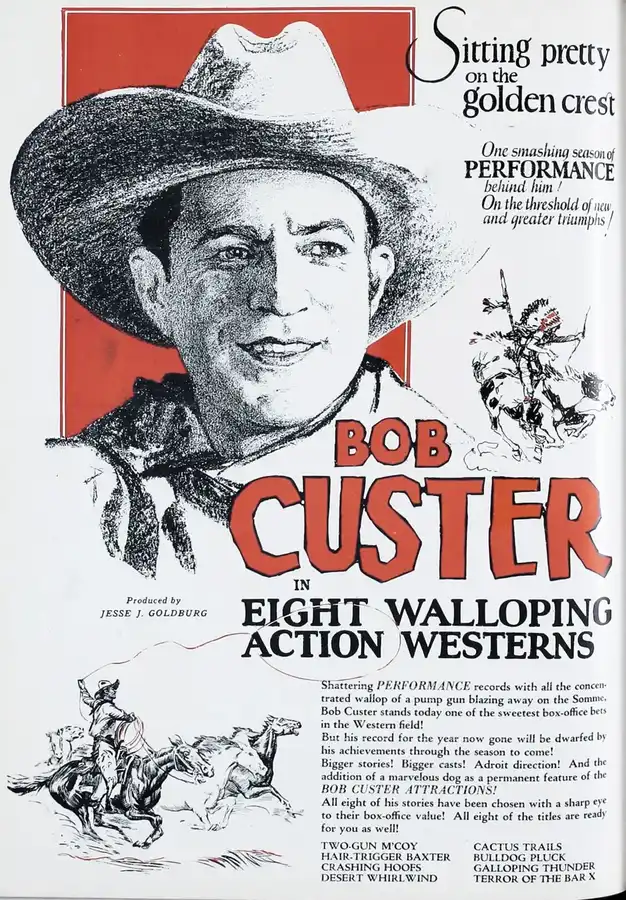
Is 'Cactus Trails,' a silent Western from 1927, worth dusting off your projector (or, more likely, clicking play on a digital restoration) in the 21st century? Short answer: yes, but with significant caveats. This film is a fascinating time capsule, a vibrant artifact of early cinematic storytelling that, against all odds, still manages to captivate, albeit for very specific audiences.
This film is absolutely for silent film enthusiasts, Western history buffs, and those with a keen interest in the evolution of genre cinema. It is decidedly NOT for viewers seeking modern pacing, complex character studies, or dialogue-driven narratives. If you demand immediate gratification or are easily deterred by the conventions of a bygone era, you might find its charms elusive.
'Cactus Trails' rides into view as a quintessential silent-era Western, a genre staple that, even in 1927, was already a well-oiled machine of good versus evil, vast landscapes, and thrilling horseback pursuits. Directed with a brisk efficiency that belies its age, this film, penned by Harry L. Fraser, George M. Merrick, and W. Bert Foster, delivers precisely what its title promises: a journey through rugged terrain, both geographical and moral.
The story, while familiar, is executed with a commendable earnestness. We are introduced to Jim Travers, portrayed by the stoic Bob Custer, a rancher whose quiet integrity is the bedrock of his community. His nemesis, Silas Kincaid, brought to life with sneering menace by Lew Meehan, embodies the predatory capitalism that often fueled frontier conflicts. The stakes are clear: Kincaid’s relentless pursuit of water rights threatens to dry up not just Travers’ ranch, but the livelihoods and hopes of an entire settlement.
What elevates 'Cactus Trails' beyond mere genre exercise is its surprisingly effective command of visual rhetoric. Silent films, by necessity, honed a unique language of gesture, expression, and mise-en-scène. Here, this language is spoken fluently. The wide-open vistas, though often limited by the film stock and camera technology of the time, still evoke a sense of untamed wilderness, a character in itself against which human dramas play out.
The cast of 'Cactus Trails' operates within the established archetypes of the silent Western, yet several performances manage to imprint themselves with a surprising degree of conviction. Bob Custer, as Jim Travers, is the epitome of the strong, silent hero. His performance is built on a foundation of restrained intensity, conveyed through a set jaw, direct gaze, and economical gestures. There’s a particular scene where Travers, having discovered Kincaid’s latest deceit, simply clenches his fist and turns away, the emotion palpable without a single title card needing to articulate his fury. It’s a masterclass in silent stoicism.
Inez Gomez, as Elena Rodriguez, provides a necessary counterpoint to the masculine bravado. Her portrayal of the schoolteacher is not merely that of a damsel in distress, but a woman of quiet strength and moral fortitude. While the narrative often places her in perilous situations, Gomez imbues Elena with a spirit that suggests agency, even when constrained by the conventions of the era. Her expressions, particularly in moments of defiance against Kincaid, convey a compelling inner resolve that few actresses of the time could manage with such subtlety. It’s a surprising depth in a film that could have easily relegated her to a purely ornamental role.
Lew Meehan, on the other hand, fully embraces the villainy of Silas Kincaid. His performance is broad, theatrical, and utterly delightful in its unapologetic wickedness. Meehan’s sneers, his exaggerated gestures of greed and contempt, are precisely what the film requires. He’s a villain you love to hate, a clear and present danger whose every appearance heightens the tension. Without a strong antagonist like Meehan, Custer’s heroism would feel less earned. He’s the dark mirror that makes the hero shine.
Supporting players like Marjorie Zier and Milburn Morante contribute effectively to the tapestry of the frontier town. Bud Osborne, a veteran of countless Westerns, appears in a role that, while small, lends authentic grit to the proceedings. The ensemble works in concert, each actor understanding their place in the larger, visually driven narrative, ensuring that even minor characters contribute to the film’s overall texture. This collective commitment to the silent idiom is often overlooked when discussing these older films, but it’s crucial.
The direction of 'Cactus Trails' is marked by a clear understanding of what makes a Western tick. The film moves at a surprisingly brisk pace, particularly during its action sequences. There’s an undeniable kinetic energy to the horseback chases and brawls, which are staged with a practical, no-nonsense approach. The camera, while largely static by modern standards, is used effectively to frame the vastness of the landscape and the isolation of its inhabitants. One particular shot, capturing Travers silhouetted against a setting sun as he rides across a ridge, is an iconic image that perfectly encapsulates the lonesome cowboy mythos.
This film's raw, unvarnished depiction of frontier life, while undoubtedly romanticized, feels more authentic than many glossier productions that followed decades later. It’s a testament to the power of simplicity.
The cinematography, though constrained by the technology of 1927, manages to capture the stark beauty and harsh realities of the desert environment. The use of natural light, the dusty trails, the sparse vegetation – all contribute to a believable world. While we don't have the benefit of Technicolor, the black and white palette, often tinted in sepia or blue for day and night scenes respectively, adds an artistic layer that enhances the mood. The film understands that the landscape is not just a backdrop, but an active participant in the story, shaping its characters and their struggles.
Pacing is another strength. Unlike some silent films that can drag, 'Cactus Trails' maintains a consistent forward momentum. The narrative beats are clear, the conflicts escalate logically, and the resolutions, while predictable, arrive with satisfying finality. The action sequences, in particular, are edited with a rhythm that propels the story, ensuring that even without spoken dialogue, the excitement translates effectively across the decades. It’s a tight, well-constructed piece of early genre filmmaking that wastes little time.
The tone of 'Cactus Trails' is unashamedly moralistic, a common trait of early Hollywood. Good is good, evil is evil, and justice, though delayed, is ultimately served. This clear-cut dichotomy is not a flaw; rather, it’s a foundational element that allows the film to explore themes of land ownership, community solidarity, and the enduring struggle against exploitation without getting bogged down in moral ambiguity. It's a morality play dressed in chaps and spurs.
The film touches upon themes that remain relevant: the fight for resources, the corruption of power, and the courage required to stand up for what is right. While presented through a 1920s lens, these core ideas resonate. The sense of community, for instance, is palpable; the townsfolk aren't just background characters, but a collective whose fate is intertwined with Jim Travers's battle. This communal aspect, often overlooked in more individualistic Westerns, provides a rich emotional undercurrent.
One unconventional observation is how the film's silent nature, rather than being a limitation, actually amplifies its mythic quality. Without dialogue, the characters become archetypes, their struggles more universal. The stark imagery and exaggerated expressions elevate the story from a simple frontier tale to something akin to a visual fable. It's less about specific words and more about primal forces at play, which is surprisingly effective.
What makes 'Cactus Trails' resonate, however faintly, almost a century after its release? It’s not its groundbreaking narrative or its revolutionary technical prowess. It’s its unvarnished honesty. It’s a film that knows exactly what it is: a tale of simple justice in a world that often feels anything but. It works. But it’s flawed. The beauty lies in its directness, its refusal to complicate what doesn’t need complicating.
The film serves as a vital reminder of the origins of cinematic language. Before dialogue, before elaborate soundscapes, filmmakers had to rely purely on visual cues and the power of performance. 'Cactus Trails' is a testament to the effectiveness of that approach. It's a raw, sometimes rough-hewn, piece of art, but it possesses an undeniable charm and historical weight that makes it worthy of rediscovery. It’s a foundational piece, a blueprint for countless Westerns to follow, including more polished productions like Reckless Romance or even early attempts at comedy like Please Excuse Me which showcase different genre evolutions.
In conclusion, 'Cactus Trails' is more than just a relic; it’s a robust example of early American genre filmmaking. While it demands a certain patience and appreciation for its historical context, the rewards are significant. It's a powerful demonstration of how silent cinema could craft compelling narratives and enduring characters with nothing but light, shadow, and human expression. It's a film that, despite its age, still has a story to tell, a dusty trail to ride. If you're willing to meet it halfway, it might just surprise you. It’s not a masterpiece, but it’s an essential piece of the puzzle, a sturdy pillar in the grand edifice of the Western genre. Go watch it, but temper your expectations with a healthy dose of historical understanding.

IMDb 6.2
1918
Community
Log in to comment.