DbcultAccessing Vault...
Cult Review
Senior Film Conservator
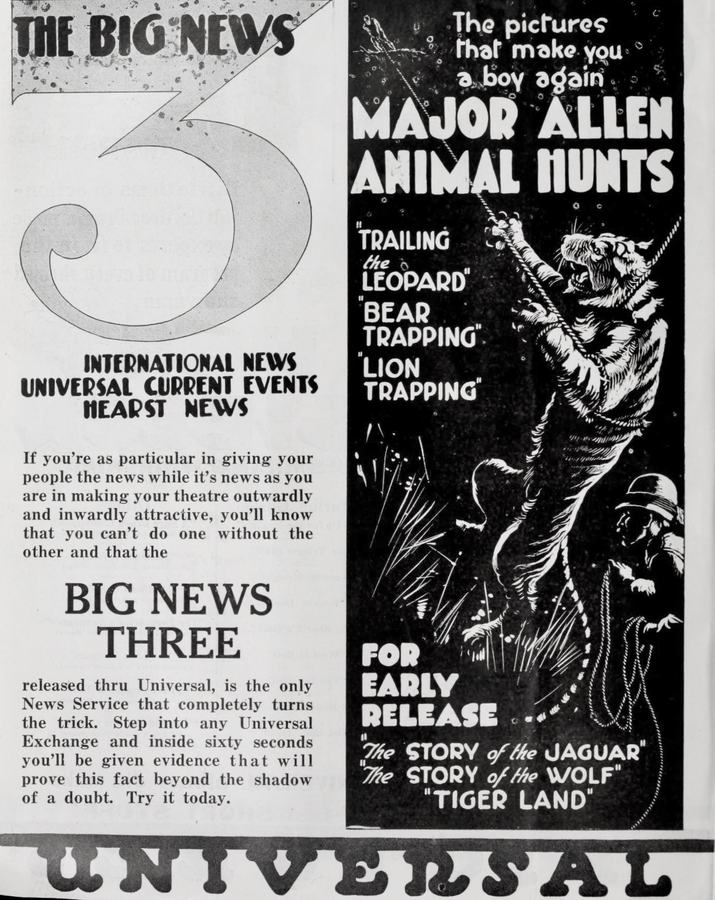
There are films that seek to entertain, films that aim to enlighten, and then there are films like 'The Bear Hunt,' which simply exist as a raw, unfiltered testament to an extraordinary event. This documentary, at its core, presents an unvarnished account of Major Jack Allen's almost unbelievable endeavor: the capture of a wild bear, armed with nothing more than a length of rope. To call it a simple premise would be an understatement; to call its execution anything less than captivating would be a disservice to the sheer, unadulterated spectacle unfolding before our eyes. It strips away the layers of narrative artifice, offering instead a direct, unmediated engagement with a moment of profound human-animal interaction, a dance between instinct and intellect in the vast, indifferent expanse of nature.
From the very first frame, 'The Bear Hunt' establishes a palpable sense of tension. The camera, seemingly an unobtrusive observer, positions itself to capture the unfolding drama with an almost clinical precision, yet there's an undeniable undercurrent of awe. Major Jack Allen emerges not merely as a protagonist, but as a force of nature himself, embodying a spirit of audacious courage that feels both anachronistic and timeless. In an era saturated with CGI spectacles and meticulously choreographed action sequences, the raw, unscripted reality of Allen's task is profoundly refreshing. It harks back to an earlier form of cinematic engagement, one that valued authenticity above all else, akin to the visceral, unadorned narratives found in early adventure films, or even the unblinking eye of a newsreel capturing a moment of historical significance. This isn't a story *about* a bear hunt; it *is* the bear hunt, unfolding in real-time, demanding our full, undivided attention.
The choice of 'only a rope' as the primary tool for this monumental task elevates the entire endeavor from a mere act of animal control to a profound philosophical statement. It speaks to a deep-seated human capacity for ingenuity and sheer nerve when faced with overwhelming odds. We witness the meticulous planning, the patient tracking through dense foliage, the quiet determination etched onto Allen's face. The film doesn't indulge in sensationalism; instead, it allows the inherent drama of the situation to speak for itself. The struggle, when it inevitably commences, is not a clean, cinematic tussle. It is a messy, powerful, and utterly believable clash of wills, where the raw power of the beast is met with the focused, strategic application of human intelligence and physical prowess. The cinematography, though perhaps rudimentary by today's standards, possesses an elemental honesty, conveying the sheer scale and danger without resorting to artificial enhancement. It's a stark contrast to the often overly dramatic and embellished narratives we see in contemporary cinema, offering a powerful reminder that sometimes, the most compelling stories are those that simply *are*.
What truly distinguishes 'The Bear Hunt' is its commitment to the art of observation. The film makes no grand pronouncements, offers no voice-over narration to guide our emotions, and refrains from imposing a manufactured sentimentality on the proceedings. Instead, it places the audience directly within the unfolding event, allowing us to bear witness to the raw, unedited reality of the capture. This minimalist approach is incredibly effective, fostering a sense of immersive engagement that more heavily produced documentaries often struggle to achieve. We are not told how to feel; we are simply shown, and in that showing, a complex tapestry of emotions — fear, admiration, tension, curiosity — is woven within the viewer. This directness recalls the early, foundational works of cinema, where the novelty of moving pictures itself was enough to captivate, and the inherent drama of real-life events provided ample narrative.
The film's impact lies not just in what it depicts, but in the questions it implicitly raises. What drives a man to undertake such a perilous task? What is the ethical boundary when interacting with wild animals, even for purposes that might be framed as scientific or conservationist? While the film doesn't overtly address these complex issues, the very act of watching compels us to ponder them. It’s a stark reminder of a time when the relationship between humanity and the wild was perhaps more direct, less mediated by technology and urban sprawl. In a way, it serves as an anthropological document, preserving a glimpse into a particular mindset and a specific approach to wilderness. This is a far cry from the stylized romanticism of, say, The Mad Lover, which, despite its adventurous title, is deeply entrenched in human emotional drama rather than raw physical confrontation with nature. 'The Bear Hunt' stands alone in its stark, almost brutal honesty.
Major Jack Allen, despite the lack of direct character development, emerges as a compelling figure through his actions alone. His quiet intensity, his methodical movements, and his unwavering focus paint a portrait of a man deeply attuned to his environment and profoundly confident in his abilities. There are no dramatic monologues or explanatory flashbacks; his character is forged in the crucible of his dangerous pursuit. This approach to characterization, where deeds speak louder than words, is a powerful cinematic choice, particularly for a documentary of this nature. It allows the audience to project their own interpretations onto Allen, seeing him variously as a fearless adventurer, a skilled tracker, or perhaps even a controversial figure depending on one's perspective on wildlife interaction. This stands in stark contrast to films like The Good for Nothing, where character is explicitly defined by social standing and narrative arcs. Here, character is defined by a singular, monumental act.
The bear, too, is portrayed with an inherent dignity and power. It is not demonized as a villain nor anthropomorphized into a sympathetic character. It is simply a bear, a magnificent creature of the wild, acting on instinct. The film captures its strength, its natural defenses, and its struggle for freedom with an impartial eye, lending a profound respect to both sides of this extraordinary encounter. The interaction between man and beast is framed not as a battle of good versus evil, but as a clash of two powerful forces, each operating within its own sphere of existence. This balanced portrayal adds significant depth to what could otherwise have been a one-sided narrative, elevating it beyond mere sensationalism. Compare this nuanced portrayal to the often simplistic antagonists in early adventure serials, or even the more complex but still human-centric struggles depicted in dramas like The Crime and the Criminal; 'The Bear Hunt' offers a different kind of antagonist, one born purely of nature.
'The Bear Hunt' is a powerful reminder of the enduring appeal of simple, well-captured reality. In an age where cinematic experiences are often meticulously constructed and heavily mediated, there's an undeniable allure to a film that simply presents an event as it happened. This documentary, despite its age, retains a surprising freshness, precisely because its core subject matter — human courage, animal instinct, and the raw beauty of the wilderness — is timeless. It doesn't rely on fleeting trends or technological wizardry; its power is inherent in the truth of its depiction. The absence of a complex plot, intricate dialogue, or a sprawling cast (unlike, for instance, the ensemble dynamics of Boston Blackie's Little Pal) actually strengthens its impact, allowing the central confrontation to resonate without distraction.
The film serves as a fascinating historical document, not just of a particular feat, but of early documentary filmmaking itself. It showcases an approach that prioritizes direct observation and minimal intervention, a philosophy that continues to inform certain branches of non-fiction cinema today. One might draw parallels to the early 'actualities' or 'slice-of-life' films that predated narrative cinema, where the very act of capturing reality on film was considered a marvel. While perhaps not as overtly instructional as something like Peerless Pineapples of the Pacific, 'The Bear Hunt' nonetheless educates through demonstration, revealing the practicalities and perils of such an undertaking. It's a testament to the fact that sometimes, the most profound cinematic experiences are those that simply open a window onto a world we might otherwise never witness.
As the final frames roll, a lingering sense of awe and a host of unanswerable questions remain. Was Major Allen's act a display of mastery, an act of necessary control, or a controversial intrusion into the wild? The film, in its silent objectivity, leaves these interpretations entirely to the viewer. It doesn't preach; it merely presents. This open-endedness is one of its greatest strengths, ensuring that the film's impact extends far beyond the immediate viewing experience. It invites contemplation, discussion, and a deeper engagement with our own understanding of nature, courage, and the often-complex relationship between humanity and the animal kingdom. Unlike the clear moral compass often found in films like Love and the Law, 'The Bear Hunt' revels in ambiguity, forcing us to confront our own ethical frameworks.
The enduring power of 'The Bear Hunt' lies in its ability to transcend its simple premise. It is more than just a record of an animal capture; it is a meditation on human fortitude, the raw power of the natural world, and the unadorned beauty of an unscripted moment. It stands as a compelling piece of early documentary work, a historical artifact that continues to resonate with contemporary audiences precisely because of its unwavering commitment to depicting reality, however challenging or awe-inspiring that reality may be. It doesn't need elaborate special effects or convoluted plot twists; its truth is its greatest special effect, its simplicity its most compelling narrative. For anyone seeking a genuine, visceral connection to the untamed spirit of both man and beast, 'The Bear Hunt' offers an unforgettable journey into the heart of an extraordinary confrontation, a testament to courage that defies the passage of time. It's a genuine cinematic gem, stark in its portrayal, yet rich in its implications, demanding attention not through artifice, but through the sheer weight of its reality.
IMDb 6.6
1920
Community
Log in to comment.