DbcultAccessing Vault...
7.1/10
Senior Film Conservator
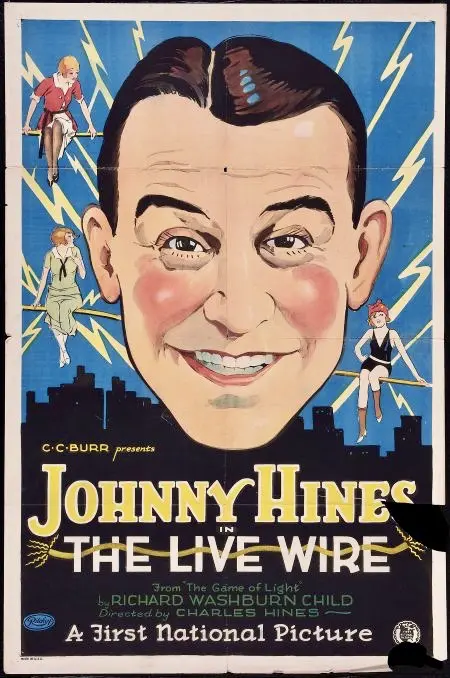
A definitive 7.1/10 rating for a film that redefined the boundaries of cult cinema. The Live Wire remains a cornerstone of transgressive art.
Should you seek out this 1925 relic or let it fade into the archives? Short answer: Yes, but only if you have a high tolerance for the hyperactive, often exhausting energy of Johnny Hines.
This film is for the silent cinema completionist who enjoys the 'go-getter' tropes of the Roaring Twenties, but it is certainly not for those who demand the structural perfection of a Buster Keaton or Charlie Chaplin feature.
1) This film works because Johnny Hines possesses an infectious, albeit frantic, screen presence that bridges the gap between slapstick and character comedy. 2) This film fails because the middle act’s transition from a circus setting to a corporate power struggle feels like two different movies stitched together with thin thread. 3) You should watch it if you want to see how 1920s cinema romanticized the 'hustle culture' of the industrial age.
Johnny Hines was never going to be the poet of the silent era. He lacked Chaplin's pathos and Keaton's stoic geometry. Instead, Hines specialized in a specific kind of American kineticism.
In The Live Wire, his performance as The Great Maranelli is a testament to this. He starts as a man of physical prowess and ends as a man of verbal (or rather, intertitled) persuasion. It is a fascinating transformation.
Consider the scene where he first sees Dorothy. His descent into a bumbling mess isn't just funny; it’s a critique of the 'performer' losing his mask. One moment he is a master of the ring, the next he is a hobo. It works. But it’s flawed.
Compared to his work in Call a Cop, Hines here feels more grounded in a narrative, even if that narrative is essentially a propaganda piece for the American Dream. He isn't just running from a threat; he is running toward a paycheck.
The shift in the second act is where the film loses its footing. We move from the visual dynamism of the circus to the static rooms of a light-and-power company. This is a risky move for a silent comedy.
Usually, we expect the protagonist to stay in their element. Here, the film asks us to believe that a clown can become a top-tier salesman overnight. It’s a leap of faith that the script barely earns.
However, the 'live-wire' sequences—where Hines uses his circus agility to close deals—are the film's highlight. He climbs buildings and navigates dangerous heights just to sign a contract. It’s a literalization of the 'climbing the corporate ladder' metaphor.
This thematic thread reminds me of the pacing found in Around the World in 80 Days, where the momentum is the main character. In The Live Wire, if Hines stops moving, the movie dies.
Bradley Barker plays the fiancé, and he is every bit the mustache-twirling villain you’d expect from 1925. His plan to devalue stock is a bit dry for a comedy, but it provides a necessary stakes-raiser.
The conflict isn't just about love; it's about infrastructure. The climax takes place in an amusement park under construction. This setting allows for a return to the physical comedy of the first act.
The use of light and shadow in these unfinished structures is surprisingly sophisticated. It lacks the expressionism of Der stumme Zeuge, but it uses the industrial skeleton of the park to create real tension.
The sabotage subplot is predictable, yet it serves a purpose. It forces the 'clown' to become a 'hero' through technical expertise, not just luck. It’s a very pro-industry message for the time.
Yes, The Live Wire is worth watching for its historical value and the sheer energy of Johnny Hines. It captures a specific moment in time when the world was moving from rural entertainment to urban industrialism.
If you are looking for a deep, emotional journey, look elsewhere. This is a film about movement, electricity, and the relentless pursuit of the girl. It is simple, punchy, and occasionally brilliant.
Pros: Hines is a human dynamo; the circus footage feels authentic; the final act in the amusement park is genuinely thrilling.
Cons: The romantic subplot is dated; the villain is a one-dimensional caricature; some of the intertitles are overly wordy.
The film lacks the social bite of The Yellow Dog, but it makes up for it with pure, unadulterated enthusiasm. It’s a film that wants you to like it, and mostly, it succeeds.
The Live Wire is a fascinating, if slightly disjointed, piece of silent cinema. It showcases Johnny Hines at the height of his powers, even if those powers are somewhat limited to a specific brand of frantic optimism. It’s a loud movie for a silent one. It’s a blue-collar fantasy wrapped in a white-collar suit. It isn't a masterpiece of the era, but it is a vital example of the kind of entertainment that kept 1920s audiences coming back for more. It’s fun. It’s fast. It’s finished before it overstays its welcome.
IMDb 6.9
1934
Community
Log in to comment.