DbcultAccessing Vault...
Cult Review
Senior Film Conservator
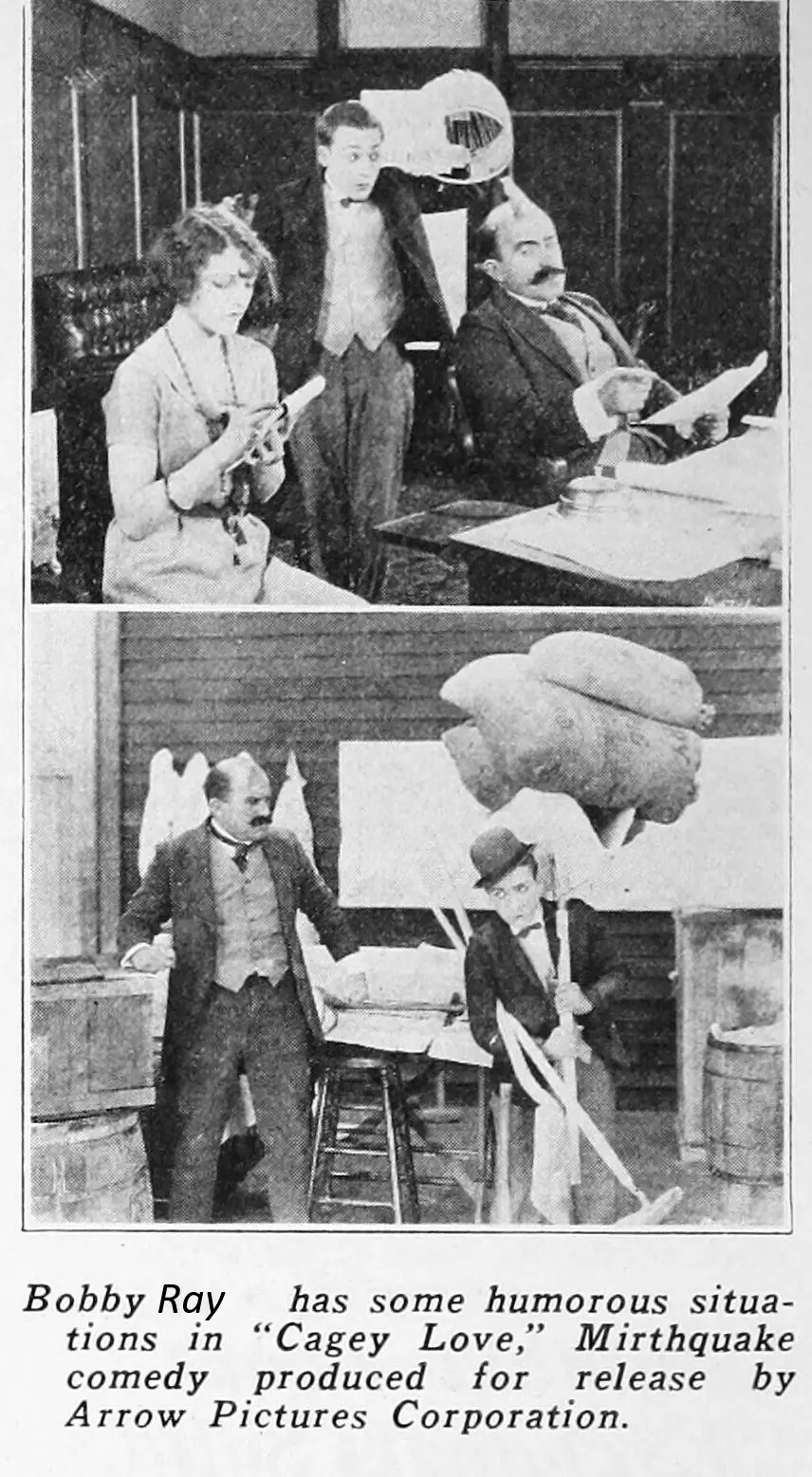
Is Cagey Love a film worth watching today? Short answer: yes, but with significant caveats. This early romantic comedy offers a fascinating, if sometimes slow, glimpse into the societal anxieties surrounding love and commitment in its era, making it a compelling watch for cinephiles interested in the evolution of the genre and those who appreciate character-driven narratives over breakneck pacing. However, it is decidedly not for viewers seeking modern comedic sensibilities or rapid-fire plot developments.
This film works because of its surprisingly nuanced characterizations and the genuine chemistry between its leads, Louise Carver and Bobby Ray, who imbue their roles with a delightful blend of wit and vulnerability. It fails because its central conflict, while thematically rich, often feels protracted, occasionally bordering on repetitive, which can test the patience of contemporary audiences accustomed to quicker resolutions. You should watch it if you appreciate the subtle art of early cinema, enjoy observing the intricate dance of human relationships, and are willing to invest in a story that prioritizes psychological depth over overt action.
Absolutely, if you approach it with the right expectations. Cagey Love is a quiet achiever. It doesn't scream for attention, but it rewards patient viewing with a charming, if slightly dated, exploration of human connection. It's a valuable historical artifact of early filmmaking and a testament to the timeless nature of romantic foibles.
At its core, Cagey Love is a study in emotional self-sabotage, a theme that resonates just as strongly today as it likely did upon its release. The narrative unfolds as a meticulously choreographed battle of wills between Evelyn and Jack, two individuals whose past experiences have taught them that vulnerability is a weakness to be exploited, not a bridge to be crossed. Jess Robbins, as the writer, constructs a world where wit is a shield and charm a weapon, and true feelings are kept under lock and key.
The film’s central conceit—that two people can be undeniably drawn to each other yet actively work to prevent connection—is both its greatest strength and its most significant hurdle. We see Evelyn, played by Louise Carver, deploying sharp, dismissive remarks at the high-society garden party where she first encounters Bobby Ray’s Jack. These aren't just casual barbs; they are calculated defenses, designed to keep him at arm's length, even as her eyes betray a flicker of interest. Jack, in turn, responds with a playful, almost taunting, persistence, never quite giving her the satisfaction of a direct emotional challenge, instead mirroring her guardedness with his own brand of strategic retreat.
This back-and-forth, while initially engaging, occasionally feels like a prolonged exercise in frustration. There are moments, such as a scene where Jack deliberately flirts with Carol Wines' character merely to gauge Evelyn's reaction, that feel genuinely insightful into their psychological warfare. Yet, the sheer duration of their standoff can test the modern viewer's patience. The film never quite pushes beyond this emotional stalemate until its very final act, which some might find an agonizingly slow burn, while others will appreciate the deliberate pacing as a faithful portrayal of deep-seated emotional resistance. It’s a bold choice, one that sacrifices immediate gratification for a more profound, if slower, character arc.
The success of Cagey Love hinges almost entirely on the shoulders of its lead actors, Louise Carver and Bobby Ray, and they deliver performances that are remarkably nuanced for their time. Carver, in particular, commands the screen with a presence that is both formidable and subtly fragile. Her Evelyn is not merely stubborn; she is a woman wounded, her sharp tongue a direct consequence of past disappointments. Watch her eyes during a seemingly innocuous conversation with Harry Martin’s character; there’s a flicker of wistfulness, a momentary dropping of the guard, that speaks volumes without a single line of dialogue. This level of internal acting is a rare treat.
Bobby Ray, as Jack, is the perfect foil. His charm is undeniable, but it's not a superficial charm. Ray imbues Jack with an underlying intelligence and a quiet determination that suggests there's more to him than just a playful flirt. His reactions to Evelyn's rebuffs are never overtly hurt, but rather tinged with a knowing amusement, as if he understands her defenses better than she does. The chemistry between Carver and Ray is palpable, a spark that doesn't need grand romantic gestures to be convincing. It exists in the shared glances, the barely perceptible smiles, and the tension of their unspoken desires.
The supporting cast, while not given as much depth, provides solid grounding for the leads. Edgar Kennedy, often known for his comedic turns, offers a surprisingly restrained performance as a well-meaning but slightly clueless friend, providing moments of levity that prevent the central conflict from becoming too heavy. Carol Wines, as the temporary romantic rival, plays her role with just the right amount of innocent allure, never becoming a caricature but rather a believable catalyst for the leads' emotional gamesmanship. It’s a testament to the direction that even these smaller roles feel integral, not just ornamental. The film thrives on these understated portrayals, allowing the audience to read between the lines of the characters' carefully constructed personas.
The direction in Cagey Love, while not overtly flashy, demonstrates a clear understanding of visual storytelling characteristic of its period. The film relies heavily on framing and staging to convey emotional states, a common technique in an era before rapid cuts became ubiquitous. Director Jess Robbins (also the writer) uses static shots to great effect, allowing the actors' expressions and body language to carry the emotional weight. For instance, a prolonged two-shot of Evelyn and Jack across a crowded room, their eyes meeting and holding, speaks volumes about their mutual fascination and apprehension.
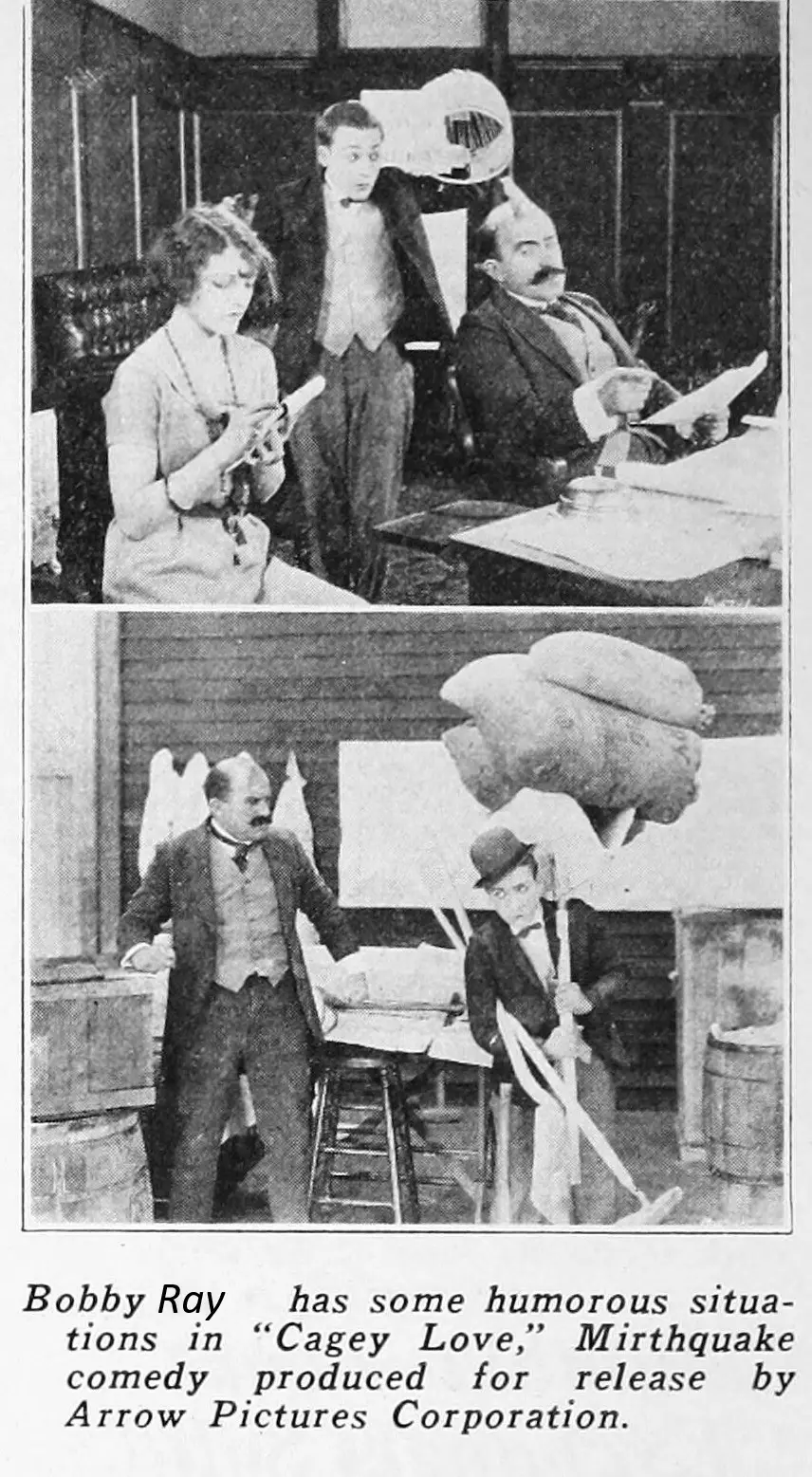
Cinematography, while perhaps not groundbreaking, captures the societal milieu with an authentic touch. The opulence of the garden parties and the intimate settings of drawing-rooms are depicted with a keen eye for detail, grounding the romantic drama in a believable social context. The lighting, often naturalistic, contributes to the film's understated tone, avoiding dramatic shadows or high contrasts in favor of a softer, more inviting aesthetic. This choice reinforces the idea that the drama here is internal, a battle of wits and hearts rather than external conflict.
The pacing of Cagey Love is deliberate, a slow burn that might feel alien to viewers accustomed to modern narrative speeds. However, this measured tempo allows for a deeper immersion into the characters' psychological states. It gives the audience time to observe, to infer, and to truly understand the nuances of Evelyn and Jack's dance. This isn't a film designed for quick consumption; it demands contemplation. While some may find it drags, I argue that this very slowness is part of its charm, a deliberate choice that fosters a richer, more reflective viewing experience, much like other character studies of the time such as The Girl Who Came Back.
Jess Robbins' screenplay for Cagey Love is a fascinating document. It foregrounds dialogue that is sharp, witty, and often laden with subtext, perfectly encapsulating the 'cagey' nature of its central romance. The exchanges between Evelyn and Jack are rarely straightforward declarations; instead, they are fencing matches, each line a parry or a thrust designed to gain an emotional advantage or, at the very least, protect one's own heart. This elevated, almost theatrical, style of conversation is a hallmark of early romantic comedies and is utilized effectively here.
However, this very strength can also be perceived as a weakness. The constant verbal sparring, while clever, occasionally veers into repetition. There are moments where one yearns for a breakthrough, a moment of unvarnished honesty, but the script stubbornly adheres to its characters' emotional defenses. This could be interpreted as a realistic portrayal of deeply ingrained habits, but it does test the audience's patience. The narrative structure, too, is rather linear, focusing almost exclusively on the evolving (or rather, stubbornly un-evolving) relationship between the leads, with minimal subplots. This singular focus, while contributing to thematic clarity, might leave some viewers craving more narrative breadth, perhaps a touch of the adventurous spirit seen in films like A Gentleman of Leisure.
Despite these minor criticisms, the screenplay's commitment to exploring its central theme—the fear of vulnerability in love—is commendable. It refuses easy answers or sudden, unearned emotional shifts. The characters' growth, when it finally comes, feels hard-won and authentic, a testament to Robbins' understanding of human psychology. It’s a script that trusts its audience to appreciate the journey, however winding, over a quick resolution. This makes it a surprisingly modern-feeling screenplay in its psychological depth, even if its structure feels of its time.
One of the most surprising observations about Cagey Love is its enduring thematic relevance. While the societal conventions and the pace of life depicted are distinctly from an earlier era, the core emotional struggles remain universal. The fear of commitment, the desire for connection juxtaposed with the terror of vulnerability, and the intricate, often self-defeating games people play in romance are as pertinent today as they were then. This film, despite its age, offers a mirror to contemporary relationships, making it more than just a historical curiosity.
I firmly believe that the film's portrayal of 'cagey love' is actually a more honest depiction of many real-world relationships than the grand, sweeping romances often seen on screen. It’s messy. It’s frustrating. It’s human. The characters' reluctance to be the first to truly open up is a relatable flaw, a testament to the universal anxieties surrounding emotional exposure. This subtle honesty, rather than any overt dramatic flair, is what elevates Cagey Love beyond a simple period piece.
Moreover, the film's quiet critique of societal expectations around marriage and partnership, particularly for women, is subtly woven into Evelyn's character. Her independence is not just a personal trait but a reaction to a world that often sought to define women by their marital status. This makes it a surprisingly progressive film for its time, echoing themes that would be explored more overtly in later decades. It’s a film that asks us to consider the true cost of emotional armor, both then and now. The comparison to other films like Love's Boomerang with similar thematic elements reinforces this timeless appeal.
“The film’s quiet strength lies in its refusal to rush, allowing the audience to truly inhabit the internal worlds of its guarded protagonists.”
Cagey Love is not a film that demands your immediate adoration, nor does it strive for explosive drama. Instead, it offers a quieter, more introspective pleasure. It works. But it’s flawed. Its strengths lie in its astute characterizations and the magnetic, understated performances of its leads, who manage to convey a wealth of emotion beneath layers of societal artifice and personal fear. While its deliberate pace and prolonged central conflict might test the patience of some, those willing to invest in its subtle charms will find a surprisingly resonant and intelligent exploration of love's intricate, often self-imposed, challenges.
For anyone curious about the evolution of romantic storytelling, or simply in the mood for a thoughtful, character-driven piece that doesn't rely on grand gestures, Cagey Love is well worth seeking out. It's a testament to the idea that sometimes, the most profound connections are forged in the quiet spaces between spoken words, even if those spaces feel a little too long.
IMDb 5.6
1929
Community
Log in to comment.