DbcultAccessing Vault...
5.3/10
Senior Film Conservator
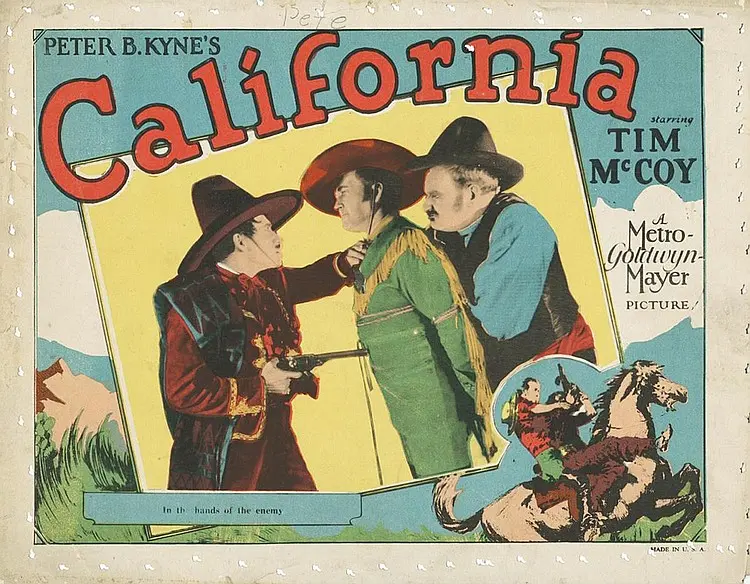
A definitive 5.3/10 rating for a film that redefined the boundaries of cult cinema. California remains a cornerstone of transgressive art.
Is 'California' a film worth unearthing from the annals of silent cinema today? The short answer is a qualified 'yes,' particularly for those with a deep appreciation for film history and a critical eye for narratives reflective of their time. This 1918 production, while undeniably a product of its era, offers a fascinating glimpse into early filmmaking conventions and the societal attitudes it both depicted and reinforced. It’s a watch for the curious historian, the student of propaganda, and anyone interested in the foundational elements of cinematic storytelling, but perhaps not for the casual viewer seeking modern emotional resonance or complex character arcs.
This film works because of its historical significance as an artifact of early American cinema, providing a stark window into how nationalistic narratives and romantic tropes were intertwined during a specific period. It fails because its narrative simplicity and lack of nuanced character development, common for its time, can feel jarringly underdeveloped to contemporary audiences. You should watch it if you are prepared to view it through a lens of historical context, eager to dissect its implicit messages, and understand the limitations and innovations of silent film.
The plot of "California" is, by modern standards, remarkably straightforward, almost to the point of being an allegory. It posits the Mexican-American War not just as a geopolitical struggle, but as a grand stage for a personal conquest. An American officer, whose ardor is presented as an almost unshakeable force, sets his sights on a Mexican senorita. Her initial defiance isn't merely personal; it's a direct reflection of the conflict between their nations, making her resistance symbolic of Mexico's own struggle against American expansion.
What's striking is how the film explicitly links the military victory of the United States with the romantic 'conquest' of the senorita's heart. This isn't subtle; it's the core thesis. The narrative suggests that as the American flag rises over new territories, so too does American influence, personified by the officer, win over the hearts of the conquered. It’s a problematic framing, certainly, but one that offers invaluable insight into the cultural zeitgeist of the early 20th century and the way national identity was constructed through popular media.
This dual conquest narrative, while simple, is executed with a directness characteristic of the era. There are no lengthy detours or complex subplots. Every intertitle, every visual cue, is likely geared towards reinforcing this central theme. One can imagine scenes where the officer's persistent gestures of affection are juxtaposed with news of American military advancements, creating a powerful, if ethically dubious, parallel. It’s a narrative that demands careful deconstruction, not just passive viewing.
In silent cinema, acting is a language of exaggeration, where every emotion must be writ large across the face and body. For a film like "California," starring names such as Fred Warren as the ardent officer and Dorothy Sebastian as the defiant senorita, the success of the narrative hinges almost entirely on their ability to convey complex internal states without dialogue. Warren, as the American officer, would have been tasked with embodying unwavering determination. His ardor wouldn't be expressed through whispered sweet nothings, but through grand gestures – perhaps a dramatic sweep of the arm, a persistent, intense gaze, or a confident stride that speaks volumes of his character's resolve.
Sebastian, portraying the Mexican senorita, faced an even greater challenge: expressing defiance and then a gradual softening of heart, all while maintaining dignity. Her initial scenes would likely involve sharp, dismissive head turns, perhaps a clenched jaw or a rigid posture, communicating her nationalistic pride and personal resistance. The transition to affection would require a nuanced shift, perhaps a hesitant glance, a subtle relaxation of her shoulders, or a moment where her eyes, previously defiant, convey a flicker of curiosity or even admiration. It’s a testament to the skill of silent film actors that they could articulate such emotional arcs with only their physicality.
The supporting cast, including Marc McDermott and Frank Currier, would have provided the necessary backdrop, perhaps as fellow soldiers or community members, amplifying the stakes of the central romance against the broader conflict. Their reactions – cheers for victory, solemn faces during conflict – would serve to contextualize the main characters' emotional journey, grounding it in the perceived reality of the war. While specific scene details are elusive, the very nature of silent acting implies a heightened, almost theatrical, approach that can be both captivating and, at times, unintentionally comical to modern eyes.
Directing a silent film in 1918, especially one with a strong thematic underpinning like "California," required a distinct vision. Without dialogue, the director's primary tools were visual composition, editing, and the performances of the actors. The pacing would have been dictated by the need to clearly convey information through intertitles and visual sequences. Unlike contemporary cinema, which often relies on rapid cuts and dynamic camera movement, early silent films often employed longer takes and more static camera positions, allowing the audience to absorb the visual information and the actors' expressions.
The director, likely working with a script from Frank Davis, Peter B. Kyne, Ruth Cummings, and Marian Ainslee, would have meticulously crafted each scene to ensure the parallel narratives of military and romantic conquest were always clear. Consider the scene where the American victory is confirmed; it might be intercut with the officer's final, triumphant approach to the senorita, visually reinforcing the idea that these two events are intrinsically linked. This kind of parallel editing was a powerful technique in early cinema, used to build dramatic tension and draw explicit connections for the audience.
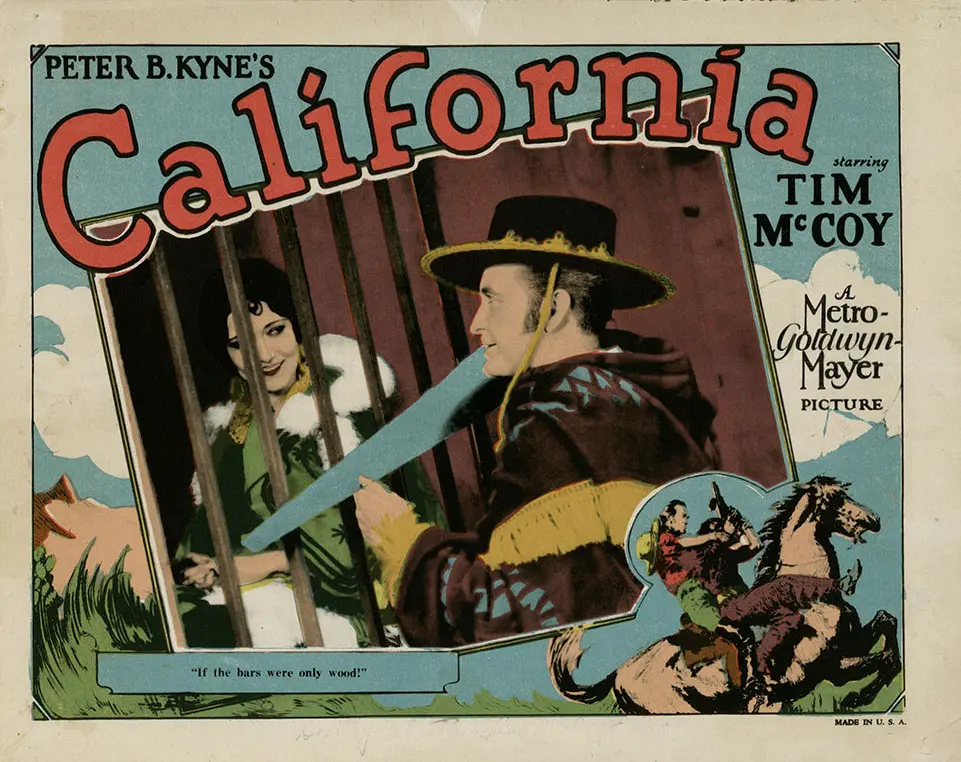
The tone would have likely shifted from initial tension and defiance to eventual triumph and romantic satisfaction. The director's challenge was to make the senorita's eventual change of heart feel earned, despite the explicit 'conquest' framing. This would involve careful staging of their interactions, perhaps showing moments of shared humanity or a gradual breaking down of barriers, even if the underlying power dynamic remained. The film's brevity, typical of films from this period, would necessitate a brisk pace, moving the plot forward with efficiency, focusing on key moments rather than prolonged development.
The cinematography of "California" would have been bound by the technological limitations and artistic conventions of 1918. Expect relatively static shots, often medium or wide, designed to capture the full scope of the actors' physical performances and the set design. Lighting, while perhaps not as sophisticated as later eras, would have been used to highlight key characters and create mood, perhaps with stark contrasts to emphasize dramatic moments. Outdoor scenes, especially those depicting military conflict or the Californian landscape, would have offered opportunities for grander, more expansive shots, even if limited by available equipment.
Production design, crucial for establishing the setting and atmosphere, would have aimed for a degree of historical accuracy, or at least verisimilitude, within the confines of a studio budget. The costumes of the American officer and the Mexican senorita would be carefully chosen to denote their status and national identity. The depiction of a wartime setting, even if rudimentary, would require attention to uniforms, flags, and perhaps rudimentary battlefield sets. One can imagine a scene where the senorita is seen in traditional Mexican attire, perhaps against a backdrop of a modest hacienda, contrasting sharply with the uniform of the American officer, symbolizing the clash of cultures.
The use of intertitles, a cornerstone of silent film, would have been integral to the viewing experience. These text cards not only conveyed dialogue but also provided exposition, commentary, and emotional cues. Their design and placement were part of the film's overall aesthetic, guiding the audience through the narrative and ensuring clarity where visual storytelling alone might fall short. The combination of visual and textual elements formed a complete, if distinct, cinematic language for the era. Compared to films like The Apple-Tree Girl or Infatuation from the same period, "California" would have shared many of these production commonalities, yet distinguished itself through its specific historical and romantic premise.
Absolutely, but with significant caveats. "California" is not a film to approach with expectations of modern narrative complexity or character depth. Its value lies primarily as a historical document, offering a rare opportunity to engage with early cinematic storytelling. For those interested in the evolution of film as an art form, or the historical portrayal of conflict and romance, it's an essential watch. It serves as a stark reminder of how narratives were constructed and consumed over a century ago.
However, for the casual viewer seeking entertainment akin to contemporary cinema, it will likely fall short. The pacing can feel slow, the acting melodramatic, and the themes, particularly the idea of romantic 'conquest' mirroring military victory, are deeply uncomfortable by today's standards. It requires an active, critical engagement rather than passive consumption.
Its significance is less about its inherent entertainment value and more about its contribution to the cinematic tapestry. It's a piece of a larger puzzle, helping us understand the origins of film language and the cultural biases embedded within early popular media. Think of it as visiting a museum: you appreciate the artifact for what it represents and teaches, not necessarily for its immediate 'fun factor.'
"California" is a film that functions more as an archaeological find than a purely entertaining experience. It works. But it’s flawed. Its true value lies in what it teaches us about our past, not necessarily what it offers in terms of timeless storytelling. It's a mirror reflecting early American sensibilities, and sometimes, what a mirror shows isn't always flattering.
"California" is a peculiar beast, a silent film from 1918 that, despite its narrative simplicity and often uncomfortable thematic undercurrents, holds a certain undeniable gravitas for the discerning viewer. It is not a cinematic masterpiece in the way we understand the term today, nor does it strive for the complex characterizations that would define later eras of filmmaking. Instead, it stands as a potent historical document, a window into a specific cultural moment where nationalistic fervor and romantic narratives were intertwined with remarkable bluntness.
The film's explicit parallel between American military victory and the 'conquest' of a Mexican senorita's heart is, by modern standards, deeply unsettling. It speaks to an era where such narratives were not only acceptable but perhaps even celebrated. This makes "California" less of a casual viewing experience and more of a critical exercise. It challenges us to confront the historical biases embedded within popular culture and to understand the origins of certain tropes that, thankfully, have evolved or been rejected over time.
For those with a genuine interest in silent cinema, the evolution of film language, or the cultural history of the United States, "California" is worth seeking out. It offers a unique opportunity to witness the foundational elements of cinematic storytelling in their nascent form, and to critically engage with a narrative that, while dated, remains profoundly illustrative. However, for those uninitiated in the nuances of early film, or seeking pure entertainment, it may prove to be a test of patience. Its value is academic, historical, and critically reflexive, rather than purely emotional or escapist. Approach it with an open mind and a historian's eye, and you will find it surprisingly rewarding, if not always comfortable.
IMDb —
1920
Community
Log in to comment.