DbcultAccessing Vault...
Cult Review
Senior Film Conservator
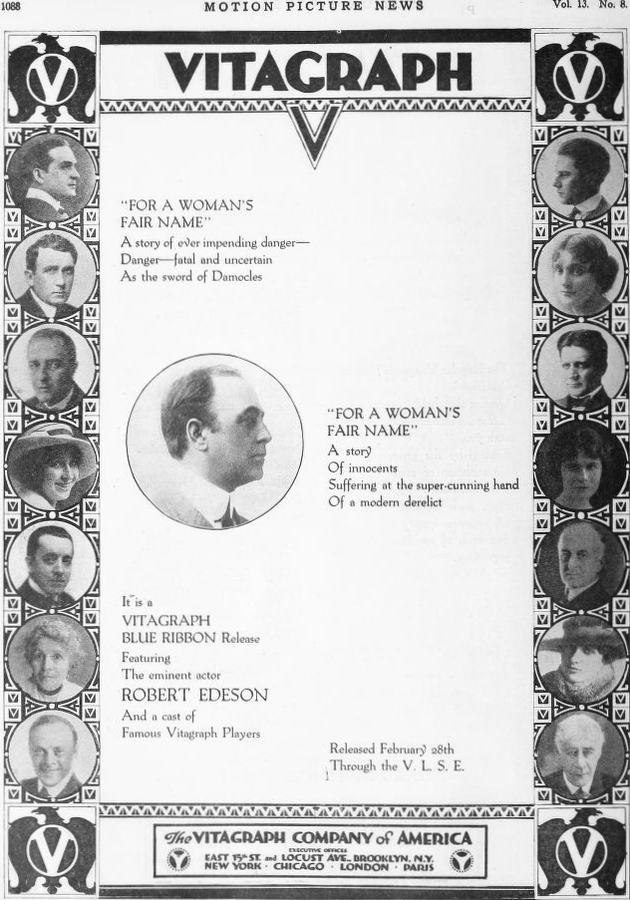
The cinematic landscape of 1916 was a fertile ground for the exploration of domestic morality and the encroaching shadows of urban vice. In this milieu, For a Woman's Fair Name emerges not merely as a relic of the Vitagraph era, but as a sophisticated inquiry into the fragility of reputation. Directed and written with a keen eye for psychological suspense by the prolific Marguerite Bertsch, the film operates on a frequency of high-stakes emotionalism that predates the more nuanced noir aesthetics of the following decades, yet shares their preoccupation with the inescapable nature of the past.
At the heart of the narrative’s rot is Bolles, portrayed with a jittery, visceral intensity that captures the contemporary anxieties regarding the "dope fiend." Unlike the more didactic approach seen in John Barleycorn, where the substance is the primary antagonist, Bertsch uses Bolles’ addiction as a catalyst for narrative complexity. He is a man whose internal moral compass has been demagnetized by his habit, making him the perfect foil for the "splendid character" of his half-brother, McGregor. This dichotomy between the two men—one a slave to his impulses, the other a servant to his honor—provides the film with its primary engine of conflict.
The setting of the "new home" is particularly symbolic. Typically a site of fresh starts and domestic sanctity, here it is immediately contaminated. The moment Vivien crosses the threshold, she is met with the gaze of her past, embodied by Bolles. This subversion of the domestic idyll is a recurring trope in silent melodrama, yet here it feels particularly claustrophobic. The trap Bolles previously laid for Vivien and Pierce, which compromised their social standing, serves as a reminder that in the 1910s, a "fair name" was the only currency that truly mattered. To lose it was to enter a social purgatory, a theme explored with similar gravity in The Closed Road.
Harry T. Morey’s McGregor is a fascinating study in the silent film archetype of the "Noble Sufferer." When Bolles, in a drug-induced frenzy, accidentally shoots Alicia, McGregor’s immediate reflex is to confess to a crime he did not commit. This is not merely a plot device; it is a reflection of a rigid code of chivalry that demanded men sacrifice their liberty to protect the sanctity of a woman’s reputation. This specific brand of self-abnegation is a hallmark of the era, found in various permutations across international cinema, from the desperate struggles in Leben heisst kämpfen to the tragic misunderstandings of Ce qu'on voit.
However, the film dares to question the efficacy of this silence. Pierce, played by Robert Edeson, is not a fool, yet his confidence in his investigative skills leads him to a devastatingly wrong conclusion. He suspects Vivien not of the shooting, but of a betrayal that cuts deeper: a perceived infidelity or a hidden life that McGregor is shielding. The heartbreak of the husband is staged with a somber gravity that elevates the film above standard potboilers. The tension between the characters is palpable, a testament to the cast's ability to convey intricate emotional states without the benefit of synchronized dialogue.
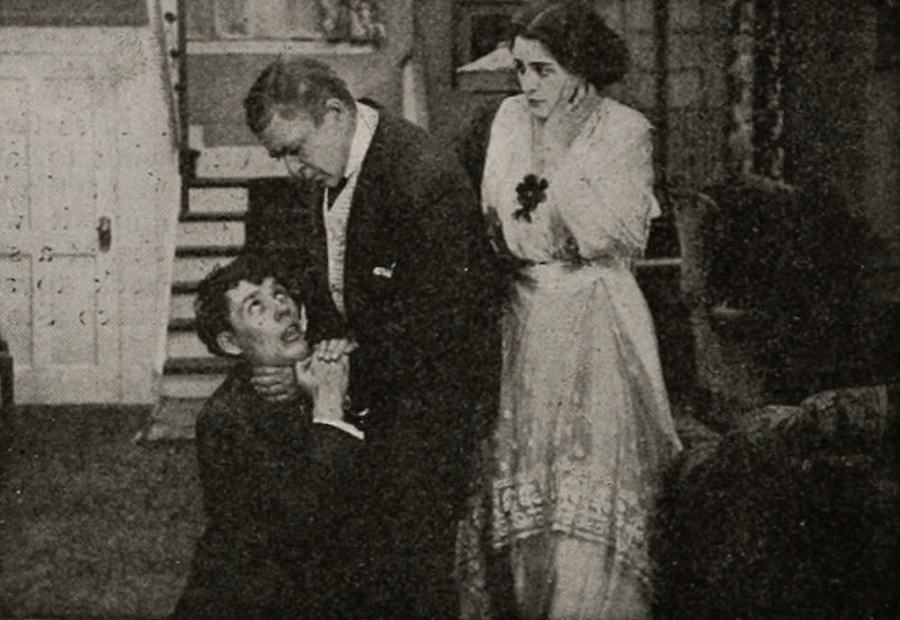
It is impossible to discuss For a Woman's Fair Name without acknowledging the brilliance of Marguerite Bertsch. As one of the few women holding significant power at Vitagraph, her screenplays often possessed a structural complexity that eluded her male counterparts. She manages to juggle four distinct character arcs—Vivien’s fear, Pierce’s suspicion, McGregor’s nobility, and Bolles’ descent—without losing the central thread of the narrative. The way she weaves the "peculiar combination of circumstances" leading to the climax is a masterclass in plotting.
In comparison to the more straightforward historical epics like Martyrs of the Alamo or the visceral social critiques of Barbarous Mexico, Bertsch focuses on the interiority of her subjects. The conflict is not found on a battlefield or in a political arena, but within the drawing rooms and libraries of the upper-middle class. This focus on the "domestic battleground" allows for a more intimate exploration of human frailty. The film's resolution, while seemingly tidy, is earned through the genuine psychological disintegration of the antagonist.
The suicide of Bolles is perhaps the most modern element of the film. It is not presented as a simple escape for a villain, but as the inevitable conclusion of a mind shattered by guilt and chemical dependency. His realization of the "trouble he has wrought" provides a moment of clarity that is both tragic and necessary. In the moral universe of 1916, the only way for the social order to be restored was through the removal of the corrupting element. Bolles’ death acts as a ritualistic cleansing, allowing Pierce and Vivien to reunite and Alicia to recover under the care of the man who nearly went to prison for her sake.
This theme of the "outcast" or the "black sheep" seeking a final, often fatal, redemption is a powerful recurring motif in the cinema of this period. One might look at The Black Sheep of the Family for a similar exploration of familial disgrace. However, in For a Woman's Fair Name, the stakes feel more personal because the antagonist is not an outsider, but an intimate part of the household—a secretary who has wormed his way into the very fabric of their lives.
Visually, the film utilizes the deep-focus capabilities of the era’s cameras to create a sense of layering within the frame. Characters often loom in the background, observing conversations they are not meant to hear, a technique that heightens the sense of paranoia. The lighting, particularly in the scenes involving Bolles’ drug-induced hallucinations, suggests a proto-expressionist influence, using shadows to elongate the sense of dread. This is far more sophisticated than the flat, stagelike presentations of earlier works like Liberty Hall.
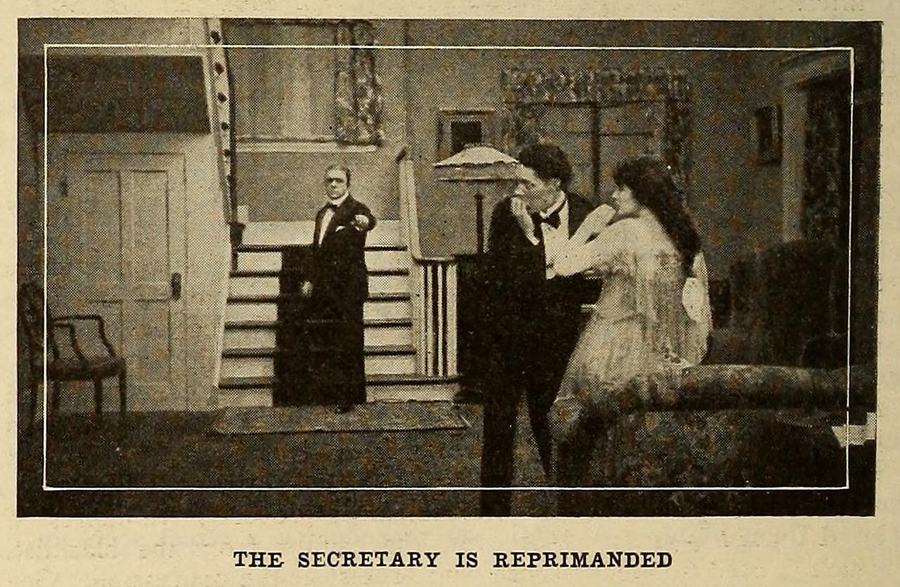
The pacing is deliberate, allowing the audience to sit with the characters' desolation. When Pierce decides on a separation, the stillness of the scene conveys a grief that no title card could fully articulate. It is in these moments of quiet that the film proves its worth as a piece of art rather than a mere entertainment. The emotional resonance of the reunion is amplified by the preceding silence, creating a catharsis that feels earned. Unlike the more whimsical or lighthearted fare of the time, such as Hampels Abenteuer or even the romantic entanglements of Comin' Thro' the Rye, this film demands a serious engagement with its themes of honor and loss.
When examining the broader context of Vitagraph’s 1916 output, For a Woman's Fair Name stands out for its maturity. While films like The Dividend dealt with the corrupting influence of wealth, and The Rack explored the legal system, Bertsch’s work is more interested in the internal court of conscience. The film asks: What is the price of a clear conscience? For McGregor, it is his freedom; for Bolles, it is his life; and for Pierce, it is the temporary loss of his faith in the woman he loves.
The motif of the "wrongly accused" man is a staple of the silent era, but rarely is it handled with such a delicate balance of suspense and melodrama. Even in high-octane dramas like The Measure of a Man or the historical grandeur of The Triumph of an Emperor, the focus often shifts toward external action. Here, the action is entirely psychological. The "shooting" is the only moment of physical violence, yet the entire film feels violent in its emotional intensity.
Ultimately, the film concludes on a note of restoration. The marriage of McGregor and Alicia serves as a narrative counterbalance to the near-destruction of Vivien and Pierce’s union. It suggests that while the "fair name" can be tarnished by the machinations of the wicked, it can be polished to a new luster through the fires of sacrifice. This is a quintessentially Edwardian sentiment, yet the film's execution feels surprisingly timeless. It is a reminder that the stories we tell about reputation and redemption are as old as society itself, and in the hands of a storyteller like Marguerite Bertsch, they remain as compelling today as they were over a century ago.
For those interested in the evolution of the screenplay, For a Woman's Fair Name is an essential study. It demonstrates a level of narrative economy and character depth that would become the standard for the Golden Age of Hollywood. It eschews the simplistic morality of the nickelodeon era for something far more grey, far more human, and infinitely more interesting. If you find yourself captivated by the high-stakes drama of His Last Dollar, you will find in this film a much richer, more textured exploration of what it means to lose everything for the sake of an ideal.

IMDb 6
1928
Community
Log in to comment.