DbcultAccessing Vault...
Cult Review
Senior Film Conservator
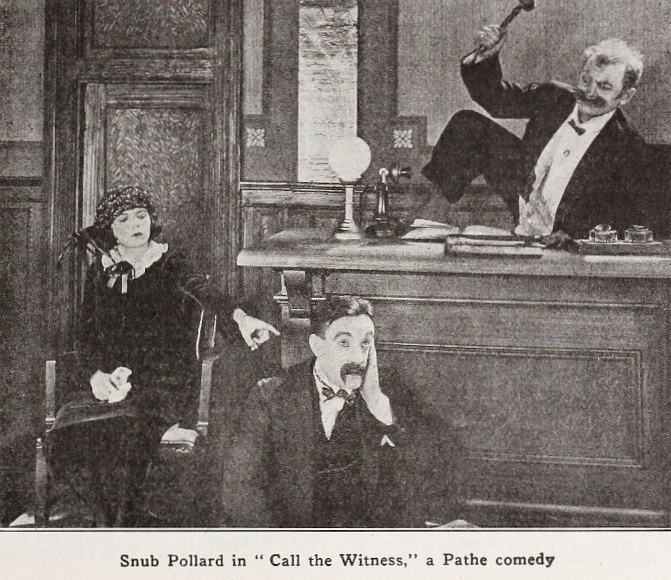
When Hal Roach’s Call the Witness flickers onto the screen, the audience is thrust into a world where silence is louder than dialogue, and every gesture reverberates with subtext. The film, a modest yet ambitious effort from the early 1920s, navigates the treacherous terrain of marital dissolution with a blend of slap‑stick vigor and earnest pathos, a duality that feels both ahead of its time and firmly rooted in the era’s cinematic conventions.
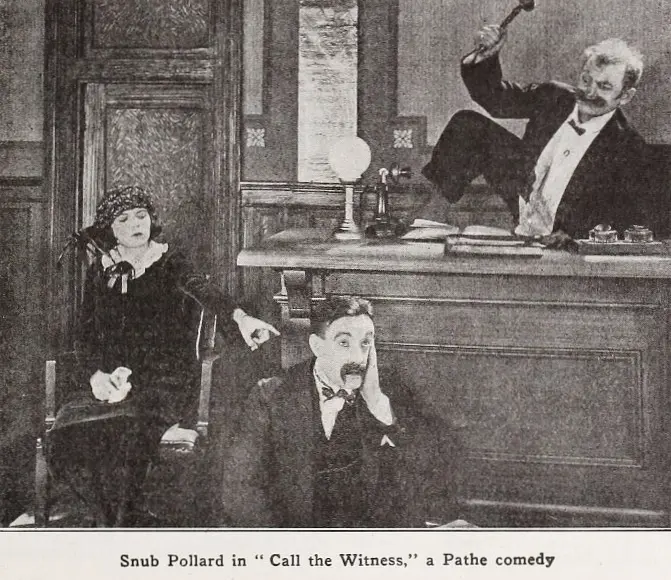
The courtroom functions as a theatrical arena, its wooden benches and stern judge forming a crucible for the protagonists’ conflicting testimonies. The wife, portrayed by Marie Mosquini, delivers her account with a restrained intensity that borders on the tragic. Her eyes, often narrowed against the harsh glare of the courtroom’s overhead lights, convey a lifetime of bruises that have never been spoken aloud. The husband, embodied by the ever‑expressive Snub Pollard, counters with a frenetic energy that transforms his fatigue into a comedic performance, his gestures exaggerated to the point of absurdity.
Roach’s decision to frame the narrative within a legal proceeding allows the film to oscillate between melodrama and farce without losing cohesion. The audience becomes a juror, compelled to sift through hyperbolic claims and discover the grain of truth hidden beneath the theatrical veneer.
Mosquini’s performance is a masterclass in restrained physicality. She conveys despair through subtle movements—a trembling hand, a fleeting glance toward the empty washtub—while never resorting to melodramatic sobbing. Her ability to embody a woman caught between domestic servitude and personal dignity mirrors the nuanced portrayals found in Her Private Husband, where the lead also wrestles with societal expectations.
Snub Pollard, on the other hand, injects a manic rhythm into his scenes. His comedic timing, honed through years of short‑form slap‑stick, transforms the husband’s grievances into a cascade of physical comedy—slipping on suds, gesturing wildly at imagined intruders. This contrast creates a tonal push‑and‑pull that keeps the viewer perpetually off‑balance, a technique reminiscent of the tonal shifts in The Bride’s Play.
The cinematographer employs chiaroscuro lighting to accentuate the emotional stakes. In the wife’s testimony, the camera lingers on the dimly lit kitchen, where shadows loom like silent witnesses to her suffering. Conversely, the husband’s recollections are bathed in harsher, high‑contrast light, underscoring his frantic state of mind. These visual choices echo the aesthetic sensibilities of The Cheat (1915), where light becomes a narrative character in its own right.
The courtroom scenes are shot from a low angle, granting the judge an imposing presence while simultaneously flattening the couple’s stature, a subtle reminder of the power dynamics at play. The use of deep focus allows background details—such as a cracked portrait or a ticking clock—to inform the viewer about the passage of time and the erosion of the marital bond.
The narrative’s fulcrum arrives with the landlady’s testimony. Her entrance, marked by a deliberate pause and a measured gait, signals a shift from chaotic accusation to grounded truth. She articulates the couple’s shared neglect of communication, pointing out that the husband’s “tiredness” and the wife’s “overwork” are merely two sides of the same coin. This moment of clarity is filmed with a soft focus, bathing the scene in a warm glow that contrasts with the stark courtroom lighting, symbolizing the potential for reconciliation.
The landlady’s role parallels the moral arbiter found in Playthings, where an external character serves to untangle the protagonists’ internal knots. Her calm demeanor and unflinching honesty cut through the film’s previous layers of hyperbole, providing a narrative catharsis that feels both earned and inevitable.
At its core, *Call the Witness* interrogates the fragile equilibrium of domestic life. The film posits that marital strife often stems not from overt malice but from a cascade of misinterpretations—a theme that resonates with contemporary discussions about emotional labor. The husband’s imagined “men hidden under tables and in closets” serve as a metaphor for his internalized anxieties, while the wife’s focus on the washtub underscores her relentless toil.
The film also critiques early‑20th‑century gender expectations. The wife’s silence mirrors the societal expectation for women to endure suffering in private, whereas the husband’s flamboyant outbursts reflect a cultural license granted to men to express frustration publicly. This dichotomy is subtly subverted when the landlady, a figure outside the marital dyad, provides the decisive voice, suggesting that external perspectives are vital for resolving internal discord.
Within Hal Roach’s prolific catalog, *Call the Witness* stands out for its willingness to blend comedy with earnest drama. While many of Roach’s contemporaneous works, such as the slap‑stick antics of The Gray Ghost, prioritize pure physical humor, this film dares to embed a narrative of emotional complexity. Its structure anticipates later works like Broken Shadows, which similarly intertwine personal conflict with broader societal commentary.
The film’s pacing, however, occasionally suffers from the constraints of its 20‑minute runtime. Certain scenes—particularly the husband’s frantic description of phantom intruders—feel elongated, bordering on the repetitive. Yet this very elongation serves to amplify the absurdity of his perspective, a deliberate choice that aligns with Roach’s penchant for exaggeration.
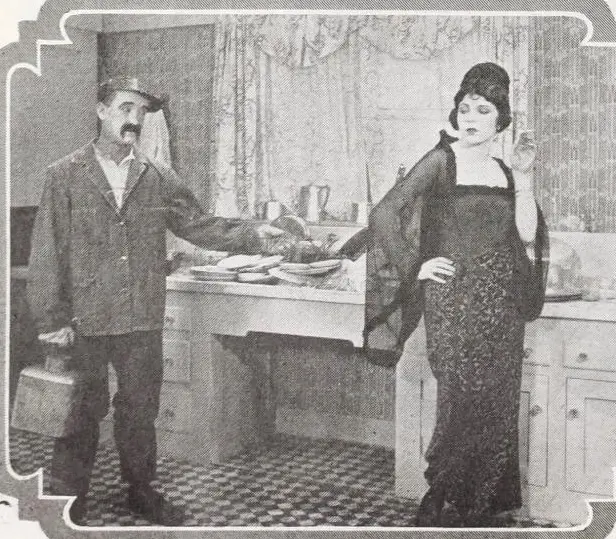
The set design is meticulously crafted to reflect the characters’ internal states. The kitchen, cluttered with dishes and a dented washtub, becomes a visual representation of the wife’s burden. In contrast, the husband’s home is depicted as a dimly lit, cramped space, underscoring his sense of confinement and exhaustion. The courtroom’s austere woodwork and looming judge’s bench reinforce the oppressive atmosphere that both protagonists must navigate.
Costuming also contributes to characterization: Mosquini’s simple, earth‑toned dress suggests practicality and humility, while Pollard’s slightly rumpled suit hints at a man who has neglected self‑care in favor of labor. The landlady’s crisp, navy‑blue attire—mirroring the sea‑blue hue #0E7490—imbues her with authority and composure.
As a silent film, *Call the Witness* relies heavily on its musical accompaniment and intertitles. The score, typically performed live in theaters, oscillates between plaintive strings during the wife’s testimony and jaunty piano riffs when the husband’s absurd anecdotes unfold. This auditory dichotomy reinforces the film’s tonal shifts, guiding the audience’s emotional response without uttering a single word.
The intertitles themselves are succinct yet evocative, employing a typographic style that mirrors the film’s visual palette. They often appear in a bold, dark orange #C2410C, providing a visual anchor that draws the viewer’s eye to critical narrative beats.
Although largely eclipsed by more prominent silent era masterpieces, *Call the Witness* offers a compelling case study in how early cinema grappled with themes of domestic strife and gender dynamics. Its blend of comedy and earnest drama prefigures modern indie films that tackle serious subjects with a light‑hearted veneer.
For scholars of film history, the movie provides insight into Hal Roach’s experimental inclinations beyond his famed comedy shorts. For contemporary audiences, the film’s exploration of miscommunication and the necessity of third‑party mediation resonates in an age where couples often seek external counsel to navigate relational turbulence.
*Call the Witness* may not boast the lavish production values of D.W. Griffith’s epics, yet its modest ambition yields a narrative that is both poignant and humorously absurd. The film’s ability to oscillate between stark realism and exaggerated comedy, all while maintaining a cohesive emotional throughline, marks it as a noteworthy entry in the silent canon. Its thematic relevance, coupled with strong performances and inventive visual storytelling, ensures that it deserves a place in the conversation alongside other underappreciated gems such as The Heart of Humanity and Mathias Sandorf.
IMDb —
1917
Community
Log in to comment.