DbcultAccessing Vault...
6.7/10
Senior Film Conservator
A definitive 6.7/10 rating for a film that redefined the boundaries of cult cinema. A Fight for Freedom; or, Exiled to Siberia remains a cornerstone of transgressive art.
Step back in time, dear cinephiles, to an era when narratives unfolded through the eloquent ballet of gesture and the evocative power of intertitles. We're delving into a true relic of early cinema, a film whose very title, A Fight for Freedom; or, Exiled to Siberia, thrums with the grand, dramatic ambitions characteristic of its time. Released in 1914, on the precipice of a global conflagration that would irrevocably alter the course of history, this picture from the nascent film industry offers more than just a glimpse into past storytelling conventions; it presents a surprisingly sophisticated exploration of themes that remain profoundly relevant today: political oppression, the indomitable human spirit, the intricate dance of familial loyalty, and the elusive quest for reconciliation. As an expert film critic, I find myself continually drawn to these foundational works, not merely for their historical significance but for their intrinsic artistic merit and their often-underestimated capacity to stir the soul. This isn't just a silent film; it's a vibrant, emotionally charged testament to the power of cinema to reflect and shape societal consciousness, even in its infancy.
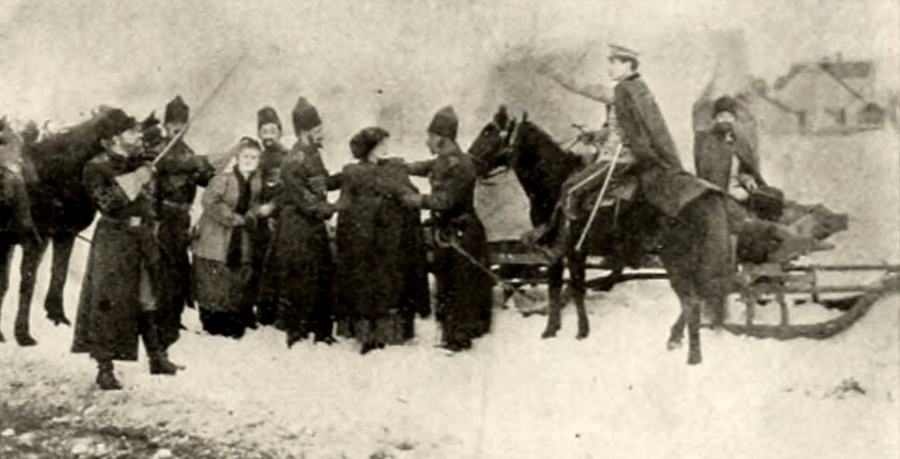
The film plunges us headfirst into the stark, unforgiving landscape of Tsarist Russia, where the iron fist of autocracy crushes dissent with chilling efficiency. We bear witness to a harrowing scene: a seemingly endless procession of political prisoners, their faces etched with despair, trudging through a blizzard towards the desolate expanse of Siberia. Among them is a venerable, yet defiant, old man, whose only crime was daring to voice his convictions for freedom. His advanced age offers no reprieve from the brutal vengeance of the state, a stark reminder of the indiscriminate cruelty of oppressive regimes. This opening sequence immediately establishes a tone of somber gravitas, drawing parallels to other historical dramas depicting the harsh realities of political persecution, albeit with a unique silent film aesthetic that amplifies the visual pathos. One might consider the thematic echoes of films like Down with Weapons, though its focus is on war, the underlying critique of systemic violence resonates.
Accompanying the old exile are his loyal wife and their strikingly beautiful daughter, both of whom choose to share his arduous fate. Their arrival in the bleak Siberian camp, confined to a rudimentary hut, underscores the profound familial bonds that often defy the most extreme adversities. It's a testament to unwavering devotion, a stark contrast to the dehumanizing machinery of the state. The daughter, portrayed with a compelling blend of strength and vulnerability by Claire Whitney, quickly emerges as a pivotal figure. Observing her father’s rapid decline in the harsh conditions, she realizes that only a return to civilization can save him. This realization sparks an ingenious, almost unbelievably audacious, escape plan—a testament to the fierce ingenuity born of desperation. They meticulously saw a hole in their hut's floor, placing a trunk with a movable bottom over it. The old man is secreted beneath, his "suicide" faked with clothes and a note placed by the riverbank. For weeks, they nurse him in secret, feeding him while the authorities remain oblivious. This segment, fraught with tension and meticulous planning, showcases the film's early narrative sophistication, building suspense through clever visual storytelling.
The ruse works. Eventually, the wife and daughter are granted passports to return to Russia. During a seemingly perfunctory search of their belongings, the trunk is indeed checked, but the exile, with a breathtaking display of agility, swaps places with the clothes the moment the officials look away, securing his passage across the border. This moment of daring subterfuge is a masterclass in silent film suspense, relying on precise timing and the audience's eager anticipation. The relief is palpable, not just for the characters, but for the viewers who have invested deeply in their plight. This escape sequence, while perhaps a touch melodramatic by modern standards, perfectly captures the spirit of early cinema's capacity for grand, heroic gestures. It's an affirmation of hope against overwhelming odds, a core theme that resonates throughout the picture.
Meanwhile, back in Russia, another dramatic fissure is tearing through the fabric of society, specifically within the autocratic establishment itself. General Romanoff, a symbol of the Tsarist regime's unyielding cruelty, orders a brutal massacre. His son, a man of conscience, refuses to obey these heinous orders to slay the innocent, leading to his immediate disinheritance and public disgrace. Stripped of his uniform, he leaves his father’s house, vowing never to return. This introduces a powerful internal conflict, adding layers of moral complexity to the burgeoning revolutionary narrative. It's a classic father-son struggle, amplified by the highest stakes of political ideology and human morality. Such a conflict, where personal ethics clash with institutional demands, finds echoes in countless dramas across cinematic history, from ancient Greek tragedies to modern thrillers.
It is on a desolate road that fate intervenes, weaving these two disparate storylines into a singular, compelling tapestry. The disgraced Romanoff son encounters the recently escaped exile and his daughter, whose sleigh has overturned. In the act of rendering aid, the son is instantly captivated by the daughter's intense, serious gaze. This is the genesis of a powerful romantic connection, a bond forged in shared adversity and a mutual yearning for justice. Their individual grievances—the daughter's profound grief and bitterness over her father's suffering, and the son's disillusionment with his own family's tyranny—propel them towards a common cause. Together, they pledge allegiance to a revolutionary society, transforming personal tragedy into collective action. This romantic subplot is not merely a diversion; it's the emotional core that binds the two halves of the narrative, giving a human face to the grander political struggle.
The revolutionary society, driven by a desperate desire for change, draws lots for a perilous mission: the assassination of General Romanoff. In a cruel twist of fate, the lot falls to the exile's daughter. Embittered by her father's ordeal and believing him lost to the Siberian wastes (a detail that adds a layer of tragic irony, given his successful escape), she consents to the dangerous task. The narrative masterfully ratchets up the tension here, creating a dramatic irony that only the audience and the son are privy to. She plans to execute the general during a ceremony where a bronze statue is presented to him as a token of appreciation. This statue, however, is hollow, concealing the determined revolutionary poised to strike. The ingenuity of the plot device, while perhaps bordering on the theatrical, is undeniably effective in building suspense, a hallmark of early narrative filmmaking.
But love, that most potent of forces, intervenes. Her gallant lover, the general's son, discovers the plot. Torn between his revolutionary ideals and his filial duty, he resolves to save both his father and the woman he loves, regardless of the personal cost. The climax of this assassination attempt is a heart-stopping sequence, a frantic race against time where the son thwarts the deed at the very last moment. The general remains blissfully ignorant of his near brush with death, a dramatic beat that underscores the profound moral complexities at play. This moment is pivotal, preventing the narrative from spiraling into pure tragedy and allowing for the possibility of a more nuanced resolution. It highlights the film's commitment to exploring the grey areas of conflict, where personal bonds can transcend ideological divides.
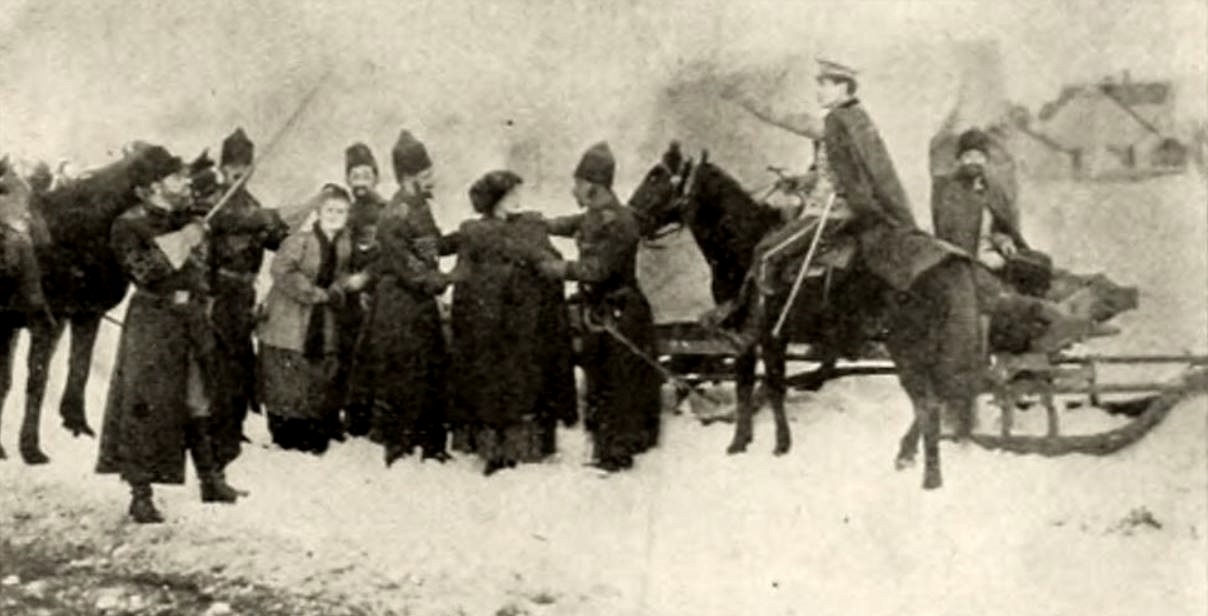
The chasm between father and son, however, proves stubbornly wide. The general, mourning his estranged son, writes a letter of forgiveness, only to tear it to shreds upon learning of his son’s revolutionary affiliations. Likewise, the son, seeking reconciliation, pens an appeal for forgiveness, but destroys it when news of another massacre ordered by his father reaches him. These parallel actions, depicted through powerful visual cues and intertitles, illustrate the cyclical nature of conflict and the profound difficulty of bridging ideological divides when trust has been shattered. It’s a poignant portrayal of how political strife can fracture the deepest human relationships, mirroring the broader societal unrest. One might draw comparisons to the profound familial rifts explored in films such as Valdemar Sejr, which, while focusing on different historical contexts, similarly delves into the tragic consequences of unwavering convictions.
The narrative crescendos into a furious street battle, a chaotic and visceral depiction of civil unrest. The general, leading his imperial troops, finds himself in direct opposition to the revolutionary forces marshaled by his own son. This is the ultimate, tragic confrontation, a physical manifestation of the ideological war that has simmered throughout the film. In the thick of the brutal melee, the general is gravely wounded. As life ebbs from him, a profound, almost spiritual realization dawns. In a moment of transcendent humanity, he offers his last drink of water to a common revolutionary soldier, clasping his hand in a gesture of brotherly love just before his soul departs. This scene is the emotional apex of the film, a powerful, wordless sermon on the inherent equality of all humanity, even in the throes of death and conflict. It's a moment that resonates deeply, suggesting that true understanding can sometimes only be found in the face of ultimate loss, a theme that perhaps finds a parallel in the elegiac tones of Heimgekehrt, a film exploring the aftermath of conflict.
The film concludes with a truly poignant image. The general's son and the exile's daughter discover the two old adversaries—the General and the exile himself—peacefully sleeping in each other's arms amidst the devastation. This final tableau, while perhaps surprising given the earlier mention of the exile's "death" (a narrative twist that either implies a miraculous survival or a symbolic interpretation of the daughter's grief), serves as the ultimate resolution. Their grief is tempered by the mute, yet eloquent, evidence of the general's profound change of heart. They smile tenderly through their tears, witnessing a posthumous reconciliation that transcends the bitter hostilities that defined their lives. It's a powerful statement on forgiveness, empathy, and the possibility of unity, even when achieved through tragedy. This ending elevates the film from a mere melodrama to a profound meditation on the human condition, suggesting that even the most entrenched divisions can ultimately yield to a shared humanity.
In an age before spoken dialogue, the burden of conveying emotion and narrative fell squarely upon the shoulders of the actors, whose every gesture, every facial contortion, had to speak volumes. James O'Neill, in the role of the venerable exile, delivers a performance imbued with quiet dignity and unwavering resolve. His portrayal of suffering and resilience is deeply affecting, forming the moral compass of the film. Joseph Levering, as the conflicted General Romanoff, navigates the complexities of a character torn between duty and a burgeoning, albeit late, sense of humanity with commendable skill. His transformation in the final moments is particularly impactful, a testament to his ability to convey profound internal shifts without uttering a single word. Fraunie Fraunholz likely provided a solid presence in his role, supporting the intricate plot with earnestness, though specific details of his character are less prominent in the surviving plot synopsis. Claire Whitney, however, as the exile's daughter, is arguably the heart of the film. Her striking beauty is matched by an intensity that conveys both her profound sorrow and her revolutionary fervor. She embodies the spirit of defiant hope, carrying much of the film's emotional weight with grace and conviction. These performances, while adhering to the more theatrical style of early cinema, nonetheless achieve a remarkable level of emotional authenticity.
The direction, though uncredited, demonstrates a keen understanding of visual storytelling. The stark contrasts between the desolate Siberian wastes and the bustling, tumultuous streets of revolutionary Russia are effectively rendered. The use of close-ups for emotional impact, the careful staging of crowd scenes, and the meticulous choreography of the action sequences—especially the escape and the final battle—all speak to a burgeoning cinematic language. The film's pacing, while deliberate, builds momentum effectively towards its dramatic climaxes. The uncredited writers, too, crafted a narrative of remarkable scope and ambition, intertwining personal drama with grand historical forces. While the film's specific technical innovations might not be as widely celebrated as those of D.W. Griffith, it nonetheless exhibits a sophisticated grasp of narrative structure and emotional manipulation, proving that even early silent films could deliver complex, thought-provoking stories. The visual poetry of the period, often overlooked, is brilliantly showcased here, reminding us that cinema's power was evident from its earliest days.
Released in 1914, A Fight for Freedom; or, Exiled to Siberia emerged during a period of immense global upheaval. The shadow of the impending Russian Revolution (which would erupt just three years later) loomed large, and stories of Tsarist oppression resonated deeply with audiences. The film taps into a potent vein of anti-authoritarian sentiment, reflecting real-world anxieties and hopes for social change. It's a fascinating artifact, not just as entertainment, but as a historical document, offering insight into the political consciousness of its era. This thematic courage, tackling such sensitive political subjects, is notable for its time, contrasting with films that might shy away from direct critique. Its exploration of revolution and societal change could be seen as a precursor to later, more explicit political cinema, laying groundwork for how films could engage with contemporary issues. Even compared to purely dramatic fare like The Vicar of Wakefield or Moths, which focused on personal tribulations, 'A Fight for Freedom' anchors its personal stories in a stark political reality.
The film's legacy lies not only in its compelling narrative but also in its demonstration of the silent medium's capacity for intricate storytelling and profound emotional depth. While it may not be as widely known as other silent classics, its narrative ambition and the potency of its themes ensure its place in the annals of early cinema. It speaks to the enduring human desire for liberty, the sacrifices made in its pursuit, and the ultimate, often tragic, possibility of reconciliation. In a world still grappling with political divisions and the echoes of historical grievances, the film's final message of human equality and compassion, even in death, remains remarkably potent. It reminds us that beneath the banners of opposing ideologies, there lies a shared humanity capable of profound understanding, even if that understanding only blossoms in the twilight of existence. The power of silent cinema to convey such complex ideas without dialogue is truly remarkable, solidifying its status as a vital art form worthy of continued study and appreciation. It’s a powerful reminder that the struggles for freedom and justice are timeless, echoing through the centuries, much like the enduring narratives found in works like The Road to the Dawn or even the more abstract philosophical musings of Obryv, which grapple with profound moral quandaries.
In summation, A Fight for Freedom; or, Exiled to Siberia is far more than a historical curiosity. It is a robust, emotionally resonant drama that showcases the burgeoning artistry of silent film. Its intricate plot, powerful performances, and profound thematic explorations of freedom, sacrifice, love, and reconciliation offer a viewing experience that transcends its era. It's a testament to the fact that compelling storytelling, regardless of technological limitations, possesses an eternal power to captivate and enlighten. The film invites us to reflect on the cyclical nature of conflict and the enduring hope for a world where understanding can ultimately triumph over division. For anyone interested in the foundational narratives of cinema or the timeless struggle for human dignity, this silent masterpiece offers an invaluable and deeply moving journey. It stands as a powerful reminder that even in silence, the loudest truths can be spoken, and the deepest emotions can be felt, echoing through time to challenge and inspire new generations of viewers.
Community
Log in to comment.