DbcultAccessing Vault...
Cult Review
Senior Film Conservator
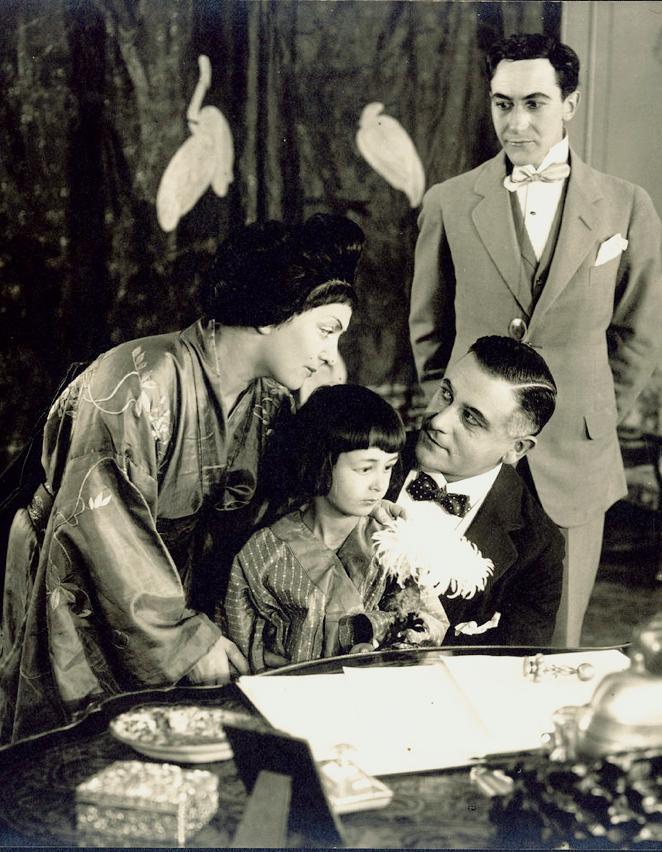
Copenhagen’s winter light—thin, mercury-tinted, almost embarrassed to exist—becomes a character in its own right throughout Troen, der frelser. It slides across parquet floors, pools inside crystal decanters, and finally dies against the vermilion cuff of O’Schiki’s kimono like a moth that has misjudged its final landing. Director Aage Barfoed, ever the watchmaker of moods, lets entire sequences unfold without a syllable, trusting the hush to say what polite society cannot. The result feels less like a narrative and more like a slowly fevering daguerreotype: every frame threatens to blister if you stare too long.
Sir John Malcolm—played by Robert Schmidt with the self-satisfied elasticity of a man who has never lost at whist—enters wearing diplomatic whites so stiff they could stand guard without him. Yet Schmidt’s genius lies in gradual deflation: by midpoint his shoulders sag until the medals seem to be holding the man up rather than adorning him. The actor never begs sympathy; he simply allows the parquet to reflect his footprint and trusts us to notice the diminishing weight. We witness colonial authority rendered porous by domestic tenderness, a reversal so quiet it feels sacrilegious.
Opposite him, Clara Pontoppidan’s O’Schiki drifts through scenes like incense that refuses to acknowledge a ceiling. Watch her fingers while she pours tea: they tremble in Morse that only Parker bothers to decode. Pontoppidan gives us a woman caught between the floating world and the Lutheran bell tower, every gesture a double-exposed photograph—courtesan and cipher, mother and infiltrator. When she finally speaks Danish in a Kyoto accent thick enough to slice, the sound is so fragile you fear the syllables might chip.
Kai Lind’s Tom Parker is the film’s most perilous creation: a clerk who has mistaken proximity for intimacy, memorandum pads for love letters. Lind never plays him as villain, only as a man whose soul has developed the hairline fractures of old porcelain. There is a moment—barely four seconds—when Parker stands in the nursery doorway, watching the child sleep; his hand hovers an inch from the boy’s cheek, and the entire moral universe wobbles. Lind’s breathing is so shallow you hear the linen of his cuff more than anything else.
Cinematographer Henry Seemann shoots Parker through latticework shadows, half face lit, half swallowed by mahogany. The effect turns every illicit desire into a bureaucratic document: filed, stamped, yet forever mislaid. Compare this to the candied overexposure of The Candy Girl or the gaslit claustrophobia of Shadows of the Moulin Rouge; Barfoed’s film prefers the tremulous penumbra where conscience and etiquette cancel each other out.
Objects mutate into accomplices here. A ream of diplomatic stationery, crisp enough to slit a fingertip, becomes Parker’s pillow in a late-night scene that courts necrophiliac overtones. An origami crane, unfolded by the child, reveals a single brushed inkstroke: “Far er hjemme”—Danish for “Father is home”—a message that reaches no one because the boy cannot yet read. Even the kimono’s weave is interrogated: Seemann’s camera sinks so deep into the fabric that crimson blossoms resemble arterial spray under microscopy.
Barfoed’s screenplay, sparse as snowfall, allows these artefacts to shoulder the exposition. Dialogue is rationed like wartime sugar; instead, we decode rustles, creaks, the soft pop of sealing wax. If you adored the verbal fencing in For the Defense, prepare for the opposite: here silence itself is cross-examined until it confesses by trembling.
The Danish title translates to “The Faith That Saves”, yet salvation remains a promissory note no one endorses. Barfoed litters the mise-en-scène with Lutheran iconography—hymnals, baptismal fonts, a copper engraving of Christ’s side-wound—but each holy fragment is undercut by human appetite. In one sly shot, Parker’s reflection overlays a stained-glass Jesus so that the secretary’s eyes become the thorn-circled eyes of the Nazarene, a visual gag that stings deeper than any blasphemy.
Compare this spiritual shell-game to The Conquest of Canaan, where redemption arrives via civic pomp. Barfoed refuses such convenience; his film ends inside the same church, candles snuffed, congregation zero, faith reduced to the echo of a latch clicking shut.
There is no orchestral swoon; instead, composer Tage Nielsen offers a heartbeat-like pulse underlain with koto plucks slowed to half speed. The effect is subliminal cologne: you do not hear the music so much as sense someone else’s pulse inside your own throat. When the child vanishes, Nielsen removes all low-frequency, leaving only the crystalline clink of a porcelain fox mask hitting cobblestones—an auditory close-up so intimate it feels like your own tooth chipping.
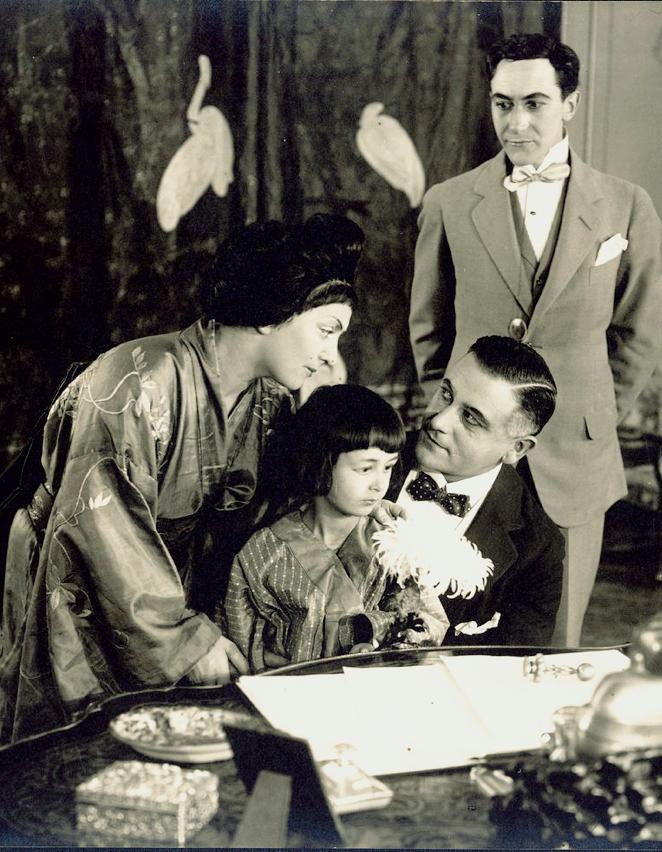
Imperial narratives habitually map women as territory; Barfoed inverts the compass. O’Schiki navigates Copenhagen’s docks at dawn, her kimono hitched to reveal Western boots—an ethnographic impossibility that nonetheless feels historically true inside the film’s dream-logic. She interrogates dockworkers in accented Danish, flips a gold coin bearing the king’s profile, and buys passage on a skiff whose sail is patched with hymn pages. For once, the colonised gaze surveys the metropole, and the city folds like cheap origami under her scrutiny.
Barfoed fractures chronology with the casual cruelty of a child snapping chalk. Mid-film, we revisit the opening breakfast thrice, each iteration revealing a fresh micro-gesture—Parker’s knee touching O’Schiki’s under the table, the boy’s eyes flicking toward the door, Sir John’s newspaper headline shifting from “Treaty Signed” to “Revolt in the Colony”. The device evokes the stutter of a film strip caught in the gate, history itself jammed and burning. Fans of the looping structure in Chained to the Past will recognise the strategy, though Barfoed’s purpose is less exposition than erosion: every replay rubs the sheen off imperial certainty until bare wood shows through.
Production designer Lilly Rasmussen restricts her palette to lacquer reds, sea blues, and candle yellows—hues that migrate like guilty thoughts. The crimson obi reappears as a ribbon binding diplomatic dossiers; the sea-blue of O’Schiki’s under-kimono flashes only when she kneels to search for her child along the wharf, a bruise of ocean against soot-blackened wood. Yellow, reserved for the child’s paper cranes, desaturates each time Parker’s obsession intensifies, until the final crane lies nicotine-brown in rain sludge. The film thus smuggles a moral spectrum into costume changes, turning wardrobe into verdict.
Where The Libertine stages excess as theatre, Troen, der frelser treats desire as something you fold smaller and smaller until it cuts whoever tucks it in their breast pocket. Parker never ravishes; he annotates O’Schiki’s absence with inkblots shaped like her silhouette. The film’s single, almost-offscreen kiss lasts three frames—an electrical blink you could miss while sneezing—but it detonates with the force of cities sacked.
Sir John’s affection for his son is never in doubt; yet Barfoed juxtaposes bedtime stories with geopolitical bedtime. One night the diplomat recounts the conquest of a tropical island while tucking the boy in, and the camera watches from the hallway as O’Schiki’s expression stiffens into porcelain. The scene implies that imperial storytelling literally colonises the next generation’s dreams. Compare this to the domestic tug-of-war in Assigned to His Wife; Barfoed’s iteration is quieter, more venomous, because the conquest happens under the guise of a lullaby.
Although the child’s disappearance propels the third act, Barfoed denies us procedural catharsis. Search parties are mentioned, then discarded; instead, the boy re-emerges inside Parker’s locked office, asleep atop a mound of diplomatic cables stamped “Classified”. The implication: secrets themselves have parented him in their image. It’s a narrative feint that will infuriate viewers who crave the investigative clarity of The Great Diamond Robbery. Yet the film’s refusal to explain is its most honest gesture: children lost in imperial bureaucracies rarely leave paper trails.
Editor Holger Madsen cuts on breath rather than beats. You feel each inhale via a subtle prolongation of shots—just enough for oxygen to enter the bloodstream—followed by exhales that land like guillotines. The average shot length hovers around 4.7 seconds, but your lungs adjust to the rhythm unawares, so that when the final cut arrives—Parker’s eyes filling the entire screen—you gasp as if surfacing from deep water.
Upon exiting, you will not debate good versus evil; you will instead taste bergamot on your tongue and wonder whether you, too, have ever confused service with ownership. The film implicates the viewer via its very reticence: because it refuses to condemn Parker in rhetorical flourishes, we supply the verdict ourselves, and the sentence sticks in the throat like dry paper.
Available in 4K on CineNord, the transfer preserves Seemann’s candlelit grain without waxing into digital gloss. Danish intertitles sport optional English subtitles in a typeface that mimics rice-paper fibres. Audio offers both the original stereo and a 5.1 upmix that amplifies floorboard creaks to tectonic levels. Run time: 103 minutes. Not rated, but equivalent to PG-13 for thematic disquiet and one fleeting kiss that feels NC-17 inside your head.
Devotees of Tess of the Storm Country’s social outrage will find a companion piece, though Barfoed replaces melodrama with whispered blasphemy. If you cherished the power-shift duets in His Vindication, migrate here for a more poisonous afterglow. Conversely, viewers seeking the crowd-pleasing restorations of The Lost Chord may find Troen, der frelser too anaemic in its pleasures. The film offers no release, only a slow leak of moral plasma you’ll be dabbing for days.
I watched it twice within twelve hours, convinced I had hallucinated the second viewing—the plot feels engineered to evaporate, leaving only scent behind. By dawn I located the origami crane I absent-mindedly folded while writing notes, its belly empty except for a watermark of dried bergamot. The film had colonised my living room, quietly, like any good diplomat.
IMDb —
1917
Community
Log in to comment.