DbcultAccessing Vault...
Cult Review
Senior Film Conservator
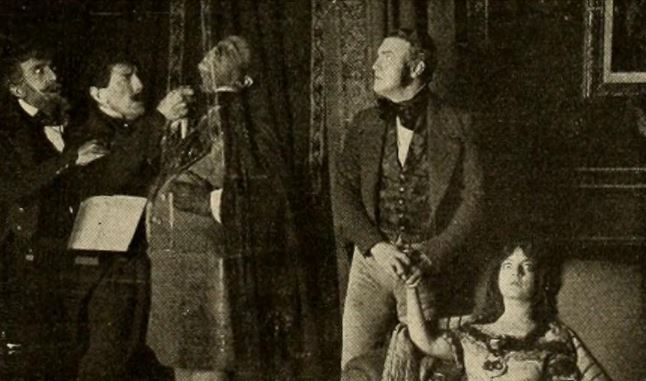
The 1914 iteration of Called Back, directed by George Berthel and produced by the London Film Company, stands as a haunting monument to the era's transition from stage-bound melodrama to the sophisticated visual language of psychological cinema. It is a film that breathes through its atmosphere, a chiaroscuro of Victorian morality and Edwardian occultism that feels both archaic and startlingly prescient. To watch it today is to step into a sepia-toned fever dream where the boundaries between the physical world and the metaphysical are perilously thin.
At the heart of this narrative is Henry Ainley’s portrayal of Gilbert Vaughan. Ainley, a titan of the British stage, brings a luminous physicality to the role of the blind hero. In early cinema, blindness was often portrayed with clumsy gesticulation, yet Ainley imbues Vaughan with a quiet, internalised suffering. His performance is a study in sensory displacement; he navigates the frame not as a victim, but as a man whose lack of sight has sharpened a deeper, more unsettling intuition. Unlike the protagonist in The Spy, whose movements are dictated by external observation and espionage, Vaughan is guided by the internal echoes of a crime he shouldn't be able to perceive.
The central conceit—a blind man 'seeing' a murder during a trance—is handled with a surprising lack of artifice. The film eschews the heavy-handed trickery one might expect from 1914, instead relying on the raw emotional resonance of the actors. When Vaughan 'witnesses' the death of Anthony, the brother of his beloved Pauline, the camera lingers on his sightless eyes, creating a bridge between his internal revelation and the audience's voyeurism. It is a moment of pure cinematic transcendence that predates the sophisticated psychological thrillers of the 1940s.
Jane Gail’s Pauline is a character trapped in a state of perpetual liminality. As the ward of the sinister Dr. Ceneri, she exists as a 'mad' woman—a term the era used to describe what we would now recognize as severe post-traumatic dissociation. Gail’s performance is hauntingly static; she moves through the opulent sets like a ghost in her own life. This portrayal of mental fragility is far more nuanced than the theatrical hysterics seen in contemporary works like Anfisa. Pauline is not a spectacle of madness, but a victim of it, her trauma serving as the locked vault that Vaughan must eventually open.
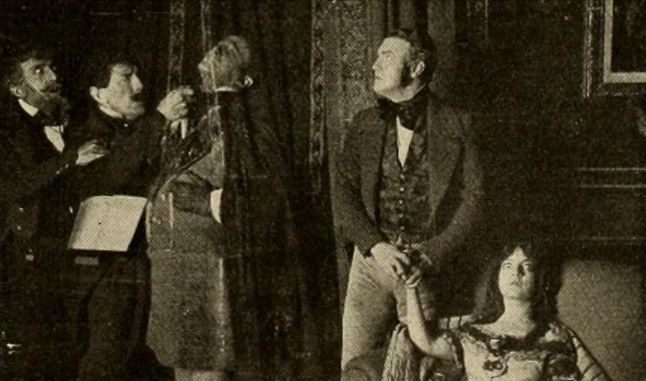
The dynamic between Pauline and Dr. Ceneri (played with a chilling, calculated reserve by Charles Rock) provides the film’s moral friction. Ceneri is the quintessential Gothic antagonist—not a mustache-twirling villain, but a man of science whose ethical compass has been demagnetized by secrecy and political intrigue. The tension within their household is palpable, a domestic claustrophobia that contrasts sharply with the expansive, almost operatic scale of Atlantis, which sought to capture the grandeur of disaster. Called Back finds its horror in the quiet corners of a drawing-room and the silent spaces of a traumatized mind.
Technically, Called Back represents the pinnacle of what the London Film Company could achieve before the industry was irrevocably altered by the First World War. The cinematography, while largely static in its framing, utilizes depth of field to create a sense of layered reality. The interiors are lush, dripping with the heavy drapes and ornate furniture of the late Victorian era, creating a visual weight that mirrors the characters' emotional burdens. This isn't the whimsical artifice of The Brass Bottle; this is a world of heavy velvet and cold stone.
The screenplay, adapted by Comyns Carr from Hugh Conway’s novel, manages to condense a complex plot without losing the essential 'penny dreadful' thrill that made the source material a bestseller. It balances the supernatural elements with a grounded, almost procedural investigation. While Lights of London captured the gritty externalities of the city, Called Back explores the shadows within the British psyche. The use of intertitles is sparing, allowing the visual storytelling to carry the narrative weight, a testament to the cast's ability to convey complex internal states through subtle shifts in posture and expression.
When placed alongside its peers, Called Back occupies a unique niche. It lacks the nationalist fervor of Karadjordje or the sweeping historical scope of Michael Strogoff. Instead, it leans into a proto-noir sensibility. It shares a certain thematic DNA with The Woman in Black, specifically in its obsession with the way the past refuses to stay buried. However, where many films of the era relied on external threats, Called Back posits that the greatest dangers are those we carry within us—be they lost memories or psychic burdens.
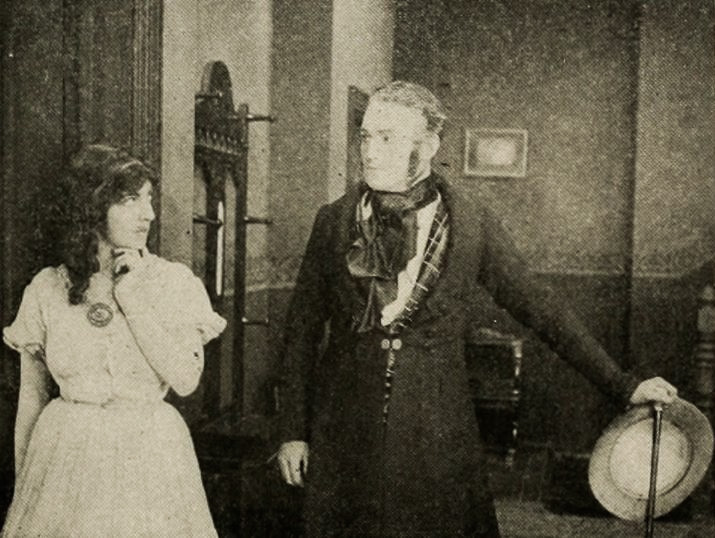
In terms of social commentary, it is less overt than The House of Bondage, which tackled the grim realities of white slavery. Yet, Called Back offers a critique of the medical establishment’s treatment of women. Pauline’s 'madness' is managed and manipulated by men for their own ends, making her recovery not just a narrative resolution but an act of liberation. This subtext adds a layer of modern relevance to a film that could otherwise be dismissed as a mere period piece.
The third act of the film, where Vaughan regains his sight and travels to Italy to uncover the truth, shifts the tone from Gothic horror to a proto-espionage thriller. The change in scenery provides a visual breath of fresh air, though the shadow of the murder remains ever-present. The climax, involving a confrontation with the true assassin, is staged with a vigor that rivals the action of The Duke's Talisman. Yet, the resolution remains tethered to the emotional stakes of the central marriage. The restoration of Vaughan’s physical sight is a metaphor for the uncovering of the truth; he can finally see the world, but more importantly, he can finally see Pauline for who she truly is.
The film’s conclusion avoids the saccharine endings common in light comedies like Mrs. Black Is Back or the moralizing tones of The School for Scandal. Instead, it leaves the audience with a sense of bittersweet catharsis. The trauma of the past is acknowledged, not erased. It is this maturity of theme that elevates Called Back from a simple mystery to a profound exploration of human resilience.
As we look back through the lens of a century, Called Back serves as a crucial link in the evolution of the thriller. It lacks the comedic irony of Half a Hero or the rugged frontier spirit of The Luck of Roaring Camp, but it possesses an intellectual depth that many of its contemporaries lacked. It is a film that demands the viewer's full attention, rewarding them with a narrative that is as much about the process of healing as it is about the thrill of discovery.
The casting of George Bellamy and Judd Green in supporting roles further grounds the film in a tradition of British character acting that would flourish in the decades to come. Every frame of this film feels intentional, every shadow curated to enhance the sense of unease. For the modern cinephile, Called Back is not merely a historical curiosity; it is a vibrant, breathing piece of art that explores the eternal struggle between the light of truth and the darkness of the forgotten. It reminds us that sometimes, we must go blind to truly see, and we must be 'called back' to our darkest moments to find the path to our future.
Reviewer's Note: While often overshadowed by the larger-than-life epics of the era, the intimacy of Called Back remains its greatest strength. It is a haunting whisper in a world of cinematic shouting.
IMDb —
1923
Community
Log in to comment.