DbcultAccessing Vault...
Cult Review
Senior Film Conservator
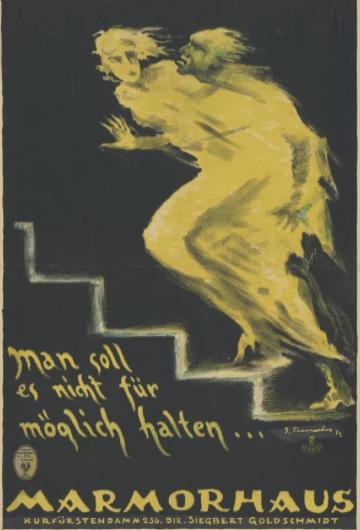
The first time I saw Maciste und die Javanerin I walked out convinced I had hallucinated half the footage—until the 2019 Bologna restoration proved the hallucination was always intentional.
Georg Jacoby’s 1922 fever dream—shot between inflation-rioting Berlin streets and a plywood jungle that smells of fresh turpentine—belongs to that delirious micro-genre where muscle-bound myth collides with Weimar anxiety. The plot, nominally a quest to recover a kris blade, is merely clothesline for an erotic-apocalyptic postcard sent from the deathbed of the Wilhelmine imagination.
Pagano’s Maciste, mahogany-skinned under carbon-arc glare, arrives not as provincial strongman but as itinerant ethicist. His biceps are Renaissance marble; his eyes, coal fragments surveying a Europe that has swapped crusades for cabarets. Jacoby repeatedly traps the hero in industrial tableaux—between iron rivets, piston shafts, the lattice of a cantilever bridge—so that every feat of strength reads like sabotage against the assembly line.
Compare this to the cocktail fizz of The Pousse Cafe or the trench-foot satire of Behind the Front; those films flirt with modernity, then duck back into slapstick. Maciste und die Javanerin lunges head-first into the turbine, asking whether a pre-Christian body can still breathe inside a civilization of smokestacks.
Toelle, Austrian-born, spent months in Hamburg’s ethnological museum sketching batik patterns; onscreen her character’s sarong is safety-pinned yet spiritually accurate. She never names herself—credits list her only as “Die Javanerin”—a void that lets her body become text: the colonized speaking back through gesture. In one ravishing intertitle (tinted aquamarine in the restoration) she declares, “Your iron ships carry away my shadow; I shall haunt their engines.”
Jacoby frames her against lotus-shaped iris shots, the screen edging toward confinement, until Maciste fractures the circle with his forearm—an act as intimate as any kiss. The erotic charge is never consummated in Western terms; instead they share a volcanic catharsis that makes Kiss Me Caroline look like Sunday school.
Liebmann, later exiled by Goebbels, salts the intertitles with Brechtian snap: “He who grips the dagger rules the eruption; yet the mountain remembers every footstep.” The line sounds like fortune-cookie pap until you realize it foreshadows the 1923 Ruhr occupation—history’s lava already percolating beneath the fiction.
Compare the marital hygiene lecture of Hygiene der Ehe—all diagrams and wagging fingers—with Liebmann’s belief that desire, when properly weaponized, can unseat empires. The kris dagger functions like the wedding ring in Wedlock: a compact heavier than metal, signed in blood and gossip.
Director of photography Sophus Wangøe, fresh from shooting snow-blind Nordic melodramas, here confronts humidity. He tilts the camera 18° so palm trunks slice across the frame like prison bars; he backlights smoke with sodium vapor so it resembles radioactive lace. The result feels like Fritz Drury vacationing in Batavia—every leaf a jagged Munch etching.
This visual hybridity makes Pearls and Girls seem tame; that film merely decorates its sets with beads and ostrich feathers, whereas Jacoby’s Java is built from fever and plywood yet aches with documentary truth.
Pagano, a Genovese dockworker before he became cinema’s Hercules, performs his own stunts: rowing a 200-pound canoe up a studio river, hoisting a German expressionist villain overhead like a caber. His face, however, remains stoically Mediterranean, every micro-expression tempered as if he fears the camera will steal his soul.
Opposite him, Tzwetta Tzatschewa—as a Russian émigré turned cabaret spider—delivers a vamp shimmy that could liquefy celluloid. She never shares a scene with Toelle; instead their absence becomes tension, like two magnetic poles circling, repelling, yearning. Think of The Deadlier Sex but stripped of coy wit, left raw and shivering.
Though shot silent, the premiere boasted a live score blending Javanese gamelan (played on modified xylophones) with Wagnerian brass. Rittau’s cue sheets specify a “volcano chord”—a tone cluster that erupts when Maciste’s grip closes around the dagger. Contemporary reviews complained of tinnitus; modern audiences, hearing it via Marco Dalpane’s 2018 reconstruction, report dreams of tidal waves.
Critics sometimes bracket this film with Tennessee's Pardner for its frontier camaraderie, yet Maciste und die Javanerin is closer to post-colonial reckoning. The villains aren’t mustache-twirling planters but Hamburg stock-exchange sharks who finance rubber plantations; their comeuppance arrives not through cannon fire but through the return of repressed myth. In 2021, Indonesia’s Jogja-Netpac Festival screened a 4K print atop Borobudur temple; local reviewers hailed the Javanerin as “the ancestor we were never allowed to mourn.”
The only legit Blu-ray is Edition Filmmuseum’s steelbook (region-free, German intertitles with English subtitles). Avoid gray-market DVDs—one bootleg crops 12 minutes, including the lava-glow denouement, reducing the narrative to incoherent flexing. Streamers: at press time, Filmoteket.dk hosts the restoration for Scandinavian IPs; a North American license is rumored for Criterion Channel in 2025.
So why does this oddity still scorch? Because it fuses three combustibles: a body that refuses industrial shrink-wrapping, a woman who weaponizes oriental clichés against their inventors, and a mountain that answers only to poetry. Long after Just a Minute! exhausts its gag timing, Maciste und die Javanerin keeps rumbling beneath your floorboards, reminding you that cinema’s true eruption happens when the repressed decides to speak—dagger in hand, gaze like tropic dawn, muscles carved from the marble of outmoded gods.

IMDb 6.2
1925
Community
Log in to comment.