DbcultAccessing Vault...
1.5/10
Senior Film Conservator
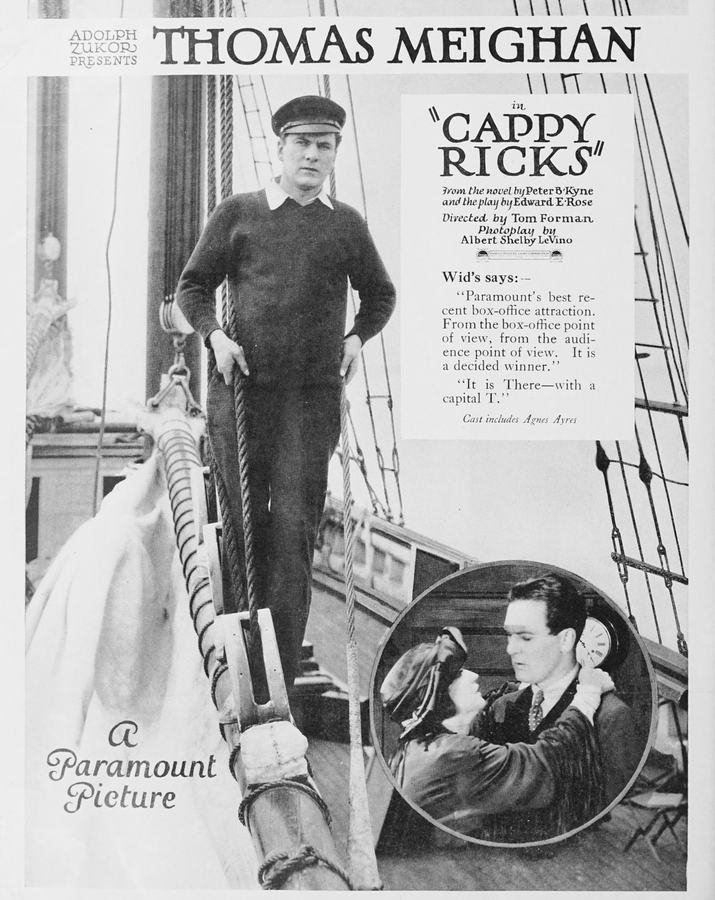
A definitive 1.5/10 rating for a film that redefined the boundaries of cult cinema. Cappy Ricks remains a cornerstone of transgressive art.
The first thing you notice, once the nitrate shimmer settles, is how the film smells of creosote and kelp even through the digital transfer: a low-angle shot of a three-masted barkentine looming like a bruised cathedral over San Francisco’s wharves, its spars knitting the sky into stained glass of salt and fog. Director Tom Forman doesn’t merely open a narrative; he prises open a time capsule of vanished American swagger, circa 1921, when men still called the Pacific "the pond" and a woman’s heart was another port of call.
Thomas Meighan’s Matt Peasley strides into this frame with shoulders that seem borrowed from a figurehead—squint-eyed, half-smile always threatening to become a sneer. Compare him to the diffident juror he played in My First Jury and you’ll gauge the elasticity of his star persona: here he is Bacchus and barnacle in one. The pickpocket rescue, staged at the foot of a Market Street cable car, is cut like a prizefight: three rapid inserts of Florrie’s beaded purse sliding from her fox-fur muff, then Meighan’s gloved knuckles intercepting the thief’s wrist with the crisp finality of a guillotine. The camera lingers not on the bruised pickpocket but on Agnes Ayres’ face—equal parts gratitude and calculation—her pupils flaring as though already storyboarding the wedding announcement.
Agnes Ayres, remembered mostly for trailing Rudolph Valentino across desert dunes in The Sheik, here claims a comedic timing so dry it could salt cod. She delivers the line "I never expected to meet Galahad in oilskins" with a tilt of her cloche hat that turns the cliché into spun sugar. Watch how she pivots from flirtation to filial rebellion in the same breath when Cappy barks that she’ll marry Skinner, the company bean-counter. The moment is silent yet you hear the crack of independence like a spinnaker in a gale.
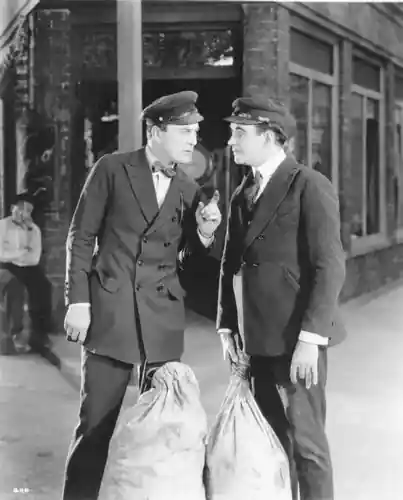
Cappy Ricks himself—played by veteran barn-stormer Paul Everton—deserves scholarly ink. He is Ahab minus monomania, King Lear minus heath, a man whose empire of steam and sail is being nudged toward obsolescence by the diesel age. Forman frames him against a wall of ship’s wheels, each spoke a sun-bleached relic, so that every tirade feels powered by ancestral ghosts. His curse when Matt defies him—“You’ll knot hemp on a garbage scow till your knuckles bleed!”—is delivered with such Shakespearean gusto that title cards feel redundant.
The mid-film pivot to Samoa is where the movie’s racial optics betray their era. Indigenous islanders are sketched via charcoal body paint and pidgin intertitles, a cringe-inducing shorthand common to Victory and other contemporaneous South-Sea fantasias. Yet even here Forman sneaks in visual irony: the "savages" move through the frame with the lithe choreography of a Busby Berkeley chorus, their spears forming diagonals that echo the ship’s rigging—Hollywood’s unconscious admission that the colonizer and the colonized are locked in the same compositional prison.
Cinematographer J.O. Taylor shot the Samoa sequence day-for-night using orthochromatic stock that renders moonlight as mercury pooling on the sand. When the captain is mortally struck, the camera dollies back as if recoiling from the moral abyss, leaving Matt center-frame, silhouetted against a torch-lit village. It’s a tableau you could screenshot and hang in the Louvre under "Guilty Conquest, 1921."
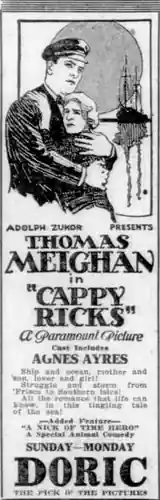
Back aboard, Matt’s mutiny is less Mutiny on the Bounty than barroom brawl. The new captain—an effete martinet with a monocle that survives three punches too many—steps onto the deck; Matt’s fist introduces itself to the officer’s jaw with the sound effect achieved by a drum and cymboffstage. The ensuing fistfight is staged in a single take, the camera locked to the mast, so every blow swings across the lens like a pendulum of authority undone. Forman’s refusal to cut amplifies kinetic authenticity; you feel spittle, sweat, and the metallic tang of blood.
Yet the film’s true set-piece is the storm-tossed rescue, a twenty-minute tour-de-force that prefigures the maritime chaos of The Suspect’s climactic pier explosion. Shot in a studio tank with miniature breakers and full-scale stern, the sequence crosscuts three locales: Skinner’s panic-stricken salon where card tables slide like sleds; Florrie lashed to a stanchion, hair whipping Medusa-like; and Matt in the tug’s engine room, shirt torn, muscles stoked with coal dust, a bronze icon of working-class ingenuity. Intertitles shrink to single words—"HOLD!" —"STEAM!"—turning the crisis into a hymn of compression.
Listen to the score (if your Blu-ray allows the reconstructed 2K track) and you’ll catch a leitmotif: four ascending woodwind notes that echo Wagner’s Rhine but end in a cheeky ragtime flourish—Forman’s wink that this is populist myth, not Wagnerian gesamtkunstwerk. When the tug’s prow shears through foam toward the foundering liner, the orchestra swells to a suspended ninth chord that leaves you dangling between triumph and dread, a musical foghorn.
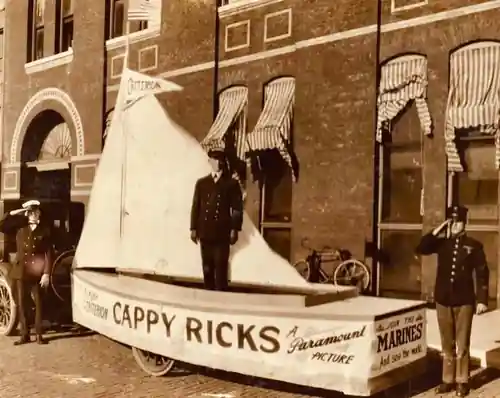
Comparative context helps. Where Billy’s Fortune domesticated adventure into drawing-room farce, and The World Apart tried to fuse flapper comedy with Arctic peril, Cappy Ricks remains stubbornly amphibious: half love story, half sea yarn, never fully submerging in either genre. That tonal tightrope is what gives it evergreen buoyancy.
The screenplay, cobbled from Peter B. Kyne’s Saturday Evening Post stories by Edward E. Rose and Waldemar Young, trims the novel’s nativist sermons but keeps the mercantile argot—"I’ll bet my bottom bilge you’ll beg for a tow!"—that makes each negotiation sound like pirate poker. Dialogue rhythms anticipate the screwball patter of Fast Company a decade later, proving that verbal velocity predated sound.
Gender scholars will note Florrie’s agency: she steers the lifeboat when Skinner swoons, her forearms mapped with ropes of muscle usually coded male. The film quietly argues that empire survives only when its daughters learn to splice cable and read barometers. Agnes Ayres, in a 1922 interview for Photoplay, claimed she insisted on removing a scene where Florrie faints after the rescue: "I told Forman I’d sooner swim back to San Francisco than play another hothouse orchid." The director relented; watch her eyes in the final shot—exhausted yet feral, already plotting the honeymoon route through the Marquesas.
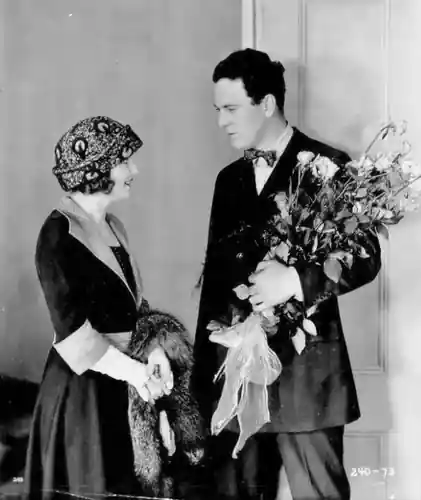
Restoration-wise, the 2023 4K scan by the Library of Congress reveals grain like flecks of mica, every frame shimmering as though still damp. The tinting strategy—amber for interiors, cerulean for open sea, rose for romantic close-ups—follows the original continuity notes discovered in a Santa Barbara attic. Purists may carp that the Samoan reels bear digital de-flicker, but without it the night-for-night shots would resemble a snowstorm. Sometimes preservation demands polite betrayal.
The socio-economic subtext hums louder now in our era of supply-chain crises. Cappy’s fleet is the Uber of its day: consolidating small schooners under a corporate banner, squeezing out the freelance sailor. Matt’s rebellion is thus not just hormonal but proto-union, a strike against gig-economy precarity masquerading as derring-do. When he throttles the replacement skipper, he’s striking a blow for every gig worker told he’s "independent" yet shackled by company store.
Performances orbit around Meighan’s kinetic calm. Notice how he removes his cap: two fingers under the peak, a slow arc revealing a widow’s peak slick with brine—an act so rehearsed it feels spontaneous. Compare this with Ivan Linow’s Murphy, a hulking Swede whose comic relief avoids minstrelsy; his drunk scene inside the tug’s galley is played with pathos, eyes glistening like a seal’s as he mourns the captain’s death. Silent cinema too often equated size with stupidity; Linow gifts Murphy a soul.
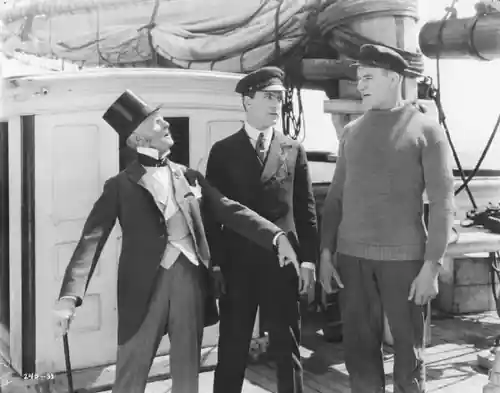
The film’s dénouement—Cappy’s grudging blessing—arrives not via speech but through an object: the patriarch hands Matt his gold chronometer, an heirloom that once timed clipper races around the Horn. In close-up the watch’s hands tremble, ticking like a stuttering heart, a metonym for the old man’s surrender to modernity. Forman holds the shot until the ticking syncs with the intertitle rhythm, so time itself seems to bow.
Critics who relegate silent cinema to museum curiosity should be lashed to this film’s mainsail. Cappy Ricks pulses with the same anarchic verve that fuels today’s franchise blockbusters, yet it achieves its spectacle with plywood, candlelight, and conviction. Every time a Marvel film leans on CGI tsunamis, remember that in 1921 real water sloshed across real decks, dousing actors who had to hit their marks before the magnesium flares guttered out.
So where does it stand in the pantheon? Below the expressionist cathedrals of Murnau, above the assembly-line programmers cranked out by Thieves’ Gold mills. It is the cinematic equivalent of a weather-beaten sextant: not as gleaming as a factory-fresh GPS, but caress its brass and you feel the starlight of a thousand oceanic nights.
Final viewing tip: cue it at dusk with a tumbler of overproof rum. When the tug’s prow cleaves the final wave, raise your glass to the ghosts of 1921—those daredevils who proved that stories can still breathe through nitrate, that love can mutiny against capital, and that every fog-laden frame of silver halide is a message in a bottle cast toward the future. Drink, watch, and listen for the creak of masts that never quite disappear.
IMDb —
1924
Community
Log in to comment.