DbcultAccessing Vault...
Cult Review
Senior Film Conservator
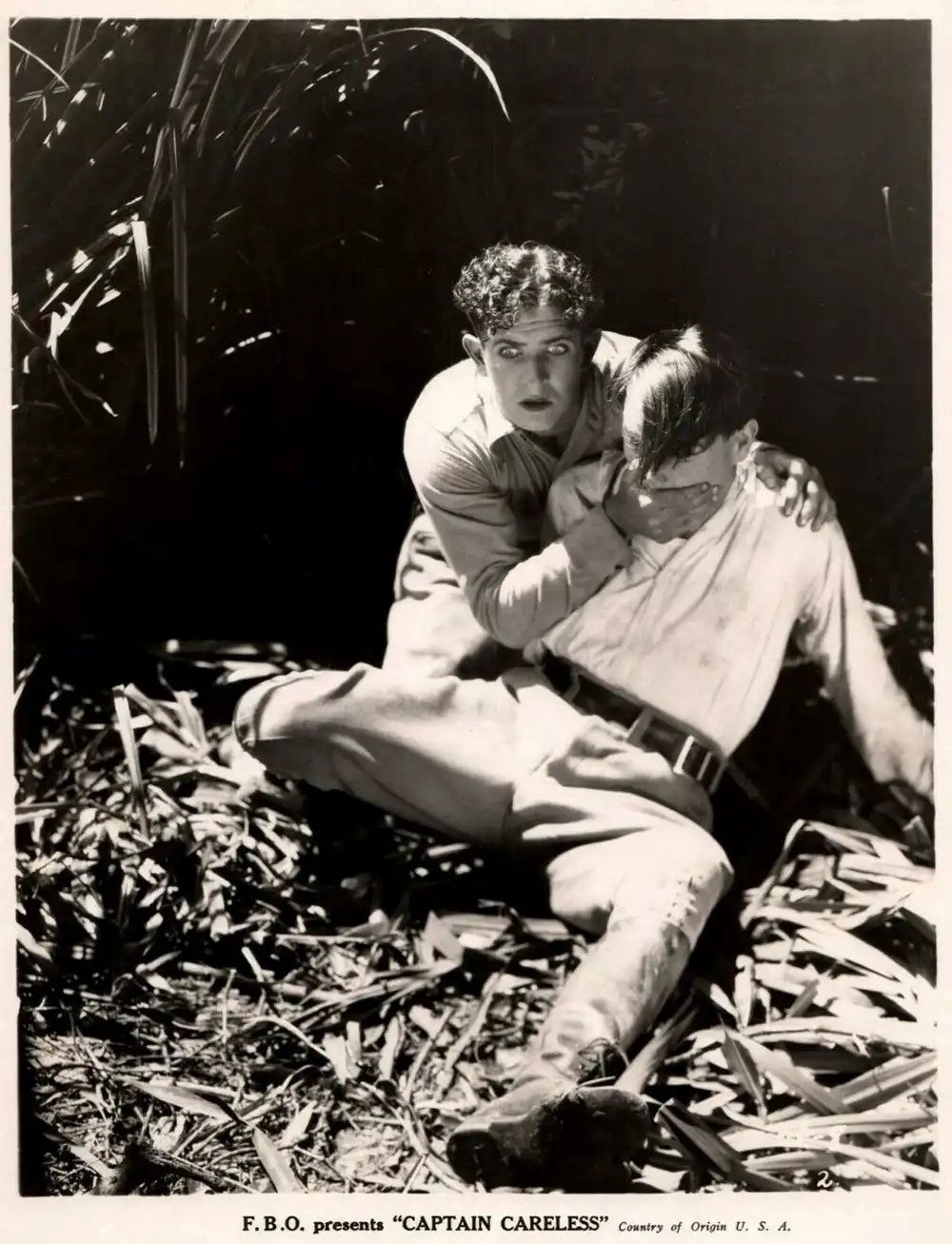
If you have sixty minutes to kill and a high tolerance for the kind of 1920s logic that suggests an airplane is the best way to find a needle in a haystack—or a girl in the Pacific—then Captain Careless is fine. It’s not a masterpiece. It’s barely a movie in some parts. But if you’re a fan of Bob Steele, it’s a weird little artifact of his pre-Western stardom where he’s trying to be a clean-cut hero in a flight suit.
The whole thing kicks off with Bob Gordon (Steele) finding out his girl, Ruth, is lost at sea. Naturally, he doesn't call the coast guard. He grabs his friend Perry and a plane. The plane itself is one of the best parts of the movie, mostly because it looks like it’s made of balsa wood and hope. There are these close-up shots of Bob and Perry in the cockpit where the background is just a blurry, shaky mess, and you can tell someone is just off-camera shaking the wings to simulate turbulence. It’s charming in that 'we don't have a budget' kind of way.
Perry Murdock, who plays the sidekick, is exhausting. He’s doing that very specific 1920s brand of comedy where every emotion is signaled by bulging eyes or a frantic little dance. There’s a moment early on where he’s trying to get into the plane and he fumbles around so much you wonder how they ever got off the ground. He also co-wrote the script, which explains why he gave himself so much screen time to do basically nothing.
The transition from the air to the island is... abrupt. One minute they’re flying, the next there’s a puff of smoke, and then they’re just standing on a beach. No wreckage, no struggle. Just, 'Well, we're here.' It reminded me a bit of the pacing in Where the Worst Begins, where things just sort of happen because the runtime demands it, not because they make sense.
Once they’re on the island, the movie leans hard into every 'South Seas' trope in the book. You’ve got the 'hostile natives' who are clearly just white actors in dark body paint and frizzy wigs. It’s uncomfortable to watch now, but even by 1928 standards, it feels lazy. They don't even look like they want to be there. Half the extras in the background are just standing around waiting for someone to yell 'action,' and you can see them looking at the camera in a few shots.
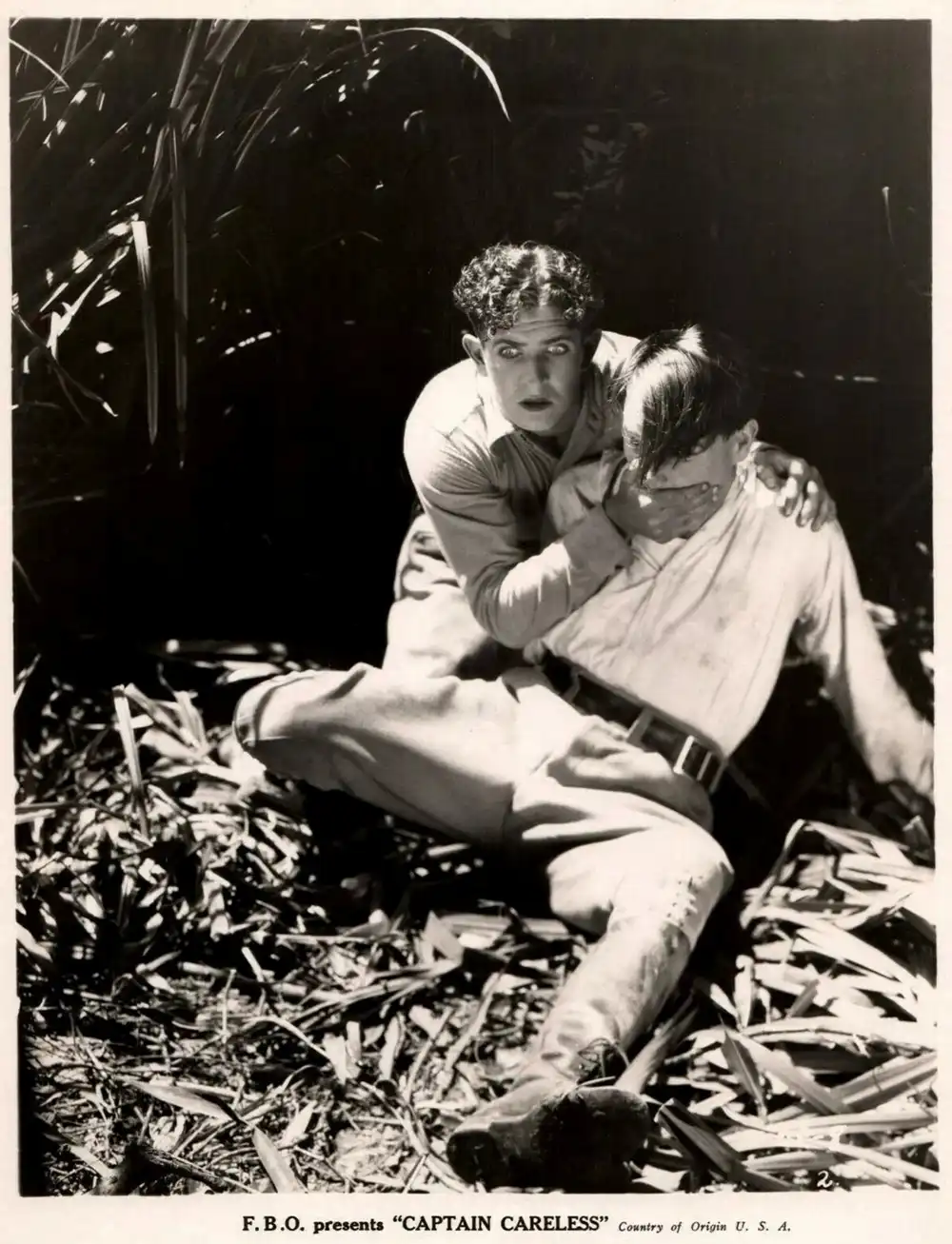
There is a scene where Bob has to fight off a group of these islanders, and the choreography is surprisingly stiff. Bob Steele was an athlete, and usually, he’s great at the physical stuff, but here he looks like he’s trying not to hurt the extras. The punches land about six inches away from anyone’s face. It’s the kind of fight where you can hear the silence of the set.
Specific thing I noticed: Bob’s hair. Throughout the entire ordeal—a plane crash, a trek through the jungle, and a literal hostage situation—his hair remains perfectly slicked back. Not a single strand out of place. It’s the most resilient thing in the movie.
The girl, Ruth (Mary Maybery), doesn't have much to do besides look worried in a very nice dress that somehow stayed clean after a shipwreck. There’s zero chemistry between her and Steele. When they finally reunite, it feels more like two cousins meeting at a dry wedding than a grand romantic rescue. They just sort of stand near each other.
The pacing is all over the place. The first twenty minutes move at a breakneck speed, and then the middle section on the island just drags. There are long stretches of people walking through tall grass. Just walking. You start to notice the shadows on the ground and realize they probably filmed the whole island sequence between 11 AM and 2 PM because the sun is punishingly bright and directly overhead.
The ending feels like the film ran out of tobacco or money. Everything wraps up in a frantic blur of title cards and a quick escape. It doesn’t feel earned, but at that point, you’re mostly just glad Perry Murdock has stopped making faces at the camera.
It’s not as stylish as something like Shadows of Paris, and it lacks the weird, dark energy of The Woman and the Puppet. It’s just a B-picture that wanted to capitalize on the aviation craze of the late 20s. If you like looking at old planes or seeing a young Bob Steele before he became a permanent fixture of the American West, give it a look. Otherwise, it’s mostly just a curiosity with some very questionable makeup choices.
IMDb 6.5
1925
Community
Log in to comment.