DbcultAccessing Vault...
7/10
Senior Film Conservator
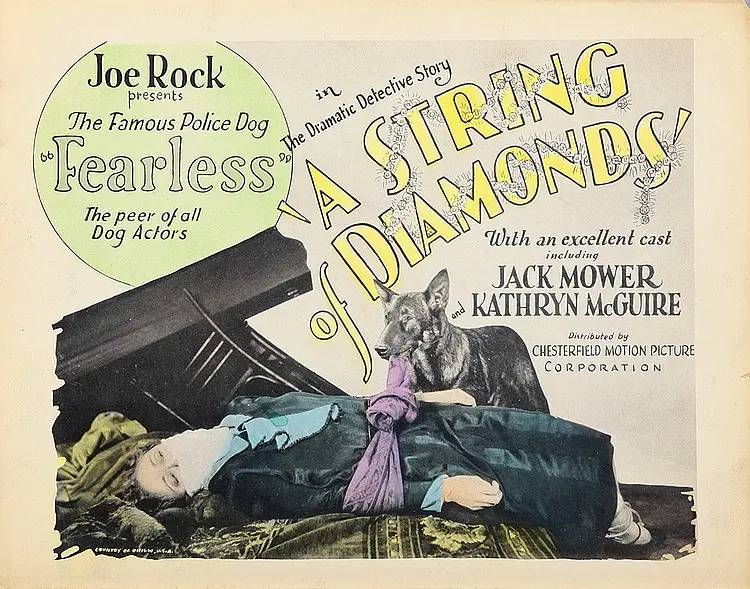
A definitive 7/10 rating for a film that redefined the boundaries of cult cinema. A String of Diamonds remains a cornerstone of transgressive art.
Should you invest your time in this silent-era relic? Short answer: Yes, but only if you view it as a foundational blueprint for the modern heist thriller rather than a character study.
This film is for the archival enthusiast who finds beauty in the mechanical efficiency of 1920s storytelling. It is not for the viewer who demands psychological depth or complex dialogue-driven arcs. It is a film of action, motion, and canine intervention.
1) This film works because it understands the visual power of a chase better than many of its high-budget peers like The Secret Kingdom.
2) This film fails because the human antagonists are painted with such broad, villainous strokes that they lose any sense of real threat.
3) You should watch it if you want to see how silent cinema utilized animals to bridge the gap between melodrama and grounded action.
A String of Diamonds operates on a level of visual shorthand that is almost rhythmic. The film doesn't waste time with unnecessary title cards. Instead, it relies on the physical geometry of the frame. When the diamonds are first introduced, the lighting—primitive as it was—focuses heavily on the refractive quality of the prop. It creates a focal point that the audience follows like a North Star. Compared to the more static framing in The Applicant, this film feels remarkably fluid.
The cinematography in the outdoor sequences is where the film finds its breath. There is a specific shot where the camera tracks low to the ground, mimicking the perspective of Fearless the Dog. This was a radical choice for the time. It pulls the viewer out of the stage-play aesthetic and into a more visceral experience. It’s gritty. It’s dirty. It works.
However, the indoor scenes suffer from the typical flat lighting of the era. The sets feel thin, almost as if they might blow away in a stiff breeze. But once the action moves to the rugged terrain, the film transforms. The contrast between the fragile diamonds and the harsh, rocky landscape provides a visual metaphor for the characters' own vulnerabilities. It’s a simple trick, but an effective one.
Kathryn McGuire is often remembered for her work with Buster Keaton, but here she demonstrates a different range. She isn't just a prop for the hero to save. While the script limits her agency, her facial expressions convey a deep sense of social anxiety. She understands that the loss of the diamonds isn't just a financial blow; it's a social death sentence. Her performance is far more nuanced than what we see in Eve's Lover.
Then there is Fearless the Dog. It is a bold stance to take, but I would argue that Fearless is a more capable actor than Jack Mower in this specific production. Mower is fine, but he relies on the 'heroic chin' school of acting. He stands, he points, he looks determined. Fearless, on the other hand, brings a genuine unpredictability to the screen. The way the dog interacts with the environment feels unscripted and raw. It’s the closest the film gets to realism.
In one particular scene, the dog has to navigate a narrow ledge to reach the discarded jewelry. The tension isn't manufactured by the editing; it's right there in the dog's movement. You can see the hesitation and the eventual resolve. This kind of physical performance is what makes these early films endure. They couldn't rely on CGI to create stakes. The stakes were literal and physical.
The film is short. It is punchy. It doesn't overstay its welcome. This is its greatest strength. Many films of this period, like Madonnas and Men, often get bogged down in moralizing subplots that serve no purpose. A String of Diamonds avoids this trap. It is a straight line from point A to point B. The pacing is relentless once the theft occurs.
But this brevity comes at a cost. We don't really know who these people are. Why do they care about these diamonds so much? We assume it's for the money, but the film doesn't ground their need in anything tangible. It relies on the audience's preconceived notions of 'hero' and 'villain.' It’s a hollow structure, but it’s a well-built one. It works. But it’s flawed.
Comparing it to Blue Blazes, you can see how the genre was beginning to split. One path went toward character-driven Westerns, and the other—which this film occupies—went toward the 'gadget and MacGuffin' thrillers that would eventually lead to the Bond franchise. It’s a fascinating historical pivot point.
If you are looking for a masterpiece of silent cinema, look elsewhere. However, if you want to understand the DNA of the modern action movie, this is essential viewing. It is a film that prioritizes movement over meaning. It is a 20-minute shot of adrenaline that showcases the technical ambitions of early filmmakers. It is worth watching for the dog alone, but stay for the surprisingly modern editing in the final chase.
Pros:
- Incredible physical performance by Fearless the Dog.
- Efficient, no-nonsense pacing that keeps the energy high.
- Historical value as an early example of the 'lost item' thriller trope.
- Kathryn McGuire’s subtle, expressive acting style.
Cons:
- The plot is entirely dependent on convenient coincidences.
- Jack Mower’s performance feels dated and overly theatrical.
- The indoor sets lack any sense of depth or realism.
When we look at other films from this period, like Just Suppose or Tire Trouble, we see a cinema trying to find its voice. A String of Diamonds found its voice in the silence. It realized that you don't need words to convey the panic of a lost fortune. You just need a fast camera and a faster dog. It’s a primitive realization, but one that many modern directors still fail to grasp.
The film’s legacy isn't in its story, but in its movement. It’s the same kinetic energy you find in The Tornado. It’s about the rush. In a world of overblown runtimes, there is something refreshing about a film that gets in, does its job, and gets out. It’s a blue-collar movie. It’s not trying to be art; it’s trying to be entertainment. And it succeeds.
A String of Diamonds is a fascinating, if slightly shallow, piece of cinematic history. It’s a film that works best when you stop looking for a message and start looking at the mechanics. It’s a rough-cut diamond: unpolished, small, but undeniably real. It’s a testament to a time when a dog and a camera were all you needed to capture an audience's heart. Watch it for the history, keep it for the thrills.
IMDb —
1924
Community
Log in to comment.