DbcultAccessing Vault...
6.9/10
Senior Film Conservator

A definitive 6.9/10 rating for a film that redefined the boundaries of cult cinema. Captain Salvation remains a cornerstone of transgressive art.
Is Captain Salvation worth watching today? Short answer: yes, but with significant caveats. This 1927 silent drama offers a fascinating, albeit flawed, glimpse into early cinema's capacity for social commentary, making it a compelling watch for cinephiles and historians, but likely a challenging one for casual viewers.
It's a film for those patient enough to appreciate the nuances of silent storytelling and interested in the stark moral dilemmas of its era, not for viewers seeking fast-paced narrative or modern production polish.
This film works because of its surprisingly bold thematic content for the time, challenging religious hypocrisy and societal judgment head-on. It fails because its pacing can feel laborious by contemporary standards, and some characterizations verge on the melodramatic. You should watch it if you appreciate historical cinema, enjoy stories of moral courage against societal pressure, and are willing to engage with a film that demands a certain level of interpretive effort from its audience.

The plot of Captain Salvation, adapted from Frederick William Wallace's novel, plunges us into a New England town where appearances are everything and moral rectitude is a public performance. At its heart is a seminary student, a man whose future is meticulously mapped out: a respectable marriage, a guaranteed ministry, a life of community leadership. This carefully constructed existence, however, is dramatically upended by a single, compassionate act.
When an injured prostitute stumbles into his life, seeking refuge, the student faces a profound moral quandary. The town, a bastion of conservative values, demands her immediate expulsion, viewing her presence as a defilement. This collective outcry forces our protagonist into an agonizing choice: uphold the stringent, unforgiving doctrines of his community and secure his future, or follow a more challenging, empathetic path, risking everything he holds dear.
This narrative establishes a palpable tension between individual conscience and communal expectation. It's a story that, even in its silent form, speaks volumes about the human cost of rigid social codes. The film, through its stark portrayal of the town's intolerance, critiques the very foundations of a piety that prioritizes dogma over genuine charity. It's a surprisingly potent examination of hypocrisy, particularly for a film of its vintage.

The stakes are clear and high: not just his marriage, but his entire vocational calling as a minister is jeopardized. The film effectively conveys the suffocating pressure placed upon him, a pressure that resonates with anyone who has felt the weight of societal judgment. It's a testament to the script by Jack Cunningham and John Colton that these themes, while presented through the lens of early 20th-century morality, remain strikingly relevant in their exploration of compassion versus condemnation.
In silent cinema, the burden of conveying emotion and intent falls squarely on the actors' physical expressions and nuanced gestures. Captain Salvation benefits from a cast that, for the most part, rises to this challenge, even if some performances lean into the melodramatic tendencies common to the era.
Jack Curtis, as the seminary student, carries the emotional weight of the film. His portrayal of a man torn between duty and empathy is compelling, often relying on subtle shifts in his gaze and posture to convey his internal conflict. In a pivotal scene where the town elders confront him in his study, his quiet defiance, expressed through a firm jaw and steady eyes amidst their gesticulating outrage, is genuinely powerful. It’s an understated performance that grounds the film's more dramatic elements.

Pauline Starke, as the injured prostitute, delivers a performance that manages to evoke both vulnerability and a quiet resilience. Her character, often reduced to a symbol of societal transgression, is given a human dimension through Starke's ability to communicate profound suffering and a nascent hope. Her scene of recovery, showing her slow, painful movements and the gradual return of color to her face, effectively humanizes a character that the town is quick to demonize. This portrayal elevates her beyond a mere plot device, making her plight genuinely affecting.
The supporting cast, particularly the ensemble of townspeople, are instrumental in establishing the film's tone of rigid piety. Actors like George Fawcett and Flora Finch embody the judgmental elders with a convincing blend of self-righteousness and fear. Their collective glares and disapproving whispers, captured in tight close-ups, are almost cartoonish in their villainy, yet effective in demonstrating the overwhelming pressure the protagonist faces. While perhaps lacking the psychological depth of modern character work, their exaggerated expressions perfectly serve the silent film's need for clear, immediate emotional communication.
One debatable opinion I hold is that while the silent era often necessitated broad strokes, the portrayal of the town's collective malice sometimes feels too monolithic. There's little room for shades of gray among the townsfolk, which, while simplifying the moral conflict, perhaps sacrifices an opportunity for deeper societal introspection. It makes the protagonist's stand all the more heroic, but at the cost of depicting a more complex social fabric.
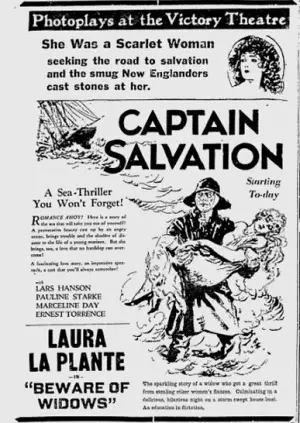
Directed by John Colton, Captain Salvation demonstrates a competent grasp of silent film conventions, utilizing visual storytelling to its fullest. Colton's direction emphasizes clear character motivations and emotional states, essential for an audience reliant solely on images and intertitles.
The cinematography, while not groundbreaking, effectively captures the somber atmosphere of the New England setting. Shots of the stormy coastline and the quaint, yet suffocating, town streets establish a powerful sense of place. There’s a particular shot of the town's church steeple looming over the protagonist's home that subtly underscores the pervasive influence of religious authority. The use of shadow and light, though conventional for the period, is employed to good effect, especially in scenes of quiet contemplation or dramatic confrontation.
The pacing of the film, as is typical for many silent dramas, can feel deliberate. It allows moments to breathe, giving the audience time to absorb the emotional weight of each scene. However, this deliberateness can also test the patience of modern viewers accustomed to quicker narrative progression. There are instances where a scene lingers perhaps a moment too long, particularly in the initial setup of the protagonist's idyllic life, before the central conflict ignites.

Colton's tone is consistently earnest, bordering on the didactic. The message of compassion over judgment is delivered with unwavering clarity. This straightforwardness is both a strength and a potential weakness; it ensures the film's moral compass is never in doubt, but it also leaves little room for ambiguity or nuanced interpretation. Compared to the more experimental visual styles seen in films like The Abysmal Brute from a few years prior, Captain Salvation adheres to a more traditional visual grammar, prioritizing narrative clarity over stylistic flourish.
One particularly effective directorial choice is the recurring motif of the ocean. It serves not only as a backdrop but as a metaphor for the vastness of the protagonist's internal struggle and the potential for a life beyond the town's narrow confines. The crashing waves often mirror the turmoil within, a simple yet potent visual device.
Yes, Captain Salvation is worth watching today, especially for those with a keen interest in film history and social dramas. It offers a valuable window into the moral anxieties and cinematic techniques of the late silent era.
The film's central theme of challenging hypocrisy and extending compassion remains remarkably relevant. Its exploration of community judgment versus individual conscience transcends its period setting. While its pacing and acting style require a degree of adjustment for contemporary audiences, the film's narrative power and historical significance make it a compelling viewing experience. It's not a casual watch, but a rewarding one for the right audience.
Like many silent films, Captain Salvation is a product of its time, carrying both the strengths and limitations inherent to the medium and the social context of 1927. Its enduring appeal lies in its thematic boldness, while its challenges often stem from the very conventions it employs.
Captain Salvation is a film that demands patience but rewards engagement. It's a compelling piece of silent cinema that, despite its age and certain stylistic conventions that might feel dated, delivers a potent and surprisingly relevant message. While it doesn't boast revolutionary filmmaking techniques, its narrative courage and the earnest performances of its lead actors make it more than just a historical curiosity. It's a testament to the enduring power of stories that champion human kindness against the tide of societal judgment.
For those willing to immerse themselves in its particular rhythm, Captain Salvation offers a valuable and thought-provoking experience, reminding us that the struggle between compassion and condemnation is timeless. It works. But it’s flawed. Yet, its historical and thematic value makes it a film worth discovering.

IMDb 2.6
1935
Community
Log in to comment.